Planning for long-term value in Monterey County requires more than just cosmetic updates. With an increasing number of homeowners choosing to stay and remodel rather than move, the focus has shifted toward significant, lasting improvements. In fact, 55% of homeowners now prefer to renovate, investing in professional home remodeling and construction to enhance layout, comfort, and functionality for the future. This trend underscores a desire for neighborhood stability and smarter financial planning, making well-executed upgrades a cornerstone of modern homeownership.
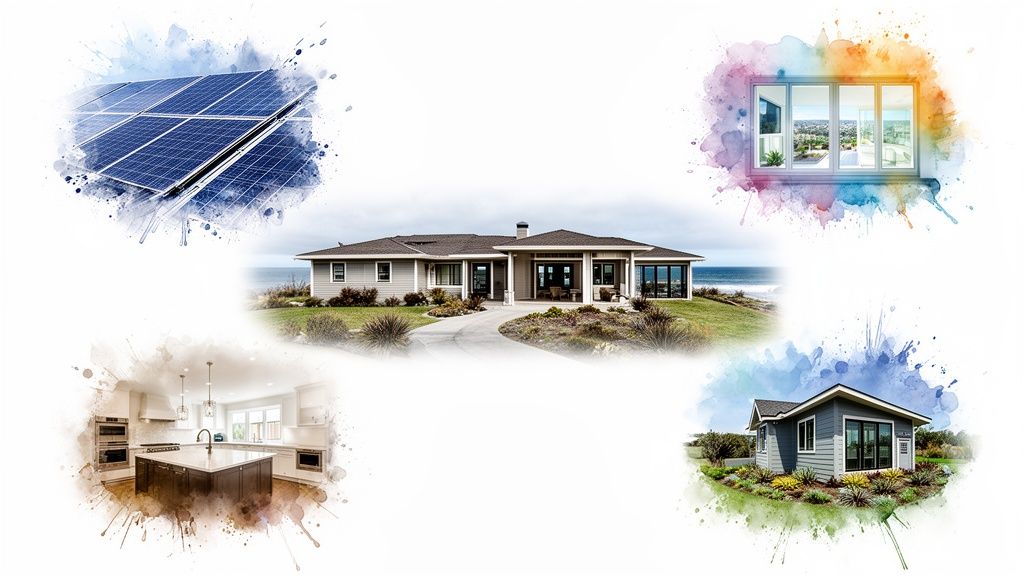
This article provides a direct, practical guide to the 6 upgrades adding long term value to Monterey County homes in 2026. We will move beyond generic advice and focus on specific, actionable insights tailored to our local coastal climate and building realities. You will learn not only what these high-impact projects are but also why they matter for durability and resale value. We will cover:
- Kitchen Remodeling: Creating durable, functional spaces built for modern life.
- Bathroom Remodeling: Focusing on moisture management and long-lasting materials.
- Home Additions: Expanding living areas to accommodate growing families.
- ADUs and JADUs: Adding flexible living space for family or future needs.
- Energy and Efficiency Upgrades: Future-proofing your home with modern systems.
- Whole-Home Renovations: Unifying systems and structure for cohesive, lasting results.
Each section will detail project considerations, material recommendations for our coastal environment, and critical permitting realities. Our goal is to equip you with the knowledge to plan a successful renovation, select a qualified contractor, and ensure your investment stands the test of time.
1. Kitchen Remodeling with Modern Functionality and Durability
A kitchen remodel remains one of the most impactful upgrades for Monterey County homes, delivering both immediate functional improvements and strong long-term value. This is not simply about new paint and hardware; a true value-adding remodel addresses the core of the kitchen's layout, workflow, material durability, and integration with modern living. With 55% of homeowners now preferring to renovate rather than move, the kitchen is a central focus for improving daily life.
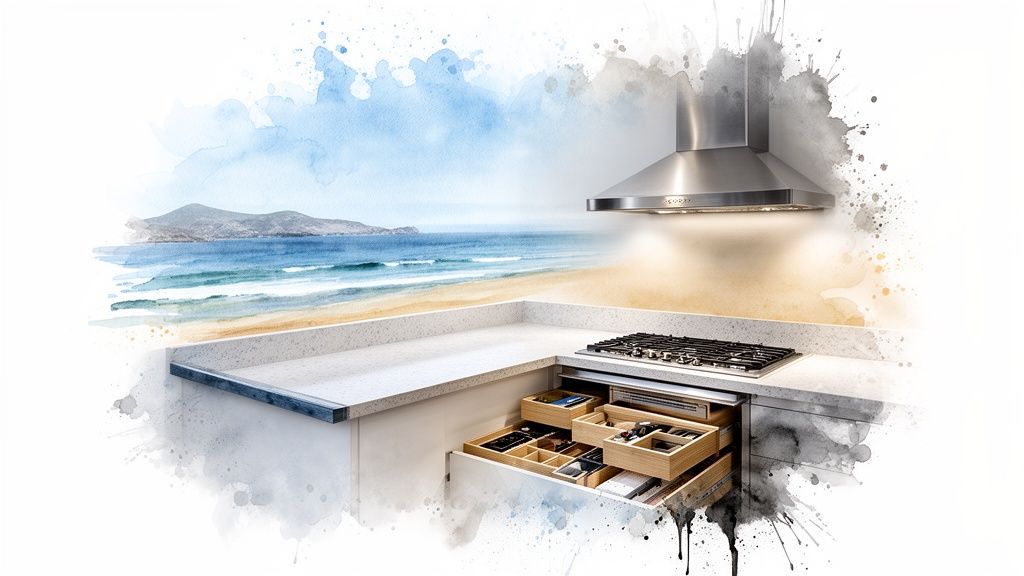
Kitchen and bathroom projects consistently lead as the most common renovations nationally. In Monterey County, this means demand for experienced contractors is high. A modern, durable kitchen is a major selling point, signaling to potential buyers that the home has been cared for and thoughtfully updated to withstand the local coastal environment.
Why This Upgrade Adds Long-Term Value in 2026
The value of a kitchen remodel in Monterey County is measured in more than just aesthetics. An updated kitchen directly solves common problems found in the area's older housing stock, such as inefficient galley layouts, poor lighting, limited storage, and materials that have deteriorated from years of exposure to salt air and moisture.
By 2026, buyers will expect kitchens that are not only beautiful but also practical and resilient. A professionally remodeled kitchen is a clear indicator of a well-maintained property, making it one of the key upgrades adding long term value to Monterey County homes in 2026.
- Improved Workflow: Reconfiguring layouts from cramped and isolated to open and intuitive improves daily living and appeals to modern family dynamics.
- Enhanced Durability: Selecting materials resistant to salt-air corrosion, such as specific grades of stainless steel and non-porous countertops, prevents premature aging and costly repairs.
- Increased Functionality: Modern appliances, proper ventilation, and smart storage solutions make the kitchen more efficient and enjoyable to use.
Key Insight: A forward-thinking kitchen remodel in our coastal region prioritizes material science as much as it does design. The right choices prevent the slow, costly decay caused by salt air, a common issue in properties from Pacific Grove to Carmel-by-the-Sea.
Planning and Implementation Details
A successful kitchen remodel requires meticulous planning. With nearly half of homeowners reporting projects costing more than expected, a detailed and realistic approach from the start is essential. Professional remodeling today is about transparent budgeting that helps prevent surprises.
Coastal Material Recommendations:
- Countertops: Engineered quartz is an excellent choice as it is non-porous, durable, and resists staining. Large slabs minimize grout lines where salt and grime can accumulate.
- Cabinetry: Opt for high-quality factory finishes on solid wood or marine-grade plywood boxes to resist moisture and warping.
- Hardware and Fixtures: Choose 316-grade stainless steel or PVD-coated fixtures, which offer superior corrosion resistance compared to standard options.
Permitting and Codes:
A kitchen remodel involving changes to plumbing, electrical, or structural walls requires a building permit from your local jurisdiction (e.g., Monterey, Carmel, or Monterey County). A licensed general contractor will manage this process, ensuring all work, including ventilation hood sizing and electrical layouts, meets California building codes. This is a non-negotiable step that protects your investment and ensures safety.
2. Bathroom Remodeling with Moisture and Durability Focus
A comprehensive bathroom remodel is the second most impactful upgrade for Monterey County homes, delivering strong value by addressing the critical challenges of our coastal climate. This goes far beyond aesthetics; a value-adding bathroom project focuses on moisture management, advanced waterproofing, and durable materials. For local homeowners, this is a strategic move to protect the home’s structure while improving daily comfort and function.
Bathrooms consistently rank just behind kitchens as the most popular renovations. In a fog-prone region like ours, a professionally executed bathroom remodel is a significant selling point, assuring potential buyers that the home is protected from the long-term, hidden damage that moisture and salt air can cause.
Why This Upgrade Adds Long-Term Value in 2026
The long-term value of a bathroom remodel in Monterey County is directly tied to its ability to prevent moisture intrusion, a persistent threat to properties from Seaside to Carmel Valley. Older homes often suffer from inadequate ventilation, failing grout, and drywall that is unsuitable for wet environments, leading to mold, rot, and structural decay.
By 2026, a properly remodeled bathroom will be seen as essential maintenance, not just a luxury. It demonstrates a homeowner's commitment to quality and longevity, making it one of the most critical upgrades adding long term value to Monterey County homes in 2026.
- Structural Protection: Modern waterproofing systems (like Schluter-Systems) and cement backer boards create an impermeable barrier, protecting wall cavities and subfloors from water damage.
- Improved Air Quality: High-capacity, properly vented exhaust fans remove moist air directly to the exterior, preventing the attic and wall moisture buildup that leads to mold.
- Enhanced Livability: A well-designed bathroom with modern, durable fixtures, spa-like features, and efficient layouts elevates the daily living experience.
Key Insight: In our coastal environment, a bathroom remodel's first job is water management. A project that fails to address waterproofing and ventilation is merely a cosmetic fix, leaving the home vulnerable to the same issues that plague older properties in Pacific Grove and Sand City.
Planning and Implementation Details
A successful bathroom remodel hinges on a detailed plan that accounts for potential hidden problems. A contingency budget is wise for older homes where plumbing surprises or pre-existing moisture damage are common.
Coastal Material Recommendations:
- Waterproofing: Use a complete membrane system like Schluter-Kerdi on all shower walls and floors before tiling. Cement board is a must-have behind tile in wet areas; never use standard drywall.
- Fixtures: Select high-quality fixtures from brands like Kohler or Toto and consider PVD finishes for their superior resistance to corrosion from salt air.
- Ventilation: Install an exhaust fan sized for the room’s volume and ensure it is ducted directly to the outside, not into an attic or crawlspace.
- Grout and Tile: Use a high-performance grout with a sealer to prevent staining and degradation from salt. Ensure shower floors are properly sloped (at least 1/4" per foot) to the drain.
Permitting and Codes:
Any bathroom remodel that alters plumbing, electrical wiring, or walls requires a building permit from your local city or county jurisdiction. A licensed general contractor will ensure all work, from drain placement to GFCI outlet installation, adheres to the California Plumbing and Electrical Codes, protecting your safety and investment.
3. Home Additions and Expanded Living Space
A home addition is a structural expansion that increases the square footage of your property, adding functional rooms like bedrooms, offices, or living areas. In Monterey County's real estate market, where space is often at a premium, a well-designed addition directly boosts property value by addressing space constraints in older homes.
Unlike purely cosmetic updates, an addition fundamentally changes the size and utility of your home. It can transform a cramped cottage into a comfortable family residence or add a dedicated home office to accommodate remote work. With the growing trend of multigenerational living, adding bedrooms and bathrooms is a practical solution that allows families to stay in their beloved neighborhoods.
Why This Upgrade Adds Long-Term Value in 2026
The long-term value of a home addition in Monterey County is clear and quantifiable: more livable square footage almost always translates to a higher appraisal. Beyond the numbers, an addition solves real-world problems for homeowners, making it a highly desirable feature for future buyers.
By 2026, buyers will be looking for homes that fit their lifestyle without requiring major, disruptive construction. A property with a completed, permitted addition signals that the heavy lifting is already done. This makes it one of the most significant upgrades adding long term value to Monterey County homes in 2026.
- Increased Square Footage: Each square foot added directly increases the home's assessed value, especially when it includes high-demand spaces like bedrooms and full bathrooms.
- Enhanced Functionality: An addition can correct poor layouts, create dedicated workspaces, or accommodate growing families, improving daily life for current owners and appealing to a broader market.
- Future-Proofs the Home: Adding space for multigenerational living or remote work aligns the property with modern housing trends, ensuring its relevance for years to come.
Key Insight: In areas with strict architectural guidelines, like Carmel-by-the-Sea or historic Monterey, an expertly designed addition that respects the home's original character while adding modern function is a rare and valuable asset. Visual cohesion is just as important as structural integrity.
Planning and Implementation Details
A home addition is a complex construction project that requires extensive planning, architectural design, and skilled execution. Engaging an experienced contractor early is critical to navigate zoning, permitting, and structural challenges unique to Monterey County properties.
Coastal Planning Recommendations:
- Foundation and Site Work: Proper soil analysis is essential, especially on hillsides or in areas with sandy soil. The foundation must be engineered to integrate with the existing structure and prevent settling.
- Architectural Cohesion: Match roof pitch, window styles, siding, and exterior trim to the existing home. A seamless addition looks like it was always there, preserving and enhancing curb appeal.
- Utility Integration: Budget for extending electrical, plumbing, and HVAC systems. This is not an area for shortcuts, as improper integration can lead to functional problems and code violations.
- Drainage and Grading: Ensure the site plan includes proper drainage and grading around the new foundation to prevent water intrusion, a critical concern in our coastal climate.
Permitting and Codes:
A home addition is a major structural project that always requires a building permit from your local jurisdiction. This process involves submitting detailed architectural and structural plans for review to ensure compliance with local zoning (setbacks, height limits, lot coverage) and California building codes. An experienced local contractor will manage this complex process.
4. ADU (Accessory Dwelling Unit) and JADU (Junior Accessory Dwelling Unit) Construction
Building a legal secondary dwelling unit, known as an Accessory Dwelling Unit (ADU) or a smaller Junior Accessory Dwelling Unit (JADU), is one of the most powerful ways to increase property value and functionality in Monterey County. These are independent living spaces built on single-family residential properties, made far more accessible by recent California state laws. In our competitive housing market, an ADU is not just an extra room; it's a strategic asset that can generate rental income, accommodate multigenerational living, or provide valuable flexibility for the future.
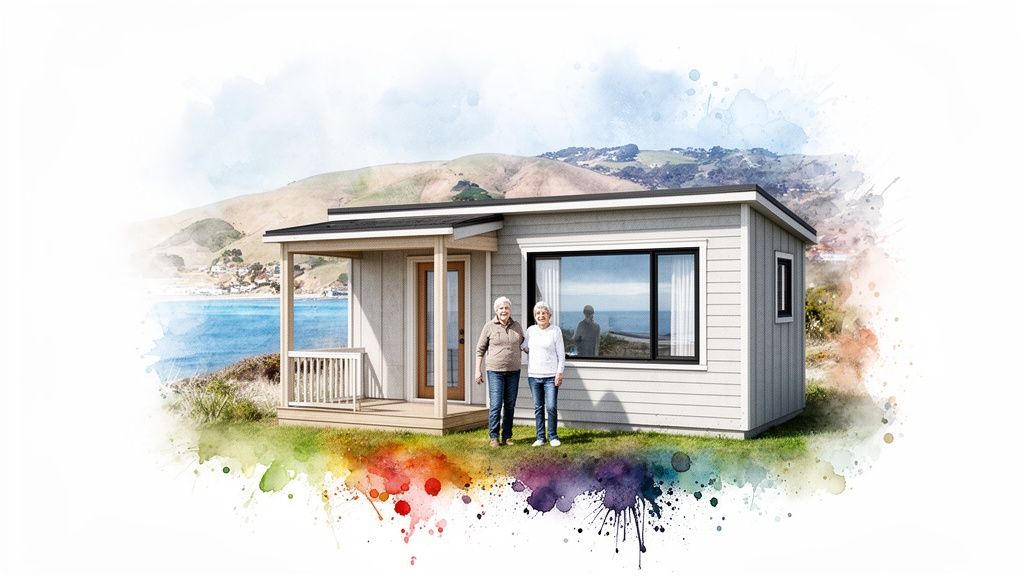
This upgrade directly addresses housing needs while substantially improving a property's market appeal. For long-term homeowners, an ADU serves multiple purposes, from creating an income stream in areas like Seaside to allowing an elderly parent to live independently but close by in a Marina property.
Why This Upgrade Adds Long-Term Value in 2026
The long-term value of an ADU in Monterey County stems from its ability to provide flexible, independent living space in a region with high housing costs and limited inventory. As more families opt for multigenerational living arrangements or seek to generate supplemental income, properties with existing, legally permitted ADUs become highly desirable. This trend is only expected to grow by 2026.
An ADU is a clear signal to buyers that a property offers more than just a single home; it offers options. For this reason, constructing an ADU or JADU is one of the most impactful upgrades adding long term value to Monterey County homes in 2026.
- Rental Income Potential: A well-designed ADU can generate consistent monthly income, offsetting mortgage costs and building long-term wealth.
- Multigenerational Living: ADUs provide a private, self-sufficient space for aging parents, adult children, or other relatives, keeping families together while maintaining independence.
- Increased Property Value: The addition of a legal, rentable unit with its own kitchen and bathroom fundamentally increases the utility and market value of the entire property.
Key Insight: In Monterey County, an ADU's value is amplified by local housing pressures. It transforms a standard single-family lot into a multi-functional property, solving immediate needs for space or income while creating a powerful asset for resale.
Planning and Implementation Details
Building an ADU is a significant construction project that requires careful planning, adherence to specific regulations, and professional execution. Partnering with a licensed general contractor familiar with local rules in Monterey, Pacific Grove, or Carmel is critical for a successful outcome.
Key Planning Considerations:
- Zoning and Regulations: Verify specific ADU/JADU rules for your city or unincorporated county area. Setbacks, height limits, and parking requirements can differ significantly.
- Utility Connections: Confirm your property's existing water, sewer, and electrical services can support a second unit. Planning for separate utility meters can simplify management if you intend to rent the unit.
- Site Work: Budget for necessary grading, drainage, and foundation work. This is especially important for detached units on sloped or complex lots common in areas like Carmel Valley.
- Access and Privacy: Thoughtfully plan the ADU's entrance and outdoor space to ensure privacy for both the main home and the new unit.
Permitting and Codes:
Constructing an ADU or JADU always requires a building permit from your local jurisdiction. A licensed general contractor will manage the entire process, from submitting architectural plans to coordinating inspections for foundation, framing, plumbing, electrical, and final sign-off. This ensures all work complies with the California Residential Code, including critical safety standards for egress and fire separation.
5. Energy and Efficiency Upgrades
While less visible than a new kitchen, upgrading your home's energy systems is a critical investment in comfort, durability, and long-term value. This upgrade involves a whole-system approach that includes high-efficiency equipment, improved insulation, and electric-ready appliances. As California’s electrification and efficiency standards evolve, a modern, efficient home is becoming a fundamental expectation for homebuyers.
Many Monterey County homes feature outdated systems that struggle with the region's unique microclimates. Modernizing these core systems prevents moisture issues, reduces high utility bills, and creates a healthier indoor environment. Planning these updates during a remodel helps future-proof your home and reduce long-term operating costs.
Upgrading energy systems is a practical decision that signals a well-maintained and future-ready property. Though the direct ROI is not as visible as a cosmetic update, the benefits to a home's operational costs and resilience make it one of the key upgrades adding long term value to Monterey County homes in 2026.
Why This Upgrade Adds Long-Term Value in 2026
An outdated home energy system is more than an inconvenience; it can be a significant financial drain and a source of chronic maintenance issues. In Monterey County's damp, mild climate, poor insulation and inefficient heating can lead to moisture buildup, promoting mold and structural decay. Older appliances and systems also waste energy, resulting in unnecessarily high utility bills.
By 2026, with California's Title 24 energy code driving higher efficiency standards, buyers will be more discerning about a home's performance. A modern home with proper insulation and electric-ready systems demonstrates a commitment to quality and long-term savings that savvy buyers value highly.
- Reduced Operating Costs: Modern insulation, windows, and high-efficiency appliances can drastically cut energy consumption.
- Improved Indoor Air Quality and Comfort: Properly sealed homes with efficient systems provide consistent temperatures and better dehumidification, crucial for comfort on foggy days in Pacific Grove or hot afternoons in Carmel Valley.
- Enhanced Home Durability: Effective moisture control protects the home's structure from the slow-moving damage caused by the coastal environment.
Key Insight: In Monterey County, a home’s building envelope is its first line of defense. Proper insulation and air sealing are not just about temperature; they are about moisture management. An uninsulated wall or leaky window can lead to musty smells and material degradation over time.
Planning and Implementation Details
A successful energy efficiency project requires professional analysis and coordinated execution. Simply swapping old appliances without addressing insulation or leaky windows will fail to deliver the expected gains.
Coastal Climate Recommendations:
- Insulation First: Before other upgrades, ensure your attic, walls, and floors are properly insulated. It’s one of the most cost-effective energy improvements you can make.
- Windows and Doors: Replace old, single-pane windows with modern, dual-pane units that have low-E coatings to improve thermal performance.
- Electrification Readiness: During a remodel, plan for the electrical capacity to support future electric appliances, like heat pump water heaters or induction cooktops.
- Ventilation Strategy: In fog-prone areas like Marina and Seaside, ensure your plan includes proper attic and crawlspace ventilation to prevent moisture accumulation.
- Corrosion Resistance: When possible, select exterior components and windows designed to withstand salt-air exposure for longer life.
Permitting and Codes:
Major energy upgrades, especially those involving window replacements or significant electrical work, often require a permit from your local building department. This ensures the installation meets safety standards and California's energy codes. A licensed contractor will handle the permitting process.
6. Whole-Home Renovations and Planning
Rather than tackling projects room by room over several years, many homeowners are planning renovations more holistically. A whole-home renovation coordinates structural, electrical, plumbing, and finish updates together. This approach can reduce redundancy, streamline timelines, and create a more cohesive finished result that significantly increases long-term value.
This unified strategy is particularly effective for older Monterey County homes, where piecemeal upgrades can lead to mismatched systems and missed opportunities. By planning all work at once, a homeowner can ensure that a new kitchen's plumbing aligns with a new bathroom's layout or that structural changes for an addition also support a new roofline.
Why This Upgrade Adds Long-Term Value in 2026
The long-term value of a whole-home renovation lies in its comprehensive nature. It addresses underlying issues across the entire property, from outdated wiring to inefficient layouts, resulting in a home that is not just aesthetically updated but fundamentally sound, safe, and modern.
By 2026, a home that has undergone a cohesive, permitted renovation will stand out in the market. It offers peace of mind to buyers, assuring them that systems are integrated and the entire structure has been professionally addressed. This makes it one of the most comprehensive upgrades adding long term value to Monterey County homes in 2026.
- System Cohesion: Ensures electrical, plumbing, and HVAC systems are designed to work together efficiently, avoiding the conflicts that arise from piecemeal work.
- Structural Integrity: Allows for a comprehensive review and reinforcement of the home's foundation, framing, and load-bearing walls.
- Cost and Time Efficiency: Reduces redundancy by grouping trades (e.g., opening walls once for plumbing, electrical, and insulation) and streamlines the permitting and inspection process.
Key Insight: A whole-home renovation allows a contractor to "see the whole board." It turns a series of separate projects into one strategic plan, ensuring that every decision supports the final goal of a unified, high-performing home.
Planning and Implementation Details
A whole-home renovation is the most complex type of residential project, requiring a highly experienced general contractor to manage design, engineering, permitting, and construction. The process begins with a deep discovery phase to define goals, set a realistic budget, and create a detailed roadmap.
Key Planning Considerations:
- Phased Master Plan: Develop a master plan with your contractor that can be executed in logical phases if the entire project cannot be done at once.
- Unified Design: Ensure a consistent design language (materials, colors, styles) flows through the entire home for a cohesive feel.
- Budget for the Unexpected: Older homes often hide surprises. A substantial contingency fund (15-20%) is crucial for addressing unforeseen structural, plumbing, or electrical issues.
- Professional Management: A successful whole-home renovation depends on a single point of responsibility. A general contractor coordinates all subcontractors, schedules, and inspections, which is essential for a project of this scale.
Permitting and Codes:
A whole-home renovation requires a comprehensive set of permits covering all aspects of the work—structural, electrical, plumbing, mechanical, and more. A licensed general contractor is essential for managing this complex process and ensuring every part of the project meets current California building codes. This protects the safety, legality, and ultimate value of your investment.
Frequently Asked Questions (FAQs) for Monterey County Homeowners
1. Which upgrade adds the most value for the cost?
While kitchens and ADUs often provide a high return, the "best" upgrade depends on your home's current condition and your goals. Addressing foundational issues like moisture management in a bathroom or upgrading insulation often provides significant long-term value by preventing costly future repairs, even if the immediate ROI seems lower.
2. How important is a building permit for these projects?
A building permit is non-negotiable for any project involving structural, electrical, or plumbing changes. It ensures the work is safe, compliant with California codes, and legally recognized. Unpermitted work can create major problems during a future sale and may not be covered by insurance.
3. Do I need an architect for a home addition or ADU?
Yes, home additions and ADUs require architectural and structural plans for permitting. Many homeowners work with a design-build contractor who provides both design and construction services, streamlining the process from concept to completion.
4. How do I choose a contractor for a major renovation in Monterey County?
Look for a licensed general contractor with a strong portfolio of similar projects in your area. Verify their license with the CSLB, check references, and ensure they have experience navigating local permitting in jurisdictions like Carmel, Pacific Grove, or Monterey County. The recent CSLB report of 119 actions against unlicensed contractors highlights the importance of this step.
5. How can I manage my budget when nearly half of projects go over?
The key is detailed pre-construction planning. Work with a contractor who provides a transparent, line-item budget and includes allowances for materials you will select. A contingency fund of 15-20% is also a critical tool for managing unexpected issues without derailing the project.
If you’re considering professional home remodeling and construction in Monterey County, understanding these 2026 trends can help you make confident, informed decisions. Whether updating a kitchen, modernizing a bathroom, or planning a full renovation, working with an experienced, licensed contractor ensures your project is thoughtfully planned, properly permitted, and built to last in our unique coastal region.