
Quick Answer
Many ADU projects run into problems before construction even starts because the planning work is incomplete. Zoning conflicts, missing permit documents, site constraints, structural issues, and vague budgets can stop a project long before excavation or framing begins. The projects that move better usually have thorough drawings, early site review, and realistic pre-construction decisions.
You’re ready to build an ADU, then the project stalls before anyone pours concrete or orders lumber. That’s a common spot for homeowners to get frustrated, especially when they assumed the hard part would start once construction crews arrived.
The reason why many adu projects run into problems before construction even starts is usually simple. The planning phase gets treated like paperwork, when it’s the very part that decides whether the job moves cleanly or gets stuck in redesign, corrections, and permit delays.
The Planning Phase The Real Foundation of Your ADU Project
Planning is where an ADU project either becomes buildable or starts drifting off course. If the measurements are off, the site plan is incomplete, the structural information is missing, or utilities haven’t been thought through, the project can slow down before a permit is even issued.
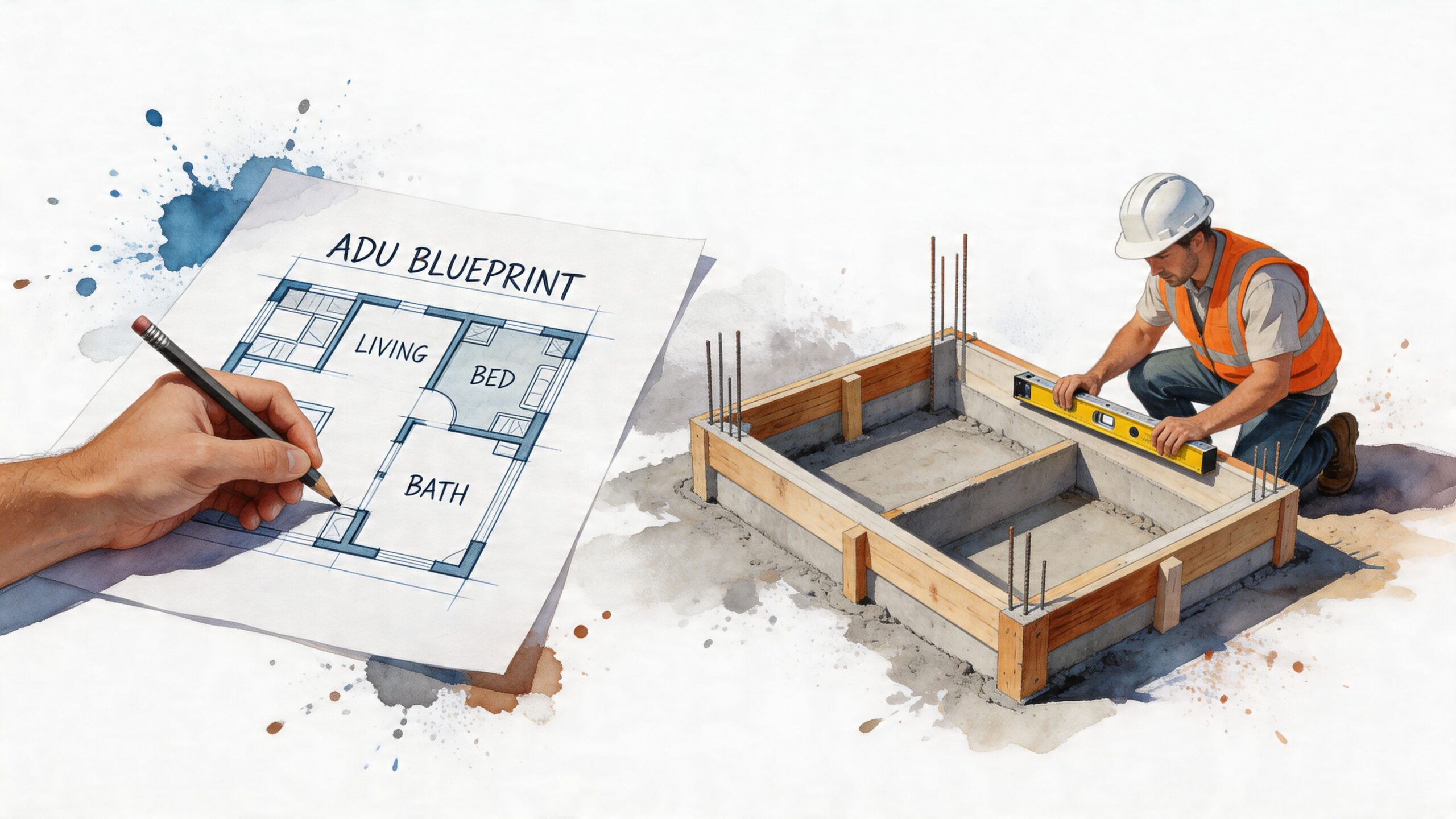
Incomplete or incorrect plan submittals are the most common cause of ADU delays before construction begins. Approximately 40% of permit delays in San Jose stem from missing documentation, especially structural calculations and energy compliance reports, and each correction cycle can add weeks to the schedule, according to this review of common ADU construction hurdles.
That matters even more in Monterey County. Coastal overlays, hillside lots, and older properties leave less room for guesswork.
What solid planning actually includes
A permit-ready ADU plan is more than a floor plan and a few exterior elevations. The work usually needs to account for:
- Accurate site measurements so the structure fits the lot, setbacks, and access conditions
- Structural planning for foundations, framing, lateral requirements, and any existing building conditions
- Utility routing for plumbing, electrical, sewer, and HVAC
- Energy compliance documentation where required
- Material and finish decisions early enough that the scope is clear before construction pricing is finalized
If even one of those pieces is loose, the rest of the project starts wobbling. A nice-looking drawing set can still be incomplete from a permitting and construction standpoint.
Practical rule: If a plan can’t answer how the ADU will sit on the lot, how it will be framed, and how it will connect to utilities, it isn’t ready for permit submittal.
Rushed planning creates downstream problems
A rushed pre-construction phase usually shows up later in two ways. First, the city sends comments back because required information is missing. Second, the contractor finds unanswered questions during pricing or layout and has to stop for clarification.
That’s when homeowners start hearing things they don’t want to hear. The footing design needs revision. The utility path crosses a problem area. The window layout conflicts with setback limits. The electrical panel location hasn’t been resolved.
Those aren’t field surprises in the usual sense. Most of them began on paper.
A good planning process also forces early decisions about what the project is. If the ADU is attached, detached, converted from a garage, or built into a difficult rear yard, the drawings and scope have to match that reality from the start. Generic plan sets rarely do that well.
For a closer look at what permit-ready work should include, this page on design and pre-construction planning in Monterey for permit-ready projects connects the early planning steps to actual buildability.
What works and what usually doesn’t
One approach works better than all the others. Measure the site carefully, review the property constraints up front, involve the right technical people early, and submit plans only after the details are coordinated.
What doesn’t work is pushing drawings out fast and hoping corrections can be handled later. They can be handled later. That’s the problem. Every later correction costs time, energy, and usually additional professional effort.
Why Many ADU Projects Run Into Problems With Zoning and Permits
A lot of ADU projects look fine until they meet the actual property rules. The homeowner has a layout they like, maybe even a drafted plan, then zoning review exposes a conflict that should have been caught before design moved that far.
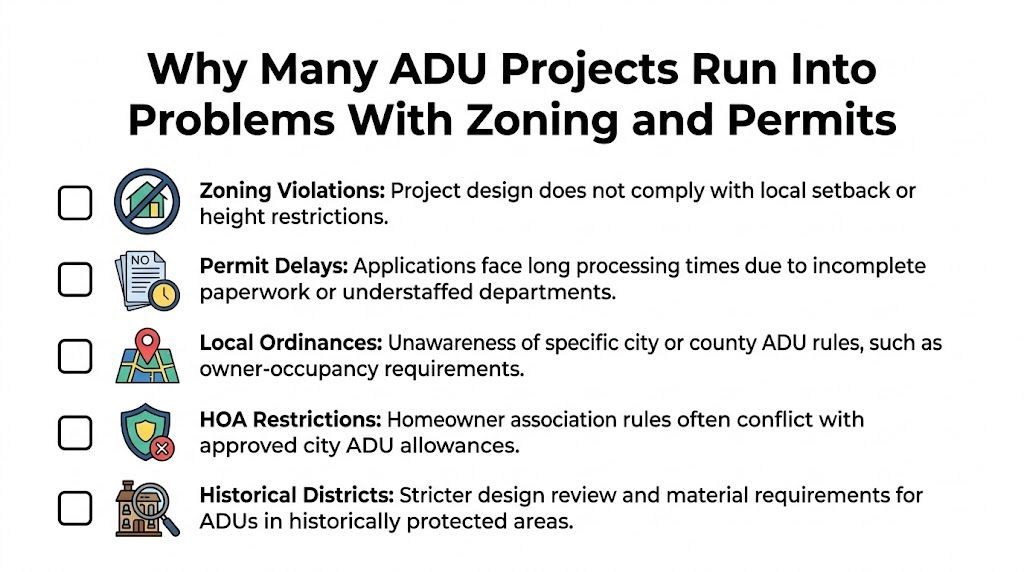
That’s one of the clearest answers to why many adu projects run into problems before construction even starts. Regulatory and zoning compliance issues are a primary culprit in ADU project failures, and design review in some neighborhoods can add 4 to 6 weeks to approval timelines, especially in historic districts or areas with active homeowner associations, according to this overview of common ADU issues and how to avoid them.
Monterey County properties are not one-size-fits-all
In this area, the lot itself often changes the rules. A property in a flatter inland neighborhood may be straightforward. A lot in Pacific Grove, Carmel-by-the-Sea, Pebble Beach, or an unincorporated coastal area may involve another layer of review before the project is ready to move.
Common sticking points include:
- Setback mistakes where the site plan shows distances that don’t hold up under review
- Height issues when roof design, grade changes, or topography push the ADU beyond what the property allows
- Lot coverage conflicts when the proposed building area leaves the site overbuilt
- Overlay restrictions tied to coastal or historic conditions
- HOA conflict where private rules create another layer of practical review, even if public law allows the unit
An old garage conversion is a good example. On paper, it seems simple because the structure already exists. In reality, if the garage sits in a tricky location, has nonconforming placement, or falls within an area with stricter review expectations, the path can get complicated fast.
Old assumptions can send a project backward
Homeowners often assume that because the state has made ADUs more accessible, any reasonable design should be approved. The problem is that “reasonable” and “compliant” are not the same thing on a specific parcel.
A basic detached layout that works on one lot may fail on the lot next door because of slope, access, overlays, or prior site conditions. That’s why off-the-shelf thinking causes trouble.
A plan that ignores the parcel’s zoning reality isn’t a head start. It’s a redesign waiting to happen.
For homeowners trying to understand where the line is between a small accessory structure and a project that needs full review, this guide on whether you need a permit to build a shed is a useful comparison point. It helps show why assumptions based on “small backyard building” logic can break down once an ADU enters the permitting process.
Permit problems usually start before submittal
The permit counter is where the issue becomes visible. It usually isn’t where the issue began.
Here’s the pattern that shows up often:
| Problem at permit stage | What likely caused it earlier |
|---|---|
| Correction notice for setbacks | Incomplete or inaccurate site verification |
| Design review delay | Neighborhood or overlay requirements not checked early |
| Height or massing comments | Roof and grade conditions not coordinated during design |
| Utility-related revisions | Plumbing, electrical, or access routes not addressed before submittal |
This is especially important in communities where design character matters. A property in a historic area may face additional review expectations on form, placement, or materials. A coastal property can trigger separate oversight. A hillside lot may create grading, drainage, or foundation questions that affect whether the proposed design is even practical.
If you want a local overview of how ADU permitting requirements affect construction timelines, that breakdown helps connect zoning review and permit timing to the decisions made before plans are submitted.
What tends to work better
The projects that avoid major permit trouble usually start with the parcel, not the floor plan. Check the lot constraints first. Confirm overlays, dimensions, access, and existing conditions before getting attached to a layout.
That approach isn’t glamorous, but it’s effective. It keeps homeowners from spending design time on an ADU concept that never fit the site to begin with.
Design Mismatches and Hidden Site Constraints
Some ADU plans fail for reasons that have nothing to do with the city and everything to do with the property itself. The design looks clean on paper, but once someone studies the existing structure, drainage pattern, grade change, or lot access, the plan no longer fits the actual conditions.

That happens often with garage conversions and older homes. A frequent pre-construction issue is the discovery of hidden structural defects such as inadequate foundations, dry rot, or non-vertical walls, and in Monterey County’s older housing stock and hillside areas, poor drainage toward the proposed ADU site can halt a project after design if nobody identified it early, according to this discussion of avoiding costly ADU delays.
Existing buildings can be worse than they look
An older detached garage can seem like a cost-saving starting point. Then the walls are out of plumb, the slab isn’t suitable, the framing doesn’t meet current expectations, or moisture has damaged key areas.
At that point, the design team and contractor are no longer converting a garage. They’re partially redesigning or rebuilding one.
That change affects scope, schedule, and permitting. It can also change whether the original budget approach made sense at all.
Hillside and drainage issues show up late if nobody checks early
A rear-yard ADU on a sloped lot can create another kind of mismatch. The plan may fit by dimensions, but the site may have water moving toward the building pad, limited equipment access, retaining needs, or utility runs that are more difficult than expected.
Those conditions don’t always show up in a quick conceptual design. They become obvious when somebody walks the site carefully and looks at how the property performs.
Field advice: On older or sloped properties, the existing conditions review matters as much as the floor plan.
A homeowner usually feels this as “the project changed.” In truth, the project just met the property.
Rough estimates are weakest when the design is still vague
This is also where money gets distorted. A rough budget based on a concept sketch is only as reliable as the information behind it. If the design doesn’t account for repairs, upgrades, drainage work, access limitations, or structural corrections, the estimate isn’t wrong because someone made a math mistake. It’s wrong because the scope was incomplete.
That’s why early on-site review has financial value. It reduces the gap between what the homeowner thinks they’re building and what the property will require.
A strong pre-design assessment should help answer questions like these:
- Is the existing structure worth converting, or will correction work erase the expected savings?
- Does the site drain properly where the ADU is planned?
- Can utilities reach the unit without major rerouting problems?
- Is the grade change manageable within the intended design?
- Do the existing conditions support the chosen layout, or is a different configuration more realistic?
For homeowners evaluating site fit before committing to drawings, this page on what determines whether you can build an ADU on your property is a practical starting point.
What usually prevents these problems
The answer is not more design software or prettier renderings. It’s a real site assessment done early enough to affect the design.
When the property review happens before plans are pushed too far, the project has a chance to stay aligned with reality. When it happens after the homeowner is already attached to a layout and budget, every correction feels like bad news.
Unrealistic Budgets and Timelines The Financial Pitfalls of Poor Planning
Low early estimates and optimistic schedules usually come from the same source. The plans are not developed enough to support a dependable number or a dependable timeline.
That doesn’t mean the person giving the estimate is dishonest. It usually means too many details are still unresolved.
Incomplete drawings create expensive loops
Incomplete plan submittals can trigger multiple rounds of revisions, and each correction notice can add 2 to 6 weeks because of resubmittal queues in busy departments like Monterey County’s, according to this realistic look at common ADU setbacks. That same source notes that missing structural engineering, Title 24 compliance, and accurate site plans are common reasons drawings get kicked back.
Every revision cycle has a cost even if nobody labels it that way. Designers revise drawings. Engineers update details. Homeowners make decisions under pressure. Contractors wait for usable information.
A “cheap” start can get expensive before a permit is approved.
Vague scope creates false confidence
If the finish level, utility work, structural requirements, and existing-site corrections are still unclear, the budget range will stay soft. That’s normal at the very beginning, but it becomes a problem when homeowners treat that soft number like a fixed construction commitment.
A few examples of what often throws the budget off:
- Structural gaps in the drawings that later require engineering revisions
- Utility assumptions that change once trenching or connection routes are reviewed
- Finish selections left open too long, which affects both pricing and lead times
- Site work omissions tied to drainage, retaining, demolition, or access
This is one reason contractors prefer a detailed scope before locking in pricing. Better information doesn’t just help the builder. It protects the homeowner from committing to a plan that hasn’t been accurately priced yet.
Scheduling suffers when decisions are deferred
A timeline built on incomplete planning usually assumes everything will go right after submittal. That’s rarely how ADU work goes.
Selections can change. Corrections come back. Utility details need clarification. Existing conditions force revisions. None of that is unusual, but all of it pushes the start date if the project wasn’t coordinated well up front.
Some homeowners like using digital tools to compare scopes and organize assumptions before final pricing. Even a general platform such as Exayard construction estimating software can help illustrate how much estimate quality depends on complete inputs rather than rough placeholders.
When the drawings are vague, the budget is vague too. The same goes for the timeline.
What a more reliable pre-construction process looks like
A better budgeting process usually follows this order:
- Confirm the site and existing conditions.
- Develop a layout that fits the parcel and intended use.
- Coordinate structural, utility, and energy requirements.
- Define materials and finish level well enough to price the scope.
- Submit a complete package instead of hoping open questions can be solved later.
Homeowners looking for a local breakdown of the variables behind pricing can review why ADU construction costs vary so much in California. The main point is simple. Cost doesn’t float randomly. It follows scope, site conditions, code requirements, and the quality of the planning behind the project.
How a Process-Driven Approach Prevents Pre-Construction Problems
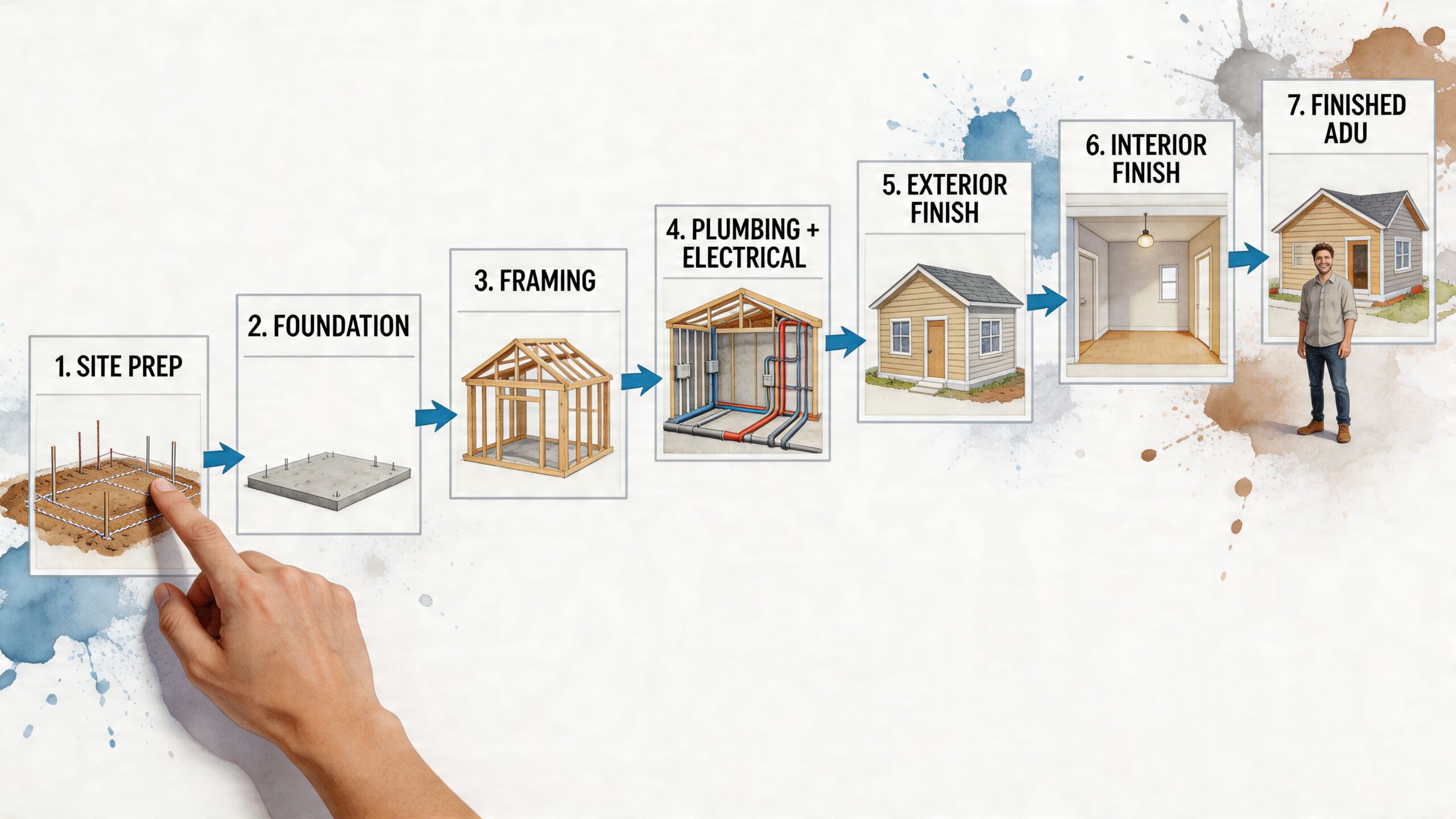
The projects that move with fewer surprises usually follow a disciplined pre-construction process. Not a rushed sketch, not a permit packet assembled in pieces, and not a budget based on assumptions that haven’t been tested against the site.
Start with the property, not the wish list
An ADU should begin with site verification and condition review. That means understanding the lot, access, grade, drainage, existing structures, and the parts of the property that may affect design or permit review.
This early work narrows the project into something real. It also protects homeowners from spending too much time refining a layout that the site won’t support.
Build the scope before chasing the estimate
A useful budget depends on decisions. If the structural path is unclear, utility connections are unresolved, or the finish level is still a moving target, any number attached to the job is preliminary.
A better process pushes key decisions forward before the owner gets too attached to a schedule or price. That may feel slower at first, but it usually prevents larger delays later.
Coordinate the technical pieces together
ADU planning gets messy when each discipline works in isolation. The layout affects structure. Structure affects utility routes. Utility routes affect site work. Site work affects budget and schedule.
That’s why coordination matters. The more complete the information is before submittal, the fewer surprises come back in corrections or field changes.
A homeowner who wants a broader perspective on project managing a build may find that resource useful. It reinforces the same basic lesson seen on ADU jobs. The early management work usually decides how much disorder shows up later.
Good pre-construction work removes avoidable uncertainty. It doesn’t remove every issue, but it catches more of them while changes are still manageable.
Keep communication tied to decisions
Process works when communication is tied to actual milestones. Site review. Layout approval. Structural coordination. Utility planning. Permit package. Pricing update.
That keeps the homeowner informed about what is known, what is still open, and what decisions will affect cost or timing. It also keeps the project from drifting into a gray area where nobody is sure whether the drawings are conceptual or construction-ready.
For homeowners evaluating who handles what during this stage, this explanation of what a licensed general contractor is responsible for helps clarify the contractor’s role in coordination, sequencing, and accountability.
Five practical questions homeowners should ask early
Are the existing conditions fully verified
Ask whether someone has measured the site, reviewed slope and drainage, and checked the condition of any structure being converted. If the answer is vague, the design may be ahead of the facts.
Is the layout based on my actual parcel
A good question is whether the plan reflects your lot’s specific setbacks, access limitations, and overlay conditions. If it’s just a standard ADU template, expect revisions.
Are structural and utility paths defined yet
You don’t need every final detail on day one, but you do need a clear direction. Foundations, framing approach, sewer, water, electrical, and HVAC all affect feasibility.
Is the estimate tied to a real scope
If the number is based on allowances and assumptions that haven’t been resolved, treat it as a starting point, not a promise.
Who is coordinating the moving parts before permit submittal
Someone needs to own the process. If that role is unclear, the homeowner usually ends up absorbing the confusion.
Frequently Asked Questions About ADU Pre-Construction Planning
Can I use a pre-designed ADU plan for my property
Sometimes, but it still has to fit your lot and your local requirements. A plan that works elsewhere may not work on a coastal parcel, a hillside site, or a property with an older structure that affects layout and utility routing.
How long does ADU planning usually take before construction starts
It depends on the property, the completeness of the drawings, and the local review path. Projects move better when the site is reviewed carefully and the permit package is complete before submittal, rather than relying on corrections to fill in missing information.
Is a garage conversion always easier than a detached ADU
No. Garage conversions can look simpler at first, but older garages often bring structural, drainage, and code-upgrade issues that aren’t obvious until the property is reviewed closely. Some detached ADUs are more straightforward than a problematic conversion.
Why does my contractor need so much information before giving a final price
Because the final price depends on the actual scope. Structural work, utilities, access, finishes, and site conditions all change the cost. A contractor who asks for more detail is usually trying to keep the number grounded in reality.
What should I have figured out before submitting ADU plans
You should have a clear layout, verified site conditions, a structural direction, utility planning, and enough material and finish decisions to define the scope. If those pieces are still loose, the permit stage and pre-construction budget will both be less reliable.
What if my property is in a coastal area or older neighborhood
Expect closer review and more site-specific questions. Those properties can still be good ADU candidates, but they usually benefit from earlier due diligence because placement, design review, and existing conditions matter more.
Start Your Monterey County ADU Project with a Solid Plan
If you’re trying to understand why many adu projects run into problems before construction even starts, the short answer is that most of those problems begin before anyone builds anything. They start with incomplete planning, site conditions that weren’t verified early, and drawings that don’t fully match the property or permit requirements.
If you're considering an ADU or home addition, learning how the planning stage works can make the entire construction process easier to manage. Understanding the steps involved before building begins often helps homeowners avoid delays and better prepare for the project ahead.
If you want to talk through your property, scope, and early planning questions, it helps to have that conversation before the design gets too far ahead of the site.
Palacios Construction works with Monterey County homeowners who want a well-planned ADU or home addition before construction begins. If you’d like to discuss your project, request an estimate, or get clearer on the planning process, visit Palacios Construction. You can also find the company at 222 Ramona Ave Unit 5, Monterey, CA.