

It’s a question every homeowner in Monterey County asks: "Do I really need a permit for this?" When it comes to what feels like minor remodeling work, skipping the permit process is a tempting shortcut.
The short answer from a professional contractor? Almost always no, permits are not optional. Permit requirements are tied to the type of work you’re doing, not the project's size, cost, or how simple it seems on the surface.
The Myth of the Permit-Free Remodel

Many homeowners get tripped up here. They assume that if they aren’t knocking down major walls or adding a new room, they can bypass the permitting process to save time and money.
That’s a big misconception, and it can be a costly one. In California, and right here in Monterey County, the need for a permit is triggered by specific actions, no matter how small the project seems.
What Really Triggers a Permit Requirement
The purpose of a building permit is to ensure your home is safe and meets modern building codes.
Any work that touches your home’s core systems—structural, electrical, plumbing, or mechanical—is almost guaranteed to need a permit. It’s a safety check, plain and simple.
This includes work like:
- Structural Changes: Moving, adding, or removing any wall, changing a window or door opening, or building a new deck.
- Electrical Work: Installing a new outlet, adding a new light fixture that needs new wiring, or upgrading your main electrical panel.
- Plumbing Modifications: Relocating a sink, toilet, or shower, or running new water supply lines or drains.
- Mechanical (HVAC) Systems: Installing a new furnace, adding new ductwork, or putting in a central air conditioning system.
Cosmetic work is usually a different story. Things like painting, laying down new flooring, or swapping out old countertops are typically exempt because they don’t alter those critical systems.
A professional contractor sees permits as a non-negotiable step that protects your family, your investment, and your home’s future value. As more people in our area choose to upgrade their homes, understanding this process is more important than ever. You can learn more about this trend in our article on why more homeowners in Monterey are remodeling instead of moving.
Why Skipping Permits Is a Major Red Flag
Many contractors believe small projects aren’t worth the time or cost of pulling permits, assuming homeowners prefer speed over compliance. Not long ago, they might have pitched this as a clever way to save a little money.
However, recent insights show that homeowners increasingly associate permit avoidance with unlicensed or unreliable contractors. What this actually means for you is that skipping permits no longer feels like a shortcut—it feels like a warning sign to informed homeowners who are already anxious about risk.
From Shortcut to Warning Sign
A contractor’s willingness to work without permits isn’t a sign of efficiency—it’s a massive warning sign.
It almost always points to deeper issues that go far beyond saving a few bucks. A contractor willing to ignore this fundamental step is likely cutting corners in other critical areas, too.
This mindset immediately calls their commitment to quality and safety into question. This is precisely why true professionals insist on proper permitting. It’s a clear signal of transparency and accountability from day one.
A contractor who handles permits correctly isn't creating delays; they are proving their commitment to doing the job right. This simple act builds a foundation of trust and demonstrates a professional process that protects both the homeowner and their investment.
The Connection to Licensing and Insurance
A contractor’s attitude toward permits is often directly tied to their legal standing. Unlicensed individuals must work this way because they can't legally pull permits themselves. This is a serious problem, reinforced by 119 CSLB enforcement actions against unlicensed operators in California in 2025.
Hiring someone who sidesteps these rules puts your entire project and property at risk. A properly licensed and insured contractor understands that permits are a non-negotiable part of Professional Home Remodeling and Construction in Monterey County. You can read more in our guide explaining why hiring a licensed general contractor actually matters. Their insistence on following the process isn’t a burden; it’s proof of their professionalism.
When 'Minor' Work Actually Needs a Permit
The line between a simple cosmetic update and a minor remodel that needs a permit can feel blurry. But it has nothing to do with the project’s size or cost—it's all about whether the work touches your home’s core systems.
In Monterey County, permits are non-negotiable for most jobs that involve structural, electrical, plumbing, or mechanical systems. Even a seemingly small change like moving a toilet, adding a new sink, or re-routing a water line is a plumbing modification that requires a permit.
This flowchart says it all. A contractor's attitude toward permitting is a dead giveaway, separating the real pros from the risky operators.
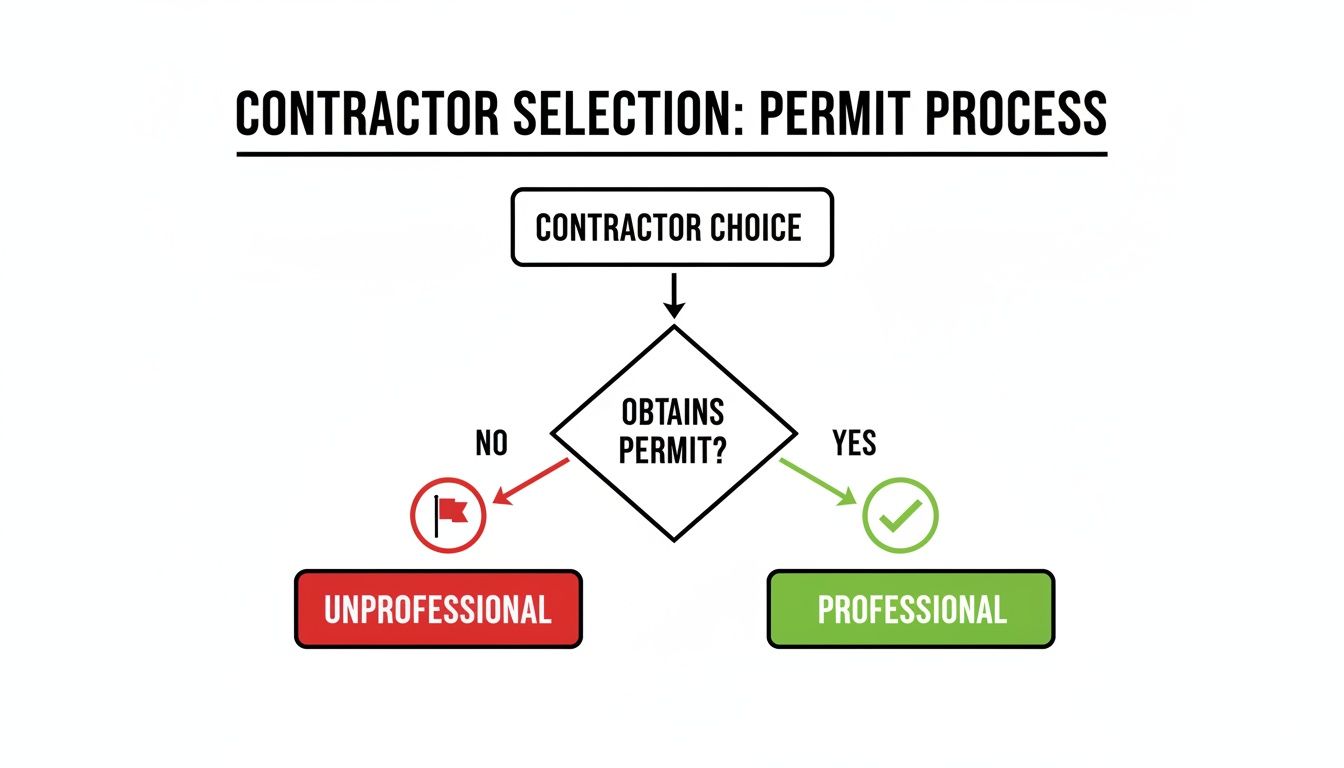
As you can see, a commitment to proper permitting isn't just a good sign—it’s a direct measure of a contractor's professionalism. For a safe, compliant project, it's not something to compromise on.
Common Examples of Permit Triggers
Let's walk through a few real-world scenarios where a small job suddenly crosses into permit territory.
- Kitchen Remodels: You can swap out an old dishwasher for a new one in the exact same spot. But if that new dishwasher needs its own dedicated electrical circuit to meet modern safety codes, that's an electrical permit. You can learn more in our guide on kitchen remodeling.
- Bathroom Updates: Replacing a leaky faucet is a simple task. But if you decide to move the vanity two feet to the left, you're altering the plumbing supply and drain lines in the wall, which requires a permit.
- Window Replacement: If you're swapping a window for another of the exact same size, you're usually fine. But changing the window's size—even slightly—means you're modifying the wall framing. That's a structural change that needs a permit.
- Outdoor Decks: A simple paver patio on the ground is typically exempt. But the moment that deck is more than 30 inches off the ground, a permit is mandatory to ensure it’s built safely with proper railings.
- Interior Walls: Taking out a wall to open up a living room requires a permit, even if it’s not load-bearing. You're almost guaranteed to be dealing with electrical wiring that must meet current building codes.
The Real-World Consequences of Unpermitted Work
The temptation to save a few hundred bucks by skipping a permit is real. But it's a short-term gamble with devastating long-term costs.
That initial savings opens you up to huge financial, safety, and legal problems down the road. This is exactly why professional contractors always insist on doing things by the book.
Safety Hazards and Failed Inspections
This is the big one. The most critical consequence is the risk to your family’s safety. Building codes exist to prevent fires, structural collapses, and other catastrophes.
Unpermitted work is never inspected, which means there’s no professional, third-party check to make sure the job was done safely and correctly. This can lead to scary situations:
- Fire Risks: Improperly installed wiring that an inspector never sees is a classic cause of electrical fires.
- Structural Failure: Removing a wall without the right engineering review could seriously compromise your home's stability.
- Plumbing Disasters: Incorrectly installed pipes can lead to leaks, water damage, and toxic mold growing inside your walls.
Financial Penalties and Costly Rework
If the local building department discovers unpermitted work, the financial fallout can be massive. They have the power to hit you with significant penalties.
When unpermitted work is discovered, homeowners often have to pay double or even triple the original permit fee. The real pain comes when they make you tear open brand-new walls so an inspector can see the hidden electrical, plumbing, or framing.
This means demolishing beautiful new work and paying a contractor to rebuild it all over again. Any money you thought you "saved" is gone in an instant.
Insurance Complications and Denied Claims
Your homeowner's insurance policy is a contract based on the understanding that your house is a legally built structure. Doing unpermitted work can void that agreement.
If a fire or flood happens and the damage starts in an unpermitted area, your insurance company has solid grounds to deny your claim entirely. This leaves you responsible for the full cost of repairs yourself.
Difficulties When Selling Your Home
Unpermitted remodeling is a ticking time bomb that almost always goes off when you try to sell your house. A buyer’s home inspector will spot the signs, and their lender will scrutinize your property’s permit history.
This discovery can kill a sale, force you to drop your price significantly, or even land you in legal trouble for not disclosing it. Ultimately, the choice is clear. The perceived shortcut of skipping a permit is a direct path to future headaches and financial loss. You can learn more about how renovation permit requirements protect home value.
Navigating the Monterey County Permit Process

For a homeowner, the building permit process can feel like a maze of paperwork and unfamiliar rules. For an experienced general contractor, it’s a standard, predictable part of every successful remodel.
A professional contractor handles this entire workflow, turning a bureaucratic headache into a smooth process. This system ensures every step of your project is documented, reviewed for safety, and approved, taking the stress and guesswork off your shoulders.
The Typical Permit Workflow
While details can vary, the core steps are always the same. Your contractor should guide your project through each stage.
Here’s what that process usually looks like:
-
Project Assessment and Document Prep: It starts with a detailed evaluation to determine which permits are needed. Your contractor prepares the necessary construction drawings, site plans, and engineering calculations for the building department.
-
Application Submission: The formal permit application is submitted to the local building department. This package gives plan checkers everything they need to understand the project's scope and technical details.
-
Plan Review: City or county plan checkers review all documents to ensure the work complies with the California Building Code and local zoning rules. If revisions are needed, your contractor handles them.
-
Permit Issuance: Once plans are approved, the building permit is issued. This is your official green light to start construction. The permit card must be posted at the job site.
-
Scheduled Inspections: An inspector will visit the site at key milestones to verify that the work matches the approved plans for foundations, framing, plumbing, and electrical before anything is covered up.
Your contractor is responsible for scheduling every inspection and meeting the inspector on-site. This keeps things moving until the final inspection is passed and the project is officially closed out. For some projects, like ADUs, the process involves extra steps. You can read more in our guide on what you need to know about ADU permits in Monterey County.
You can get more details about Monterey County permit requirements on their official site.
Your Partner for Compliant Remodeling
Think of a building permit not as a roadblock, but as a critical part of your remodel’s foundation. Choosing a contractor who respects and handles the permitting process from day one is one of the smartest decisions a homeowner can make.
A properly permitted project gives you peace of mind. It protects your property’s value and guarantees the final work is safe, durable, and built to last. A real professional understands that skipping permits isn't a shortcut—it’s a major red flag that savvy homeowners now recognize.
According to the California Contractors State License Board (CSLB), 119 enforcement actions were taken against unlicensed operators in 2025 alone, many caught doing unpermitted work.
Be explicit early: explain which permits are required, why they exist, and how they protect both the homeowner and the contractor from future issues. This commitment to transparency is the hallmark of a true professional.
If you’re navigating permitting questions on remodels in Monterey County, learning how to explain and manage the process clearly can reduce friction and build trust before construction even begins.
Frequently Asked Questions About Remodeling Permits
Homeowners always have good questions about permits. Here are concise answers to the most common ones we hear.
How Long Does It Take to Get a Building Permit in Monterey County?
For a simple project like a re-roof, a permit might take a few weeks. For a more complex remodel needing a full plan review, it could take several months. An experienced local contractor can provide a realistic timeline based on your project and the current workload at the local building department.
Do I Need a Permit to Replace Windows in My Home?
Yes, almost always. Replacing windows, even if they are the same size, typically requires a permit. This ensures the new windows meet current California energy efficiency and safety glazing codes. If you are changing the size of the window opening, a permit is always required as this is a structural alteration.
Can I Pull My Own Permit as the Homeowner?
California law allows homeowners to act as an "owner-builder" and pull their own permits. However, this makes you legally responsible for ensuring all work meets code, supervising the job site, and assuming all liability. We almost always recommend letting your licensed general contractor manage the permit process.
What Happens If I Buy a House with Unpermitted Work?
As the new owner, you become responsible for any unpermitted work. The city or county can legally require you to bring that work up to current code, which could mean tearing out finished walls for inspections at your own expense. This can also cause problems with homeowner's insurance or when you try to sell the property later.
Does a Permit Guarantee the Quality of the Work?
No. A permit ensures the project is inspected for compliance with minimum safety and building code standards. It does not guarantee the quality of craftsmanship. The quality of the final product—straight tile, clean paint lines, and proper fit and finish—depends entirely on the skill and professionalism of your contractor.
At Palacios Construction, we believe a well-managed permit process is the foundation of a successful project. If you’re planning a remodel in Monterey County and have questions about your project’s requirements, we’re here to provide clarity and professional guidance. Visit us at https://palaciosconstructionca.com to learn more about our process.