
Homeowners often tell us they want a “spa bathroom.” The idea of a rainfall shower and a freestanding tub is appealing. However, focusing only on aesthetics is a risky way to plan a remodel, especially here in Monterey County.
To ensure your new bathroom lasts for decades, you must look beyond the spa aesthetic and prioritize what really matters: durability, proper planning, and professional execution from the studs out.
Why Spa-Inspired Remodels Are Not Enough
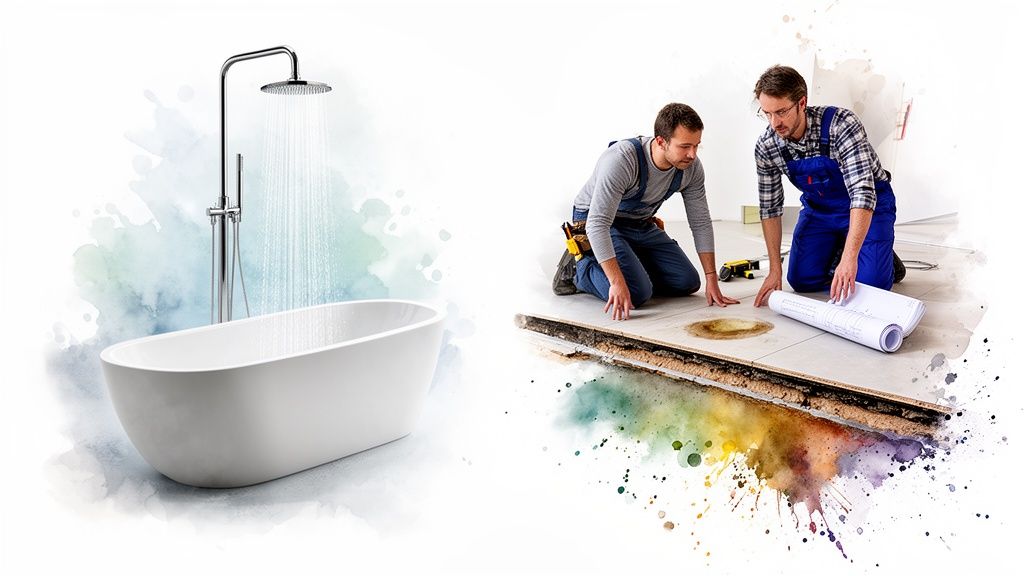
When you see a bathroom remodel on TV or Pinterest, the focus is on luxury finishes. The reality of a successful renovation, however, is what happens behind the walls. This is especially true given the older homes and coastal conditions across the Monterey Peninsula.
A remodel that looks impressive in photos but fails on waterproofing, ventilation, or structural support is not a good investment. It is a future liability.
The Problem with Aesthetic-First Planning
When planning starts with finishes, foundational work is often overlooked. A designer or showroom might present beautiful materials without explaining what it takes to install them correctly in your specific home. This creates a gap between expectations and reality, often leading to budget overruns and stress.
This planning gap is a major reason projects go over budget. One recent report found that 47% of homeowners said their renovation cost more than expected, and 30% had to reduce their project scope due to rising costs. This shows that surface-level planning is failing clients.
It also helps explain why many Monterey homeowners are choosing to stay and invest in their current properties, making smart, durable remodeling choices more critical than ever. You can read more in our article on why more homeowners are remodeling instead of moving.
A Building-Science-Driven Alternative
A more reliable method is a building-science-driven approach. This strategy prioritizes the unseen components that ensure a bathroom performs correctly for years. Before discussing tile, we must address the fundamentals:
- Structural Integrity: Is the floor joist system strong enough to handle a heavy cast-iron tub or a dense mud bed for a tile floor?
- Moisture Management: How will we waterproof the shower? What is the ventilation plan to prevent mold and mildew in our damp coastal air?
- Code Compliance: Are we meeting all current California building codes, including Title 24 energy and water efficiency standards? A safe, legal renovation is non-negotiable.
When you prioritize the technical foundation, you protect your investment. The goal is a bathroom that is not just beautiful on day one but is also durable, compliant, and built to serve your family without issues for decades.
It's about shifting from a purely design-focused mindset to one that balances aesthetics with performance.
Comparing Two Bathroom Remodeling Approaches
| Consideration | Typical Spa-Aesthetic Focus | Building-Science-Driven Approach |
|---|---|---|
| Priorities | Visuals, fixtures, and trendy materials. | Durability, moisture control, and structural soundness first. |
| Planning Start | Selecting tile, vanities, and tubs. | Assessing framing, plumbing, and electrical systems. |
| Waterproofing | Assumes standard methods are "good enough." | Specifies modern, redundant systems like liquid membranes and foam pans. |
| Ventilation | A basic fan, often undersized or poorly placed. | A properly sized, quiet fan vented correctly to the exterior. |
| Success Metric | How it looks in photos. | How it performs over 10-20 years with no leaks or mold. |
A building-science approach does not mean you can't have a beautiful, spa-like bathroom. It means you are building it on a foundation engineered to last, providing peace of mind long after the project is complete.
The Unseen Foundation of a Lasting Bathroom
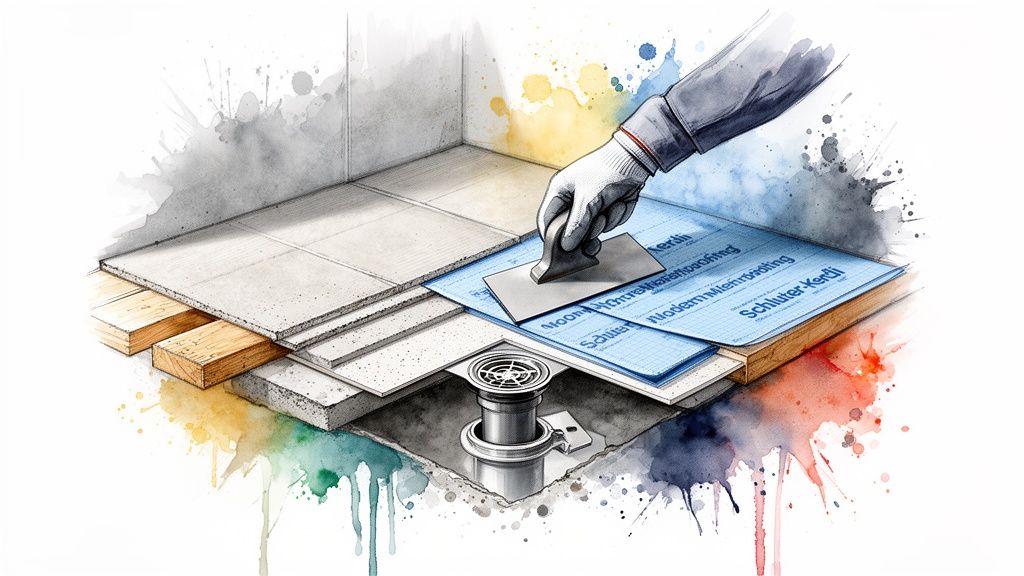
The construction industry often markets bathroom remodels with images of rainfall showers and freestanding tubs. While that is the appealing part, a project's longevity is defined by what you cannot see. The real value is behind the tile and under the floor.
A beautiful finish is only as good as the system supporting it. Focusing on this technical backbone is what separates a quick cosmetic fix from a smart, long-term investment. Performance comes first.
Starting with Substrate Preparation
Before a single tile is installed, the surfaces must be properly prepared. This process, called substrate preparation, is a non-negotiable step for a durable result. In a bathroom, this means ensuring floors and walls are flat, solid, and ready for waterproofing.
For floors, we may need to reinforce joists or install a new, level subfloor. For walls, it means removing any water-damaged drywall and replacing it with a moisture-resistant material like cement board. Skipping this step can lead to cracked tiles and crumbling grout.
The Critical Role of Modern Waterproofing
A shower handles thousands of gallons of water annually. Older methods relied on a simple plastic liner under a thick mortar bed. Today’s systems offer far superior protection against leaks, rot, and mold.
A bathroom remodel is fundamentally a water management project. A single failure in the waterproofing system can lead to thousands of dollars in structural damage, making it the most important technical element of the entire build.
Modern waterproofing creates a completely sealed enclosure. These systems are applied directly behind the tile, stopping water before it can soak into wall studs or the subfloor.
Key Waterproofing Components Include:
- Sheet Membranes: Products like Schluter-KERDI are bonded to surfaces, creating a continuous waterproof and vapor-proof barrier.
- Liquid-Applied Membranes: A thick, rubberized coating is rolled onto surfaces to form a seamless shield.
- Pre-Formed Pans and Curbs: We often use factory-waterproofed foam shower pans that are pre-sloped to the drain.
Proper installation requires specialized training and meticulous attention to detail. Every seam, corner, and fastener penetration must be perfectly sealed. This is where professional general trades expertise is essential.
Ventilation for Coastal Conditions
In Monterey County, with its damp, foggy climate, proper ventilation is not just a building code requirement—it's essential. A bathroom fan's primary job is to exhaust humid, steamy air to the outside.
Without a powerful fan, moisture becomes trapped, leading to mold and mildew growth on ceilings and in grout lines.
A proper ventilation system must be:
- Sized Correctly: The fan's power (CFM, or cubic feet per minute) must match the bathroom's square footage.
- Vented Properly: The duct must lead directly outside. Venting into an attic only moves the moisture problem elsewhere.
- Operated Consistently: We often install fans with humidistat sensors that automatically activate when moisture is high and turn off when the air is dry.
Structural Integrity for Heavy Fixtures
Many popular bathroom designs involve significant weight. A freestanding tub filled with water can weigh over 1,000 pounds. Large porcelain or stone tiles also add substantial weight to floors and walls.
Before installing such items, we must verify the home’s framing. We ensure the floor joists can carry the load without sagging over time. Ignoring this step risks structural damage, cracked floors, and an unsafe bathroom.
Navigating Monterey County Building Codes and Permits
A bathroom remodel in Monterey County is a construction project subject to local building codes and permit regulations. These rules are not bureaucratic hurdles; they are designed to protect you, your home, and your investment.
For homeowners in Monterey, Carmel, Pacific Grove, and surrounding communities, a bathroom remodel must align with California building codes, energy standards, and local permitting requirements. A professionally managed project ensures compliance, durability, and thoughtful execution.
California Codes and Local Requirements
Two state regulations significantly impact your choices:
- California Title 24 Energy Standards: This code mandates energy efficiency. For bathrooms, it requires high-efficacy lighting (like LEDs) and often vacancy sensors to automatically turn off lights.
- Water Conservation Mandates (CALGreen): This rule dictates that toilets, showerheads, and faucets must meet specific low-flow standards. Modern fixtures are designed to do this without sacrificing performance.
These are legal requirements that a professional general contractor incorporates into the plan from the start.
How a Contractor Manages Permits and Inspections
The permit process can seem intimidating, but a qualified general contractor manages it entirely. This is a core part of our service and ensures your bathroom is built legally and correctly. You can learn more in our guide on when permits are required for remodeling work.
The process typically unfolds as follows:
- Plan Submission: We submit detailed plans to the local building department.
- Plan Review: Officials review the plans to ensure compliance with building, electrical, plumbing, and energy codes.
- Permit Issuance: Once plans are approved, the permit is issued, and work can officially begin.
- Scheduled Inspections: An inspector visits at critical milestones—like after new plumbing and electrical are installed but before walls are closed up—to verify the work.
- Final Inspection: After completion, the inspector returns to sign off on the finished project.
This structured inspection process provides third-party verification that the work behind your walls is done correctly. It is your ultimate guarantee that your new bathroom is built on a foundation of safety and quality.
Budgeting Realistically with an Allowance-Based System
Budget anxiety is a major source of stress in bathroom remodels. This fear is often realized when a bid is based on low-quality placeholder items, leaving the homeowner to cover the true cost of desired fixtures and finishes.
A professional contractor avoids this issue by using an allowance-based budgeting system. This transparent approach divides the project into two categories: fixed costs and variable allowances. It is the best way to achieve financial clarity and avoid the sticker shock that derails many projects.
Fixed Costs vs. Variable Allowances
Understanding this distinction is key to a predictable remodel. A well-structured proposal will break everything down.
Fixed costs cover the non-negotiable parts of the job required to build the bathroom correctly. This part of the budget is stable and includes:
- Labor: Costs for all skilled trades, from demolition to tile setting.
- Structural Materials: Lumber, drywall, subflooring, and cement board.
- Rough-In Materials: Pipes, wires, vents, and drains behind the walls.
- Waterproofing Systems: Membranes, sealants, and pans that protect your home.
- Project Management & Overhead: Professional oversight for scheduling, coordination, and quality control.
These costs are based on a defined scope of work and form the project's foundation.
How Allowances Put You in Control
Allowances are the second part of the budget. They are specific dollar amounts set aside for the items you choose, known as "finish materials."
Instead of a contractor guessing what you might want, an allowance gives you a clear, pre-agreed budget for each category. It empowers you to make decisions that fit your style and financial comfort zone without affecting the project's fixed costs.
For example, your proposal might include allowances like:
- Tile Allowance: A set budget per square foot for floor and wall tile.
- Vanity Allowance: A specific amount for the cabinet and countertop.
- Plumbing Fixture Allowance: Funds for your faucet, showerhead, and tub filler.
- Lighting Allowance: A budget for all light fixtures.
This method prioritizes the building science while giving you a realistic budget for finishes. If you select an item under allowance, you save the difference. If you choose something over, you pay the difference. The financial impact is clear from day one.
This approach directly addresses the problem of budget overruns, allowing you to make informed choices with real numbers. Learn more in our guide on what a realistic budget for a bathroom remodel looks like. This clear system shifts your bathroom remodeling in Monterey County from guesswork to predictable, professional work.
Choosing Materials for Coastal Durability and Timeless Style
In Monterey County, the coastal air is salty, humid, and hard on building materials. When remodeling a bathroom here, choosing finishes is not just about aesthetics—it's about selecting materials that will last.
This means looking beyond fleeting trends. For example, while natural marble is beautiful, it is porous and requires constant sealing to prevent stains and water damage—a significant chore in our coastal climate.
Performance and Durability Over Passing Trends
A better approach is to choose materials that offer both the desired look and real-world performance with less maintenance. Modern materials like high-quality non-porous porcelain tile excel here. They can mimic natural stone or wood but are far more resistant to water, stains, and scratches.
Fixtures and Grout Built for the Coast
The salt air in Monterey, Pacific Grove, and Carmel accelerates corrosion. Your choice of fixtures is critical. A standard chrome-plated faucet can pit and rust after the first scratch.
Instead, we recommend finishes designed for our environment:
- PVD (Physical Vapor Deposition) Finishes: This process bonds the finish to the faucet at a molecular level, creating a tough surface that resists scratches and corrosion.
- Stainless Steel: This material is naturally resistant to rust, making it a clean and durable choice.
The goal is to build a bathroom that ages gracefully. Choosing corrosion-resistant fixtures and durable tiles is a core principle of a remodel that looks beyond the spa aesthetic to focus on lasting value.
Even your grout choice matters. Old cement grout is porous and prone to mold. We use modern epoxy or high-performance cementitious grouts that are stain-resistant, repel water, and have antimicrobial properties. You can get more detail on how project costs in Monterey County reflect this focus on quality.
Smart Layouts for Long-Term Function
A timeless bathroom is also about a layout that works for you now and in the future. Forward-thinking in the design phase pays dividends.
One of the most practical features we build is the curbless or zero-entry shower. Removing the curb creates a clean look and a more accessible bathroom. It's a key element of universal design, ensuring the space is safer for everyone, regardless of age or mobility.
Your Guide to a Predictable Remodeling Process
A well-run bathroom remodel is a predictable, step-by-step process. Understanding how it works makes the entire experience clearer and less stressful.
We begin with a deep dive into your technical requirements before discussing aesthetics. From there, we move to design, material selections using our allowance system, and securing permits. Only then does construction begin.
The Correct Sequence of Construction
The construction phase follows a strict order to prevent costly rework and delays.
- Demolition and Prep: We carefully remove the old bathroom and address any hidden issues like dry rot or poor framing.
- Rough-Ins: With the walls open, we install all new plumbing, electrical wiring, and ventilation. This work is inspected before being covered.
- Substrate and Waterproofing: We prepare surfaces with proper backing materials, then meticulously apply the waterproofing system.
- Finish Installation: After the waterproofing passes inspection, we set tile, lay flooring, and install the vanity and fixtures.
This diagram shows how we approach material choices for our coastal environment, prioritizing durability from the ground up.
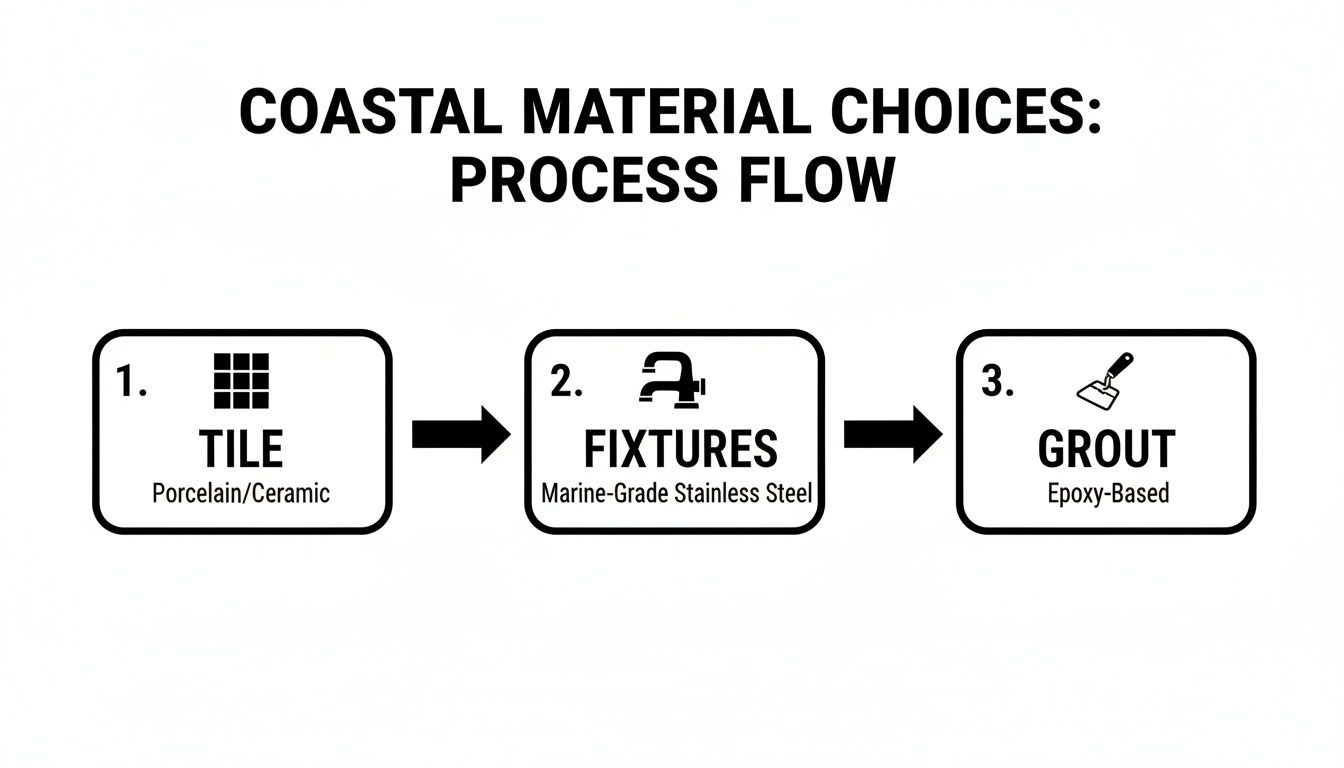
Foundational choices like the right tile and grout are what protect your investment and ensure longevity, especially in our salt-air climate.
A commitment to bathroom remodeling in Monterey County beyond the spa aesthetic is a commitment to a process that puts technical quality first. This plan-first approach eliminates surprises and delivers a bathroom you can depend on for decades.
You can learn more about our structured approach by exploring our proven construction process.
Frequently Asked Questions about Bathroom Remodeling
Here are answers to some of the most common questions we hear from homeowners in Monterey County.
How long does a proper bathroom remodel take?
A full remodel involving plumbing, electrical, and structural changes is a multi-week project. The timeline depends on permit approvals, inspection schedules, and material lead times. A detailed schedule is created to manage this sequence efficiently.
Is a permit always necessary for a bathroom remodel in Monterey County?
Yes, if the project involves altering any plumbing, electrical wiring, or structural walls, a permit is required. This process ensures all work meets current safety codes and is verified by a third-party inspector. A professional contractor handles this entire process for you.
What is the biggest mistake to avoid in a bathroom remodel?
The single biggest mistake is prioritizing finishes over the foundational work. Choosing materials before ensuring proper waterproofing, ventilation, and structural support is a recipe for future problems like leaks and mold. A well-planned project always puts technical execution first.
Why is an allowance-based budget better than a simple quote?
An allowance-based budget provides total transparency and control over the final cost. It clearly separates fixed construction costs from the variable costs of your finish selections. This lets you decide where to spend and where to save without worrying about hidden markups or surprise bills.
Can my bathroom be both luxurious and durable?
Absolutely. True luxury is found in quality craftsmanship and smart material choices, not just fleeting trends. For example, high-quality porcelain tile can provide the stunning look of natural marble with far greater durability and less maintenance—a significant advantage on the Monterey Peninsula. A beautiful bathroom you never have to worry about is the ultimate luxury.
Ready to plan a bathroom remodel that prioritizes quality and durability? For professional home remodeling and construction in Monterey County, contact Palacios Construction to discuss your project. https://palaciosconstructionca.com