
The most effective way to avoid surprise costs in a bathroom remodel is to establish a highly detailed scope of work upfront and maintain a dedicated contingency fund of 10-20% of the project's total cost. These two elements transform a project from a hopeful guess into a predictable, well-managed plan. They are the foundation for preventing vague assumptions from derailing your budget.
Why Bathroom Remodel Budgets Unravel
A bathroom remodel often starts with one number and ends with another, leaving homeowners unsure what caused the increase. The reality is that surprise costs rarely appear out of nowhere. They are typically born from predictable issues that a thorough plan can account for ahead of time.
Many homeowners choose the lowest bid without realizing it may exclude critical items like electrical upgrades, plumbing changes, or permit-related costs. This guide focuses on achieving budget clarity from the start, not just finding the cheapest quote.
Common Causes of Budget Overruns
National survey data shows that unclear scope, missing line items, and poor cost tracking are the most common reasons bathroom projects exceed budgets. A low bid often becomes the most expensive one when the initial estimate lacks crucial details.
Common reasons a budget gets blown apart include:
- Vague Scope of Work: An estimate that only says "remodel bathroom" is a recipe for disaster. It leaves too much room for interpretation over what is included.
- Hidden Problems: Older homes, especially in coastal areas like Monterey County, often have issues hiding behind the walls. This includes outdated plumbing, hidden water damage, or electrical systems not up to current code.
- Incomplete Bids: Some bids may look attractively low because they intentionally leave out necessary work. Items like waterproofing, proper ventilation, or permit fees can reappear later as "extra" charges.
A well-managed project is built on clarity, not assumptions. The goal is to identify as many potential costs as possible before work begins, turning "surprises" into planned expenses.
For homeowners in Monterey County planning a bathroom remodel, working with a contractor who understands older homes, local permitting, and realistic costs is essential. Palacios Construction emphasizes upfront scope clarity and ongoing cost communication, helping homeowners understand where their money is going as the project progresses.
Your Blueprint for Budget Control: The Scope of Work
The single most powerful tool for preventing surprise costs is a detailed Scope of Work (SOW). A vague, one-line estimate leaves too much open to interpretation, which is where budgets get blown apart.
A professional SOW serves as the project’s blueprint. It defines every task, material, and method before work begins, turning a vague idea into a predictable plan.
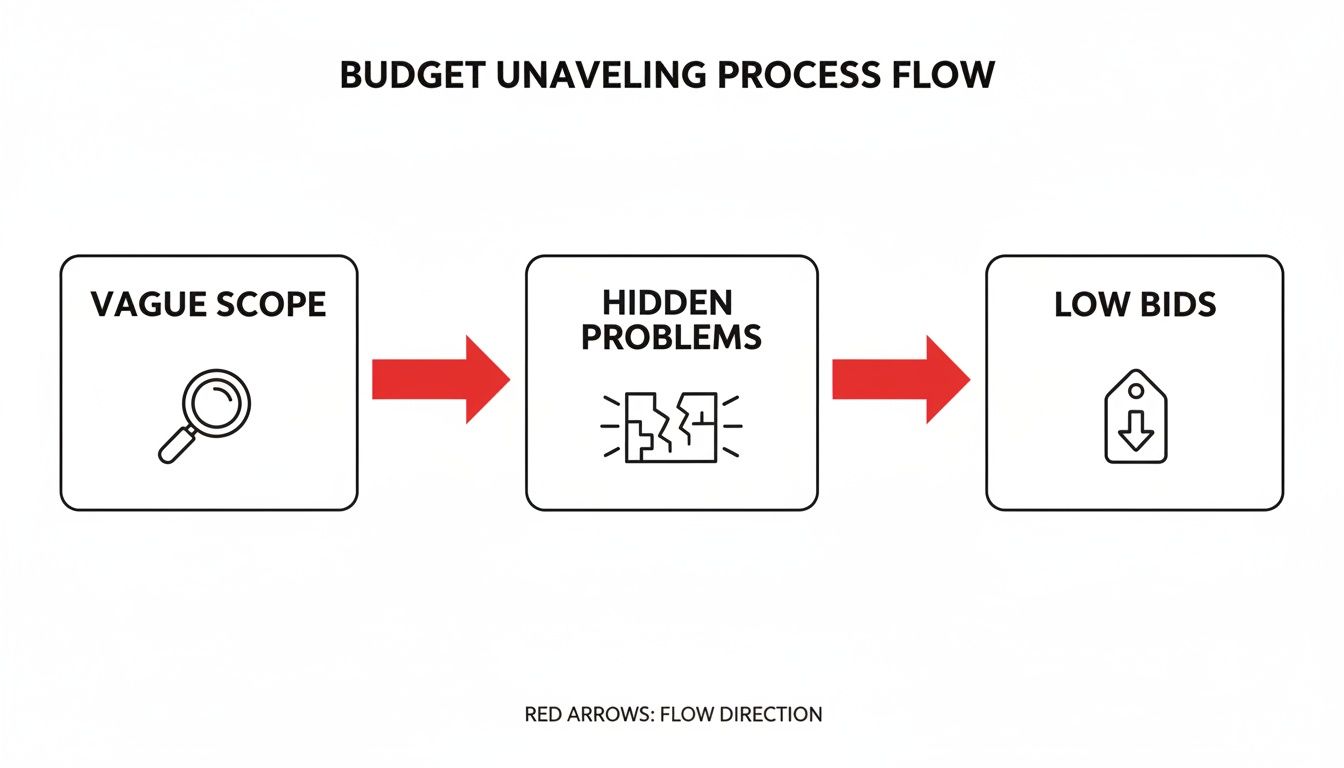
As this flowchart shows, a fuzzy plan is the starting point for most budget problems. It leads directly to discovering hidden issues and makes suspiciously low, incomplete bids seem tempting.
What a Detailed Scope of Work Includes
A proper SOW is an itemized breakdown of every component, specific enough that another contractor could understand exactly what needs to be done.
At a minimum, it should cover:
- Demolition: Specifies exactly what will be removed, such as the vanity, toilet, tub, tile, drywall, and subfloor.
- Framing and Structural: Details any new walls, window reframing, or changes to the floor structure.
- Plumbing Modifications: Lists concrete actions, like relocating a shower drain, moving a toilet flange, or replacing old supply lines.
- Electrical Work: Outlines all new outlets (including GFCI), switches, ventilation fans, and any dedicated circuits.
- Waterproofing: Describes the exact system being used in the shower, such as a liquid membrane or a sheet system.
- Material Specifications: Lists the exact tile, grout, paint finish, vanity model, and fixtures you have agreed upon.
A detailed scope protects both the homeowner and the contractor. It creates a shared, written understanding that minimizes miscommunication and unexpected charges.
The Role of Allowances in Your Budget
Even with a great plan, some finish selections may not be finalized before the project starts. This is where allowances are used. An allowance is a placeholder budget for a specific item, like tile, faucets, or lighting.
For instance, your SOW might include a $1,000 allowance for the vanity and $500 for lighting fixtures. This allows your contractor to build a realistic total budget while giving you flexibility.
It is crucial to ensure allowances are realistic. An unrealistically low allowance is a common way to make an initial bid appear lower. Always ask how the numbers were determined. This transparency is a core part of our approach to professional home remodeling and construction in Monterey County.
Why This Matters for Monterey County Homes
In Monterey County, where many homes have unique character, age, and coastal exposure, a detailed SOW is non-negotiable. A vague plan for a 1950s Carmel home won't account for the real possibility of finding old galvanized plumbing or unlevel floors.
A specific SOW forces these conversations to happen upfront. For example, a good scope might include a line item to "Investigate subfloor condition upon vanity removal and budget for potential leveling." That simple sentence turns a potential surprise into a planned contingency, keeping you in control.
Finding Problems Before They Find Your Wallet
The biggest budget-breakers in a bathroom remodel are almost always the ones you cannot see. Behind the drywall and under old flooring, especially in older Monterey County homes, "unforeseen conditions" often await demolition day. A professional contractor investigates first.
This is especially true for homes in communities like Pacific Grove or Carmel-by-the-Sea, where charming exteriors can hide decades-old plumbing and wiring. Identifying these risks upfront means they go into the main budget, not as a mid-project emergency.
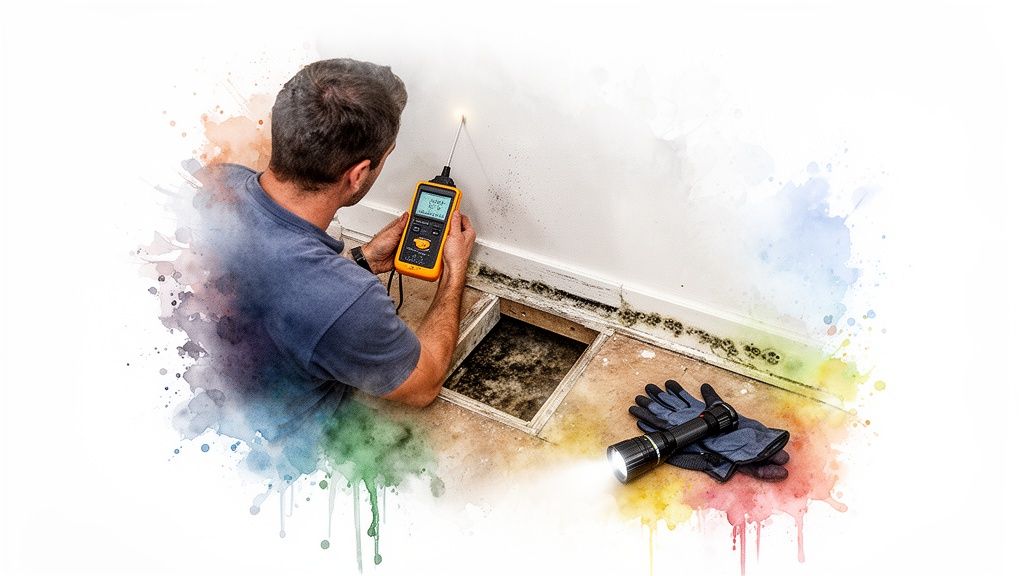
Proactive Investigation Over Hopeful Assumptions
An experienced contractor knows what to look for before a single tile is removed. This is a methodical process of risk assessment based on a home's age, location, and visible signs of wear.
This initial investigation may include:
- Using a Moisture Meter: This tool can detect high moisture levels behind drywall, often the first sign of a slow, hidden leak.
- Inspecting the Electrical Panel: We check if the current panel can handle the load of modern upgrades like heated floors or GFCI outlets required by code.
- Opening a Small Inspection Hole: Where damage is suspected, a small, easily patched hole provides a direct view of plumbing lines, insulation, and framing.
- Checking for Level Floors and Plumb Walls: Older homes settle. We confirm the existing structure is straight and level, which is critical for a professional tile installation.
Unforeseen conditions are only "unforeseen" to those who don't look for them. A professional’s job is to anticipate problems based on experience and conduct targeted checks.
By addressing the most common culprits, you can build a more resilient and realistic budget from day one.
Common Issues Lurking Behind the Walls
In our years of professional home remodeling and construction in Monterey County, we see the same issues repeatedly, especially in coastal homes.
Common hidden problems include:
- Corroded Galvanized Pipes: Homes built before the 1970s often have these pipes, which are notorious for rusting from the inside out and requiring replacement.
- Hidden Water Damage and Mold: A slow leak from an old toilet seal can rot the subfloor and create a mold problem.
- Outdated Knob-and-Tube Wiring: This early electrical wiring is ungrounded and considered a fire hazard by modern standards. It must be replaced to meet safety codes.
- Lack of Proper Ventilation: Many older bathrooms lack an effective exhaust fan, leading to chronic moisture issues that degrade drywall and encourage mold.
Permit planning is also a crucial part of this discovery phase. If inspections reveal that we need to move plumbing or electrical, a permit will almost certainly be required. This is a non-negotiable step that ensures work is done safely and to code. You can learn more in our guide on when and why you might need permits for your Monterey County remodel.
Building a Smart Financial Safety Net
Even the best-planned remodel can hide secrets. That’s where a contingency fund comes in. This is not a slush fund for upgrades; it is a dedicated financial safety net for genuine, undiscoverable issues that arise during construction.
We advise clients to set aside 10-20% of the total estimated project cost. For a newer home, 10% may be sufficient. For an older home in Monterey or Pacific Grove, 20% is smarter planning.
What a Contingency Fund Is For
This fund is strictly for true surprises—problems nobody could have reasonably identified before demolition.
Real-world examples include:
- Discovering dry rot in wall studs or the subfloor after removing an old tub.
- Finding active mold growth behind shower tile that requires professional remediation.
- Uncovering outdated wiring that must be replaced to meet current California building codes.
- Realizing the subfloor is badly damaged and needs major repair before new flooring can be laid.
A contingency fund turns a potential crisis into a manageable, pre-planned expense. It allows you to handle the unexpected correctly without cutting corners.
Contingency Use vs. Change Orders: Know the Difference
It is critical to understand that using your contingency fund is not the same as a change order.
A contingency cost is reactive—it's for fixing a hidden, pre-existing problem. A change order is proactive. It’s a formal record of a new decision you make to alter the original plan.
For instance, deciding to add heated floors after the project has started is a change order. The cost for that upgrade should come from your personal funds, not the contingency budget. Keeping these two separate is key to good project management. You can learn more about our approach to transparent remodeling pricing.
Understanding Labor Costs and the Flow of Work
Labor is almost always the largest single line item in a bathroom remodel budget. It represents a carefully sequenced process involving demolition crews, framers, plumbers, electricians, tile setters, and painters. This project flow is where a budget either stays on track or goes off the rails.
Poorly managed workflow leads to cost increases. If drywallers arrive before the electrician has finished, it results in wasted time and rework. A general contractor’s primary role is to manage this sequence, ensuring each specialist is on-site exactly when needed.
The Real Cost of Skilled Hands
Skilled trade work is a craft that directly determines the quality and durability of your new bathroom. A perfectly tiled shower or a plumbing fixture that never leaks is the result of years of experience.
Labor costs can account for 40-65% of a total project budget. According to data from NerdWallet, for a mid-range primary bathroom remodel, this can average around $15,586. This figure can be higher in Monterey County, where older homes may require significant electrical upgrades to meet modern codes. You can see more remodeling cost data from NerdWallet's home improvement guides.
How Your Design Choices Drive Labor Hours
Your design decisions have a direct impact on labor costs. A simple, straightforward layout requires far fewer skilled hours than an intricate, custom one.
Consider these common examples:
- Tile Patterns: Laying large tiles in a basic grid is efficient. A complex herringbone or mosaic pattern adds significant time for measuring, cutting, and placement.
- Custom Vanities and Niches: Installing a standard vanity is a quick job. A custom-built floating vanity or a fully recessed shower niche requires a skilled carpenter for precise framing and installation.
- Moving Fixtures: Keeping your toilet, sink, and shower in their current locations is the most budget-friendly option. Moving them involves cutting into walls or floors and rerouting pipes.
A professional contractor translates your design ideas into a realistic labor estimate. They should explain why a certain design costs more by breaking down the specific steps and hours required.
Effective project management keeps labor costs in check by minimizing downtime and avoiding rework. This coordination is one of the most valuable services a licensed general contractor provides. To learn more, see our article on why hiring a licensed general contractor matters.
How to Handle Mid-Project Changes
Even with a detailed plan, changes can happen. If you decide you want a heated floor or a recessed shower niche halfway through the project, the process must be managed correctly to avoid derailing your budget and timeline. The solution is a formal, written Change Order.
This document is the best tool for maintaining control when the project scope shifts. A casual verbal agreement is a recipe for misunderstandings and a surprise bill at the end.
What a Real Change Order Looks Like
A Change Order is a formal amendment to your main contract. It must be clear and specific.
Every Change Order must include three critical pieces of information:
- A Clear Description of the New Work: It must be specific, such as "Install a 12-inch by 24-inch recessed shower niche, including all necessary framing, waterproofing, and tile work."
- The Exact Cost: This section breaks down the precise cost for the additional materials and labor.
- The Impact on the Schedule: It must state exactly how the change will affect the project timeline, whether by days or weeks.
A Change Order is not official until signed by both you and your contractor—and this must happen before the new work begins. This simple step turns a potential argument into a mutual agreement.
Communication Is Your Best Defense
A formal Change Order process, combined with regular budget updates from your contractor, ensures you are never in the dark about where your money is going. Regular budget check-ins prevent surprises.
This transparent communication builds a partnership and removes the risk of a massive, unexpected invoice at the end of the job. For homeowners remodeling in Monterey County, this disciplined approach makes the difference between a stressful experience and a predictable, well-managed project.
FAQs: Avoiding Surprise Costs in a Bathroom Remodel
Is a 10% contingency fund enough for an older home in Monterey County?
For most homes built before 1970, we recommend a contingency fund of 15-20%. Older properties in areas like Monterey or Pacific Grove have a higher chance of hiding outdated plumbing, non-compliant electrical systems, or water damage. A larger contingency ensures these discoveries do not derail your project.
Why do bids for the same bathroom remodel vary so much?
A suspiciously low bid often omits critical scope items like proper waterproofing, code-required ventilation, or permit fees. A professional bid accounts for every step, material, and labor hour needed to do the job correctly. Always compare bids based on the detail in the scope of work, not just the final price.
Can I save money by buying my own materials?
While it may seem like a way to save, supplying your own materials makes you responsible for logistics and correctness. If a faucet you order arrives damaged or does not fit, you are responsible for the project delays and any associated rework costs. Contractors have established supplier relationships that ensure correct, quality materials arrive on time.
How does a change order differ from using the contingency fund?
A contingency fund is a financial safety net for fixing unforeseen problems discovered during demolition, like rotted wood or hidden leaks. A change order is a formal, written agreement for a change you request after the project has started, such as upgrading tile or adding a light fixture. One addresses problems; the other reflects new decisions.
What is the biggest hidden cost you see in Monterey County bathrooms?
Besides water damage, the most common surprise in older coastal homes is the need for significant electrical upgrades. Many older bathrooms lack the GFCI protection and dedicated circuits required by modern building codes. Inadequate ventilation is another frequent issue that must be corrected to meet safety standards.
For more answers to common questions, explore our page on home remodeling in Monterey County.