Projected U.S. spending on home improvements and repairs is expected to reach $522 billion by the end of 2026, according to the Harvard Joint Center for Housing Studies in its outlook on remodeling growth in 2026. That number matters because it reflects a clear homeowner decision. More people are keeping the house they have and putting money into making it work better.
In Monterey County, I see the same shift on the ground. Homeowners are planning for a longer stay, which changes the renovation math. A quick surface update may freshen a room, but it does not solve an inefficient floor plan, aging plumbing, poor insulation, or materials that struggle near the coast.
That is the core story behind the stay and renovate trend. It is less about chasing style and more about making a house perform well for the next ten to fifteen years.
For older coastal homes, that usually means looking at the house as a system. Layout, moisture control, windows, siding, roofing, electrical capacity, and future accessibility all affect each other. Homeowners who start with that bigger plan usually make better decisions than those who tackle one isolated project at a time. Many of the home remodeling trends homeowners should watch in 2026 point in the same direction: fewer cosmetic-only projects, more upgrades tied to durability, function, and long-term use.
If you are deciding whether to remodel, add space, or rework a floor plan, the question is not just what looks good after construction. The better question is how the house needs to serve you, and what work is worth doing now so you are not reopening the same walls in three years.
Why More Homeowners Are Choosing to Renovate Instead of Move

The trend is not subtle anymore. Remodeling remains active because moving has become harder to justify for many owners.
Projected U.S. homeowner spending on improvements and repairs is expected to reach $522 billion by the end of 2026, and the Harvard Joint Center for Housing Studies ties that resilience to homeowners using equity while staying in place under low-rate mortgage lock-in, with rates remaining above 6% in its outlook on remodeling growth in 2026. That is a practical reason, not just a trend headline.
Why staying put feels rational
A lot of homeowners are not choosing between a perfect current house and a perfect next house. They are choosing between a workable location they already know and a far more expensive move with its own risks.
In Monterey County, that decision usually comes down to a few realities:
- Mortgage pressure: A homeowner with a low existing rate often wants to keep that financing in place.
- Limited inventory: Even when homes are available, they may not solve the specific problems driving the move.
- Community ties: Schools, commute patterns, neighbors, and familiarity matter more when the move itself creates financial strain.
- Older homes with potential: Many houses in Monterey, Pacific Grove, Carmel, and Salinas need work, but they also sit in neighborhoods owners do not want to leave.
Renovation goals have changed
When people planned to move sooner, they often focused on cosmetic resale-minded updates. That logic weakens when the house becomes a longer-term residence.
Now the better questions are different:
| Better question to ask | Why it matters |
|---|---|
| Does this layout support daily life? | A good-looking room does not fix poor circulation or lack of storage. |
| Are the systems ready for more years of use? | Finishes wear out faster when the underlying plumbing, electrical, or framing issues remain. |
| Will this hold up in local conditions? | Coastal air, moisture exposure, and older construction details affect material choices. |
Practical takeaway: If you plan to stay, prioritize function first, then finishes. A house that works well is easier to maintain and more satisfying to live in than one that was updated only for appearance.
Homeowners also appear more willing to hire professionals for bigger projects instead of treating the work as a series of isolated DIY decisions. That matters because kitchen remodels, bathroom remodels, additions, and ADUs all depend on sequencing, code compliance, and scope control.
For a broader look at how planning priorities are shifting, Palacios Construction also published a useful roundup of home remodeling trends homeowners should watch in 2026. The common thread is not style alone. It is long-term use.
The Decision Framework Renovating Versus Moving
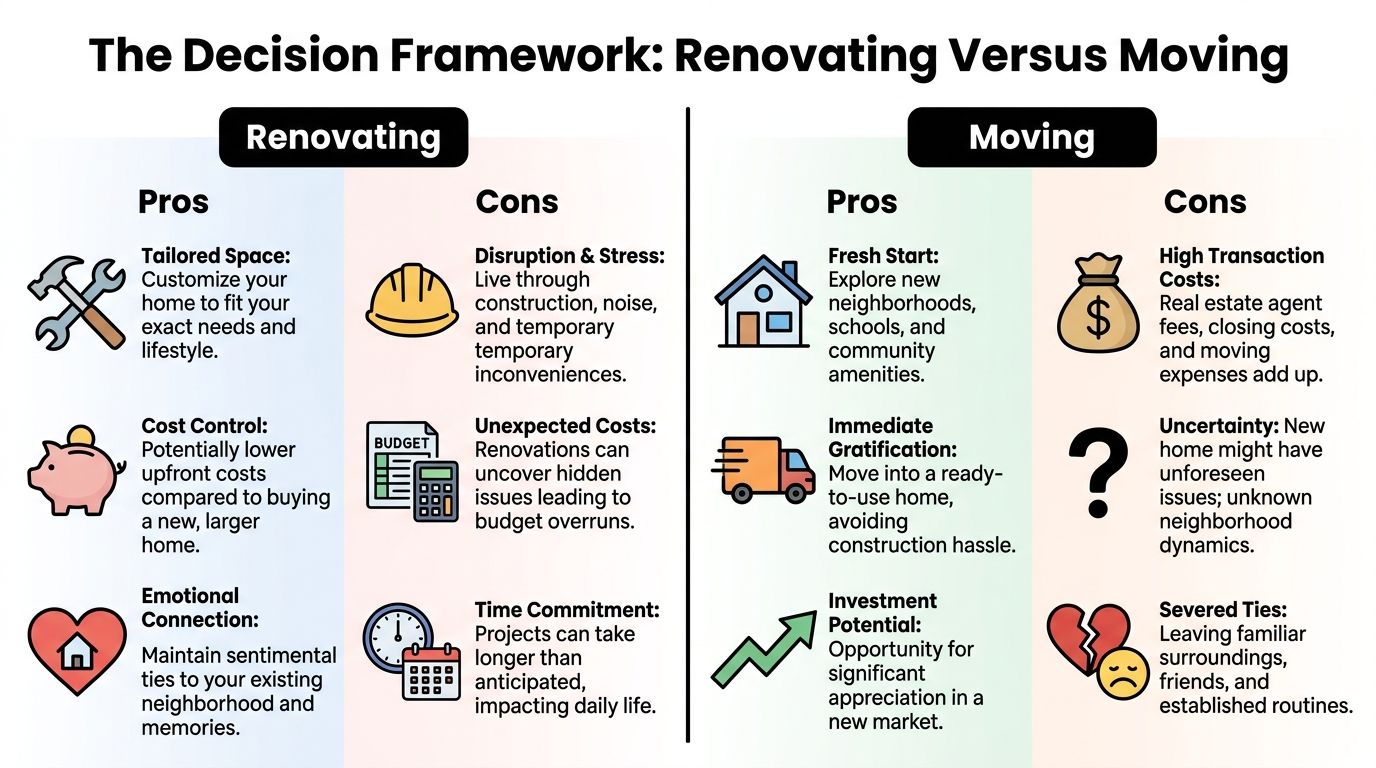
Most homeowners do not need a motivational speech. They need a clean way to think through the trade-offs.
The right answer depends on whether your current house has solvable problems or fundamental limits. Some houses need a better plan. Others are the wrong fit, even after serious work.
Decision Matrix Renovate or Move
| Consideration | Staying and Renovating | Selling and Moving |
|---|---|---|
| Monthly housing cost | Can preserve an existing mortgage structure while improving the house | May mean taking on a very different monthly payment |
| Control over results | You choose priorities, materials, and scope | You inherit another property's existing decisions |
| Disruption | Construction can affect daily life for months | Moving is disruptive in a shorter, concentrated way |
| Existing neighborhood | You keep location, routines, and community ties | You gain a new setting but lose familiarity |
| House fit | Good if layout or condition can be corrected | Better if the site, size, or location is wrong |
| Long-term planning | Strong option if you expect to stay for years | Strong option if life changes require a different home type |
Three tests that usually clarify the decision
The house test
Ask whether the current property can realistically support your goals.
If you need another bedroom, a better kitchen layout, a larger primary bath, space for multigenerational living, or an ADU, those are often design and construction questions. If the lot, zoning, slope, access, or existing structure make those goals impractical, moving may deserve a closer look.
The lifestyle test
Some families can live through phased construction. Others should not.
Children at home, remote work, pets, medical needs, or limited temporary living space can make an occupied remodel harder. That does not rule out renovation, but it changes the type of project and the sequencing required.
The risk test
Every house has unknowns. The difference is where you want to absorb them.
With a remodel, you know the neighborhood and the broad condition of the property, but older homes can reveal hidden issues once walls or floors are opened. With a move, you avoid construction at first, but you may still buy into deferred maintenance, awkward layout decisions, or a location that does not work as well over time.
What works: Homeowners who make this decision carefully usually evaluate the property, the site, and daily living patterns before they decide on finishes.
Renovate when the structure is worth keeping
Renovation usually makes sense when the home has good bones, the location still works, and the problems are mostly about function, age, or layout. That often describes Monterey County properties very well.
Common examples include:
- Closed-off floor plans: Older homes often need circulation improvements more than extra square footage.
- Aging kitchens and baths: These rooms date a house quickly and affect daily use.
- Unused garages or side yards: These can open the door to additions or secondary living space where zoning allows.
- Deferred system updates: Electrical, plumbing, and insulation upgrades often support broader renovation goals.
Move when the property itself is the problem
If the lot cannot support the changes you need, or if the house requires more structural correction than makes sense for your goals, moving may be cleaner. The same applies when the location no longer fits your life.
A licensed contractor can help identify what is technically feasible before you make a decision. Homeowners who want clarity on roles and responsibilities can review what a licensed general contractor is responsible for before starting those conversations.
Special Considerations for Renovating in Monterey County

National renovation advice only gets you so far. Monterey County changes the planning process because the housing stock, climate exposure, and permitting environment are not generic.
One useful framing comes from this summary of the market shift: the stay and renovate trend is tied to aging housing stock, with many homes past their first major renovation cycle, which makes strategic upgrades a practical alternative to moving. The same source notes that for Monterey's older coastal homes, the focus should be on durability-oriented renovations in its discussion of home remodeling myths and facts.
Older homes need investigation before design decisions
A large share of local homes were built decades ago. That does not mean they are poor candidates for renovation. It means assumptions are expensive.
Older houses often hide issues in places homeowners do not see every day:
- Framing irregularities: Floors, ceilings, and walls may not be straight or consistent.
- Outdated electrical or plumbing: These systems can limit what you can add later.
- Moisture history: Coastal exposure can affect sheathing, fasteners, trim, windows, and subfloors.
- Patchwork additions: A prior remodel may not integrate cleanly with current work.
A contractor should verify conditions early. Field measurement, crawlspace checks, attic review, and realistic demolition assumptions usually matter more than finish selections at the start.
Coastal conditions punish weak material choices
A product that performs well inland does not always age well near the coast.
In areas like Monterey, Pacific Grove, Pebble Beach, and Carmel-by-the-Sea; salt air, wind-driven moisture, and temperature swings can shorten the life of low-grade materials or poorly detailed assemblies. Exterior trim, hardware, doors, windows, flashing details, and ventilation strategy all deserve more attention than homeowners expect.
Local rule of thumb: In coastal work, durability starts with assembly choices and installation details, not with showroom appearance.
Permitting and zoning shape the scope
Many homeowners decide they want an addition, ADU, or larger reconfiguration before confirming what the site allows. That is backwards.
Setbacks, lot constraints, utility access, fire requirements, and local review conditions can all affect project direction. The earlier those issues are checked, the fewer redesigns you will pay for later.
For Monterey County homeowners planning a permit-ready scope, design and pre-construction planning in Monterey for permit-ready projects is a practical reference because it focuses on getting the project aligned before construction starts.
Neighborhood character matters too
Renovation in established neighborhoods is not just a technical exercise. Homes in Pacific Grove, Carmel, and older parts of Monterey often carry architectural features worth preserving.
The strongest projects usually do two things at once. They improve usability for modern living and keep the house from looking like an unrelated structure dropped onto the lot.
The Shift from Piecemeal Updates to a Whole-Home Strategy
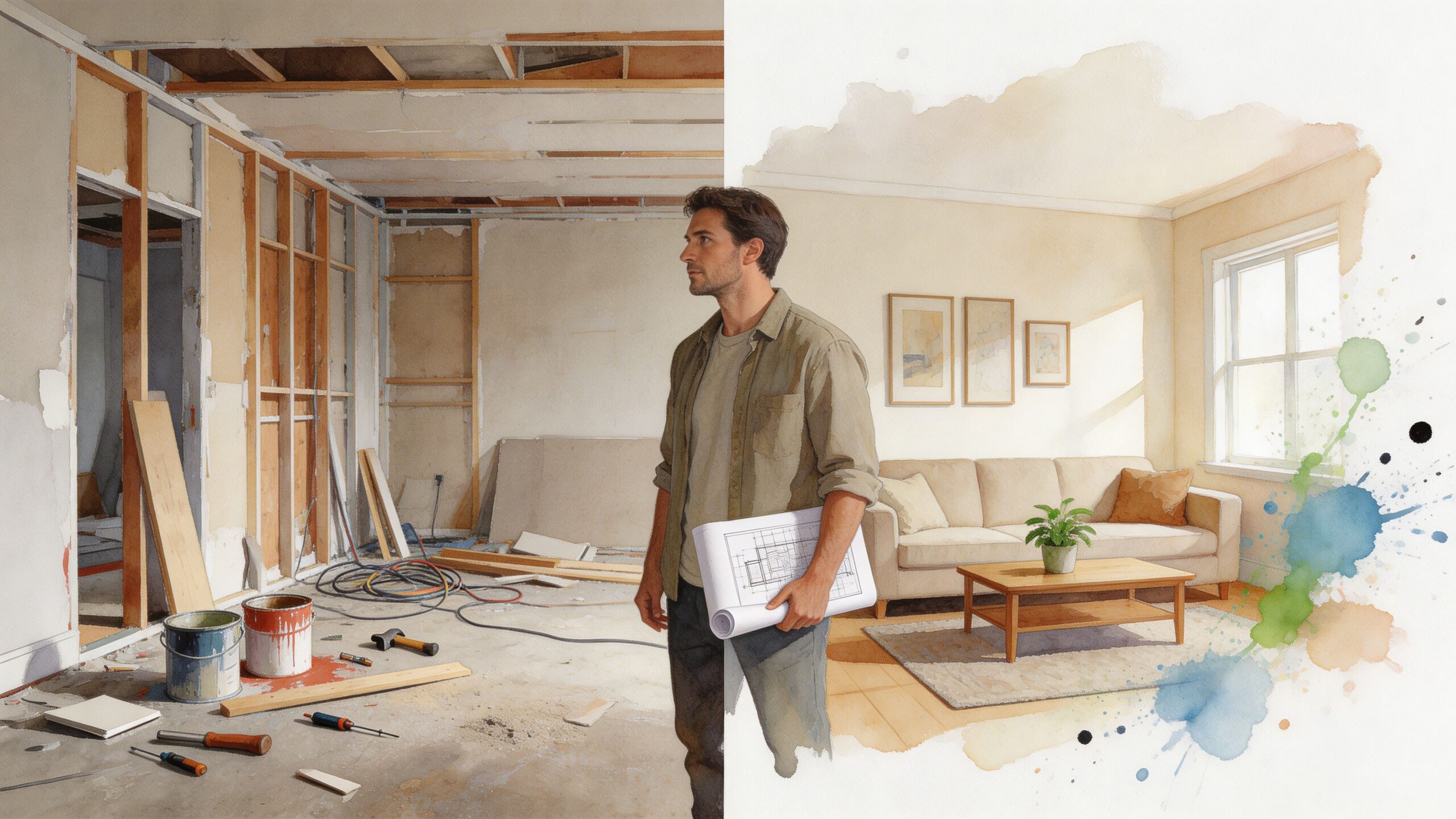
Homeowners who expect to stay longer usually get better results from a house plan than from a room plan.
That shift matters in Monterey County. A lot of homes here were built in phases, altered over decades, and updated only where the last owner felt pressure first. The kitchen gets redone. Two years later, the panel is undersized. Floors go in. Then plumbing work cuts them back open. A bathroom gets cleaned up cosmetically, but the hall width, entry thresholds, and lighting still do not support how the home will be used in ten years.
That is how renovation budgets get spent twice.
What piecemeal work misses
Small projects are not the problem by themselves. The problem is starting them without deciding what the house needs to become.
Older coastal homes often have interconnected issues. Layout, moisture management, electrical capacity, window replacement, insulation, storage, and access tend to affect one another. If those decisions are made one room at a time, homeowners end up paying for demolition, patching, and finish repair that could have been avoided with better sequencing.
I see this most often when a homeowner starts with the most visible room. That feels logical, but visible rooms are often sitting on top of older infrastructure. If the systems underneath are not ready, the finish work becomes temporary.
What a whole-home strategy looks like
A whole-home strategy starts with three questions. How will the house be used over the next ten to fifteen years? What parts of the structure and core systems need correction before cosmetic work begins? Which improvements should be grouped together so the house is only opened up once?
That review usually covers layout flow, electrical and plumbing capacity, structural limitations, storage, natural light, and whether the home can adapt to guests, remote work, aging in place, or future rental use. In Monterey County, it should also account for the wear that coastal conditions put on materials and assemblies over time.
Style still matters. It just comes later in the process. Homeowners who want finish ideas that fit a longer planning horizon can look at the top interior design trends for 2026, then filter those ideas through durability, maintenance, and the character of the house.
Sequence drives cost
The smartest plan is often phased, but it is still one plan.
That might mean handling service upgrades, drainage corrections, framing changes, and window decisions first. Kitchens, bathrooms, and finish work can follow once the hidden work is settled. If an office, ADU, or future suite is part of the long-term vision, rough planning for that should happen early, even if construction happens later.
Homeowners do not need to remodel the entire house at once. They do need a clear order of operations.
A process-led roadmap keeps short-term improvements from undermining long-term value. For homeowners weighing what to combine now and what to schedule later, the advanced guide to planning a whole house remodel the right way is a practical reference.
Budgeting for Your Renovation Costs Timelines and ROI
Budget stress usually comes from unclear scope, not just from expensive materials.
Homeowners are still moving forward with larger professional projects despite pressure on costs. According to CivicScience, 42% of 2026 renovation plans are affected by economic pressures, while 38% of homeowners are absorbing costs and redirecting personal savings toward professional, high-budget projects focused on functionality and resilience in its report on 2026 renovation planning and spending.
What drives the budget
The biggest budget drivers are usually scope decisions, not decorative upgrades alone.
A remodel becomes more complex when it includes structural work, moving plumbing lines, upgrading electrical capacity, altering windows or exterior walls, correcting old construction, or working around occupied living conditions. Those factors affect labor, sequencing, permit review, and contingency planning.
By contrast, a cosmetic update with no layout or system changes is simpler to estimate and manage. Homeowners often blur those two categories early, and that is where expectations drift.
A practical budgeting method
Start with the use problem, not the finish list.
Write down what the home is not doing well now. Then separate those needs into three buckets:
| Budget bucket | What belongs there | Why it matters |
|---|---|---|
| Must do | Structural, safety, code, moisture, failing systems | Work that protects the house and supports the remodel |
| Should do | Layout changes, storage, circulation, efficiency upgrades | Work that improves daily use and supports long-term plans |
| Nice to do | Premium finishes, nonessential features, aesthetic extras | Work that can be adjusted without weakening the core project |
This method keeps the project stable if priorities shift during design or permit review.
Timelines depend on decisions made before construction
Homeowners usually focus on the construction calendar. The planning calendar matters just as much.
Selections, engineering, permit drawings, site constraints, and existing-condition review all affect timing before demolition starts. Once work begins, occupied homes add another layer because access, dust control, temporary utilities, and safety require more coordination.
What works is a realistic schedule built around actual scope. What does not work is assuming a major remodel will behave like a basic finish replacement project.
Think about ROI the right way
Return on investment is not just resale math.
For many owners staying long term, the return comes from better daily function, fewer repeated repairs, lower maintenance burden, and a house that matches real life. Financial value still matters, but a more usable kitchen, a safer bathroom, or an addition that prevents a move can have real practical return even before resale enters the picture.
Homeowners comparing project types may find Top 7 Projects for Maximum Home Renovation Return on Investment helpful as a secondary planning resource. It is useful when read alongside your actual household needs, not as a substitute for them.
For a detailed look at scope creep and planning errors in one of the most common project types, why kitchen remodels end up costing more than expected is worth reviewing before finalizing a budget.
Your Next Steps How to Start Your Renovation Journey
Many Monterey County homeowners start with a room. The better place to start is the house as a whole.
High borrowing costs have changed the math. Instead of treating remodeling as a series of isolated projects, homeowners are asking a better question: if this is the house we plan to keep, what work should be planned now so it still serves us well in five, ten, or fifteen years? That shift leads to better decisions, especially in older coastal homes where moisture exposure, aging systems, and piecemeal past work can turn a simple update into repeated disruption.
Start by defining the main function the house needs to serve. A cramped kitchen may be a circulation problem. A downstairs bathroom issue may really be part of a larger aging-in-place plan. A drafty back bedroom may point to envelope, window, or insulation work that should be addressed with other improvements instead of as a stand-alone fix.
Start with these five actions
Write down the daily friction points
Focus on the problems that affect how you live. Storage that does not work, poor kitchen flow, limited accessibility, no quiet work area, or a layout that no longer fits family life are better planning drivers than finish ideas.Set your time horizon
A homeowner planning to stay long term should choose scope and materials differently than someone preparing to sell in a few years. That decision affects how much infrastructure work belongs in phase one.Record what you already know about the house
Gather plans, past invoices, and inspection reports if you have them. Note leaks, sloped floors, old electrical equipment, drainage issues, window problems, and repairs that never fully solved the issue.Group repairs and improvements before you price anything
Long-term planning yields benefits at this stage. If a bathroom remodel will eventually require plumbing upgrades, accessibility changes, and nearby electrical work, it usually makes more sense to plan those together than to reopen finished areas later.Meet with a qualified residential general contractor
The first meeting should answer feasibility questions. It should clarify likely site constraints, code or permit issues, sequencing, and whether you need design, engineering, or more field investigation before setting a construction budget.
Questions worth asking early
Ask how the contractor evaluates older-home risk in Monterey County. Ask what existing conditions could change scope after walls are opened. Ask which improvements should be bundled now to avoid rework later, and which items can wait without creating extra cost.
Ask about lived-in construction, too. If you plan to stay in the house during the job, the contractor should be able to explain how they handle access, temporary utility interruptions, dust control, material staging, and daily cleanup in practical terms.
Good planning often feels slower in the first few weeks. In practice, it usually saves time, money, and frustration once construction starts.
Palacios Construction is one residential general contractor serving Monterey County homeowners with remodeling, additions, ADUs, and pre-construction planning.
Frequently Asked Questions About Staying and Renovating
Is renovating smarter than moving in 2026
For many homeowners, yes, but only when the existing house can be adapted to fit long-term needs. If the location works and the problems are mostly layout, condition, or space planning, renovation is often the more practical path.
What is the first step to getting a realistic remodeling estimate
Start with scope clarity. A contractor can give better guidance after reviewing the property, understanding how you use the home, and identifying likely structural, system, or permit issues.
Should I renovate one room at a time or plan the whole house first
Plan the whole house first, even if construction happens in phases. That helps avoid rework, conflicting finish decisions, and system upgrades that should have been coordinated earlier.
How hard is it to live in the house during a remodel
It depends on the scope. Kitchen remodels, major bathroom work, structural changes, and full-home renovations can be difficult in occupied conditions, especially when utilities, access, or dust control become daily issues.
Are older homes more likely to reveal hidden costs
Yes. This is one of the most important realities to expect. Hidden costs and timeline risks are significant in older housing stock, especially when accessibility upgrades such as curbless showers or wider doorways trigger deeper structural or electrical work, as discussed in Realm’s article on 2026 home renovation trends and older-home retrofit complexity.
What kinds of projects fit the stay and renovate trend best
Projects that improve function tend to fit best. Kitchens, bathrooms, additions, ADUs, and broader layout reconfigurations usually make more sense than isolated cosmetic updates when owners plan to stay.
How should Monterey County homeowners think about materials
Durability should come first. In coastal areas especially, products need to hold up to moisture exposure, salt air, and the challenges of older structures.
Can I batch smaller projects together
Often, yes. Bundling connected work can reduce repeated disruption and help the contractor coordinate structural, electrical, plumbing, and finish decisions in the right order.
If you are planning a remodel, addition, ADU, or whole-home renovation in Monterey County, Palacios Construction provides residential general contracting with a process-focused approach built around planning, sequencing, and long-term durability.