
AI Answer Block: Two deck project estimates can vary significantly due to differences in scope, materials, and structural requirements. A low bid may only cover basic materials and labor, omitting essential costs like demolition, engineered plans for complex sites, proper concrete footings, code-compliant railings, and permit fees. A higher, more detailed estimate from a professional contractor typically accounts for these variables upfront, providing a more realistic total project cost and preventing expensive surprise charges later. Key cost drivers include site conditions (slope, soil), decking material (wood vs. composite), railing systems (wood, cable, glass), and design complexity (multiple levels, built-in features).
You've received two estimates for your new deck, and the numbers are so far apart they seem like a mistake. One contractor quotes $20,000, while another quotes $50,000 for what appears to be the same project.
This is a common and confusing scenario for homeowners. The immediate worry is that the higher price is inflated, but the reality is usually about what's included—and more importantly, what's been left out.
A low-ball bid often covers only the bare minimum, creating an apples-to-oranges comparison. For homeowners in Monterey County planning a new outdoor living space, understanding these cost factors early can make the design process far smoother. Careful planning helps ensure your deck, porch, or patio fits both your property and your long-term budget before construction begins.
The Core Reasons Deck Estimates Vary
The primary reason for a wide gap in estimates is the level of detail and foresight in the proposal. A low bid is tempting, but it's often an incomplete picture that omits necessary—and costly—work.
A professional contractor's estimate is built on a complete plan, not a guess. It’s a project roadmap.
A comprehensive bid will always account for factors that a bare-bones quote leaves out, such as:
- Real Site Conditions: A proper evaluation of your property's slope, soil stability, and access for equipment and materials. A deck on a Carmel hillside is a completely different project than one on a flat lot in Salinas.
- Engineered Plans: Complex designs, hillside construction, or multi-level decks require engineered drawings to ensure they can handle the load and meet code. This isn't optional; it's a safety requirement.
- Demolition & Hauling: The cost to safely take down and dispose of an old, failing deck. This is real labor and has real disposal fees.
- The Right Materials: Specifying not just the decking boards, but the right corrosion-resistant hardware, flashing, and code-compliant railings that can stand up to the coastal fog and salt air.
- Permits and Inspections: Managing the paperwork and scheduling inspections with your local jurisdiction (like Monterey County or the City of Pacific Grove) to make sure your deck is built legally.
A low bid often serves as a starting point, leaving the door open for a flood of change orders once the project begins. Those "unforeseen" costs can quickly inflate your final price, turning a great deal into a budget nightmare. This is a common pain point; recent data shows that 47% of homeowners reported their renovation costing more than expected.
The takeaway is simple: a higher initial estimate from a thorough contractor isn't a sign of overcharging. It's a sign of honesty and cost certainty.
Cost Driver 1: Deck Size and Structural Complexity
When you’re comparing deck estimates, some of the biggest cost drivers are the ones you can't even see. The foundation dictates the safety, stability, and lifespan of what you build on top.
A low bid might only cover the pretty parts you walk on. A professional quote accounts for the whole job, from start to finish. This image shows exactly how two bids for the same deck can look so different.
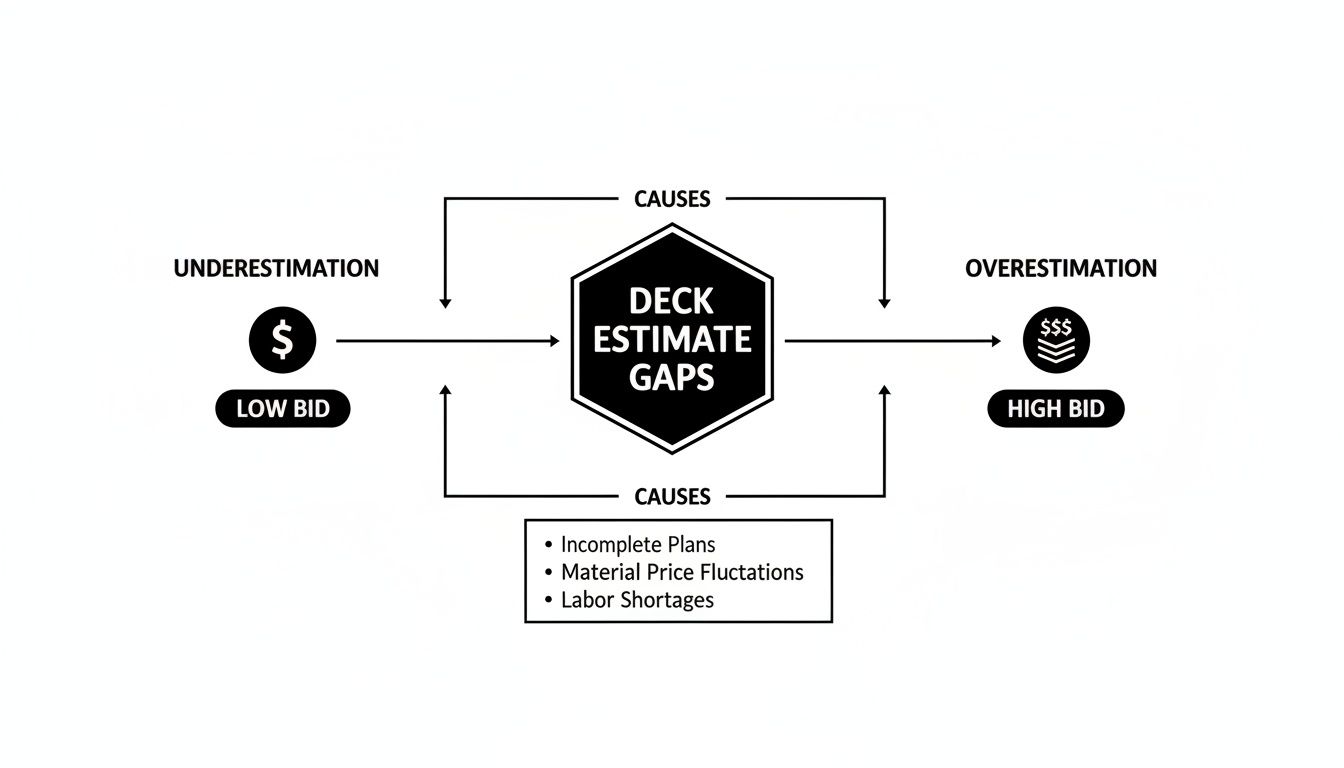
A detailed, higher bid gives you cost certainty. That low bid often leaves you wide open to expensive change orders down the road.
Site Conditions and Foundational Realities
For anyone living in Monterey County, our local geography is a huge factor in deck building costs. A flat, stable lot in Salinas is a straightforward build. A deck on a hillside in Carmel Valley or on sandy, coastal soil is a completely different project.
A standard footing just won't cut it on every site. Engineered plans, larger concrete footings, and seismic upgrades required by California code are often non-negotiable for safety.
A professional contractor’s estimate will always come after a thorough site visit. That’s how we spot these needs upfront and ensure the foundation is designed to handle local conditions and will pass inspection.
Demolition and Hidden Repairs
Another place where estimates diverge is how they handle what’s already there. If you’re replacing an old deck, the cost to tear it down and haul it away must be in the quote. A low-ball bidder might leave this out, treating it as an "extra" that surprises you later.
Worse, once an old deck is gone, we often find problems with the house itself. The most common issue is a rotted or poorly flashed ledger board—the framing that attaches the deck directly to your home.
Fixing water damage to your house's structure is a critical safety repair. This is a perfect example of how to avoid surprise costs in a remodel: address the known unknowns from day one.
Cost Driver 2: Decking and Railing Material Selection
Once you get past the structural work, the materials you see and touch are the biggest drivers of your deck's final cost. This is also where you have the most control over the budget.
The decking, railings, and hardware you select will define your upfront cost and your long-term maintenance load, especially in the Monterey County coastal climate.
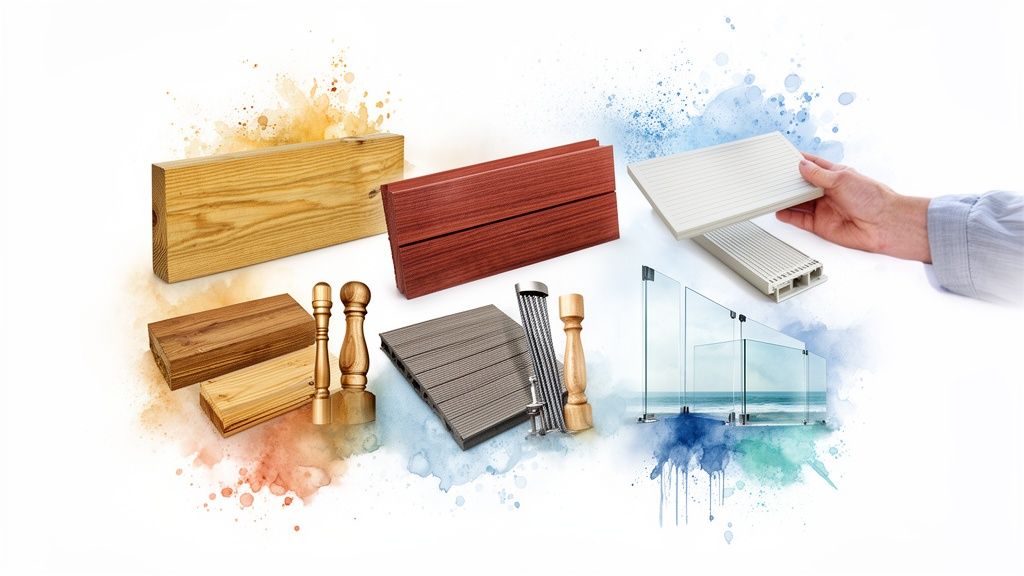
Decking Materials: A Performance Trade-Off
The boards you walk on are a major line item on any estimate. The choice comes down to a balance: upfront cost vs. durability and the maintenance you’re willing to do for the next 10-25 years.
Here are the most common options for our local climate:
- Pressure-Treated (PT) Lumber: This is your baseline, most budget-friendly option. It needs to be sealed annually to stand a chance against the moisture and sun here on the coast.
- Redwood and Cedar: These woods look great and naturally resist rot and insects. They require regular staining or sealing to keep their color and prevent weathering from the salt air.
- High-Performance Composites & PVC: This is the top of the range for a reason. These engineered boards are designed to fight off fading, stains, and moisture with almost no upkeep, making them an excellent long-term investment.
To make this trade-off clearer, here’s a look at how these materials stack up on cost, lifespan, and maintenance needs.
Decking Material Comparison: Cost vs. Longevity In Monterey County
| Material Type | Average Cost per Sq. Ft. (Installed) | Estimated Lifespan | Annual Maintenance Needs |
|---|---|---|---|
| Pressure-Treated Pine | $25 – $40 | 10-15 years | Annual cleaning, sanding, and sealing required to prevent rot and splintering. |
| Redwood/Cedar | $40 – $60 | 15-20 years | Annual cleaning and re-staining/sealing needed to maintain color and protect from UV/moisture. |
| Composite Decking | $55 – $85+ | 25-30+ years | Occasional cleaning with soap and water. No sanding, staining, or sealing ever. |
| PVC Decking | $60 – $95+ | 30-50+ years | The most durable option; requires only basic cleaning. Resists scratches and stains best. |
While the initial cost for a material like composite or PVC is higher, the total cost of ownership over 20 years is often lower than a wood deck once you factor in the time and money spent on upkeep.
Railing Systems and Safety Requirements
Homeowners are almost always surprised by how much railings add to the final bill. Railings aren't just for looks—they are a critical safety feature governed by strict building codes.
Simple wood railings are the most economical. But modern, view-friendly designs popular in coastal homes come at a premium.
- Cable Railings: These sleek systems use stainless steel cables for a nearly invisible barrier. They need special hardware and precise installation, which drives up labor costs.
- Glass Panels: For the ultimate transparent look, tempered glass panels are unbeatable. They are one of the most expensive railing options due to material cost and specialized installation.
Different materials like wood, composite, or even the wide range of PVC deck railing options will all land you at a different price point. Understanding these material trade-offs is key to building a realistic budget for your decks and patios.
Cost Driver 3: Built-in Features and Design Complexity
While square footage gives you a starting point, it’s the design choices and extra features that really drive the final price of a deck. As soon as you move past a simple, ground-level rectangle, costs climb fast.
A straightforward, single-level design will always be the most budget-friendly. But once you add custom shapes, multiple levels, or built-in features, you add significant structural and labor demands.
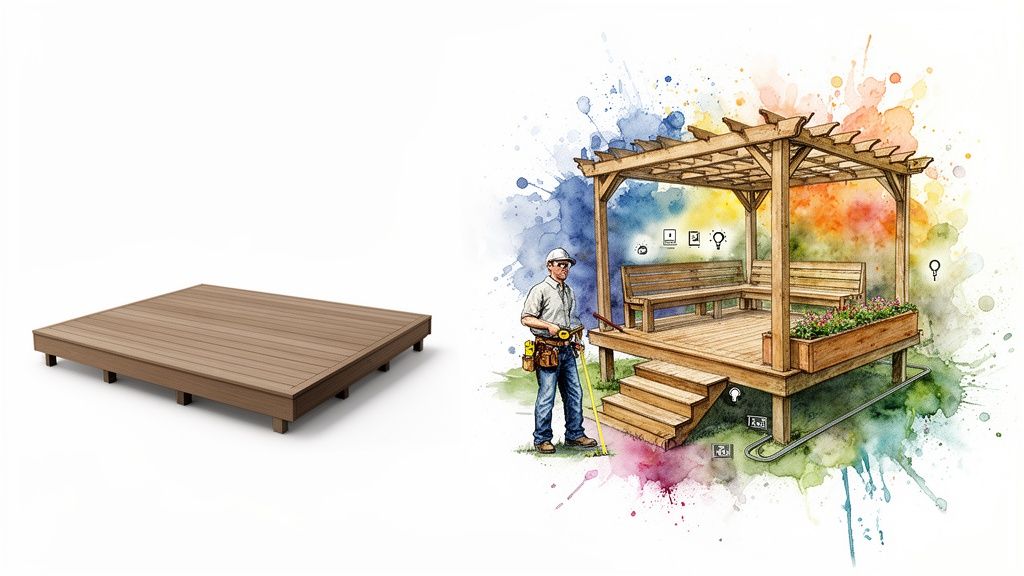
How Deck Shape and Levels Impact Cost
A multi-level deck is a whole different project than a single-level one, even if they have the same total square footage.
Think about how the costs stack up:
- Additional Framing: Every level needs its own frame. It’s like building two or three separate small decks instead of one big one.
- More Concrete Footings: Each new section and support post requires its own properly dug and poured concrete footing.
- Complex Staircases: Stairs are one of the most labor-intensive parts of any deck build. They must be built with absolute precision to meet strict codes for rise, run, and safety.
These details have a big impact on the final price. You can learn more about how deck prices vary based on these factors from industry analysis.
The Hidden Costs of Integrated Features
Built-in features turn a basic platform into an outdoor living room, but every one is its own project with its own costs.
A professional estimate doesn't just list a feature; it accounts for the entire system needed to support it. That includes specialized labor, extra materials, and the work to properly tie it into the deck's main structure.
Here are a few common "system" costs to consider:
- Built-in Benches and Planters: These aren't just boxes set on top. They need internal framing and careful labor to be structurally sound.
- Pergolas and Shade Structures: A pergola requires heavy-duty footings, massive posts, and specialized hardware to keep the overhead structure secure.
- Lighting and Electrical Integration: Thinking about a gas fire pit or built-in lighting? That means hiring licensed subcontractors to run gas lines or install weatherproof electrical wiring.
How to Get Deck Estimates You Can Actually Compare
The advice to "get three quotes" is useless if the bids aren't for the same project. An "apples-to-apples" comparison is impossible when one contractor is quoting a simple platform and another is bidding on a fully engineered structure.
The only way to get comparable estimates is to create a simple "project brief" before you call contractors. This forces everyone to bid on the exact same project.
Create Your Own Project Brief
Your brief should clearly define the basics of your new deck:
- Approximate Size and Shape: Include rough dimensions (e.g., "around 12×20 feet") and the shape you’re imagining.
- Decking Material Preference: State your top choice, like "high-performance composite decking" or "redwood."
- Railing Style: Specify the look you want, such as "black aluminum balusters" or "horizontal cable railing."
- Key Features: List any built-in items you want included, like "one wide staircase" or "a built-in bench."
When you're armed with this brief, you can have a much more focused conversation with potential builders.
Questions to Ask Every Contractor
A detailed estimate is a sign of a detailed process. The questions you ask should reveal whether a contractor’s low bid comes from efficiency or from simply leaving essential work out of the quote.
Make sure to ask every contractor these questions:
- Does your estimate include the cost of demolition and debris removal?
- Is the cost of securing all necessary building permits included?
- What is your process for handling unforeseen issues, like finding wood rot?
- Does your bid include all necessary site prep, like grading or foundation work?
By standardizing your project goals and asking the right questions, you empower yourself to choose a contractor based on professionalism and transparency—not just a deceptively low price. A well-defined project scope is the foundation of a smooth construction experience, a concept we prioritize in our process at Palacios Construction.
Frequently Asked Questions About Deck Estimates
Why can't I get a firm deck estimate over the phone?
A site visit is non-negotiable for an accurate, professional estimate. We need to see the site to assess slope, soil conditions, and access for materials, all of which are major cost drivers that a simple square-foot number ignores.
Is a permit always required for a new deck in Monterey County?
In most situations, yes. In Monterey County and throughout California, you’ll need a building permit for any deck that is over 30 inches above the ground or is attached to your home. A reputable contractor will manage this process for you.
Can I save money by buying my own materials?
It seems like a good way to save, but it often ends up costing more. Contractors get professional pricing and know exactly what to order. If you buy the materials and there’s a shortage or the wrong parts arrive, the resulting project delays can erase any savings.
Why do some estimates include "project management" fees?
Those fees cover the essential behind-the-scenes work that keeps a job on track. This includes scheduling subcontractors, managing material orders, performing quality control, and ensuring the job site is safe and clean. It’s the cost of a professionally run project.
How much should I budget for a contingency fund?
For any deck project, plan on a contingency fund of 10-20% of the total cost. This is your safety net for true unknowns, like finding hidden dry rot in your home's structure after removing the old deck.
At Palacios Construction, we specialize in professional home remodeling and construction in Monterey County, providing the clarity and expertise needed for well-executed outdoor living projects. If you value a process-driven approach and transparent planning for your next project, visit us at https://palaciosconstructionca.com.