Quick Answer
An in-law suite is a private, self-contained living space on the same property as a single-family home. It usually includes a sleeping area, bathroom, living space, and some form of kitchen setup, and it's built to give a family member independence while keeping them close to home.
If you're trying to make room for a parent, an adult child, or long-term guests, you're probably asking a practical question, not a design question. What is an in law suite in real life, and what does it take to build one without creating permit problems or a layout that doesn't work.
Around Monterey County, that answer usually involves more than the common label people use. The family term is "in-law suite," but the legal path often runs through ADU or JADU rules, local review, and property-specific limits. If you're weighing whether to stay put and add living space instead of moving, this local look at the stay and renovate trend for homeowners is part of the same conversation.
Defining the In-Law Suite and Its Common Forms
An in-law suite is a living space built for privacy and day-to-day independence inside the same property as the main home. At minimum, it should function like a real place to live, not just a spare bedroom with a nice bathroom.
That usually means a sleeping area, a private bathroom, a place to sit and live, and some form of food prep area. In many homes, the difference between a true suite and a simple remodel comes down to whether the occupant can come and go, sleep, bathe, and prepare basic meals without relying on the main house.

The three forms homeowners usually consider
Most in-law suites fall into one of these layouts:
Detached suite
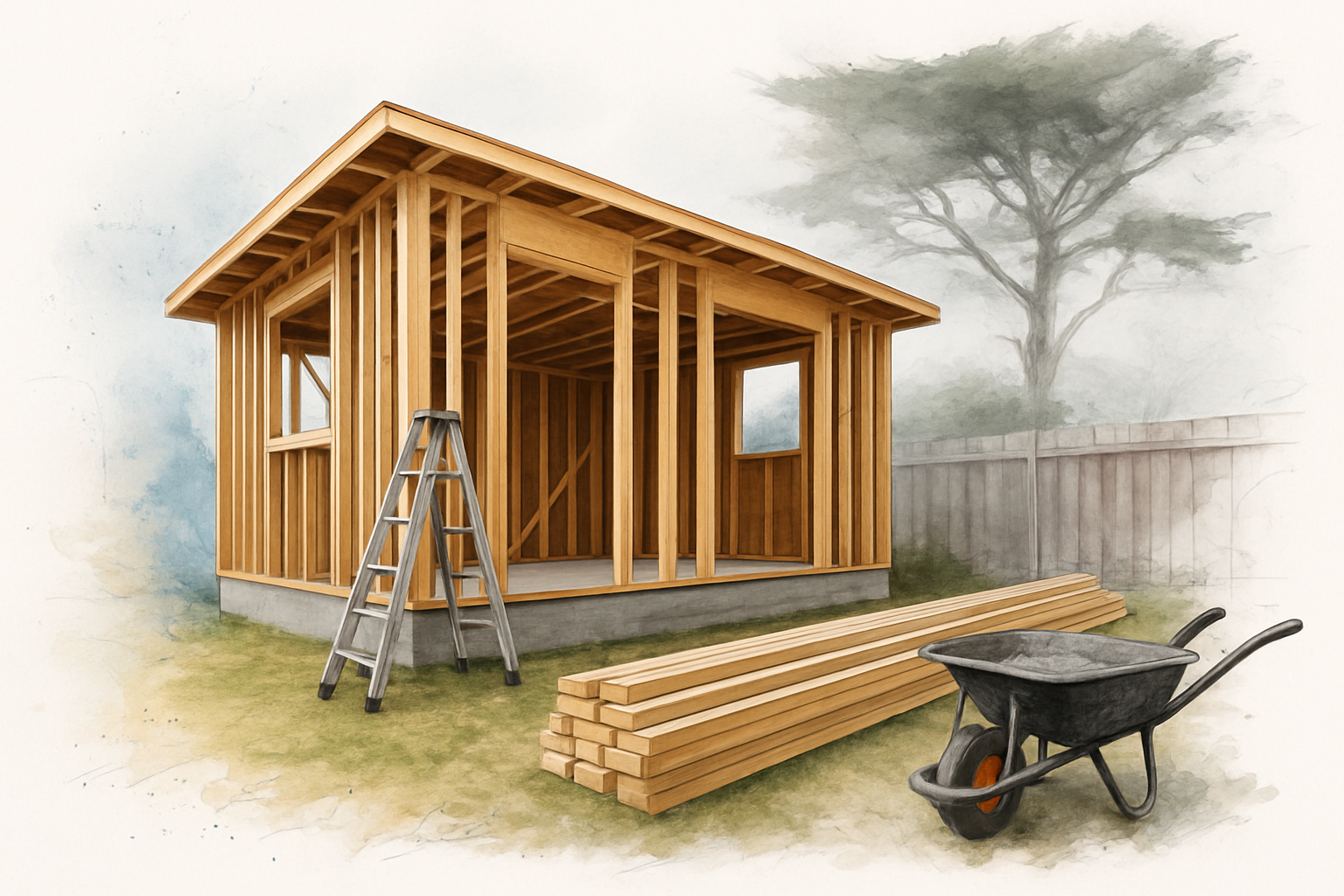
This is a separate structure in the yard, often chosen when the family wants the most privacy. It tends to feel the most independent, but it also adds site work, utility routing, and more permitting detail.Attached suite
This is an addition connected to the main home, usually with its own entrance. It works well when a homeowner wants family nearby without putting everyone under the same roof plan.Internal conversion
This uses space that already exists, such as a garage, part of the house, or another enclosed area. On many older Monterey County properties, this is the first option worth studying because it may reduce structural disruption compared with a ground-up build.
What works well and what often doesn't
A good in-law suite respects two things at the same time: closeness and separation. Family members want help nearby, but they also want a door they can close, a bathroom that isn't shared, and a layout that doesn't turn everyday life into constant overlap.
Practical rule: If the space only works when everyone has perfect schedules and perfect patience, the layout needs more work.
The benefits are real. These spaces support multigenerational living, can adapt over time, and may add value to the property. One source notes that adding an in-law suite can raise property value by up to 9.8%, though the actual result depends on the property, design, and market, as explained in the cost section later in this article.
The trade-offs are real too. Detached units can take yard space. Internal conversions can remove parking or storage. Attached additions can create noise transfer if walls, doors, and mechanical systems aren't thought through early.
Why homeowners are building them again
In-law suites aren't a new idea. Their roots go back to older coach houses, servant quarters, and similar secondary spaces, and multigenerational living in the United States has shifted over time. It fell to about 12% of the population in 1980, then rose again, reaching 12.2 million multigenerational households, or 16% of the population, by 2014 according to the data summarized in the earlier background source.
That shift matters because the room you're planning isn't just "extra space." It's housing for a real life change. When the use is serious, the planning has to be serious too.
In-Law Suite vs ADU and JADU in California
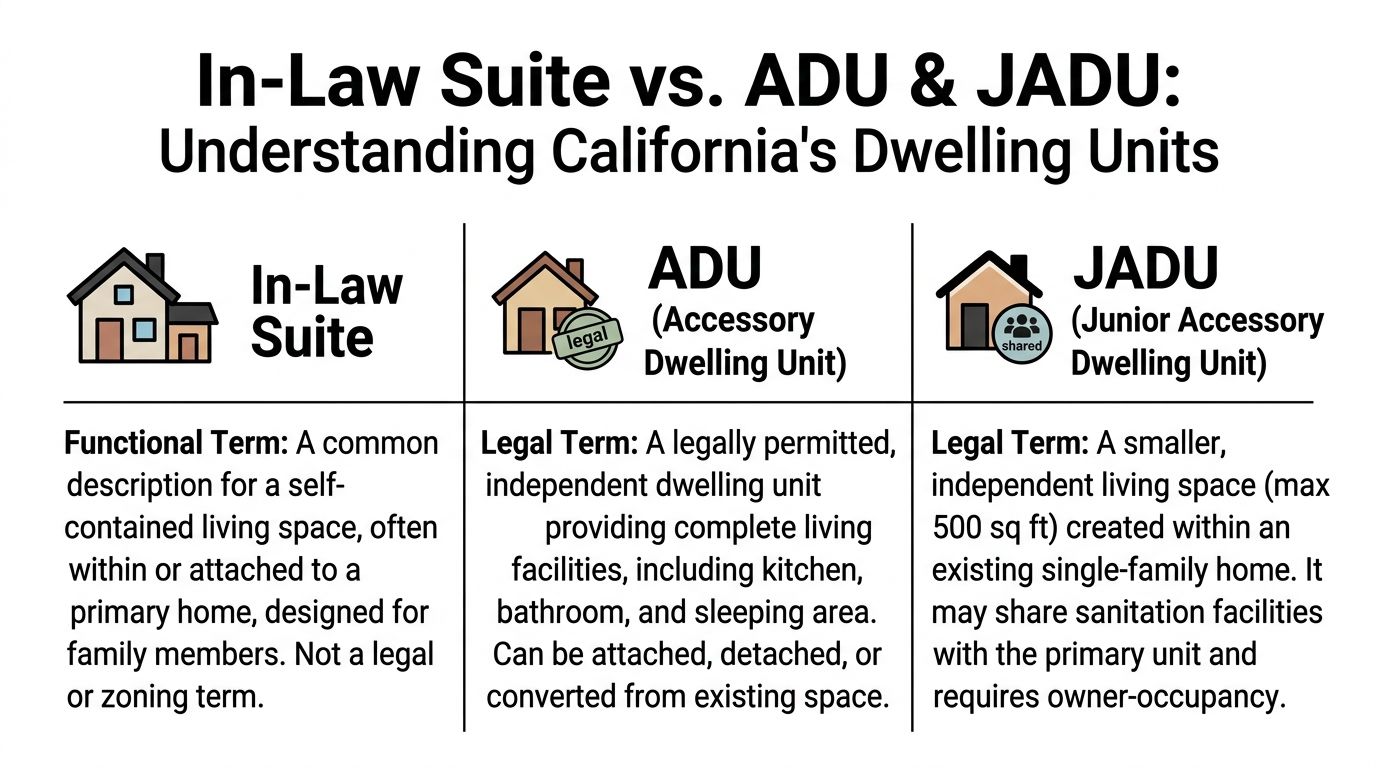
The phrase in-law suite is common, but it isn't the term your local planning department uses to review a project. In California, the legal categories are usually ADU and JADU, and that distinction affects size, design, permits, and how the space can be built.
The functional term versus the legal term
When homeowners say "in-law suite," they usually mean a private living area for family. When the city or county reviews plans, they need to classify that space under code.
In Monterey County, a smaller in-home version is often treated as a Junior Accessory Dwelling Unit, or JADU. California jurisdictions such as Monterey County often classify these compact units as JADUs, which are limited to 500 square feet maximum and must have a separate entrance, according to this California JADU overview.
Call it an in-law suite when talking about how you want to live. Call it an ADU or JADU when you're talking permits.
The difference between a JADU and a standard ADU
A JADU is usually the better fit when you're converting part of the existing home and keeping the footprint compact. A standard ADU allows more flexibility and is often the route for detached buildings, larger additions, or more complete separation from the main residence.
| Feature | Junior ADU (JADU) | Standard ADU |
|---|---|---|
| Typical use | Small in-law suite within the home | Larger independent secondary dwelling |
| Size | Up to 500 sq ft | Larger than a JADU, subject to applicable rules |
| Location | Within or attached to the existing single-family home | Attached, detached, or converted from existing space |
| Entrance | Separate entrance required | Separate access as part of independent living design |
| Kitchen setup | Smaller, limited setup depending on approval path | Full independent living facilities |
| Best fit | Aging parent, adult child, compact family housing | Greater independence and longer-term flexibility |
If you're still sorting out what's allowed on your property, this guide on what determines whether you can build an ADU on your property is a useful next read.
Why the local label matters in Monterey County
The classification affects more than paperwork. It changes how the plans are drawn, how utilities are handled, what existing space can be used, and whether the suite should be approached as a conversion or a larger addition.
That matters even more in older homes. A house may have enough square footage on paper, but the actual walls, framing, access path, ceiling conditions, and mechanical layout may make one route much more practical than another.
Local issues that change the decision
Monterey County adds a layer of reality that generic articles skip. Coastal review, older housing stock, historic considerations, hillside lots, and access constraints can all push a homeowner toward one type of unit over another.
A detached structure may look ideal until setback or site access issues show up. A garage conversion may look easy until fire separation, drainage, or utility conflicts make it less efficient than a well-planned addition.
The Benefits and Practical Realities of Adding a Suite
Families usually build an in-law suite because they need a better living arrangement, not because they want another project to manage. The strongest reason is usually simple: keep someone close without giving up privacy.
By 2020, 29% of Americans over age 65 lived in multigenerational homes, and these units can yield a 30-50% ROI through rentals or family use in some cases, according to Realtor.com's overview of mother-in-law suites. The numbers matter, but the day-to-day function matters more. If the space helps a parent live safely and independently, that often carries more weight than resale math.
What homeowners tend to value most
The best suites solve three problems at once:
Privacy for both households
A separate entrance and dedicated bathroom lower friction fast.Flexibility over time
A suite may start as housing for a parent and later become guest space, a caregiver room, or private space for an adult child.Less disruption than moving
Families often prefer adapting a property they already know instead of starting over somewhere else.
The practical side that needs honest attention
Every gain comes with a trade-off. A detached unit can reduce open yard area. A garage conversion can remove storage or parking. An addition can affect existing circulation in the main house if the layout isn't carefully planned.
Maintenance matters too, especially near the coast. Moisture, salt air, and older construction methods can punish shortcuts. Materials, waterproofing details, ventilation, window placement, and drainage are not side issues on this kind of project.
A suite built for family should age well. If it only looks good at final inspection, it wasn't built thoughtfully enough.
A realistic project path from the homeowner's side
Most homeowners experience the project in four stages, even if the work behind the scenes is more detailed.
First comes feasibility. The property gets evaluated, the likely code path is identified, and the initial idea gets tested against the existing house. At this stage, bad assumptions should be removed.
Then the plans are developed for permit review. This phase is less exciting, but it's where many avoidable problems are prevented. If access, drainage, setbacks, structural conditions, and utility routing aren't addressed here, they come back later as delays.
Construction follows after approvals. This is the visible part people think of first, but by then most of the important decisions should already be made.
Final inspection and turnover close it out. At that point, the space should function as intended, not just satisfy a checklist.
Navigating Local Building Rules in Monterey County
Monterey County is where generic advice usually falls apart. The state has made ADU and JADU projects more workable, but local conditions still control how difficult your project will be.
From 2018-2023, Monterey County issued over 300 ADU permits, reflecting real demand for this kind of housing in the area. That doesn't mean every lot is straightforward. It means more homeowners are pursuing the work, and more of them are running into property-specific review issues.
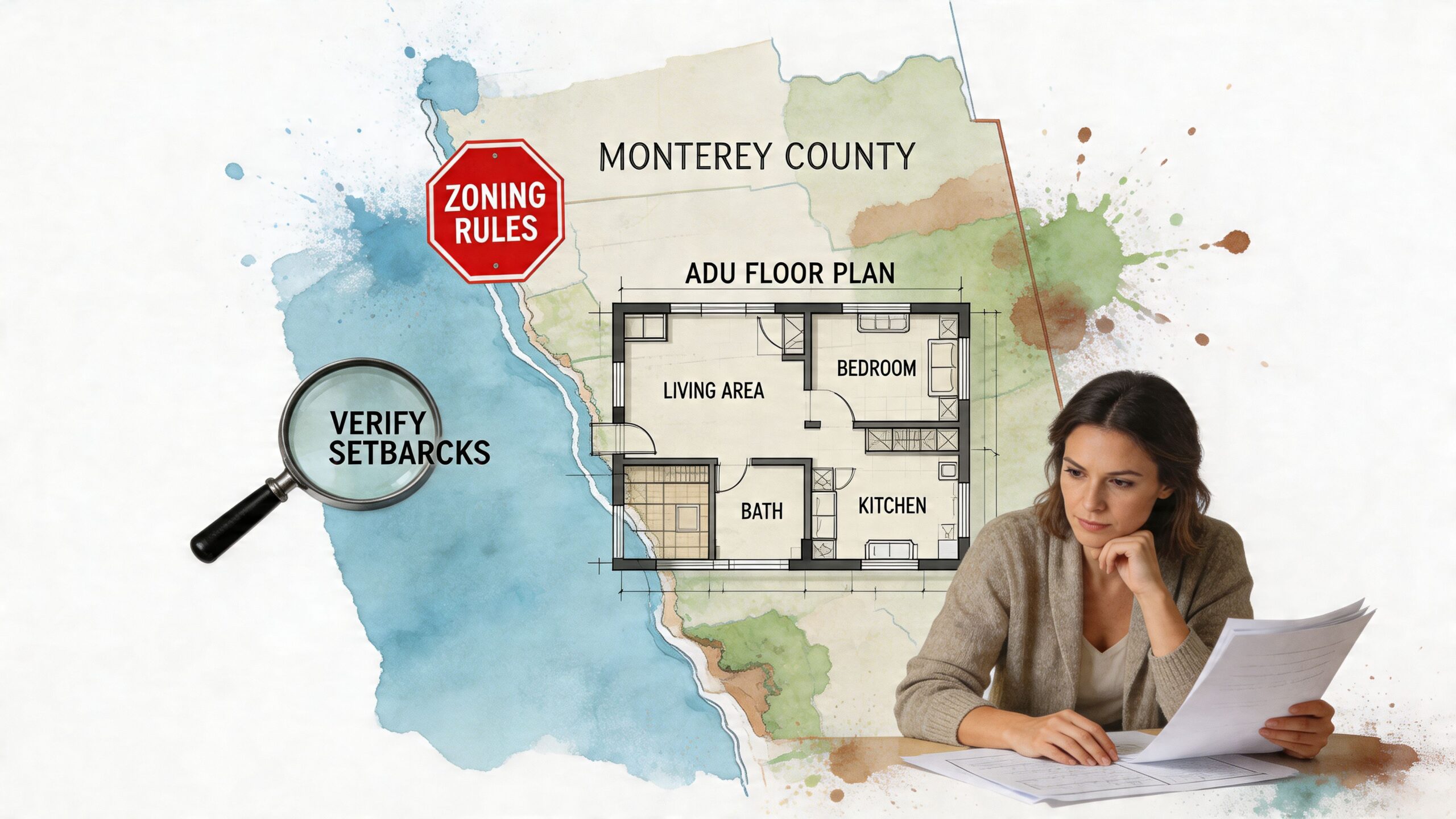
Coastal and local review can reshape the project
In Monterey County, coastal regulations and local reviews can add significant complexity. While state laws have made approvals easier in general, local factors such as coastal zone setbacks can still delay projects, as noted in this Monterey County in-law suite discussion.
A homeowner in Monterey, Pacific Grove, or Carmel-by-the-Sea may start with the same idea and end up with very different permit conditions. That's normal here. The property, the jurisdiction, and the site's constraints all matter.
If you're trying to understand the permit side before committing to plans, this article on whether you need permits to build an ADU in Monterey County will help.
Older homes change the scope quickly
A lot of the housing stock in this area wasn't built with secondary units in mind. Once walls open up, older framing, undersized services, outdated plumbing, or awkward floor levels can change the scope.
That's one reason conversions deserve a careful first look. A garage or interior wing may seem like the cheaper path, but if the slab, roof, drainage, or access conditions are poor, a different approach may make more sense.
Budget drivers that homeowners should expect
The main cost variables aren't mysterious, but they do stack up:
Project type
A detached unit, attached addition, and interior conversion don't carry the same labor path.Site conditions
Slope, drainage, coastal exposure, access for crews and materials, and utility distance all affect the build.Existing house conditions
Older electrical service, foundation issues, or structural changes can add work quickly.Finish level
Cabinetry, tile, fixtures, windows, doors, and appliance choices move the budget more than most homeowners expect.
The cheapest sketch is not the cheapest project. A simple plan that matches the house and the site usually costs less to build than a clever plan that fights both.
What helps projects move better
The smoother projects usually have three things in place early: a realistic use for the suite, a clear permit path, and a layout built around the existing property instead of wishful assumptions.
That sounds basic, but it prevents a lot of redesign. In Monterey County, the homeowner who verifies the site first usually spends less time correcting the plan later.
The Contractor-Led Design and Construction Process
Homeowners usually want to know what the actual process looks like once the idea is serious. On a well-run project, the contractor doesn't just show up when framing starts. The work begins much earlier, during planning and decision-making.
Planning and feasibility
The first stage is figuring out what the property can support. That includes the likely ADU or JADU path, the basic layout, access, utilities, structural implications, and whether the existing house helps or fights the plan.
This early phase is where experienced pre-construction work pays off. A clear process for design and pre-construction planning for permit-ready projects helps keep the project grounded in what can be approved and built.
Permitting and construction documents
Once the concept is viable, the drawings need to become permit documents. That usually means more detail than homeowners expect. Structural information, code notes, floor plans, elevations, utility coordination, and site conditions all need to line up.
This isn't glamorous work, but it sets the job up. When the permit set is thin or rushed, construction turns into improvisation, and homeowners pay for that in delays and change orders.
Construction in the field
After approvals, the sequence depends on the project type. A detached build may begin with site prep and foundation work. A conversion may begin with demolition, framing changes, rough plumbing, electrical, and HVAC adjustments.
On occupied properties, sequencing matters as much as craftsmanship. Protecting the existing house, keeping access usable, and timing inspections properly are part of the contractor's job.
Final inspections and handoff
The last phase isn't just a punch list. It includes final code compliance, finish corrections, fixture testing, and making sure the suite functions as a complete living space.
A proper handoff should leave the homeowner with a space that works in daily use, not just one that passed a final sign-off. Doors should close correctly, ventilation should perform, drainage should be right, and the unit should feel intentional from the first day.
Understanding Construction Costs and Financing
Cost is one of the first questions homeowners ask, and it should be. The useful answer isn't a single number. It's an explanation of what drives the budget and which decisions create the biggest changes.
One published estimate says an in-law suite can increase property value by up to 9.8%, and project costs typically range from $40,000 to $125,000 depending on type, size, and finishes, according to this in-law suite cost and value overview. That's a broad range, which is exactly why homeowners need a property-specific estimate.
What usually moves the price
A few factors drive most of the difference:
Detached build versus conversion
New structures usually involve more site work and utility planning than repurposing enclosed space.Size and layout efficiency
A compact, well-organized plan often controls cost better than a larger plan with complicated circulation.Kitchen and bathroom scope
These rooms carry a lot of labor, finish, and fixture cost.Structural and site issues
Foundation work, slope, drainage, access, and upgrades to existing systems can add substantial scope.Finish expectations
Homeowners can push the budget up quickly with custom cabinetry, premium tile, specialty windows, and appliance selections.
If you want a fuller breakdown of why one ADU project prices differently from another, this article on why ADU construction costs vary so much in California is worth reading.
Financing options homeowners commonly explore
Most families look at some combination of savings, refinance options, or equity-based borrowing. Others explore specialized lenders when timing or property conditions don't fit a standard bank process.
For homeowners comparing lending routes, resources on California private money lenders can help frame what nontraditional financing looks like before you speak with a lender directly.
Good budgeting starts with scope control. If the design changes every few weeks, the budget won't hold still either.
Frequently Asked Questions About In-Law Suites
Can an in-law suite be inside my existing house
Yes, in many cases it can. A portion of the home, an enclosed garage area, or another internal space may be a workable candidate if the layout, access, and code requirements support it. The legal classification still matters, so the design has to match the permit path.
Is an in-law suite the same as a guest room
No. A guest room is just a bedroom unless it has the features needed for more independent living. An in-law suite is meant to function as a private living space, with its own bathroom and some level of self-sufficiency.
Can I rent out an in-law suite
Possibly, but that depends on how the unit is permitted and what local rules apply. The family label "in-law suite" doesn't answer the rental question by itself. The approved ADU or JADU status, local jurisdiction, and project setup do.
How long does it take to build one
The honest answer is that timing depends on the permit path, the condition of the property, and whether you're building detached, attached, or converting existing space. In Monterey County, planning and approvals can take time, especially when local review adds complexity. Construction itself is only part of the full timeline.
Will adding a suite affect my property taxes or insurance
It can. New living space, a secondary dwelling setup, and upgraded systems may affect both. Homeowners should ask their tax professional and insurance carrier early instead of assuming the impact will be minor.
Do I need an architect for an in-law suite
Some projects need full design involvement, and some can move forward with a more limited design and drafting path tied closely to the contractor and permit requirements. The right approach depends on the house, the scope, and how complex the site is. What matters is getting permit-ready documents that match the actual project.
Are these common in Monterey County
Yes. Local demand is real, and local zoning has increasingly supported this type of housing for multigenerational living. Monterey County issued over 300 ADU permits from 2018-2023, which reflects how many homeowners are pursuing these projects, as noted earlier in the verified data.
What's the first step if I'm seriously considering one
Start with feasibility, not finishes. Before picking tile, fixtures, or cabinet colors, confirm what your property can support and whether the suite should be approached as a JADU, standard ADU, addition, or conversion.
If you're also thinking through funding, general guides on home improvement financing can help you organize the questions to ask before you commit to the project.
Start Planning Your Monterey County Project
If you've been asking what is an in law suite, the short answer is simple. It's a private living space for family on the same property. The harder part is figuring out what type of unit makes sense on your lot, what the local rules allow, and how to build it so it works for years.
For homeowners in Monterey County, that usually starts with a real site discussion, not assumptions. The right next step is to review the property, the intended use, and the likely permit path before any major design decisions are made.
If you'd like to talk through an in-law suite, ADU, JADU, or home addition on your property, Palacios Construction can help you evaluate what's realistic and what the process will involve. You can reach the team through the website or visit 222 Ramona Ave Unit 5, Monterey, CA.