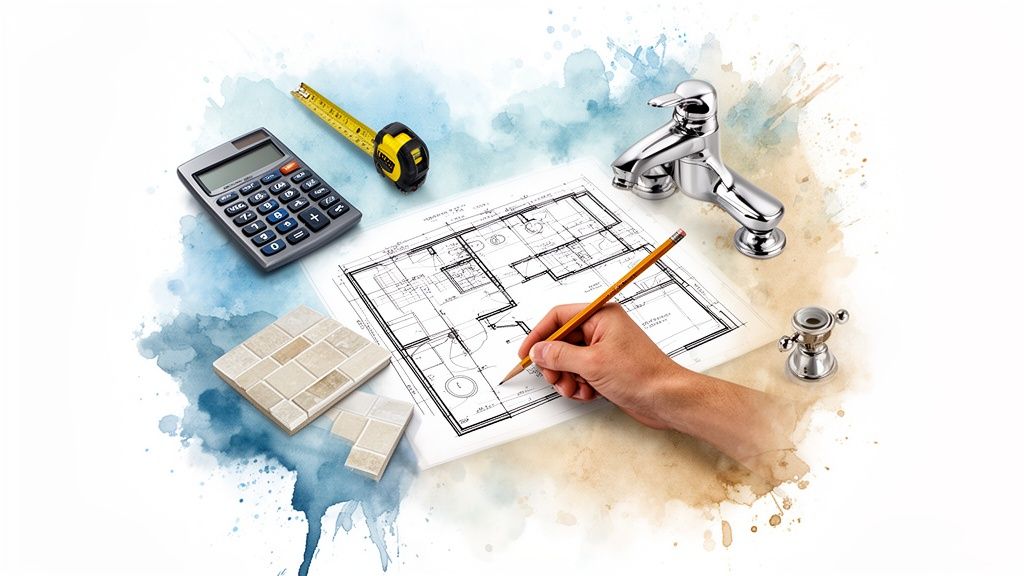


A great kitchen remodel in Monterey County isn't just about picking beautiful tile or the perfect countertops. It’s built on something much more important: a solid plan. This guide shifts the focus from finishes to the critical groundwork that makes a project successful—professional project management, realistic budgeting, and a clearly defined scope of work.
From Finishes to Function: A Smarter Approach to Kitchen Remodeling

It’s easy to get excited about design galleries and finish selections. However, a truly successful kitchen remodel is decided long before the first cabinet is torn out. It begins with a framework built on function, logistics, and smart financial planning.
Think of it like building a house. You must get the foundation and frame right before choosing paint colors. The same principle applies to your kitchen. Focusing first on layout workflow, electrical capacity, ventilation, and structural needs sets the stage for a smooth, predictable project.
Why Surface-Level Planning Leads to Budget Stress
Too often, projects go sideways because of a "finishes-first" approach. When the focus is solely on aesthetics without a real plan, unexpected costs and delays are almost inevitable.
According to a report from Harvard's Joint Center for Housing Studies, 47% of homeowners said their renovation cost more than expected. Further, 30% had to reduce their project's scope due to budget pressures. These statistics show a clear link between poor planning and financial stress.
A professional, planning-first method addresses these risks from the start.
The Professional Approach to Kitchen Remodeling
A process-driven contractor prioritizes the systems that make a kitchen actually work. This ensures your investment results in a space that performs as well as it looks.
Here’s what that looks like in practice:
- A Clearly Defined Scope: Every detail is documented before work starts, from moving a wall to relocating an outlet.
- Realistic, Allowance-Based Budgeting: We use transparent cost breakdowns for items that can vary, like plumbing fixtures and appliances, to prevent lowball estimates.
- Sequenced Project Management: We strategically schedule every trade—plumbers, electricians, cabinet installers—to minimize downtime and keep the project moving forward.
By establishing this foundation, homeowners experience fewer change orders and a much shorter disruption to their daily lives. You can learn more about our process-driven approach to professional home remodeling.
Defining Your Scope and Creating a Realistic Budget
A successful kitchen remodel is decided long before the first hammer swings. This is the stage where your wishlist becomes a buildable plan and a vague budget number turns into a reliable financial map.
Your scope of work is the master document for the remodel. It’s a detailed blueprint that spells out every single task.
This includes:
- Layout Changes: Are walls moving? Is the island changing size or location?
- Structural Modifications: Does a new window need a different header? Are we removing a load-bearing wall?
- Plumbing and Electrical: Is the sink moving? Does the electrical panel need an upgrade for an induction cooktop?
- Appliance and Fixture Specifications: Listing exact models for your oven, fridge, faucet, and sink.
- Finish Materials: Nailing down specific choices for flooring, backsplash tile, and cabinet hardware.
A clear, detailed scope is your best defense against surprise costs and delays.
From Wishlist to Workable Plan
The goal is to turn your vision into something a professional can build. A wishlist might say “brighter kitchen.” A proper scope of work defines exactly how: “add three recessed LED lights over the main prep area, install under-cabinet lighting, and replace the north-facing window with a larger model.”
This level of detail is what allows a contractor to provide an accurate price and a realistic timeline. Without it, any budget is just a guess.
Understanding Allowance-Based Budgeting
One of the biggest sources of budget stress is the gap between a lowball estimate and a real-world, transparent budget. This is where allowance-based budgeting is so important.
An allowance-based budget is a transparent financial tool. A contractor assigns a realistic dollar amount for variable items like countertops, tile, and plumbing fixtures. This gives you the flexibility to shop for products within that budget, preventing the surprise of under-bidding.
For example, a budget might include a $5,000 allowance for countertops. You can then pick a quartz that costs $4,500 and get a $500 credit back, or choose a marble for $6,000 and pay the $1,000 difference. You are always in control. To see how these costs can add up, check out our guide on why kitchen remodels end up costing more than expected.
This is completely different from a low, fixed-price bid that likely includes builder-grade materials. A professional budget is built from your detailed scope, not a generic assumption.
Navigating Monterey County Permits and Regulations
A kitchen remodel is a construction project in the eyes of your local building department. It must follow local rules for safety, efficiency, and legal compliance. Sidestepping this process can lead to stop-work orders, fines, and problems when you sell your home.
A building permit is usually required for any work that touches your home's structure, electrical systems, or plumbing. This isn't just bureaucracy; it's a system that protects your family and your investment. Thinking about skipping this step? We explain why permits are not optional for most remodeling work.
When Is a Permit Required for a Kitchen Remodel?
While purely cosmetic updates like painting cabinets may not require one, most kitchen projects will. You will almost certainly need a permit if your project involves:
- Moving or Removing Walls: Altering your home's structural load requires review and approval.
- Changing Electrical Circuits: Adding new outlets, running a dedicated circuit for a new appliance, or moving lighting needs an electrical permit.
- Altering Plumbing Lines: Moving a sink, dishwasher, or gas line is a fundamental change that must be permitted.
- Installing New Windows or Doors: Changing the size or location of an opening in an exterior wall affects the building envelope and needs a permit.
Local Monterey County Considerations
A kitchen remodeling project in Monterey County must also adhere to specific regional rules. For homeowners in Monterey, Carmel, Pacific Grove, Salinas, and surrounding communities, a remodel must account for local permitting, water credit limitations, and evolving energy standards.
Here are two major local factors you can't ignore:
- Monterey Peninsula Water Management District (MPWMD): This agency’s rules impact your fixture choices. Installing new water-using fixtures often requires available water credits. An experienced local contractor knows how to ensure your selections are compliant.
- California's Title 24 Energy Code: This statewide code demands high energy efficiency. For a kitchen remodel, Title 24 dictates lighting (requiring high-efficacy fixtures like LEDs), appliance choices, and ventilation.
A professional general contractor manages the entire compliance process. This includes preparing and submitting permit applications, scheduling inspections, and ensuring every detail meets or exceeds all local and state codes.
Partnering with a knowledgeable local contractor takes this burden off your shoulders, ensuring your new kitchen is safe, well-built, and legal.
How a Professional Kitchen Remodel Unfolds
A kitchen remodel isn’t chaos. It's a logical sequence of steps, managed by a professional to keep things moving smoothly. Understanding this flow helps set realistic expectations.
This methodical approach is the core of successful kitchen remodeling in Monterey County, turning a large project into a series of manageable phases.
Phase 1: Site Prep and Demolition
Before construction begins, we protect your home to contain dust and disruption.
- Site Protection: We seal off the work area with plastic barriers and cover floors in adjacent rooms.
- Temporary Services: If you’re living in the house, we can help set up a temporary kitchen space in another room.
- Demolition: We remove old cabinets, countertops, appliances, flooring, and any non-structural walls. This gives us the first look at the condition of the framing, plumbing, and wiring.
Phase 2: The "Rough-In" and Structural Work
With the kitchen stripped to the studs, the real building begins. This "rough-in" phase is about installing the systems hidden behind the walls.
This stage includes:
- Framing and Structural Changes: We frame new walls, windows, or doorways and install any necessary support beams.
- Plumbing and Gas Lines: Plumbers run new water supply lines, drains, and gas lines.
- Electrical Wiring: Electricians run all new wiring for outlets, switches, lighting, and dedicated appliance circuits.
- HVAC Adjustments: New ductwork for the range hood is installed while the walls are open.
The rough-in phase is a critical checkpoint. All new framing, plumbing, and electrical work must be inspected and approved by your local building inspector before we can install drywall.
Phase 3: Closing Up Walls and Installing Finishes
Once inspections are passed, your kitchen starts to take shape again.
The sequence is:
- Insulation and Drywall: We insulate exterior walls, then hang, tape, and finish the new drywall.
- Painting: We prime and paint the ceilings and walls before cabinets and flooring go in.
- Flooring Installation: Your new flooring is installed across the entire room.
- Cabinet Installation: We carefully install, level, and secure all new base and upper cabinets.
This flowchart shows key approval points that are a mandatory part of any kitchen remodeling plan in Monterey County.

Knowing about these checkpoints helps set a realistic timeline, as they are built directly into the construction schedule.
Phase 4: The Final Finishes and Details
With cabinets in place, we install the final fixtures and finishes with precision.
- Countertop Templating and Installation: A fabricator makes a precise template of your base cabinets. After fabrication, the countertops are installed.
- Final Plumbing and Electrical: Our plumber installs the sink, faucet, and dishwasher. The electrician installs light fixtures, outlets, switches, and appliances.
- Backsplash and Finishes: The tile backsplash is installed, along with any remaining trim and cabinet hardware.
- Final Punch List: We conduct a final walkthrough with you to create a "punch list" of any small adjustments needed.
This systematic process is the only way to deliver a high-quality kitchen remodel. For a better feel for project timelines, read our guide on how long a whole-house remodel usually takes.
Choosing Materials That Last in Our Coastal Climate

The finishes are what you see, but a successful kitchen remodel in Monterey County is built on performance. The goal is to choose materials and systems that stand up to daily life and our unique coastal environment.
Surfaces Built for Durability and Function
Your kitchen surfaces take the most abuse. Choosing for longevity is the smart move.
- Countertops: For most families, we recommend engineered quartz. It’s highly resistant to stains, scratches, and heat, making it a practical workhorse.
- Flooring: Luxury Vinyl Plank (LVP) and quality porcelain tile offer superior water resistance and durability compared to hardwood in a kitchen.
- Cabinetry: In Monterey County's humid air, cabinet boxes made from MDF or particleboard can absorb moisture and warp. We recommend solid hardwood or high-quality plywood construction.
A well-planned kitchen balances beauty and pragmatism. It must withstand cooking, cleaning, and foot traffic without showing its age.
Planning for Modern Appliances and Clean Air
Your remodel must account for modern kitchen technology and healthy indoor air.
Electrical Capacity
Today's appliances—like induction cooktops or steam ovens—often require dedicated circuits. A smart plan starts with an electrical assessment to ensure your panel can handle the new load.
Ventilation Systems
Good ventilation is a code requirement. A powerful, properly ducted range hood pulls steam, grease, and odors out of your home, protecting your new cabinets and preventing moisture buildup—a critical consideration in our coastal climate.
Building these high-performance materials and systems into your plan creates a kitchen that is resilient, efficient, and built to last.
Partnering With the Right General Contractor
Choosing your general contractor is the single most important decision for your kitchen remodel. A great contractor is your project manager, your main point of communication, and your problem-solver.
You are looking for a partner with a clear process for scheduling, managing subcontractors, and handling unexpected issues. While price is a factor, competence, trust, and communication are what keep a project on schedule and on budget.
Vetting Your Potential Contractor
Before signing a contract, do your homework. First, verify they have a valid California contractor's license, general liability insurance, and workers' compensation coverage. We explain in our guide why hiring a licensed general contractor actually matters.
Then, ask pointed questions about how they work:
- Project Management: How do you keep the project on schedule and coordinate trades?
- Communication: What is your system for providing regular updates to homeowners?
- Change Orders: How do you handle scope changes or unexpected issues?
- Subcontractors: Do you have a consistent team of trusted specialists you work with regularly?
The Importance of Partnership in a Busy Market
Your choice of contractor is especially important in a market with high demand. Kitchens remain the most renovated room, accounting for 29% of all remodeling projects. This means the best trade professionals are often booked months in advance.
A well-connected contractor with strong local relationships can ensure your project is staffed with quality tradespeople, which is the best way to avoid delays. You can discover more insights about these housing trends from Harvard's Joint Center for Housing Studies.
Ultimately, you are hiring a partner, not just a builder. The goal is to find a professional who values a transparent, process-driven approach—qualities that lead to a successful kitchen remodeling project in Monterey County built on competence and trust.
FAQs: Your Monterey County Kitchen Remodel Questions Answered
Here are straightforward answers to common questions from homeowners in Monterey County.
How long does a typical kitchen remodel take in Monterey County?
For a full gut-and-remodel, plan for 8 to 14 weeks of actual construction. A simple "pull-and-replace" project with the same layout will be on the faster end. Moving walls, changing layouts, or waiting on custom cabinets will extend the timeline. Permit approvals and material lead times are the biggest variables.
Do I really need a permit for my kitchen remodel?
Yes, almost certainly. Any work that touches the home's structure (moving a wall), alters electrical wiring, or changes the plumbing layout requires a building permit from your local jurisdiction. Working with a licensed contractor ensures this is handled correctly, protecting you from legal issues and problems when you sell your home.
What is the biggest hidden cost in kitchen remodeling?
The most common surprises appear after demolition, especially in the older homes common on the Monterey Peninsula. We often find outdated wiring, old plumbing leaks, termite damage, or structural issues that were not up to code. A contingency fund of 10-15% of your total budget is the best defense against these discoveries.
Can I live in my house during a kitchen remodel?
You can, but it is highly disruptive. A full remodel involves weeks of dust, noise, and workers. Most importantly, you won't have a functioning kitchen. Many homeowners set up a temporary mini-kitchen in another room or make other living arrangements during the heaviest phases of construction.
Why does a professional contractor use allowances in a budget?
Allowances provide transparency and give you control over the final cost. They are realistic budget placeholders for items you will select, such as countertops, tile, and light fixtures. If you choose an item that costs less than the allowance, you get a credit back. If it costs more, you pay the difference. It is a fair system that prevents under-bidding and ensures a predictable budget.
When you're ready to move from planning to action, it’s important to partner with a contractor who values professional execution. Palacios Construction provides professional home remodeling and construction services grounded in clear communication and expert management. Visit our website to learn more about our process. https://palaciosconstructionca.com