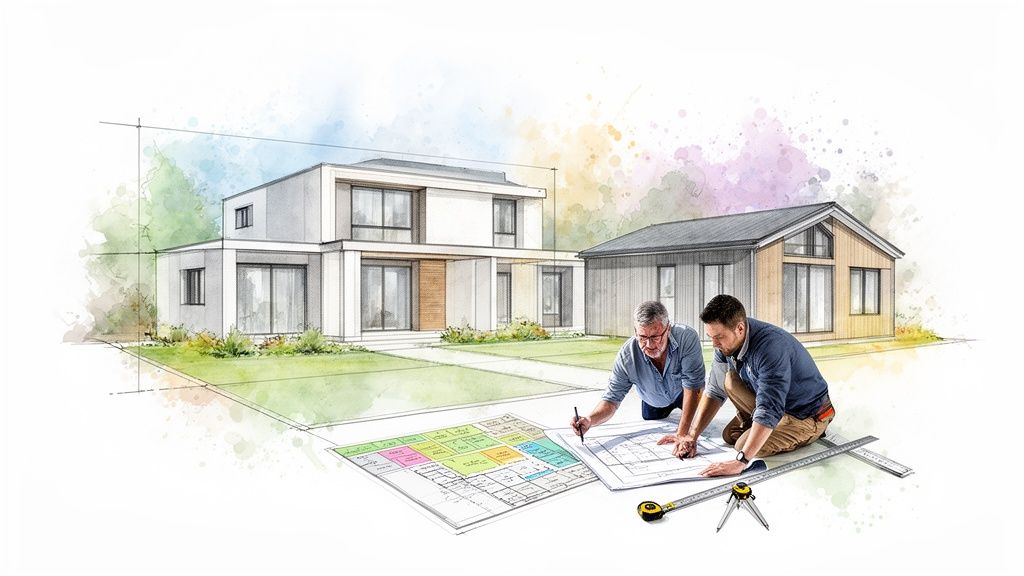

If you’re asking, “what permits are required for an ADU or garage conversion?” you’re not alone. California state laws have made building an Accessory Dwelling Unit (ADU) more accessible, but the process is far from permit-free. Success requires careful coordination with multiple local departments.
Many homeowners assume recent legislation makes ADUs easy to build, but the reality of the permitting process in Monterey County can feel slow and complex.
Why ADU Permitting Is More Complex Than It Seems

Headlines about streamlined state laws have created a common misconception: that adding an ADU is a simple, paperwork-free task. Homeowners in Monterey County get excited about adding a flexible living space, only to be surprised by the reality of local regulations.
The truth is, building a legal, safe ADU or converting a garage is like building a small house. It requires a series of official approvals to ensure the new unit is structurally sound, safe, and compliant with all local and state building codes.
The Critical Role of Permits
A common misstep is assuming a prefab unit or simple garage conversion avoids local regulations. This often leads to stop-work orders, costly redesigns, or even demolition notices. The permit process isn’t just red tape—it’s a critical safeguard for your investment, property value, and safety.
Even with streamlined state laws, ADUs require multiple approvals from different departments—building, planning, public works, and sometimes fire and health. In Monterey County, local rules add more complexity.
Local factors often include:
- Coastal Zone Regulations: Properties near the coast require an extra review that can significantly affect design and timelines.
- Water Availability: Securing water credits is a major hurdle in many local water districts.
- Local Zoning and Setbacks: Each jurisdiction has specific rules for ADU size, height, and placement.
Starting with a clear feasibility review is essential. Zoning, setbacks, utilities, water availability, and coastal requirements should be evaluated before design or budgeting. For a deeper look, you can learn more about ADUs in our Monterey County guide.
The Reality of Unpermitted Construction
The idea of a "permit-free" ADU or garage conversion is a myth. Some homeowners consider skipping the official process to save time or money, but this decision almost always backfires.
Building without approvals is the fastest way to get a project shut down. It starts with a stop-work order from a city or county inspector, followed by daily fines that quickly surpass the original permit fees. In the worst-case scenario, officials can order you to tear the structure down.
The Hidden Costs of Skipping Permits
The problems don't stop with fines. Unpermitted construction creates long-term issues that affect your property for years.
- Insurance Complications: An insurance carrier will likely refuse to cover damage or liability related to an unpermitted structure.
- Future Sale Problems: Unpermitted work must be disclosed when you sell your home, scaring away buyers and reducing your property's value.
- Forced Legalization: Permitting work retroactively often means tearing open walls for inspections, redoing work to meet current code, and paying double or triple the original permit fees as a penalty.
Permits aren't just bureaucratic red tape; they are a fundamental safeguard for your investment. They ensure the structure is sound, the wiring won't cause a fire, and the unit is safe for occupants.
Permits are the foundation of a successful project. Inspections verify that every critical step—from the foundation to the final plumbing connections—is done correctly. The final, signed-off permit is your proof that the space was built to last and meets professional standards. To learn more, check out our guide on whether permits are optional for minor remodeling work.
The Four Essential Permits for Your ADU Project

Homeowners often hope for a single, simple answer when they ask, "what permits are required for an ADU or garage conversion?" The reality is that an ADU is a small home with multiple systems that require separate approvals.
Every ADU project in Monterey County is built on four essential permit pillars. Understanding these provides a clear roadmap for construction.
The Building Permit
The Building Permit is the master permit for the project. It covers the physical structure, ensuring it is safe and built according to the California Building Code.
This permit addresses the "bones" of your ADU, including:
- Foundation: A new slab or reinforcement of an existing one.
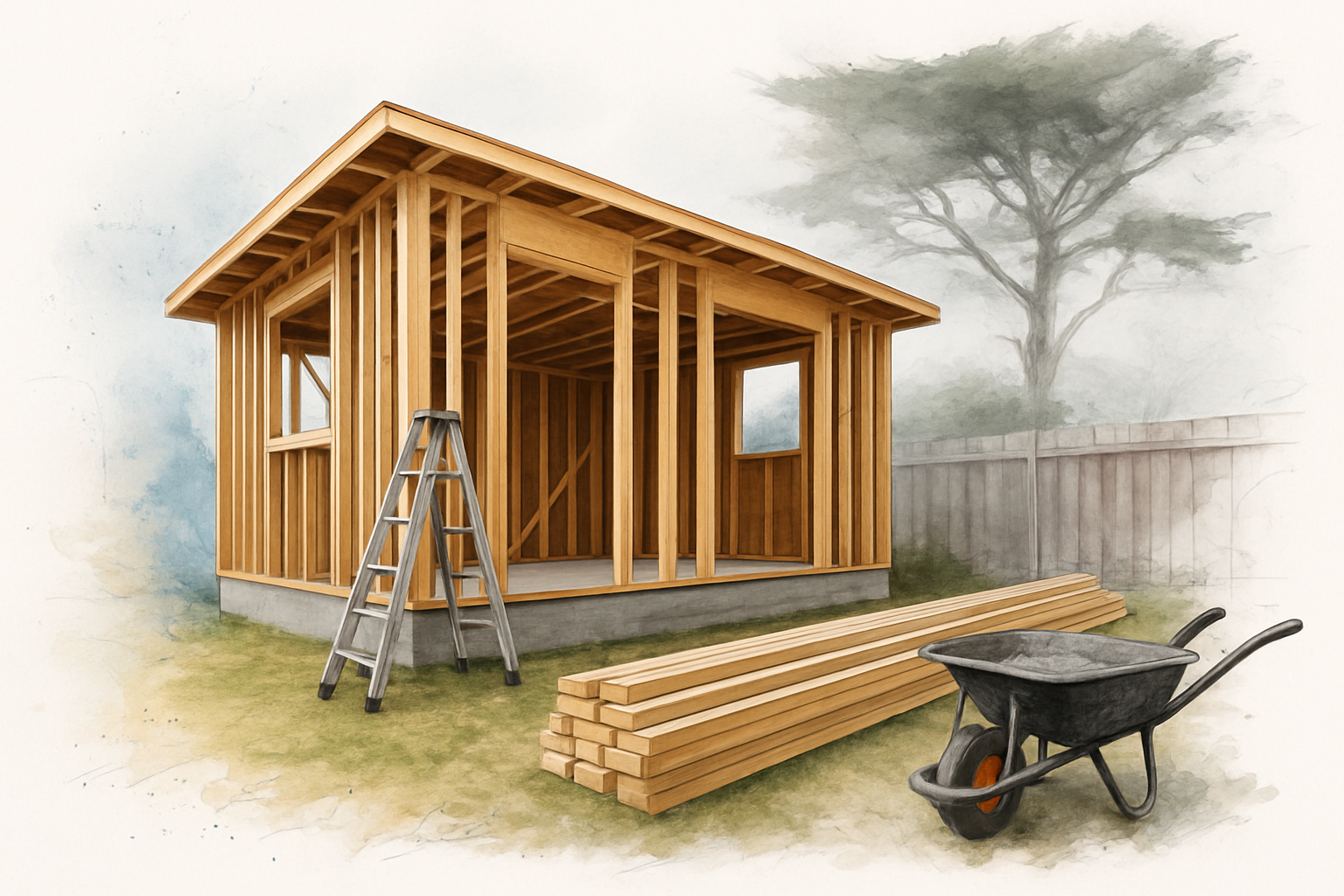
- Framing: Walls, roof structure, and openings for windows and doors.
- Roofing and Siding: The exterior shell that protects the unit.
- Insulation and Drywall: Interior finishes for energy efficiency.
- Egress: Proper window and door sizes for emergency escape.
An inspector will visit at key milestones to verify the work matches the approved plans.
The Electrical Permit
An Electrical Permit is mandatory to ensure all new wiring, outlets, and lighting are installed safely. This prevents fire hazards and system overloads.
Here's what it covers:
- New Circuits: Dedicated circuits for appliances like stoves and refrigerators.
- Wiring and Outlets: Proper installation and placement of all components.
- Panel Upgrades: An upgrade is often needed to handle the additional electrical load.
- Lighting: All lighting must meet code for safety and energy efficiency.
An electrical inspector checks the work before walls are closed to ensure every connection is secure.
The Plumbing Permit
If your ADU has a kitchen or bathroom, a Plumbing Permit is non-negotiable. This is critical for ensuring clean water comes in and wastewater goes out safely.
This permit addresses:
- New Water Lines: Running hot and cold water to fixtures and appliances.
- Sewer Connections: Tying the ADU’s drain lines into the main sewer or septic system.
- Drainage and Venting: Ensuring proper drainage and safe venting of sewer gases.
- Fixtures: Correct installation of all plumbing fixtures.
The Mechanical Permit
Finally, the Mechanical Permit handles heating, ventilation, and air conditioning (HVAC) systems. Proper ventilation is essential for healthy air quality and moisture control.
This permit ensures your systems are up to code, including:
- Heating System: Whether it's a ductless mini-split or another heat source.
- Ventilation: Required kitchen and bathroom exhaust fans.
- Air Conditioning: If an AC unit is part of the plan, it falls under this permit.
State laws require cities to approve compliant ADU applications within 60 days, but this timeline only begins with a complete application. If you're curious how these rules apply to garage conversions, you can explore this garage conversion guide. Palacios Construction coordinates all four of these permit processes to keep projects on track.
Local Permit Hurdles Specific to Monterey County
While the four core permits are the backbone of any ADU project, building in Monterey County involves another layer of local reviews. This is where having local experience becomes non-negotiable.
Answering "what permits are required for an adu or garage conversion?" on the Peninsula means looking beyond a standard checklist.
Zoning and Planning Department Review
Before the building department reviews structural plans, the local Zoning and Planning Department must give its approval. Their job is to ensure your ADU complies with all local land-use rules.
They will verify:
- Setbacks: How far your ADU must be from property lines.
- Lot Coverage: The total percentage of your lot that can have structures on it.
- Height Limits: How tall your ADU can be.
- Design Standards: Some areas have strict rules on materials and styles.
A rejection at this stage means returning to the design phase, costing time and money.
Coastal Commission and Design Overlays
If you live in the Coastal Zone, expect a major hurdle: the California Coastal Commission. This review process can add several months to your approval time, as the Commission examines everything from visual impact to environmental preservation.
Properties in historic districts or areas with "design overlays" require similar extra reviews to ensure new construction fits the neighborhood's character.
Health, Water, and Fire Department Approvals
Several other local agencies must sign off on your plans before a building permit is issued.
- Health Department: If your property is on a septic system, the Monterey County Health Department must confirm it can handle the extra load from an ADU.
- Water Availability: You must prove you have adequate water rights or purchase water credits from agencies like the Monterey Peninsula Water Management District. You can find more information on our page explaining what permits are needed to build an ADU in Monterey County.
- Fire Department: Your local fire department will review your site plan for emergency vehicle access, especially in high-risk fire zones.
Working with a contractor who understands the specific hurdles in Monterey County makes the entire process more manageable.
Budgeting for Permit Costs and Timelines
The permitting process is a major part of your project's budget and schedule. Fees are not a single lump sum but a series of payments to different local agencies.
Understanding Permit-Related Fees
For any garage conversion or new ADU in Monterey County, you’ll face several layers of fees.
Expect costs like these:
- Plan Check Fees: Paid upon submittal, this covers the time for staff to review your plans.
- Permit Issuance Fees: Paid after plan approval to receive the official permit.
- Impact Fees: These offset the new unit's impact on public services like schools and parks.
- Utility Connection Fees: This variable cost covers connecting your ADU to water, sewer, and electrical lines.
The image below shows potential hurdles during the permit approval process in Monterey County.

Juggling these reviews adds real complexity and time to your project.
Navigating the Permit Timeline
California law requires local agencies to review a complete ADU application within 60 days. However, this "shot clock" doesn't start until the planning department deems your application 100% complete.
An incomplete submittal resets the entire clock. Most delays are not from slow government review but from an application that wasn't prepared correctly.
An experienced local contractor knows what each jurisdiction needs for a submittal to be considered complete on the first try, avoiding back-and-forth corrections. For a deeper look at the numbers, our guide on how much an ADU costs in Monterey, CA breaks down the full picture.
Here’s a table outlining a typical timeline.
Typical Permit Process Timeline for a Monterey County ADU
| Phase | Description | Estimated Duration |
|---|---|---|
| 1. Pre-Design & Feasibility | Confirm zoning, setbacks, utility access, and other site constraints before drawing plans. | 1-3 Weeks |
| 2. Architectural Design | An architect or designer creates the floor plans, elevations, and site plan for the ADU. | 3-6 Weeks |
| 3. Plan Submittal & Review | Your complete plan set is submitted. The "60-day shot clock" starts once it's deemed complete. | 4-10 Weeks |
| 4. Revisions & Resubmittal | The jurisdiction provides comments. Your designer updates and resubmits the plans. | 1-4 Weeks |
| 5. Permit Issuance | After revisions are approved and fees are paid, the building permit is issued. | 1 Week |
This process shows why a complete submittal is crucial.
How Palacios Construction Helps You Start Correctly

Start with a professional feasibility review before spending thousands on architectural plans. This step is the difference between a smooth project and one filled with costly redesigns and delays. A feasibility review provides a clear, practical roadmap of what's possible on your lot.
What a Feasibility Review Should Cover
A thorough review verifies these critical points:
- Zoning and Setbacks: Can an ADU be built here, and where can it legally go?
- Utility Access: Do existing water, sewer, and electrical lines have capacity for an ADU?
- Water Availability: In Monterey County, we must confirm you have the required water credits or access.
- Coastal or Historic Rules: Are there special design reviews that could add time and cost?
This upfront diligence separates a predictable project from one filled with stressful surprises. Answering “what permits are required for an ADU or garage conversion?” starts here.
Palacios Construction guides homeowners through ADU planning and construction. We coordinate permits, inspections, and local compliance so there are fewer surprises mid-project. Our team handles the entire sequence, from the initial assessment to managing the submittal process and acting as the main point of contact with officials.
Since California reformed its ADU laws, permit applications have surged. As of 2022, nearly 2.8 million single-family parcels became eligible for an ADU, creating a significant housing opportunity. For more on this, you can discover more insights about California's ADU boom. For homeowners in Monterey County, understanding local permitting early can save months of delays—working with a contractor familiar with local jurisdictions makes that process more manageable.
Understanding why hiring a licensed general contractor actually matters is key. It allows you to move forward with confidence, knowing every detail has been accounted for.
Frequently Asked Questions About ADU Permits
Here are straightforward answers to common questions from homeowners in Monterey County.
Can I build an ADU without any permits?
No. Building an ADU or converting a garage without permits is illegal and risky. Local authorities can issue stop-work orders, steep fines, and even demolition orders. Unpermitted work can also void your homeowner's insurance and create significant problems when you sell your property.
Do I still need permits if I'm using a prefab ADU?
Yes. A prefab ADU must be permanently installed on a proper foundation and connected to water, sewer, and electrical systems. The local permitting process ensures all site work—including foundation, utility connections, and placement—meets California Building Codes and local Monterey County rules.
How long does it take to get an ADU permit in Monterey County?
State law gives jurisdictions 60 days to act on a permit application, but this timeline only starts once your application is deemed 100% complete. Realistically, the entire process from design to an approved permit often takes several months, depending on plan completeness and the need for special reviews (e.g., coastal, septic).
Are garage conversions easier to permit than new ADUs?
In some ways. A conversion uses an existing structure, which can simplify setback requirements. However, it still requires a full permit review, including building, electrical, plumbing, and mechanical permits to ensure the space is a legal, safe dwelling. The structure must be brought up to current residential building codes.
What is the most common mistake homeowners make with permits?
Starting construction before the permit is officially issued. Many people assume they can begin demolition or foundation work after submitting plans, but this will result in a stop-work order and penalties. It is essential to wait until you have the approved, stamped plans and the official permit in hand before any work begins.
Navigating ADU permits in Monterey County comes down to local knowledge and a solid process. As a professional home remodeling and construction firm in Monterey County, Palacios Construction manages ADU projects from start to finish. If you’re ready to get your project started on the right foot, get in touch with us at palaciosconstructionca.com.