
Quick Answer
A waterfall edge kitchen island is an island countertop that continues down one or both sides to the floor. It works well when it's built with proper slab thickness, hidden support, and enough walkway space. In Monterey County, material choice and installation quality matter because coastal moisture, salt air, and older home conditions can affect long-term performance. For budget context, see this Monterey County kitchen remodel cost guide.
You’re probably here because you’ve seen a waterfall island in photos, liked the clean look, and now want to know if it makes sense in a real kitchen. That’s the right question.
A waterfall edge kitchen island can look sharp, but the visual part is the easy part. The harder part is building it so it fits the room, holds up over time, and doesn’t create problems with clearance, seating, or slab movement. If you're planning a remodel, this smart kitchen planning guide for Monterey County homeowners is a useful companion to the decisions below.
Understanding the Waterfall Edge Concept
Walk into a coastal Monterey County kitchen six months after install, and you can usually tell whether the waterfall island was treated as real construction or just a style choice. The good ones still look square, the corner joint stays tight, and the end panel has taken the daily hits that would have chewed up a painted cabinet side. The bad ones show movement, chipped corners, or a slab that always looked slightly off because the base was never corrected.
A waterfall edge is a countertop that continues down the side of the island to the floor. That vertical return changes more than the appearance. It adds weight, creates a highly visible corner, and turns one cabinet end into a finished surface that has to stay plumb and protected over time.
It also serves a practical purpose. The slab shields the island end from shoes, vacuum bumps, stool impacts, and the wear that shows up fast in active kitchens.
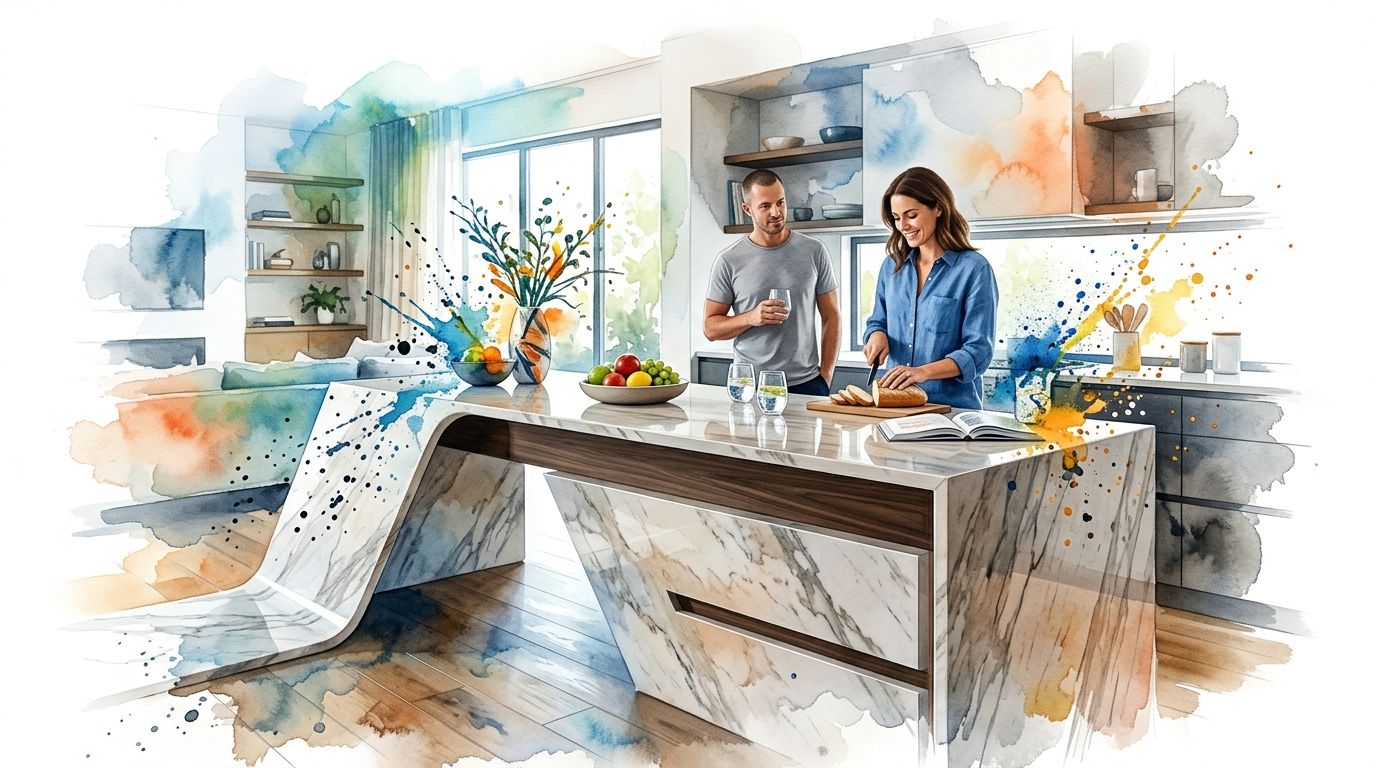
In Monterey County, that matters more than it does in a dry inland home. Coastal air, older subfloors, and slight movement in existing framing can all show up at a waterfall corner because the detail is rigid and easy to inspect with the naked eye. A standard countertop can hide a little irregularity. A waterfall edge usually cannot.
What homeowners usually get right
The appeal is easy to understand. A waterfall edge gives the island a more finished, intentional look, especially in an open kitchen where the side of the island is always in view.
That instinct is usually right.
It can also make sense in homes where the island end takes abuse from kids, guests, or daily circulation paths. In those cases, the stone or wood return is not just decorative. It is acting as a durable outer face.
What gets missed early
The common mistake is assuming the waterfall happens at the countertop stage. It starts much earlier, with layout, cabinet sizing, floor conditions, and support planning. If the cabinet run is out of square, if the floor drops, or if the overhang needs steel and nobody planned for it, the finished corner will expose every one of those decisions.
I tell clients to judge a waterfall edge by two standards. It should look right in the room, and it should be built to stay aligned after years of use. In a coastal remodel, those two standards are tied together.
A good Monterey County kitchen planning process catches these issues before the slab is fabricated.
Where it works best
It works best on an island with enough length and visual presence to justify the full-height return. The detail needs room around it so the side panel reads as intentional, not crowded.
It also fits kitchens with a restrained material palette. If the room already has busy veining, strong cabinet profiles, and multiple finish changes, the waterfall can start to feel like one more competing element instead of the anchor.
Where it falls short
It is not the best answer for every Monterey County home. Older houses, cottages, and kitchens with a furniture-style island often look better with paneled ends or a turned-leg detail that matches the character of the house.
There is also a real trade-off in function. Once the slab runs to the floor, that island end is no longer available for open shelves, short-side seating, or a lighter cabinet finish. If those features matter more than edge protection and visual mass, a standard countertop with a finished end panel is often the better choice.
Comparing Waterfall Construction Materials
Material choice sets the cost, the maintenance, and how well a waterfall island holds up after years of use. In Monterey County, coastal conditions directly affect material longevity. Salt air, indoor humidity swings, and small structural movement put more stress on the corner joint and the finish than many showroom samples suggest.
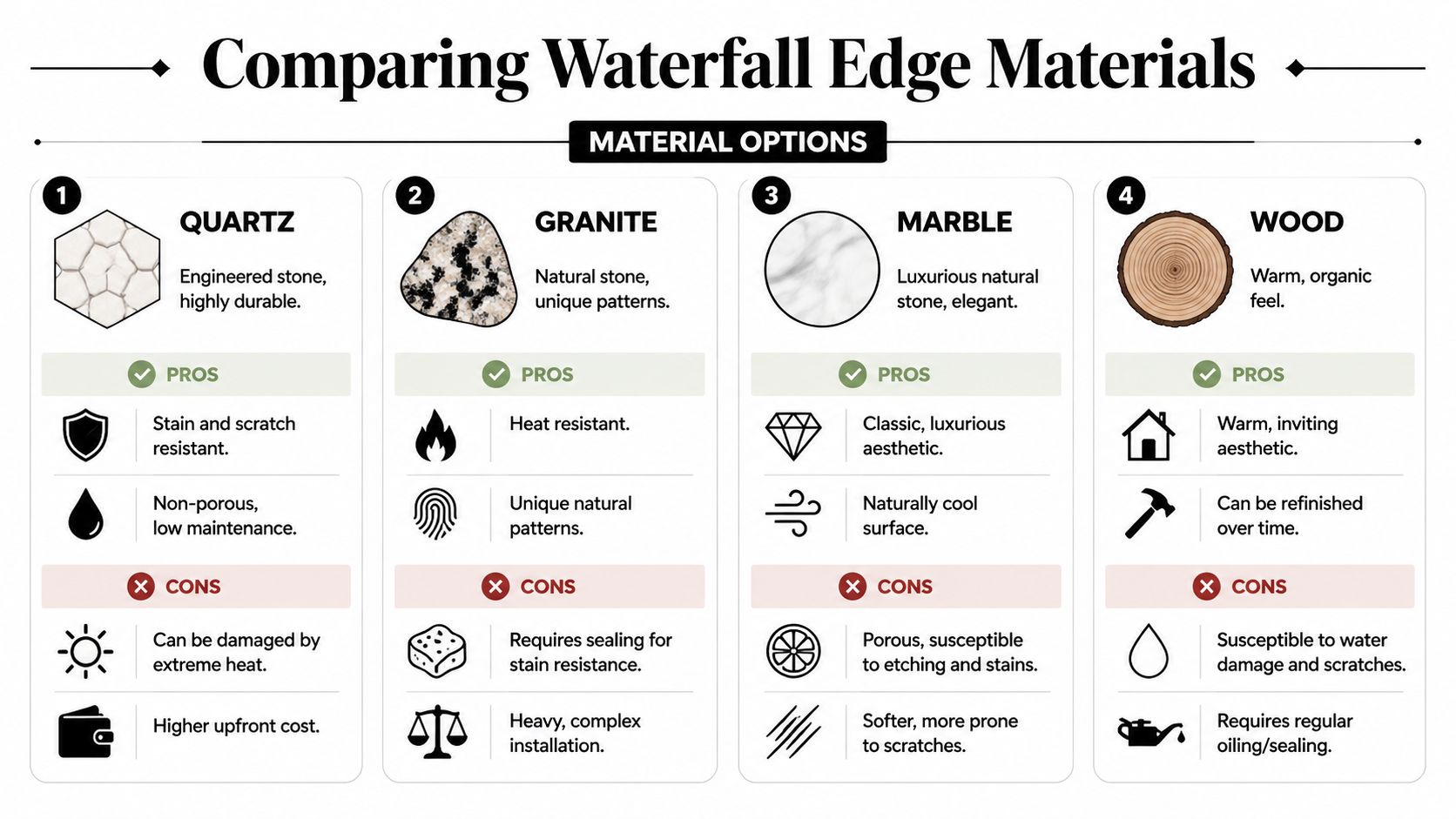
There are really two decisions here. The first is the visible material: quartz, granite, marble, or wood. The second is how that look is built. A true slab return behaves differently from a decorative panel that only imitates one.
Full slab versus lighter treatments
A full slab waterfall uses the countertop material itself on both the horizontal top and the vertical end. If it is stone or quartz, that means more weight on the cabinet run, tighter fabrication tolerances, and a corner joint that has to stay aligned over time. It costs more, but it also gives the cleanest result and the best protection at the island end where carts, shoes, and vacuums tend to hit.
A laminated edge or built-up assembly creates the appearance of thicker material by bonding pieces together. This can reduce slab cost, but it adds more glue lines and more chances for those lines to show as the house moves or the substrate shifts. In a dry, stable interior that may be acceptable. In a coastal remodel, I treat it as a budget compromise, not an equal substitute.
A veneer or cladding approach works better with wood than with stone-look finishes. Once the edge gets bumped or the base sees mopping water, those assemblies usually show their limits faster than a full slab installation.
How Monterey County conditions change the material decision
Near the coast, the material itself matters less than many homeowners think. The weak points are usually porosity, corner impact resistance, and how well the finish tolerates daily moisture and cleaning.
Quartz is consistent and nonporous, which makes it easier to live with in a busy kitchen. Granite is tougher at the surface than many people assume, but it still needs sealing and more care at the mitered corner. Marble brings a look many homeowners want, but it etches, stains, and chips more easily, especially on an exposed waterfall end. Wood gives warmth, though it is the most vulnerable at floor contact and at the lower corners where water and abrasion collect.
That is why I push clients to judge samples on edge performance, not just the top face.
Waterfall Island Material Comparison
| Material | Durability | Maintenance | Aesthetic Notes |
|---|---|---|---|
| Quartz | Holds up well in active kitchens. Nonporous, stain-resistant, and more predictable at the waterfall return. | Low maintenance. No sealing. | Clean, controlled look. A good fit for modern kitchens and slabs with consistent veining. |
| Granite | Durable and harder-wearing than marble, but weight and porosity still matter. | Needs periodic sealing and attention to spills. | Natural variation and depth. Better for homeowners who want movement and do not mind some upkeep. |
| Marble | Softer and more prone to etching, scratching, and edge damage. | High maintenance. Best for owners who accept patina and wear. | Distinctive and refined, but less forgiving in a hard-use kitchen. |
| Wood | Warm and inviting, but easier to dent and wear at corners and floor contact. | Requires regular protection from moisture and finish breakdown. | Softer, more casual character. Usually better as a design feature than a primary heavy-use island surface. |
What usually works best
For most Monterey County kitchens, quartz is the safest material for a waterfall island. It gives a cleaner miter, asks less from the homeowner after install, and handles everyday moisture better than natural stone that depends on sealing.
Granite is still a good choice for clients who want real stone and understand the maintenance. I use it when the slab is thick enough, the pattern works at the corner, and the owner is realistic about upkeep.
Marble is usually the highest-maintenance option. It can be the right choice in the right house, but only when the owner accepts that the exposed end will record use over time.
Wood belongs in a different category. It can make a beautiful island, but not because it outperforms stone. It works best when the goal is warmth and character, and when the homeowner is prepared for refinishing and edge wear.
How a Waterfall Island Is Built The Structural Details
A well-built waterfall island starts before stone fabrication. Cabinet layout, floor condition, structural support, and final dimensions all need to be right before the slab is cut.
If the base is out of level or out of square, the corner joint will show it. Stone doesn't hide framing mistakes.
Slab thickness is not a style choice
For waterfall edge kitchen islands, 3cm (1.25-inch) slabs are the industry standard over 2cm (0.75-inch) material because thinner slabs are more likely to sag or crack under overhang loads. One cited trade source states that for a 42-inch wide island with 15-inch overhangs, 3cm quartz or granite provides a significant safety factor against deflection and failure, and hidden 16-gauge steel corbels are essential for long-term durability and compliance. That guidance is laid out in this stone overhang and waterfall construction reference.
That matches field reality. Thin material may save money on paper, but it narrows the margin for error.
The miter joint is where good work shows
A waterfall corner is typically created with a mitered joint so the top and side read as one continuous form. If the fabrication is sloppy, the corner draws your eye immediately.
Vein direction matters too. On heavily patterned material, the fabricator has to think through how the pattern will turn the corner. If the visual flow breaks at the joint, the whole point of the feature gets weaker.
A waterfall island is one of those details where small mistakes look big.
Hidden support matters more than most people think
The stone gets attention. The support underneath deserves it.
Support can include reinforced cabinetry, internal framing, and steel corbels concealed inside the island structure. On older homes, floor framing can also become part of the conversation if the kitchen has been reworked several times or if the island is unusually heavy.
For homeowners trying to understand who coordinates structural responsibility during a remodel, this guide on what a licensed general contractor is responsible for gives the broader picture.
Build sequence that avoids trouble
The clean installs usually follow the same discipline:
- Cabinets are set first: They must be anchored, level, and checked before templating.
- Templating happens after final field verification: Appliance openings, overhangs, and end-panel alignment have to be confirmed in place.
- Support is installed before stone day: Corbels and backing shouldn't be improvised once the slab arrives.
- Seam planning is done before fabrication: The corner isn't something to “figure out later.”
- Installation is careful and deliberate: Heavy pieces need controlled handling, not rushing.
What shortcuts look like in practice
The common failures are predictable. Thin slabs, weak support, rushed templating, and corner joints that looked acceptable in the shop but open up once the island settles.
In a coastal home, adhesive choice and edge sealing matter too. The goal isn't just getting the slab installed. The goal is keeping that corner stable after years of use.
Key Design Considerations for Monterey County Homes
A waterfall island has to fit the room before it can improve the room. Many remodels fail when this is neglected.
People focus on the slab and forget the walkway. But the side panel runs to the floor, so the island becomes a harder obstacle than a standard cabinet end.
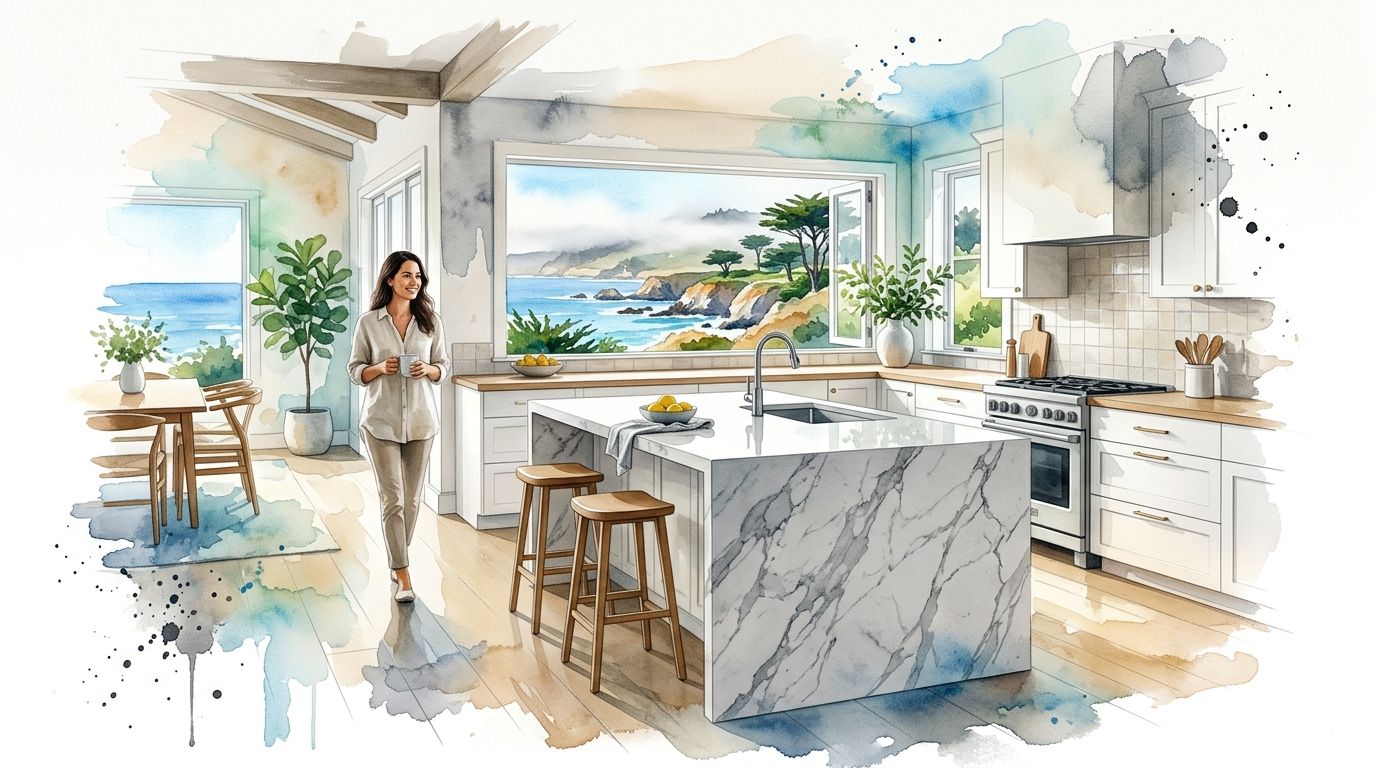
Clearance is not optional
A minimum 42-inch clearance around waterfall islands is essential for function, and 48 inches is better in multi-cook kitchens, according to this waterfall island design reference. That same source notes that sink cutouts should be offset 6 to 8 inches from waterfall edges to protect structural integrity, and it specifically flags salt air and seismic activity as material durability issues in coastal areas like Monterey County.
Those numbers matter in real kitchens. If a space is already tight, a waterfall end can make it feel tighter because the slab reaches the floor and visually closes in the path.
Older homes need extra scrutiny
A lot of Monterey County homes weren't built around the way people use kitchens now. Some have narrow circulation paths. Some have uneven floors. Some have been remodeled in pieces over the years.
A waterfall edge can still work in those homes, but it has to be evaluated carefully. If the room can't support the required clearance, the right answer may be a standard island end, a one-sided waterfall, or a different island shape.
Coastal exposure changes detailing
Moisture isn't the only issue near the coast. Salt air can affect metal components, and small fabrication flaws can become maintenance points if water sits at a joint or edge.
That doesn't mean you avoid a waterfall island. It means you detail it correctly. Material selection, adhesive choice, anchoring, and accurate fabrication all carry more weight in Pacific Grove, Carmel-by-the-Sea, Pebble Beach, and other exposed parts of the county than they might inland.
If the kitchen layout is fighting the waterfall idea, listen to the layout. The room is usually right.
Layout choices that usually hold up better
A few decisions tend to age well:
- One-sided waterfalls: Good when you want the look without boxing in both ends.
- Sink placement away from the drop: Better for structure and easier detailing.
- Clear seating zones: Stools need room, and the side panels limit where people can sit comfortably.
- Controlled patterns: Busy veining and tight rooms can make the island feel heavier than intended.
What doesn't age well
Double waterfalls in undersized kitchens are a common regret. So are heavily veined slabs installed without careful visual planning.
Another miss is forcing the island to do too much. If it needs to hold appliances, hide outlets, provide wide seating, and carry a dramatic slab on all sides, something usually gets compromised.
FAQ About Waterfall Edge Kitchen Islands
Is a waterfall edge kitchen island worth it?
In the right kitchen, yes. A well-built waterfall island gives the room a clean finished edge and protects the cabinet end from kicks, carts, and day-to-day abuse.
The catch is that it only pays off if the layout, support, and slab choice are right. In Monterey County, I also look at exposure, floor level, and how close the home is to damp coastal air. A waterfall edge installed as a visual add-on tends to show problems early at the corner or base.
Does a waterfall island cost more than a standard island?
Yes. It uses more slab, more shop time, and more care during installation.
The added cost usually comes from fabrication, corner detailing, extra handling, and the support work underneath, not just the material itself. On many remodels, the island also pulls in electrical, flooring patching, or cabinet modifications. That is one reason budgets shift. If you want a practical breakdown, this guide to why kitchen remodels end up costing more than expected explains where those changes usually happen.
Can I still have seating with a waterfall island?
Usually, yes. The seating just needs to be planned around the panel instead of treated like an afterthought.
The long side is where seating works best. The waterfall end closes off one side, so stool spacing, knee room, and traffic flow matter more than they would on a standard island. If a family wants seating on multiple sides, I often recommend one waterfall panel instead of two.
Will a waterfall island work in a small kitchen?
Sometimes. Clearance is the first test.
A waterfall panel adds visual weight and removes some flexibility at the end of the island. In a compact kitchen, that can make the room feel tighter and make circulation less forgiving. Smaller kitchens often do better with a one-sided waterfall or a standard finished panel that keeps the space lighter.
What material is usually the safest choice for daily use?
For many households, quartz is the most forgiving option. It gives a consistent look, handles routine use well, and asks for less upkeep than marble.
That does not make it the right answer for every project. Natural stone can still be the better fit if the homeowner wants movement and accepts the maintenance. In coastal homes, I usually favor materials and finishes that are easier to keep clean and less sensitive at exposed edges and joints.
Will quartz crack in an earthquake?
Quartz can crack. So can granite, porcelain, or natural stone if the installation is weak or the support is wrong.
The better question is whether the island was built to limit stress. I want a flat substrate, proper cabinet support, controlled spans, and secure attachment at the slab and cabinet connection points. In California, the material matters, but the build details matter just as much.
How do you clean the vertical sides?
Use the cleaner recommended for the countertop material and wipe the panel more often near the bottom. That is where scuffs, mop splash, shoe marks, and chair contact show up first.
Avoid harsh cleaners and abrasive pads. They can dull a honed finish, leave residue at seams, or create a noticeable difference between the horizontal and vertical faces over time.
Do the veins really line up at the corner?
They can, but only if the slab is selected and cut for that result. Good vein matching starts in the shop, not on installation day.
With some natural stones, perfect continuity is unrealistic because the pattern shifts through the slab. A strong match is often the right goal. If the corner has to read as one continuous line, that needs to be discussed before fabrication begins.
Is a waterfall island a bad idea in an older house?
No, but older homes need a closer look. I see more issues with out-of-level floors, walls that are not straight, and framing that was never meant to carry a heavy finished slab at the island end.
Those conditions do not rule out a waterfall detail. They do mean the support has to be built carefully, and sometimes the smartest choice is a modified design instead of a full double waterfall.
Why do remodel prices around islands change so much?
Because the island affects several trades at once. Countertop work is only part of it.
A waterfall island can trigger cabinet revisions, electrical moves, flooring repair, added backing, finish carpentry, and more fabrication time if the slab pattern has to die into the corner cleanly. In coastal homes, I also pay closer attention to adhesives, fasteners, and moisture-prone connection points so the island holds up after the photos are taken.
Starting Your Waterfall Edge Kitchen Island Project
A waterfall edge kitchen island works when the room has the space for it, the material fits the way you live, and the build is treated like structural finish work instead of decoration. That’s the difference between an island that still looks right years later and one that starts showing problems at the corner, the base, or the walkway.
In Monterey County, the local conditions raise the stakes a bit. Coastal exposure, older housing stock, and California structural requirements all make planning more important. If permits are part of the remodel, this explanation of who handles remodel permits in Monterey and why it matters is worth reviewing early.
The right approach is simple. Measure the room accurately. Choose the material for real use, not just appearance. Build the support before the slab shows up. If any part of that feels uncertain, sort it out in planning, not during installation day.
If you’re planning a waterfall edge kitchen island as part of a kitchen remodel, Palacios Construction can help you evaluate the layout, structural needs, and finish details before work begins. Homeowners throughout Monterey County can reach out through the website or visit 222 Ramona Ave Unit 5, Monterey, CA to start a straightforward conversation about the project.