
Quick Answer
To convert a garage to living space in Monterey County, you need more than finishes and furniture. A legal, durable conversion starts with planning, permits, structural review, floor and moisture work, insulation, HVAC, electrical, and code-compliant windows and exits. If the space may become an ADU, review ADU cost considerations in Monterey early because scope changes everything.
If you're standing in your garage and seeing a future office, guest room, family space, or in-law setup, the idea makes sense. A garage already gives you an enclosed footprint, but knowing how to convert garage to living space correctly is what separates a lasting project from a room that feels cold, damp, dark, or unfinished.
In Monterey County, that difference usually comes down to process. Coastal moisture, older homes, local permitting, and garage slabs that were never built for daily living all need to be addressed before the drywall goes up.
Is a Garage Conversion the Right Project for You
A garage conversion works well when the structure is sound, the use is clear, and you're prepared to build it as habitable space instead of treating it like a cosmetic remodel. A garage was built for parking and storage. Living space has a different standard.
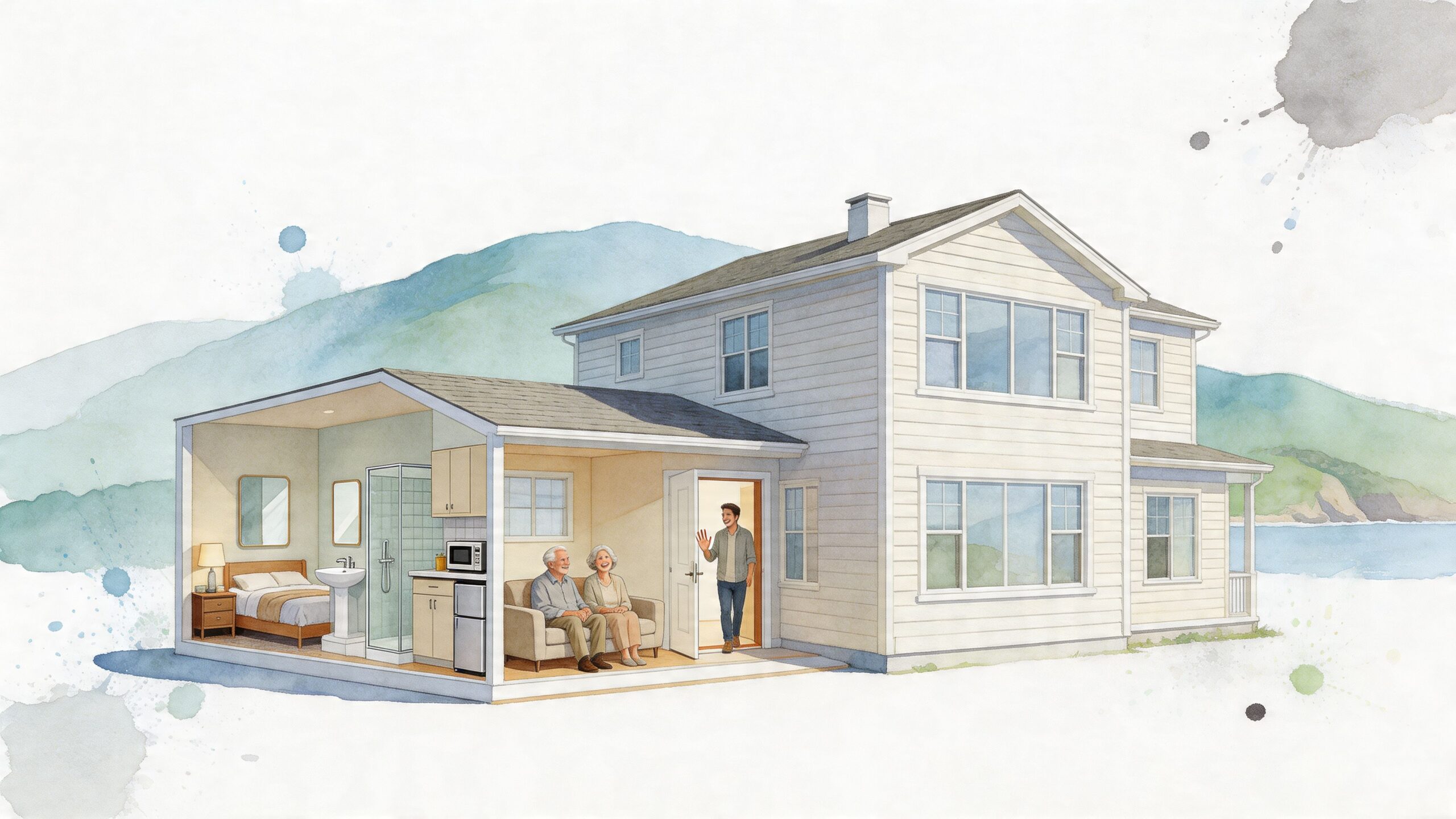
Some homeowners need a simple extension of the house, like a den, bedroom, or office. Others are really considering an ADU or JADU without using that term yet. Those are different projects with different rules, utility needs, and long-term value considerations.
Start with the intended use
The first decision is not flooring or windows. It is how the room will function.
If the conversion will be part of the main house, the job may be more straightforward from a layout and utility standpoint. If you want an independent unit with its own living functions, you may be entering ADU territory, which changes planning, permits, and how the space must be built.
A few common directions look like this:
- Extra room for the main house. This works for a home office, bedroom, playroom, or family room. It usually has the fewest moving parts.
- JADU path. This can work in the right house, but it has its own limits and isn't the same as a full detached or self-contained unit.
- Full ADU conversion. This is the most involved option because the space must function as an independent dwelling.
If you're unsure which category your property fits, it helps to review what determines whether you can build an ADU on your property before you commit to a layout.
Look at the trade-offs honestly
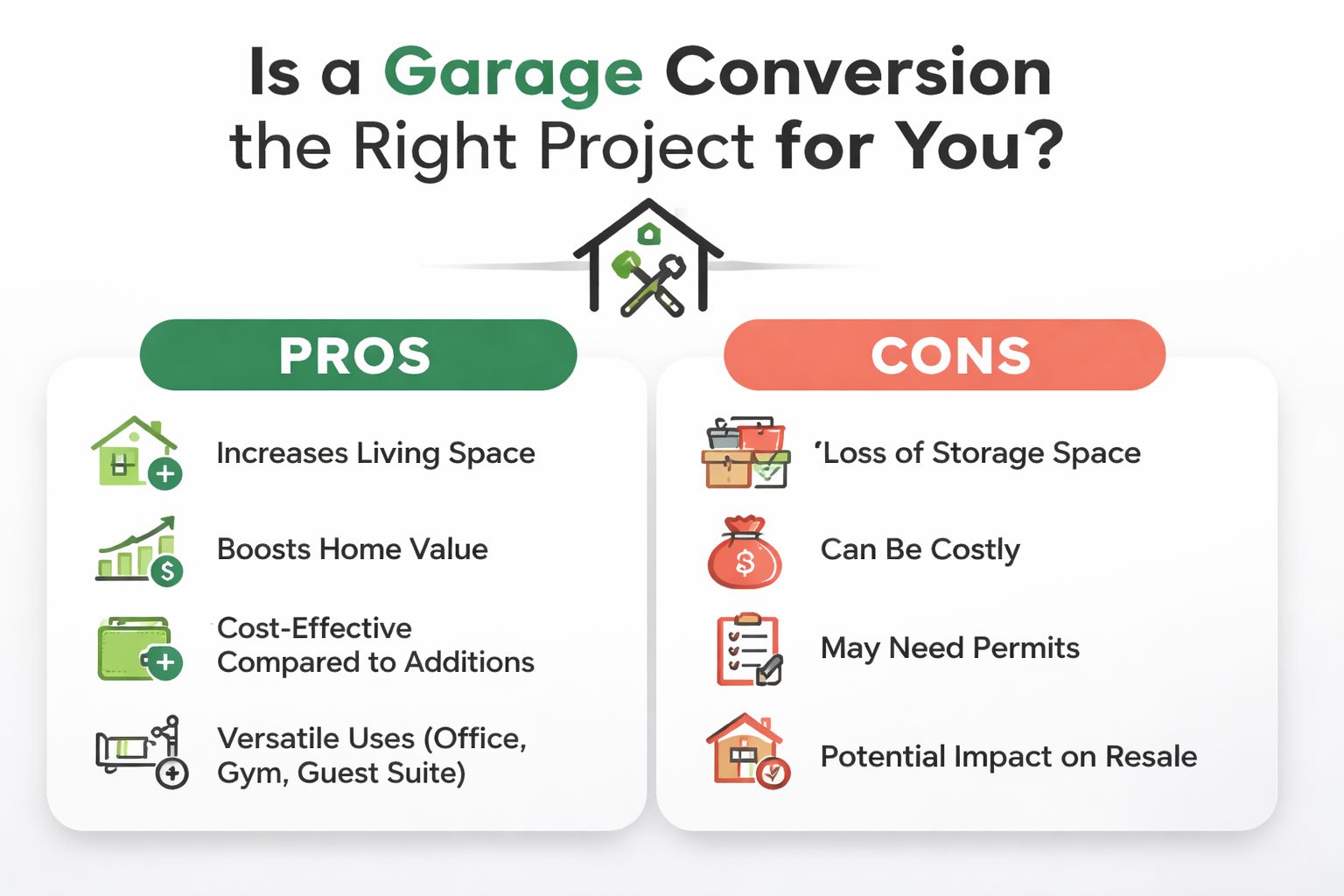
A conversion usually costs less upfront than a full addition because you're starting with an existing shell. But lower initial cost doesn't automatically mean it is the right project for every house.
The biggest trade-offs are practical:
- Parking loss. Some sites and jurisdictions care about replacement parking more than homeowners expect.
- Storage loss. Most garages carry more overflow household use than people realize until demo starts.
- Resale perception. Buyers do not always value a converted garage the same way they value a traditional addition.
In coastal markets, buyers can view converted garages differently from conventional additions, which is why the resale side should be weighed against zoning restrictions and project cost, as noted in this discussion of garage conversion resale trade-offs.
That doesn't mean a conversion is a bad investment. It means the project should match the property, neighborhood, and long-term use.
Check the structure before you fall in love with the idea
A garage can look clean and still be a poor candidate. The slab may slope hard toward the door. The stem walls may need work. The framing may not support what you want to add. Moisture intrusion may already be present around the perimeter.
In Monterey County, attached garages in older homes often need more correction than owners expect. Salt air, moisture, deferred maintenance, and patched-over prior work show up once finishes come off.
A quick pre-planning checklist helps:
| Question | Why it matters |
|---|---|
| Is the garage attached or detached | It affects utility routing, access, and possible ADU use |
| Is the slab level and dry | Floor prep drives comfort and durability |
| Are there signs of settlement or cracks | Structural fixes need to happen first |
| Will you need a bathroom or kitchenette | Plumbing changes add complexity |
| Do you have another place for storage and parking | This affects daily use after the project is done |
Exterior appearance matters too. Once the garage door opening is closed in, the front of the house can either look intentional or patched together. If you're thinking ahead about the street-facing side, these high-ROI fixes to improve curb appeal are worth a look because the garage conversion should improve the house visually, not make it look like something was taken away.
Navigating Monterey County Permits and Regulations
Permits are not the annoying paperwork you deal with after core decisions. They are part of the project itself. If the permitting path isn't clear, the scope isn't clear either.
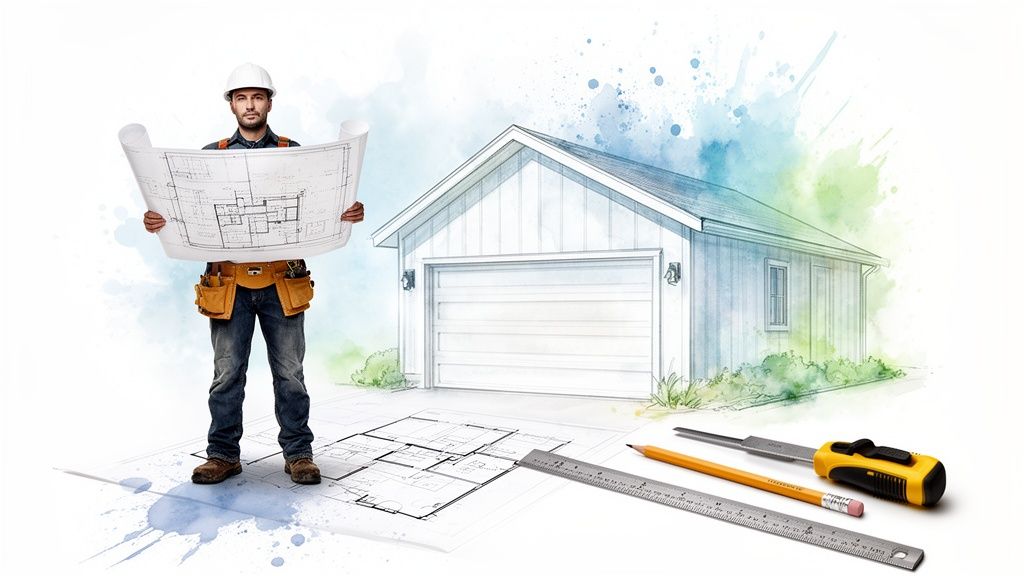
A legal garage conversion requires plans that show the county or city what is being built, how it will be supported, how it will be conditioned, and how life-safety requirements are being met. In practice, that usually means floor plans, structural details, electrical layouts, window and door information, and any plumbing or mechanical work that applies.
What approval usually depends on
Monterey County properties are not all reviewed under the same conditions. Neighborhood, lot constraints, coastal issues, and the type of conversion all affect what gets flagged.
Common review issues include:
- Zoning compliance. The property has to allow the proposed use.
- Parking questions. Some jurisdictions may require replacement parking depending on the site and project type.
- Fire and separation details. If the garage is attached, the separation from the main house has to be handled correctly.
- Historic or design review concerns. In older neighborhoods, exterior changes can draw closer attention.
A lot of permit delays come from incomplete submittals. The county or city isn't guessing what you intend. If the plans don't clearly show the work, you'll get comments and revisions.
The permit process works best in sequence
The cleanest path is straightforward. Verify what the property can support, document existing conditions, prepare permit-ready plans, submit, respond to comments, then build in inspection order.
Practical rule: Don't start demolition to "get ahead." If the approved scope changes after demo, you can create extra repair work and inspection issues.
For homeowners sorting out what agencies may ask for, this guide on permits required for an ADU or garage conversion is a useful starting point.
The county process can feel slow when you're eager to start, but building first and trying to legalize later is usually where delays and costs show up. On a garage conversion, the permit path is part of the construction plan, not separate from it.
Essential Structural Work for a Durable Conversion
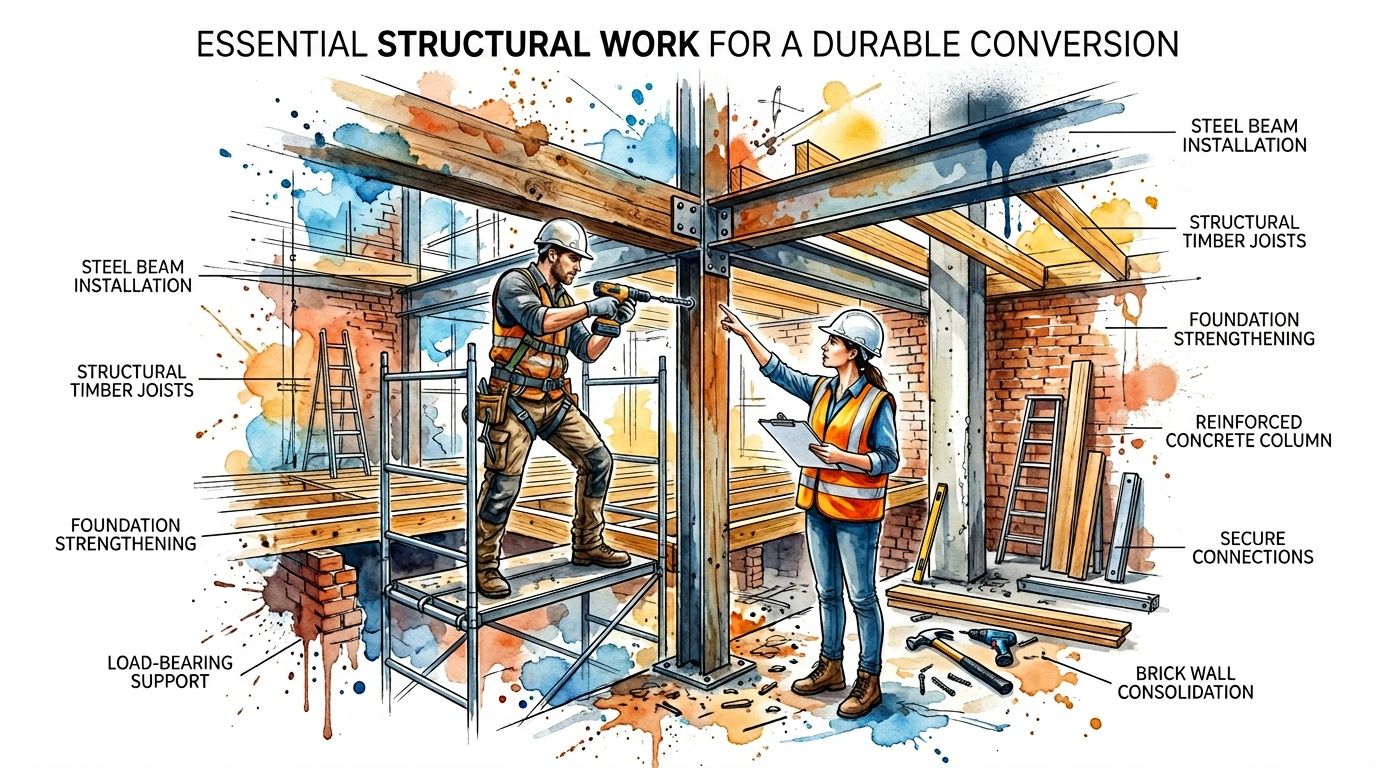
Proper execution is paramount for garage conversions. If the foundation, floor, wall framing, and openings are not corrected properly, the finished room may pass a quick visual test and still perform poorly for years.
The slab is usually the first problem. Most garage floors were poured for utility, not comfort. They often slope, sit lower than the house floor, and have no insulation approach that makes sense for habitable use.
Fix the floor before anything else
In Monterey County, floor preparation is not a place to cut corners. Marine moisture and ground moisture don't care what finish floor you pick later. If water management is wrong at the slab, the room will tell you.
According to this discussion of coastal floor and moisture failure risks, coastal conditions expose weak floor prep fast, and floor systems need proper moisture barriers and sealing to avoid premature failure. That's consistent with what shows up in the field. The failures usually aren't dramatic at first. They start as musty air, cold floors, edge swelling, finish separation, or staining around the perimeter.
A proper floor plan may involve:
- Moisture evaluation to see what the slab is doing now, not what you hope it will do later
- Leveling or raising the floor so the room transitions properly and supports the chosen finish
- Sealing and barrier work to separate the occupied space from slab moisture
- Threshold planning at doors so water doesn't work back into the room
Framing has to match habitable use
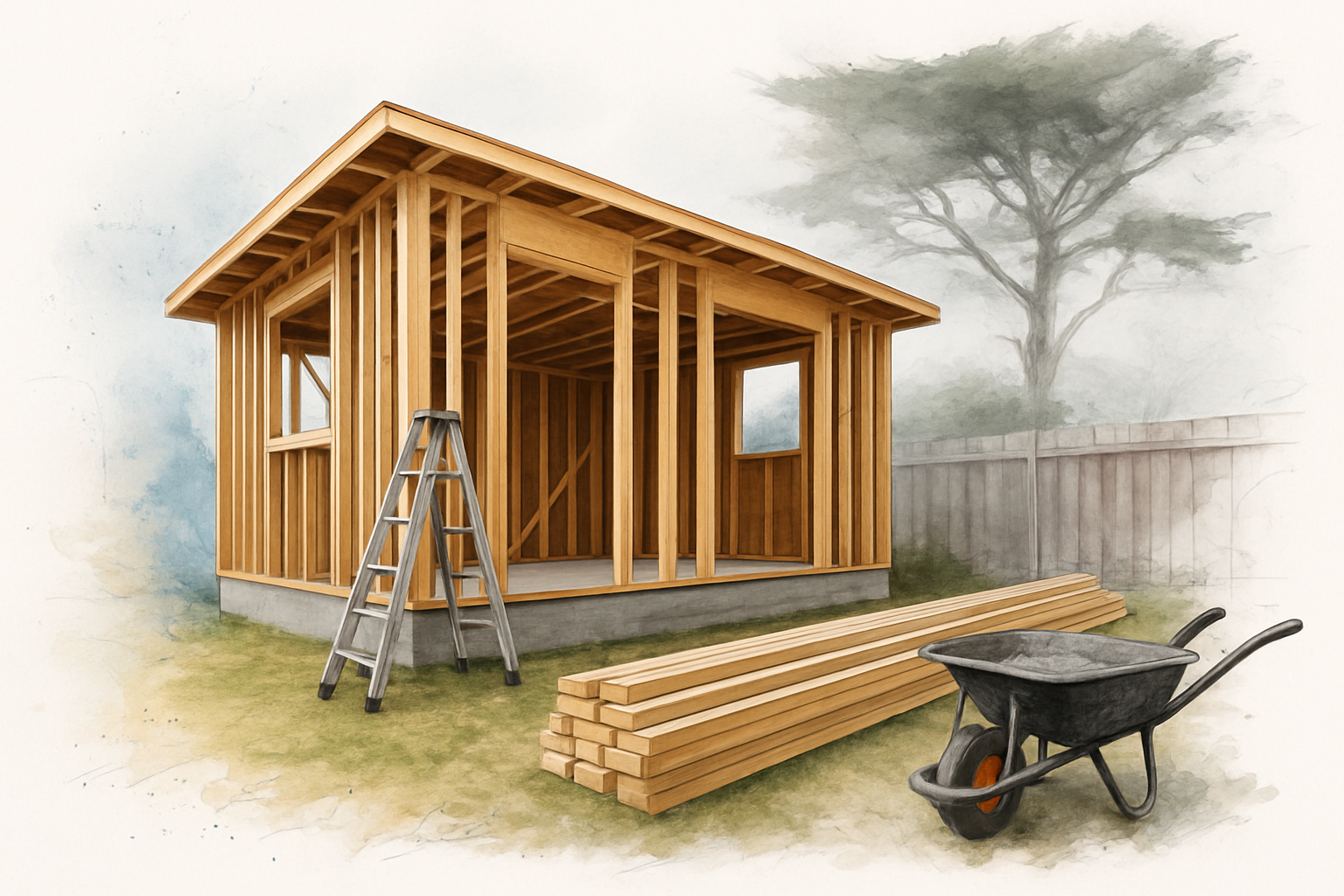
Once the floor is addressed, wall framing and the old garage door opening become the next major moves. At this stage, a garage starts turning into part of the house instead of a box with a nicer floor.
The infill where the garage door used to be must tie into the existing structure correctly. Windows and doors need proper headers where required, proper weather detailing, and a clear exterior finish strategy so the front elevation doesn't look patched.
Attached garages also need attention at the house connection. That joint matters structurally and from a moisture and air-sealing standpoint. If the new work isn't integrated well, you'll often feel it in drafts and see it in seasonal movement.
Sequence matters more than people think
A common mistake is moving quickly to visible items. Framing starts, windows go in, and everyone feels progress. Then a slab issue or structural correction shows up and work has to be reopened.
That is why pre-construction planning matters on this type of job. If you want a clearer picture of how permit-ready planning supports the field work, this overview of design and pre-construction planning in Monterey for permit-ready projects gets at the same issue.
Foundation and floor corrections should lead the job, not follow it.
A durable conversion starts at the bottom. The room only feels finished after those hidden parts are handled.
Creating a Fully Conditioned and Ventilated Space
A Monterey garage can look finished and still fail as living space. The usual pattern is familiar. Drywall goes up, paint dries, the room looks clean, then the first cold morning or damp evening exposes the weak spots. The floor feels chilly, the air sits heavy, and the space never matches the rest of the house.
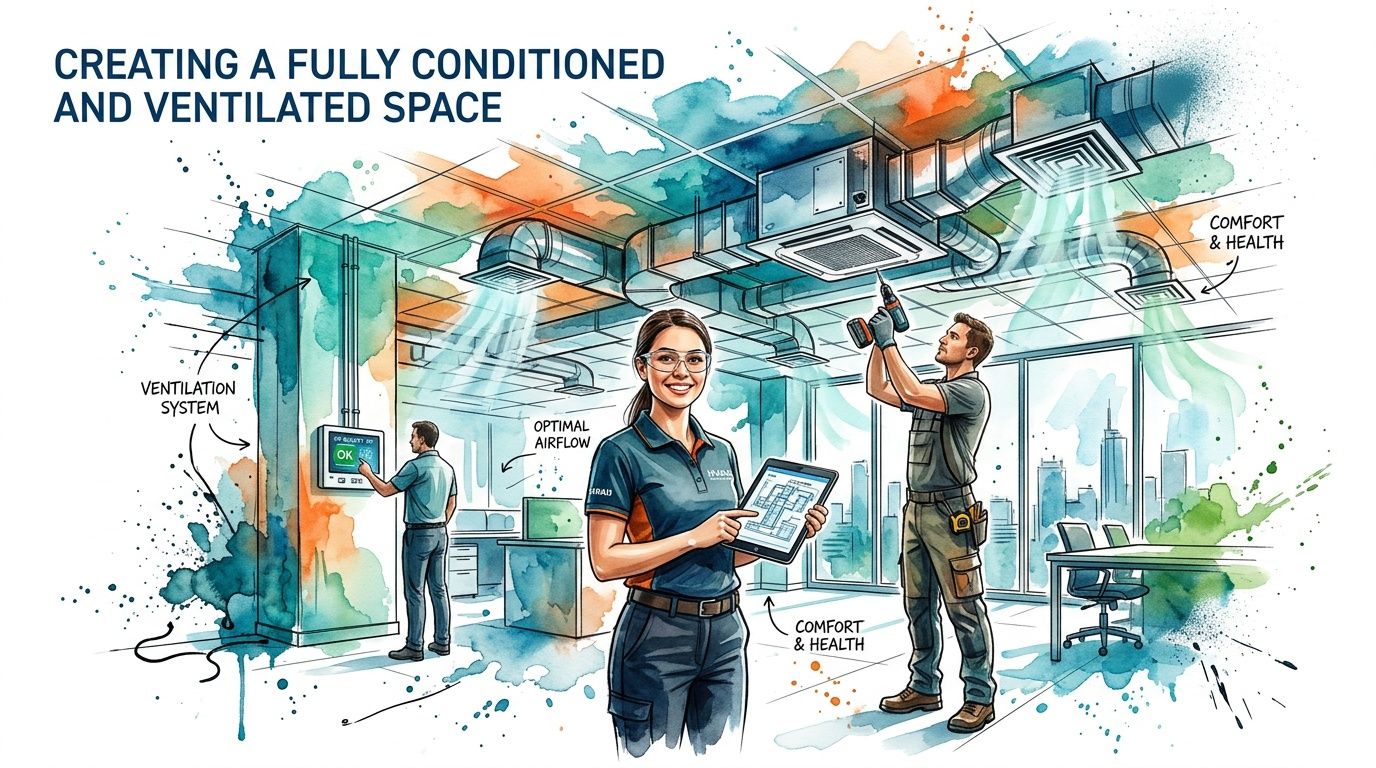
That happens because conditioning is more than adding a heat source. In coastal Monterey County, the room has to control temperature, air movement, and moisture at the same time. If those three pieces are handled separately, the conversion often ends up uncomfortable even when it passes a basic visual inspection.
Insulation has to match the assembly
Garages usually begin as loosely insulated or uninsulated shells. Habitable space requires a different standard. California Energy Code requirements for insulation and mechanical systems are outlined by the California Energy Commission.
The practical issue is not just the insulation rating. It is whether the wall, ceiling, slab edge, and air sealing work together. In this climate, a room can have decent batt insulation in the studs and still feel damp or uneven if outside air is getting in around penetrations, at the old garage door infill, or where the ceiling ties into older framing.
I treat insulation as part of the drying strategy for the room, not just a line item for inspection.
That planning should happen before rough work starts. If you are sorting through equipment choices and assembly details early, this guide to permit-ready design and pre-construction planning in Monterey helps frame the coordination work that keeps these projects from being reopened later.
Heating and cooling should be sized for the converted space
Homeowners often ask to tap into the existing forced-air system and call it done. Sometimes that works. A lot of times it creates a comfort problem somewhere else in the house or leaves the new room under-served because the original system was never sized for the added load.
In garage conversions, the common options are straightforward:
| Option | Good fit | Main trade-off |
|---|---|---|
| Extend existing ductwork | The house system has documented capacity and duct routing is practical | Added load can reduce performance in other rooms |
| Ductless mini-split | One room, independent control, retrofit-friendly installation | Indoor head location and outdoor unit placement need careful planning |
| Electric resistance heat | Very small spaces or limited-use rooms | Higher operating cost and weaker year-round comfort |
For Monterey County, mini-splits are often the cleanest answer because they give steady control without major duct surgery. They also handle shoulder-season weather well, which matters near the coast where conditions shift quickly between morning and afternoon.
Ventilation and moisture control need their own plan
Conditioned air is only part of the job. A converted garage also needs controlled ventilation, especially if the space includes a bathroom or stays closed up for long periods. The U.S. Department of Energy guidance on home ventilation gives a good overview of why fresh air exchange and spot exhaust matter in enclosed spaces.
Openable windows help. They do not replace properly sized bath exhaust, source control for moisture, and a room that can dry out after normal daily use.
That matters more here than inland. Coastal air carries more moisture, and old garages were not built with long-term indoor comfort in mind. If a conversion gets insulated and sealed without a clear ventilation plan, stale air and condensation issues show up fast, especially around cooler surfaces and corners with weak airflow.
A well-built garage conversion feels dry, even, and predictable through winter mornings, foggy afternoons, and summer heat spells.
When the insulation, HVAC, and ventilation strategy are coordinated from the start, the room lives like part of the house. When they are patched together, the problems stay with the owner for years.
Wiring, Plumbing, and Windows for Safety and Function
Once the shell is corrected and the room can be conditioned, the next layer is utility work and life safety. This is the part homeowners notice every day. Where the outlets land, how the lights are switched, whether the bathroom drains correctly, and whether the windows make the room legal all affect how usable the conversion is.
Electrical layout should match real use
A garage conversion needs more than a few added receptacles. The electrical plan should reflect what the room is for.
A bedroom, office, media room, or ADU-style space all use power differently. That affects lighting circuits, outlet placement, dedicated equipment, and sometimes the main panel capacity. If heating and cooling equipment or added appliances are part of the plan, the electrical side needs to be coordinated early, not after framing is complete.
Good electrical planning usually includes:
- Lighting at task areas instead of relying on one central fixture
- Outlet placement based on furniture layout and intended use
- Switching that makes sense at entries, bedside areas, or exterior access doors
- Future needs if the space may be repurposed later
Plumbing changes are where scope expands quickly
If the room stays dry, meaning no sink, bath, or kitchenette, the build is simpler. Once plumbing enters the job, the slab, drainage path, venting, and utility coordination all become more involved.
Material choice matters too, especially where long-term serviceability is a concern. While climates differ, this article on PEX performance for Big Bear homes is a useful general read for homeowners comparing plumbing material expectations and durability questions.
Windows and egress are not decorative decisions
Garage conversions often start dark. New windows solve part of that problem, but they also serve code and safety purposes. Habitable spaces need compliant light, ventilation, and emergency escape where required.
That means window size, sill height, operation, and placement cannot be treated as purely aesthetic choices. Exterior doors matter too. The room needs practical access and a safe exit path. If the conversion includes a sleeping area, these details become even more important.
A code-compliant room should work for daily life first, and for emergency use when needed. Both have to be built in from the start.
Project Costs and Hiring a Licensed General Contractor
Most homeowners eventually ask two questions. Is this worth the money, and who should handle it?
A garage conversion can make financial sense when the project is legal, well planned, and built as real living space. According to Master Appraisal Services on garage conversion value, garage conversions typically deliver an ROI of around 80%. That same source notes that the gain comes from adding livable square footage, which is why quality and permit status matter so much.
 general contractor for home renovations.” />
What drives cost on a garage conversion
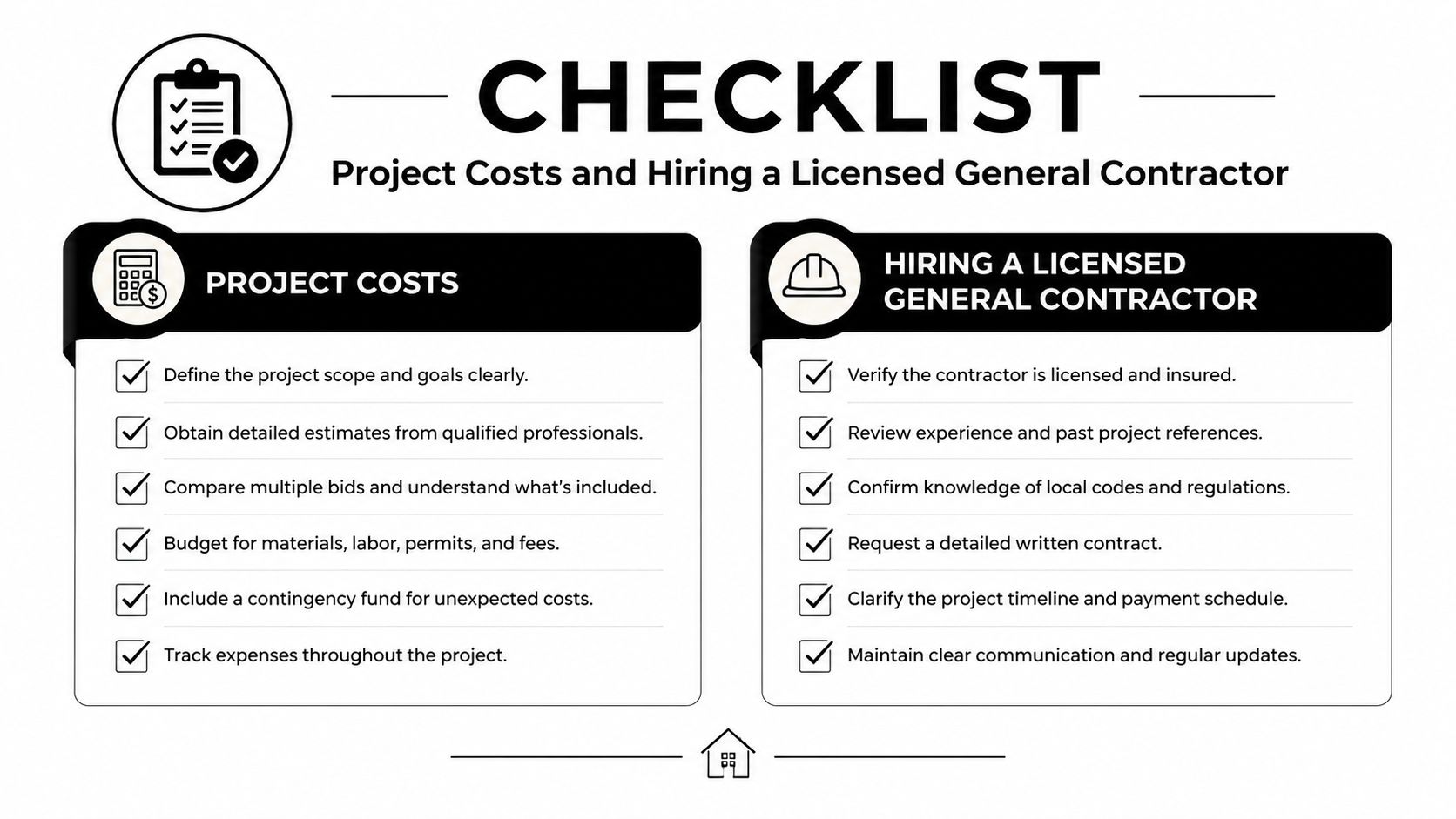
The cost question doesn't have a useful one-size answer because scope changes everything. A basic conditioned room is one thing. A conversion with a bathroom, full utility upgrades, structural correction, exterior rework, and higher-end finishes is another.
The biggest cost drivers are usually:
- Existing conditions. Slab issues, framing repairs, moisture problems, or older utility systems all add work.
- Layout changes. New doors, window openings, and garage door infill affect structural and finish scope.
- Mechanical complexity. HVAC, plumbing, electrical upgrades, and panel work can move the budget significantly.
- Permit and plan requirements. The cleaner the planning, the fewer expensive surprises during construction.
- Finish level. Flooring, tile, trim, cabinetry, fixtures, and exterior match work all influence final cost.
The cheapest proposal often assumes the fewest corrections. That can look good at contract time and fall apart once walls open up.
How to hire the right contractor
On a garage conversion, hiring is not just about finding someone who can frame walls and hang drywall. You need someone who understands sequence, permitting, inspections, and the hidden work that makes the room last.
A useful homeowner resource on simplifying contractor selection for homeowners can help you think through the screening process. Beyond that, focus on a short list of practical checks:
| What to verify | Why it matters |
|---|---|
| Active license and insurance | Protects the homeowner and sets a baseline for legitimacy |
| Residential remodeling experience | Garage conversions involve different issues than simple cosmetic work |
| Local permit familiarity | Monterey County review and inspection expectations matter |
| Clear scope and exclusions | You need to know what is included before work starts |
| Communication style | Good field decisions depend on clear updates and accountability |
If you want a better sense of role and responsibility on a residential project, this page on what a licensed general contractor is responsible for is worth reviewing.
The right contractor will talk plainly about risks, existing conditions, and what must happen first. If someone skips past those topics and moves straight to finishes, that is usually not a good sign.
Frequently Asked Questions About Garage Conversions
Can I convert my garage into a bedroom or office without making it an ADU
Yes, if the conversion is becoming part of the main house and the property allows the work. It still has to meet habitable-space requirements for permits, insulation, access, and safety. A room conversion is not the same thing as a separate dwelling unit.
Do I need permits to convert a garage to living space
Yes. If you're changing a garage into habitable space, permits are part of doing the job legally. That includes structural work, electrical, mechanical, plumbing where applicable, and final approval.
Is a garage conversion worth it in Monterey County
It can be, especially when you need living space without building a full addition. The value depends on the condition of the existing garage, the quality of the work, how the market views the finished space, and whether the conversion is fully permitted.
What is the hardest part of a garage conversion
In many projects, the hardest part is correcting what the garage already is. Sloped slabs, moisture exposure, low insulation levels, awkward utility paths, and permit constraints all show up before finishes do. The project gets easier once those issues are handled early.
Can I keep part of the garage for storage
Sometimes, yes. That depends on the layout, code requirements, and whether the remaining area can still function as intended. It needs to be planned carefully so the finished room doesn't feel compromised or create fire-separation problems.
How long does a garage conversion take
The timeline depends on planning, permit review, inspections, existing conditions, and project scope. A simple conversion moves differently than one with plumbing, major structural upgrades, or ADU-level requirements. The permitting stage often shapes the schedule as much as the field work.
Call to Action
A garage conversion can add useful square footage and strong long-term function, but only if the work is done as real habitable construction. If you're figuring out how to convert garage to living space on your Monterey County property, it helps to start with the structure, the permit path, and the conditions on site rather than the finish selections.
If you'd like to talk through your garage conversion, ADU, or home addition project, Palacios Construction offers residential construction guidance for homeowners in Monterey County. You can start the conversation at palaciosconstructionca.com or visit 222 Ramona Ave Unit 5, Monterey, CA.