
If you are planning a bathroom remodel for 2026, the first question is about cost. A simple cosmetic refresh can cost under $15,000, while a full-gut, high-end renovation can easily exceed $75,000.
This wide range is driven by the scope of work, the quality of materials, and whether you move walls or plumbing. For homeowners in Monterey County, local labor rates and coastal building codes often push costs higher than national averages.
Establishing Your 2026 Bathroom Remodel Budget
A realistic budget is the foundation for every decision in your remodel. Without a solid financial plan, project scope can easily expand, forcing unwanted compromises or project delays.
The first step is to define what "remodel" means for your home. We break projects into three tiers, each with its own budget and goals, to align expectations with financial realities.
Understanding the Budget Tiers
Cosmetic Refresh: This involves surface-level updates to improve aesthetics without altering the core structure. Think of it as a significant facelift.
Mid-Range Renovation: This is the most common project type. It involves replacing nearly all fixtures and finishes for a comprehensive overhaul, but the existing layout remains the same.
High-End Overhaul: This is a complete transformation. It includes significant changes like reconfiguring the layout, moving plumbing and electrical, and installing premium, custom features.
A common misconception is that national cost averages apply directly to our local market. Factors like skilled labor availability, coastal material requirements, and the complexities of renovating older homes in Monterey County create a unique cost structure.
National data might suggest a standard bathroom project costs $6,600 to $18,000, with a per-square-foot cost between $70 and $250. These numbers are a useful baseline but only a starting point. You can explore more about these national averages and what they include, but local factors will determine the final cost.
To provide a clearer picture, here is a summary of what to expect for each tier in Monterey County.
2026 Bathroom Remodel Budget Tiers at a Glance
This table breaks down typical investment levels and the scope of work you can expect. It helps align your vision with a practical budget.
| Remodel Tier | Typical Budget Range (2026) | Common Scope of Work |
|---|---|---|
| Cosmetic Refresh | $12,000 – $25,000 | New paint, vanity, countertop, mirror, light fixtures, and faucet. The existing layout and tile remain. |
| Mid-Range Renovation | $25,000 – $60,000 | Includes all cosmetic updates plus a new shower/tub, tile flooring, toilet, and enhanced lighting. |
| High-End Overhaul | $60,000+ | All of the above, plus layout changes, moving walls or plumbing, custom cabinetry, and luxury finishes. |
These are realistic starting points. The final cost will always depend on your specific home, material selections, and project complexity.
Breaking Down the Key Cost Drivers
Understanding where the money goes is more useful than just knowing the total number. A professionally planned budget allocates every dollar, from plumbing labor to the vanity.
The largest line item in almost every professional remodel is skilled labor. It is not uncommon for labor to account for 40% to 65% of the total project cost. This covers licensed and insured plumbers, electricians, tile setters, and carpenters, all coordinated by a project manager to ensure work is done correctly and passes inspection.
The Anatomy of Your Budget
A well-structured budget balances funds across materials, fixtures, and the professional labor required for correct installation. While every project is unique, budget allocation follows a predictable pattern.
Here is a look at how a typical bathroom remodel budget is allocated, showing where the investment goes.
Typical Bathroom Remodel Budget Allocation
| Cost Category | Typical Budget Percentage | Description of Included Items |
|---|---|---|
| Labor & Project Management | 20% – 25% | Includes demolition, installation, plumbing/electrical rough-in, tile setting, and overall project coordination. |
| Cabinetry & Hardware | 15% – 20% | Vanity, medicine cabinet, storage towers, and all associated knobs, pulls, and hinges. |
| Fixtures | 10% – 15% | Tub, shower base, toilet, and sinks. |
| Faucets & Plumbing | 10% – 15% | Faucets for sink and shower, shower heads, valves, and supply lines. |
| Flooring | 8% – 10% | Tile or other waterproof flooring materials and installation supplies. |
| Countertops | 5% – 10% | Material (quartz, stone, etc.), fabrication, and installation. |
| Lighting & Electrical | 5% – 8% | Sconces, overhead lights, exhaust fan, switches, outlets, and wiring. |
| Walls & Ceilings | 4% – 6% | Drywall, paint, and wall tile for shower surrounds. |
| Permits & Design | 3% – 5% | Fees for permits, plan checks, and any professional design services. |
| Contingency Fund | 10% – 15% | A necessary buffer for unexpected issues, especially in older homes. |
This breakdown shows that costs are distributed across several key areas. The one factor that can significantly shift these numbers is moving walls or plumbing. Rerouting pipes and wires will always increase labor costs.
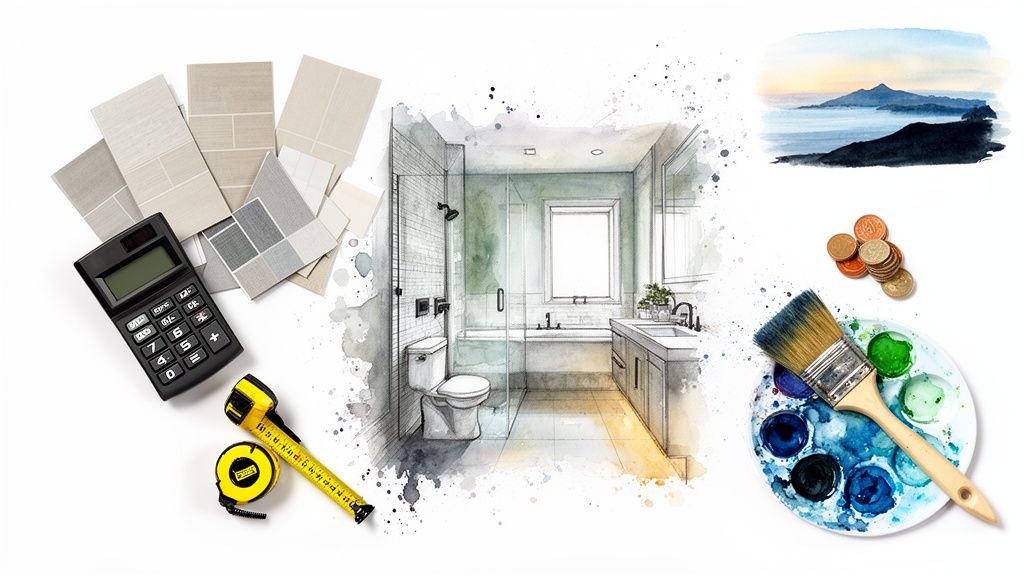
The image below provides a simple visual for thinking about different investment levels.

As you can see, a larger scope requires a larger budget. High-end projects almost always involve more complex changes and premium materials.
Major Cost Categories to Plan For
Organizing your budget into these categories makes it easier to track spending and identify potential savings.
- Labor and Project Management: This covers all skilled tradespeople and the coordination needed to complete the job on time and to code.
- Cabinetry and Vanities: Costs vary widely, from stock vanities to semi-custom or fully custom-built cabinetry.
- Fixtures: This includes your tub, shower, toilet, and sinks, with prices ranging from standard models to high-end fixtures.
- Finishes: This includes tile, countertops, flooring, and paint. These choices significantly impact both the final look and the cost.
- Plumbing and Electrical: This covers everything from new faucets and shower valves to modern lighting and dedicated circuits for features like heated floors.
- Permits and Fees: This is a non-negotiable cost for any significant remodel, ensuring the work is safe, inspected, and compliant with Monterey County building codes. You can learn more in our guide on when permits are required for remodeling work.
Why Costs Are Higher in Monterey County
Relying on national cost averages for a local project is a common budgeting mistake. To build a realistic bathroom remodel budget for 2026, it is essential to understand the factors that make Monterey County unique.
Several key drivers create a cost structure that is consistently higher than in most other parts of the country.
The Impact of Local Labor and Logistics
The single largest reason for higher costs is the price of skilled labor. In an area with a high cost of living like Monterey County, wages for licensed plumbers, expert tile setters, and experienced carpenters are higher.
Logistics also play a significant role. Many communities, from Carmel-by-the-Sea to Pebble Beach, have strict rules about construction hours and site access. This requires careful coordination and can add to project timelines and management costs.
California is one of the most expensive markets in the nation for home remodeling. Research suggests a typical bathroom remodel in California can range from $18,000 to $35,000. This is a significant jump from national figures, driven by elevated labor rates and strict permitting. You can discover more about regional cost variations at Badeloft USA.
Older Homes and Coastal Conditions
Monterey County has a wonderful stock of older homes, but they often contain surprises that can impact the budget. Common issues include:
- Outdated Plumbing: Old galvanized pipes or worn-out copper lines may need a full replacement to meet current codes.
- Faulty Electrical: Obsolete wiring and ungrounded circuits are common and must be updated to modern safety standards.
- Hidden Moisture Damage: Years of coastal fog and humidity can lead to dry rot or mold that requires professional remediation.
Furthermore, our coastal environment demands better materials. We must use moisture-resistant drywall, robust waterproofing systems, and durable finishes that withstand salt-laden air. These higher-grade materials are non-negotiable for a lasting remodel and add to the upfront investment. The financial planning often mirrors the complexity of figuring out the cost of building an ADU in Monterey County, where similar site-specific challenges drive the final numbers.
Seeing the Budget in Action: Real-World Scenarios
Numbers and percentages are helpful, but real-world examples make them tangible. Let's walk through three common project types we handle in Monterey County to illustrate different budget levels.
Each scenario has a different goal, scope, and price tag. These templates can help you match your own vision to a realistic budget.

Example 1: The Small Guest Bathroom Refresh
A homeowner in Pacific Grove needs to update a small guest bathroom (about 40 sq. ft.). The layout and shower are in good shape, so the plan is a cosmetic facelift. The goal is to make it feel clean, bright, and current.
- Project Goals: Update the look, replace worn-out fixtures, and improve lighting.
- Key Scope: New vanity with a quartz top, new faucet and sink, a modern light fixture, new mirror, fresh paint, and a new high-efficiency toilet.
- Estimated 2026 Budget: $15,000 – $20,000
- Where the Money Goes: The new vanity/countertop and skilled labor for plumbing and electrical swaps consume most of the budget.
Example 2: The Mid-Range Primary Bathroom Gut
A couple in Carmel is ready to overhaul their 1980s primary bathroom (around 75 sq. ft.). They are keeping the existing layout but replacing everything. The room will be taken down to the studs for a fresh start.
- Project Goals: Replace all finishes and fixtures, install modern waterproofing, and create a more spa-like feel.
- Key Scope: A full demolition, a new walk-in shower with frameless glass, new waterproofed tile floors, a semi-custom double vanity, new toilet, upgraded lighting, and a powerful exhaust fan.
- Estimated 2026 Budget: $35,000 – $55,000
- Where the Money Goes: Labor is a major cost driver for demolition, meticulous tile work, and proper waterproofing. High-quality fixtures, a double vanity, and frameless glass are the largest material expenses.
These sample budgets are for planning purposes. Each project’s final cost depends on the home's specific conditions, material choices, and overall complexity.
Example 3: The High-End Primary Bathroom Expansion
A family in Pebble Beach wants a luxury primary suite and needs more space. The plan involves borrowing square footage from an adjacent closet, which requires relocating walls, plumbing, and electrical systems.
- Project Goals: Design a larger, open primary bathroom with high-end features and a new layout.
- Key Scope: Structural work to move a non-load-bearing wall, moving the shower drain and toilet, adding a freestanding tub, installing custom cabinetry, and using premium materials like natural stone.
- Estimated 2026 Budget: $80,000+
- Where the Money Goes: This budget is driven by extensive labor for structural changes and relocating plumbing and electrical. Custom cabinetry and luxury materials are the other major investments. You can see examples of beautifully finished spaces like these in the Palacios Construction project gallery.
How Professional Management Protects Your Budget
When planning a realistic bathroom remodel budget for 2026, the most important factor protecting your investment is not a material—it is professional project management.
A general contractor directs a complex process where a small mistake can create a domino effect of delays and extra costs. Each trade—demolition, plumbing, electrical, tile—must enter at the correct time. If the timing is off, the project and budget can unravel.
Preventing Errors Through Expert Sequencing
A professionally managed remodel follows a precise order. For instance, tile installation cannot begin until the plumber has set rough-in pipes and the waterproofing membrane has cured.
Rushing this sequence can cause waterproofing failure, leading to hidden leaks and the need to tear out new tile. This is a devastating budget blow that is avoidable with proper oversight. A contractor’s job is to prevent these issues with smart planning.
The true value of a professional contractor lies not just in the finished product but in the problems you never face. Proper sequencing, material verification, and subcontractor scheduling keep the project on track and on budget.
Minimizing Downtime and Maximizing Efficiency
Unmanaged projects are known for downtime. If a plumber is ready to install a faucet but the custom vanity has not arrived, work stops. Each day of delay creates a ripple effect, pushing back other trades and the final inspection.
A general contractor avoids these roadblocks by:
- Ordering long-lead-time materials (like custom cabinets or specialty tile) weeks or months in advance.
- Scheduling subcontractors based on a realistic construction timeline.
- Solving logistical challenges before they cause a work stoppage.
This proactive approach keeps the project moving and controls labor costs. The money invested in professional oversight pays for itself by creating a predictable financial outcome. For more on this, see our guide on why hiring a licensed general contractor is essential.
Planning for the Unexpected with a Contingency Fund
A realistic bathroom remodel budget for 2026 must account for the unseen. In any renovation, especially in older homes in Monterey County, surprises are part of the process. A contingency fund is your most important budgeting tool.
A contingency fund is a portion of your budget set aside from day one to cover unexpected problems found during construction. It is not for last-minute upgrades; it is for fixing hidden issues without derailing your timeline or finances.

Why This Fund is Non-Negotiable
Once we open walls and floors during demolition, we get the first clear look at what has been hidden for decades. This is when unexpected problems often appear.
Common issues a contingency fund covers include:
- Hidden Water Damage: A slow leak can rot studs and subflooring, requiring replacement before new work can begin.
- Outdated Electrical Wiring: Old, ungrounded wiring must be brought up to current safety codes.
- Obsolete Plumbing: Corroded galvanized pipes or failing cast iron drains often need replacement once exposed.
- Unexpected Structural Issues: An improperly supported floor joist may need to be reinforced for safety.
These are pre-existing conditions that are impossible to spot with 100% certainty before work begins.
A contingency fund turns a potential crisis into a manageable task. It is what separates a professional, predictable project from an optimistic guess and ensures the job keeps moving forward without cutting corners.
How Much Should You Set Aside?
The industry standard for a professionally managed project is to set aside 10% to 20% of your total estimated construction cost for contingency.
For the older homes common in our area, or for any project with many unknowns, aiming for 20% is a safer bet. This buffer protects your investment and the project. By planning for these issues, the fund guarantees that problems are fixed correctly and efficiently. You can read more about how to avoid surprise costs in a bathroom remodel on our blog.
Frequently Asked Questions
What does a bathroom remodel cost in Monterey County?
In 2026, a simple cosmetic refresh can range from $12,000 to $25,000. A mid-range renovation typically costs $25,000 to $60,000, while a high-end, custom overhaul will start at $60,000 and can go much higher depending on the scope and materials.
How much should I set aside for a contingency fund?
A professional contractor will recommend a contingency fund of 10% to 20% of your total project cost. For older homes in Monterey County, a 20% fund is a safer benchmark to cover potential issues like hidden water damage or outdated plumbing.
Can I save money by purchasing my own materials?
While it seems like a way to save, it often leads to problems. Contractors have established relationships with suppliers, receive trade pricing, and manage logistics effectively. If you order the wrong size item or materials arrive damaged, the delays and extra costs become your responsibility.
Does moving walls or plumbing significantly increase the cost?
Yes, changing a bathroom's layout is one of the largest cost drivers. It involves multiple trades (plumbers, electricians, framers), additional materials, and more complex permits. A remodel that maintains the existing footprint is always the most budget-friendly option.
Why do quotes from different contractors vary so much?
Significant differences in quotes often come down to what is included. A low bid may omit critical steps like proper waterproofing, permits, or comprehensive project management. A detailed, professional quote will break down every cost, ensuring there are no hidden fees and the work will be done to code.
Planning a bathroom remodel requires a clear vision and a solid financial plan. At Palacios Construction, we believe a great project is built on thoughtful planning and expert execution. If you are ready to begin, contact us to learn more about our process for Professional Home Remodeling and Construction in Monterey County.