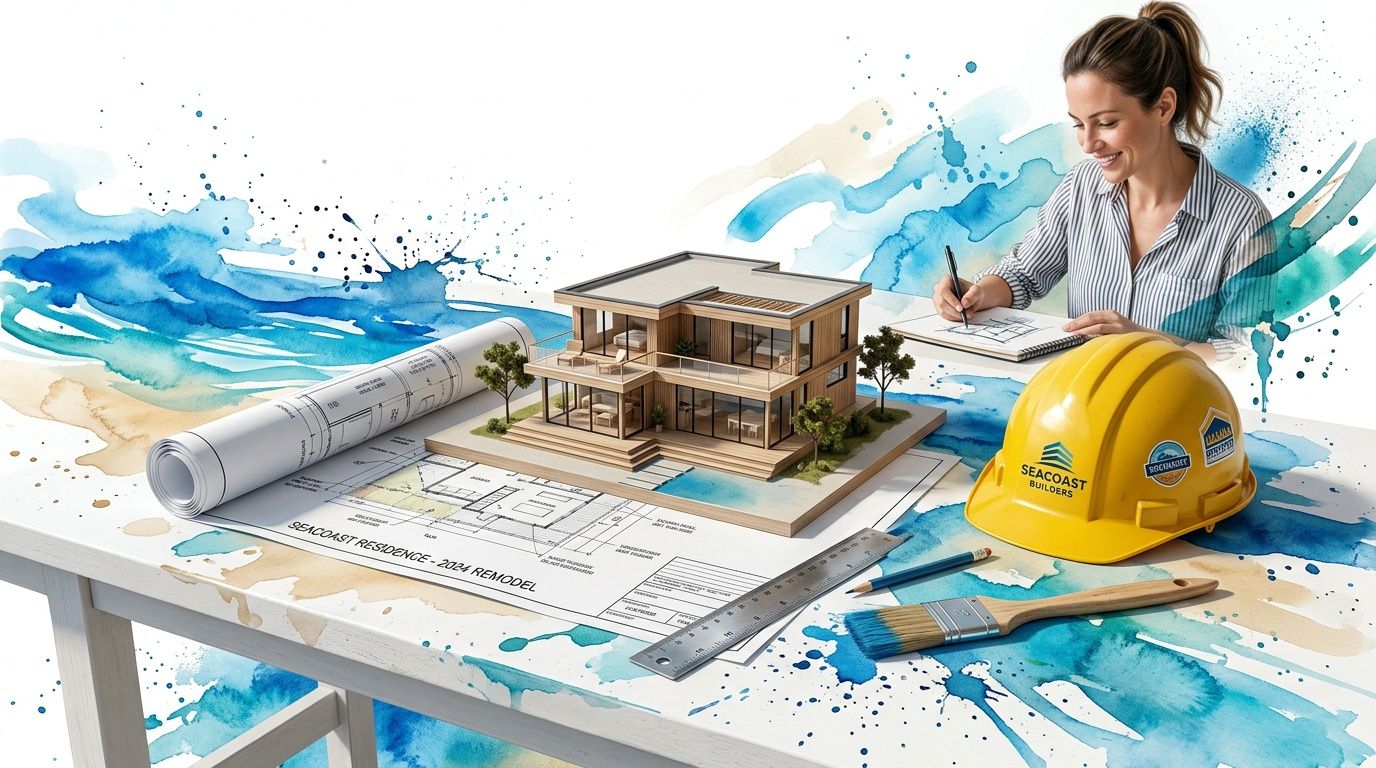

A whole-house remodel isn't just a cosmetic project; it's a complex systems overhaul. Many homeowners focus on aesthetics first, but this common approach often leads to budget overruns and delays. True success comes from treating your home as an interconnected system of structures, utilities, and regulatory requirements from day one.
This guide moves beyond surface-level advice to provide a framework for planning your remodel with professional precision. By focusing on systems, realistic budgeting, and structured sequencing, you can gain predictable timelines, control costs, and achieve a cohesive result.
Why Traditional Remodel Planning Often Fails

Most homeowners start with inspiration photos and big design ideas. Industry-standard advice often encourages this, framing a remodel as a design transformation. However, this approach skips the most critical groundwork, setting projects up for failure before the first wall ever comes down.
This surface-level planning is a primary reason remodels become stressful and expensive. Research shows 47% of homeowners report their renovation cost more than they budgeted, and 30% had to reduce their project's scope due to inflation pressures. There is a clear disconnect between how people are told to plan and what actually delivers a successful outcome.
A Shift from Aesthetics to Systems
The right way to plan a whole-house remodel starts with a different mindset. Instead of seeing your house as a collection of rooms to decorate, you must see it as an interconnected system of structures and utilities.
A successful project hinges on holistically understanding how these systems work together:
- Structural Integrity: Is the foundation solid? Are the walls you want to remove load-bearing?
- Mechanical, Electrical, and Plumbing (MEP): Can your old electrical panel handle modern appliances and future electrification? Will the plumbing support a new bathroom?
- Building Envelope: How will new windows, doors, or roofing affect your home’s energy efficiency and ability to withstand coastal weather?
- Code Compliance: Does the plan account for current California building codes, including seismic rules, energy standards (Title 24), and local fire safety requirements?
Focusing on finishes first is like picking out a wedding cake before booking a venue. It’s backward, and it consistently leads to expensive, last-minute changes.
The core problem with most remodel planning is its focus on the "what" (a new kitchen) instead of the "how" (the structural, mechanical, and regulatory steps needed to get there). This is the single biggest cause of budget overruns and delays.
The Monterey County Factor
For homeowners in Monterey, Carmel, Pacific Grove, and surrounding Monterey County communities, a whole house remodel has another layer of complexity. Our region has unique challenges that a generic plan cannot handle.
Coastal conditions, older housing stock, and specific local permitting hurdles demand real professional experience. Navigating water credit constraints, Coastal Commission oversight, and local building departments requires deep local knowledge. A one-size-fits-all approach simply doesn't work here.
A professionally managed, systems-based plan ensures your renovation is not only beautiful but also compliant, durable, and built for our local environment. By addressing these critical details upfront, you can gain predictable timelines and controlled costs. Our guide on how to avoid surprise costs in a remodel offers more practical advice for managing your project’s finances.
Establishing Your Realistic Scope and Budget

This is where the dream meets reality. After assessing your home’s core systems, it’s time to move from a vague wish list to an actionable scope and budget. This is the single most important exercise in balancing what you want with what your home—and your finances—can truly support.
The classic mistake is building a list of wants from inspiration photos without any sense of cost. A successful plan starts with a clear-eyed view of what’s possible from day one.
From Wish List to Needs and Wants
To gain clarity, take every item you're considering and put it into one of two buckets: "Needs" and "Wants." This simple exercise forces conscious trade-offs early.
-
Needs are your non-negotiables, almost always tied to safety, core function, or structural integrity. Examples include replacing a failing roof, updating old knob-and-tube wiring, or fixing a dysfunctional kitchen layout.
-
Wants are the upgrades you'd love to have but could live without if the budget gets tight. This bucket includes high-end appliances, imported tile, or that spa-like primary bathroom you saw online.
This process ensures your budget is allocated to the most critical parts of the remodel first, before being spent on discretionary finishes.
A well-defined scope isn’t just a list—it's a detailed, room-by-room document that spells out exactly what work will be done. This becomes the foundation for accurate bids and a strong contract, protecting both you and your builder from expensive misunderstandings.
Building a Transparent, Allowance-Based Budget
With your priorities straight, you can build a budget that puts you in control. A professional contractor should provide a detailed budget with fixed costs for labor and management, plus allowances for materials and finishes.
An allowance is a specific dollar amount set aside for items you select—things like plumbing fixtures, lighting, flooring, or tile. This transparent approach gives you direct control over a huge chunk of your final cost.
If you find a faucet that costs less than its allowance, you save that money. If you fall in love with a countertop that's over budget, you can make an informed choice to approve the extra cost. This method is far superior to a vague, lump-sum bid, which often hides cheap materials and gives you no say in quality.
Understanding True Project Costs
Your budget has to be grounded in local reality. Here in Monterey County, remodeling costs are influenced by our specific labor rates, complex permitting, and coastal building codes.
A realistic budget for a whole house remodel goes beyond just labor and materials. A professional's budget will always include line items for:
- Permit and Engineering Fees: Costs for architectural plans, structural engineering reports, and all municipal permits required for your project.
- Site Preparation: Funds for demolition, potential hazardous material abatement (like asbestos or lead paint), and protecting parts of your home not under construction.
- Contingency Fund: This is non-negotiable. It's a reserve of 10-20% of the construction cost set aside for unknowns common in older homes, like hidden water damage or unexpected structural issues.
This level of financial planning is what separates a predictable, successful remodel from one full of constant surprises.
Navigating Monterey County Permits and California Codes
Your vision and budget are huge parts of a whole-house remodel, but they don't drive the project alone. A remodel is a regulated process, tied to a web of local and state rules that cannot be ignored.
For anyone doing major work in Monterey County—especially in places like Carmel, Pacific Grove, and Pebble Beach—understanding this side of things is non-negotiable. Trying to sidestep the building department is a rookie mistake that leads to delays, fines, and having to tear out finished work.
Why Local Knowledge Is Everything
Every city and unincorporated area in Monterey County has its own specific rules that can change your project’s scope, timeline, and cost. These are legal requirements, not friendly suggestions.
Here are a few local hurdles we navigate frequently:
- Water Credits: On the Monterey Peninsula, adding a bathroom or even a new sink can require you to obtain water credits, which are scarce and complicated to secure.
- Coastal Commission Oversight: If your home is in the coastal zone, the California Coastal Commission gets a say. This adds another layer of review focused on protecting coastal views and resources.
- Seismic and Geotechnical Rules: We live in earthquake country. Many projects, particularly additions or homes on sloped lots, will need updated seismic engineering and soil reports.
- Historic Preservation: In historic towns like Pacific Grove and Carmel-by-the-Sea, any changes to older homes may require review by a historic resource committee to ensure updates are appropriate.
Think of the permit process as your project's built-in quality control. A proper review by the building department ensures your home is safe, sound, and up to modern standards. It protects your family and your investment.
Keeping Up with California's Building Codes
On top of local rules, your remodel must meet the statewide California Building Codes, which are updated every few years. A good contractor stays on top of these changes so your project is built right and passes all inspections.
Two significant trends we are planning for now are:
- Energy Efficiency (Title 24): This code sets tough standards for insulation, windows, HVAC systems, and lighting to reduce energy use. A whole-house remodel will absolutely trigger Title 24 requirements.
- Electrification Trends: California is pushing new construction and major remodels toward all-electric homes. This influences choices for appliances, water heaters, and HVAC systems, moving projects away from natural gas and future-proofing your home.
The Permit Timeline Is Not Just Paperwork
The permit process is often the most misunderstood part of a remodel. Submitting your plans is just the first step. Multiple departments—planning, building, fire, and public works—all have to review and sign off. This process can easily take several months, and it all happens before construction begins.

A contractor who knows the local jurisdictions can anticipate problems, prepare a complete submittal package, and communicate effectively with plan checkers. This professional management saves significant time and frustration.
Structuring Your Project Sequence for Success
A whole-house remodel that flows in a logical order is the only way to prevent costly rework and frustrating delays. This isn't just a task list; it’s an operational roadmap that dictates what happens, when it happens, and why. Getting the sequence right is the core of professional project management.
The entire process is built on dependencies. You can’t hang drywall until all in-wall plumbing, electrical, and HVAC rough-ins are finished and passed inspection. Doing things out of order is the fastest way to burn through your budget and timeline.
The Phases of a Whole House Remodel
While every project has its own quirks, a full renovation follows a predictable path. Understanding these phases helps you see the big picture.
Here’s the general flow of work:
- Pre-Construction and Permitting: We finalize plans, secure necessary engineering, and submit everything to the building department. In Monterey County, this can take several months.
- Site Prep and Demolition: Once permits are in hand, we protect the site with dust barriers and floor protection, then begin careful demolition.
- Foundation and Framing: For additions or projects with structural changes, we pour foundations and then frame the new walls, floors, and roof.
- In-Wall Rough-Ins: With the "skeleton" of the house exposed, plumbers, electricians, and HVAC professionals run all new lines. This work must be inspected and approved before we can cover anything.
- Insulation and Drywall: After passing rough-in inspections, we install insulation. Then drywall goes up, is taped, and textured to create your new walls and ceilings.
- Finishes and Fixtures: This is where the visual transformation happens. Siding, windows, flooring, tile, cabinets, countertops, trim, and paint are installed.
- Final Systems and Punch List: In the last stretch, we install light fixtures, faucets, toilets, and appliances, followed by a final "punch list" walkthrough to correct any small details.
Knowing how long a whole house remodel usually takes helps set realistic expectations for this entire sequence.
Remodeling While Occupied
One of the biggest challenges is living in the house during a remodel. While moving out is ideal for a full-gut renovation, it isn't always realistic. When you're living on-site, disciplined job site management is non-negotiable.
A professional contractor will have a clear plan to minimize disruption, including:
- Creating robust dust barriers to isolate the construction zone.
- Establishing clear work hours for predictable quiet time.
- Managing site logistics like crew parking and material storage.
- Scheduling any utility shutoffs well in advance with clear communication.
A mid-range, 1,500 sq. ft. remodel in our area might take 3-6 months for construction, but a high-end gut renovation could easily stretch to 9-12 months or more, not including permitting.
A project schedule isn't just a calendar—it's a management tool. It aligns dozens of trades, suppliers, and inspectors into a single, coordinated effort, reinforcing the value of hands-on professional oversight.
How to Select Your Remodeling Contractor
Choosing the right general contractor is the single most important decision you will make. It goes beyond checking a license and calling a few references. You are selecting a long-term partner to manage a complex project inside your home.
The lowest bid is almost never the best value. A surprisingly low price is a red flag that often indicates a missed scope, cheaper materials, or inadequate insurance. True professionals invest in systems, skilled labor, and project management—and their pricing reflects that.
Evaluating a Contractor’s Process
A contractor’s process is a window into how organized and predictable your project will be. Dig into how they operate before you sign anything.
Get past the sales pitch and ask direct questions about their operational systems:
- Budgeting: How do they build their budgets? Do they use a detailed, line-item format with transparent allowances, or just a single lump-sum number?
- Change Orders: What is their exact process for handling changes? A professional uses a formal change order document that states the new scope, cost, and schedule impact, which you must approve before extra work begins.
- Subcontractor Management: How do they vet and manage their subcontractors? Do they have long-standing relationships with trusted local trades?
The answers reveal whether they run a disciplined operation or just react to problems as they arise.
When you interview a contractor, you are evaluating their business skills just as much as their building skills. A strong process for managing money, changes, and people is the best defense against the chaos that can derail a remodel.
The Importance of Communication and Trust
A whole house remodel can last for months. You need a partner who is responsive, clear, and proactive—not someone you have to chase for updates. Pay attention to how they communicate during the interview process.
Our article on why hiring a licensed general contractor actually matters explains the baseline standards of professionalism you should expect.
A strong construction agreement is the final, critical piece. It translates all discussions into a legally binding document and should never be a simple one-page form.
A comprehensive contract absolutely must include:
- A Detailed Scope of Work: An explicit list of every task, material, and fixture, referencing the architectural plans.
- A Clear Payment Schedule: Payments should be tied to the completion of specific project milestones (e.g., framing inspected), not arbitrary dates.
- Defined Project Milestones: The contract needs to outline the key phases of the project and provide a projected timeline.
By focusing on a contractor's process, communication, and a detailed contract, you set yourself up to select a true building partner and ensure your project is managed the right way.
Frequently Asked Questions About Whole House Remodels
What are the very first steps in planning a whole house remodel?
The first step is to define your "why"—your primary goals for the project. Are you seeking more space, better function, or modernizing for safety and efficiency? Next, establish a realistic preliminary budget based on typical costs in Monterey County. This financial grounding prevents you from designing a project you cannot afford.
How long does a whole house remodel actually take?
It depends entirely on the scope. A cosmetic update may take 2-4 months of construction. A full gut renovation involving layout changes and new systems can take 9-12 months or longer, not including the permitting process, which can add several months in the Monterey Bay area.
Should I plan to live in my house during the remodel?
For a true whole-house remodel, we strongly advise against it. The process involves constant dust, noise, utility shutoffs, and safety hazards. Most homeowners find it far more practical and less stressful to arrange other housing during the main construction phases.
What is the difference between an architect and a general contractor?
An architect is the designer; they translate your vision into detailed, code-compliant blueprints. A general contractor is the builder; they take those plans and manage the entire construction process, including hiring trades, sourcing materials, and ensuring the project is built to specification. You need both for a successful outcome.
How should I handle unexpected costs during the remodel?
The best way to handle surprises is to plan for them. A professional contractor will insist you include a contingency fund in your budget—typically 10-20% of the total construction cost. This reserve is specifically for addressing unforeseen issues like hidden water damage or structural problems, ensuring they can be fixed without derailing your project.
At Palacios Construction, we believe a successful project is built on clear communication, detailed planning, and professional execution. If you are a homeowner in Monterey County ready to approach your remodel with a focus on quality and predictability, we can help.
Explore our whole home renovation services in Monterey County to see our process and how we manage projects from planning through completion.