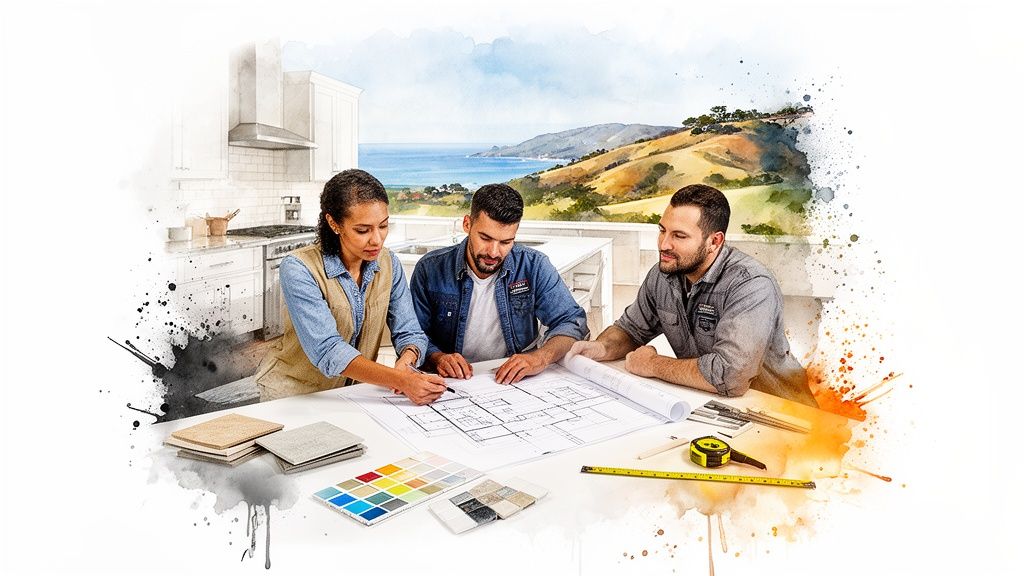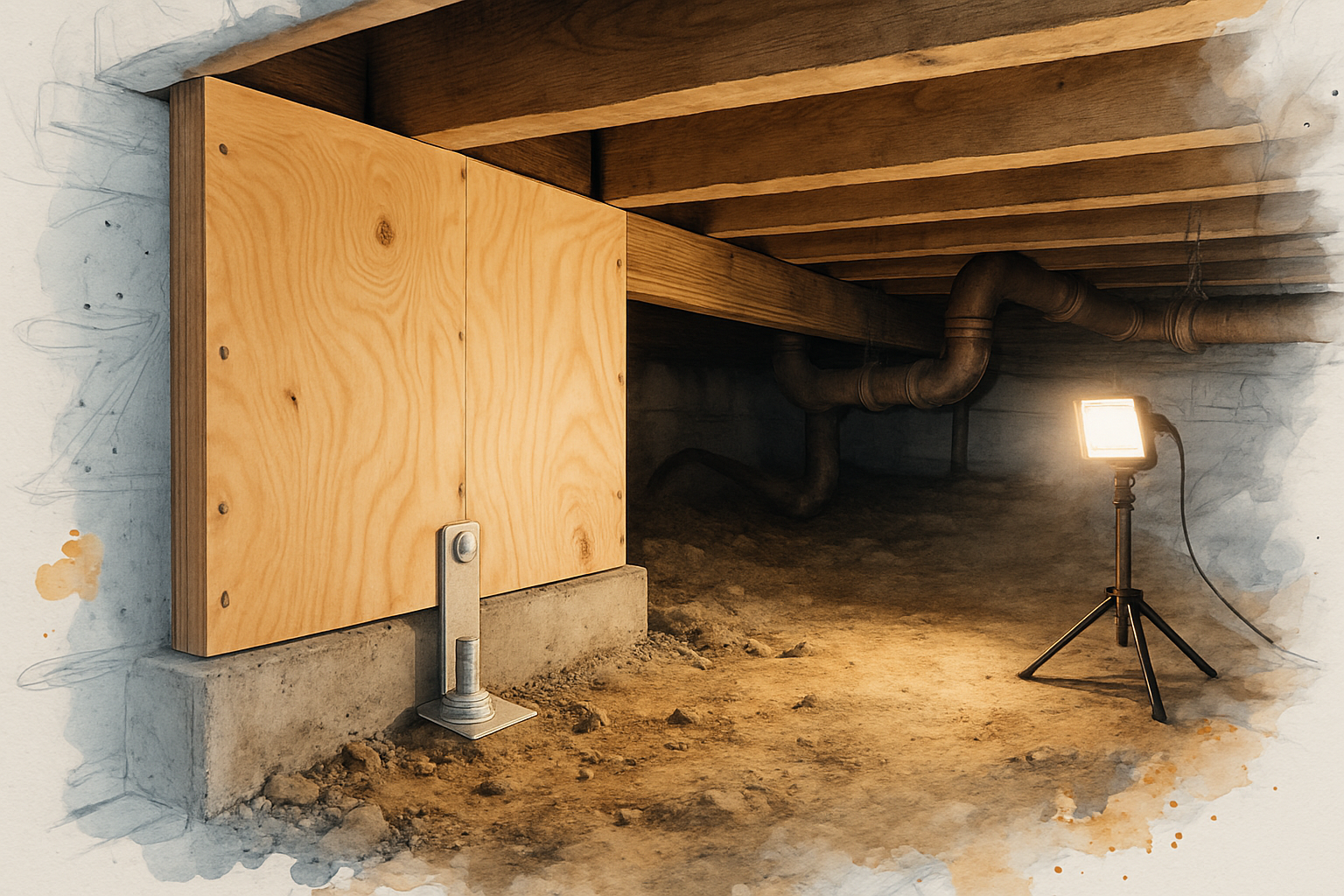
Solid design and pre-construction planning in Monterey for permit-ready projects is not just about aesthetics—it's a strategic process for navigating local regulations without unnecessary headaches. A proactive approach means having every document, from architectural drawings to a clear scope of work, finalized before you submit for a permit.
This methodical planning is how you prevent costly delays and ensure a smooth construction experience.
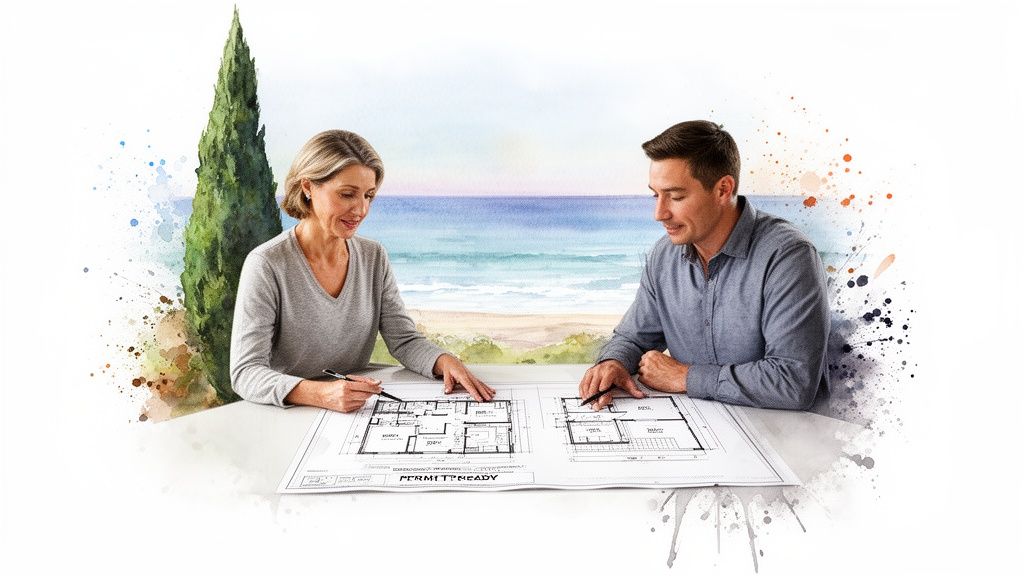
Why Pre-Construction Planning is Critical in Monterey County
For homeowners on the Monterey Peninsula, the path to project approval can feel complex. Residents of Monterey know that coastal regulations and updated ADU ordinances have changed how projects are reviewed and approved.
Even small remodels and additions may require detailed documentation before permits are issued. Diving in without a structured plan almost always leads to delays and budget overruns. Think of a structured pre-construction phase as your project's foundation. It is the process of turning your vision into a set of documents that a plan checker can understand and approve.
To illustrate the difference, here’s a look at what happens with and without proper planning.
The Impact of Pre-Construction Planning On Your Project
| Project Phase | With Structured Planning | Without Structured Planning |
|---|---|---|
| Design | The design is vetted against local codes (zoning, coastal, water) before plans are finalized. | The design is based only on aesthetics; major revisions are needed after the first plan check rejection. |
| Budgeting | The budget is built on a detailed scope, specific material selections, and real-world contractor input. | The budget is a rough guess based on square footage, leading to constant change orders and surprise costs. |
| Permitting | The permit package is complete and accurate on first submission, minimizing correction cycles. | Incomplete or vague plans trigger multiple rounds of corrections, adding months to the timeline. |
| Construction | The contractor has a clear roadmap, materials are ordered on time, and the build is efficient. | The project stalls while waiting for decisions, revised plans, or materials that were never specified. |
| Outcome | The project is predictable, stays closer to budget, and the final result matches the original vision. | The project is stressful, goes over budget, and often involves compromises you didn't want to make. |
Simply put, planning isn't an optional step—it's the foundation for a successful project.
From Vision to a Predictable Plan
The goal of pre-construction planning is to create a predictable path from your idea to the first day of construction. This is more than a few sketches; it’s about building a complete, accurate, and approvable submission package tailored to Monterey County requirements.
A truly permit-ready project always includes:
- Detailed Architectural Drawings: Comprehensive plans—floor plans, elevations, site plans—that leave zero room for ambiguity.
- Structural Calculations: The engineering that proves your design is safe and meets California's seismic codes.
- A Clear Scope of Work: A document spelling out every material, finish, and project boundary. This makes a budget and timeline accurate.
In Monterey County, incomplete drawings or vague scope documents often trigger correction notices from planning departments, extending review timelines by weeks or months. You can see how we build this detailed roadmap by reviewing our process for professional home remodeling and construction.
Practical Tip: Before starting construction drawings, contractors should verify zoning overlays, coastal review triggers, and utility constraints. Providing detailed, code-aligned plans at submission significantly reduces revision cycles and inspection delays.
Navigating Local Building Requirements
Local regulations have a huge impact on how a project unfolds. For example, recent changes to coastal regulations and updated ADU ordinances mean that even a small remodel might need extensive paperwork before a permit is considered.
A professional contractor verifies all of this—zoning overlays, coastal review triggers, utility constraints—before a single line is drawn.
When you provide the county a set of detailed, code-aligned plans from the start, you drastically reduce the chance of getting bogged down in revision cycles. This is key to a smoother, more predictable construction experience.
Turning Your Vision into a Buildable Plan
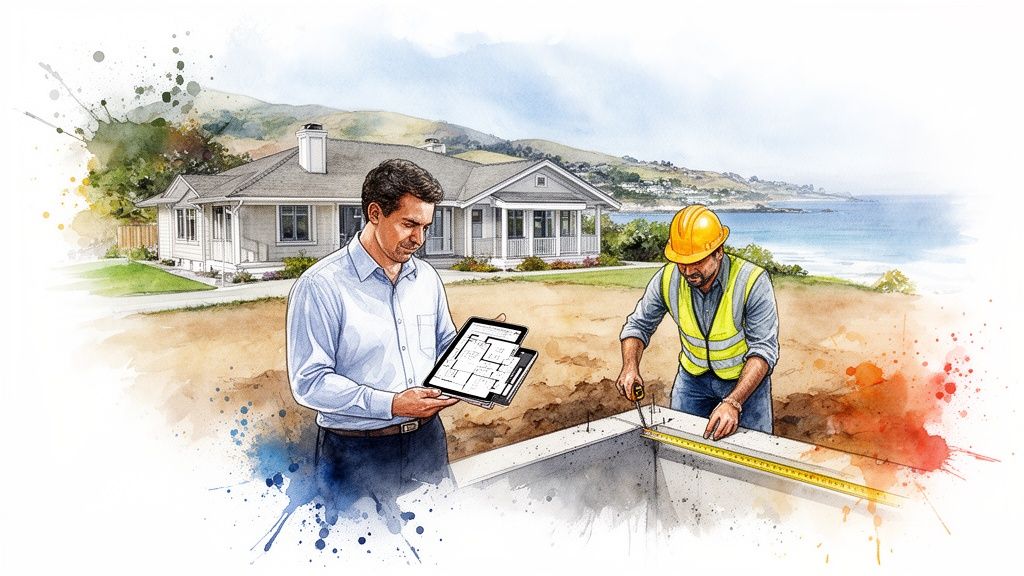
Every successful home remodel starts long before demolition. It begins by turning your ideas into a detailed, buildable plan. This is where we bridge the gap between what you envision and what can realistically—and legally—be built.
Without this upfront work, great ideas can lead to expensive delays and frustrating compromises. Proper design and pre-construction planning in Monterey for permit-ready projects creates the roadmap everyone follows, ensuring a smooth build.
Defining a Clear and Detailed Scope of Work
A buildable plan is more than "remodel the kitchen." The foundation of your project is a detailed scope of work that defines what will be built, how it will be done, and what materials will be used.
A vague scope is a primary cause of budget overruns because it leaves too much to assumption, often resulting in expensive change orders.
Your scope of work should read like a detailed instruction manual for the project. It aligns you and your contractor, removing doubt about the finished product.
To achieve this clarity, your plan needs to define specifics like:
- Layout and Functional Goals: How will the new space flow? Are you solving a specific problem, like a lack of storage?
- Material and Finish Selections: This includes everything—flooring type, window brand, cabinet hardware, and even paint colors.
- Structural Modifications: Are walls moving? Are beams being added to open a room? These details are non-negotiable for engineering and permitting.
The Importance of a Professional On-Site Assessment
Before drawing blueprints, a professional must assess existing conditions. This is where we uncover potential roadblocks in your walls, under your floors, or in the soil. This step is critical in Monterey County, given our mix of older homes and challenging terrain.
An on-site assessment might find:
- Outdated Electrical Systems: Many older homes in Pacific Grove and Monterey have undersized electrical panels that cannot handle the load of a modern kitchen.
- Soil and Foundation Issues: A planned addition on a sloped lot in Carmel Valley may require a geotechnical report to ensure ground stability.
- Hidden Structural Problems: A wall you assume is non-structural could be load-bearing, requiring an unbudgeted engineering fix.
Finding these issues during planning turns them into manageable line items instead of emergencies. Our team provides these detailed on-site assessments as part of our design and planning services to address these issues early.
Verifying Local Zoning and Building Constraints
Monterey County's building regulations are complex, with rules changing from one city to the next. A key part of creating a buildable plan is checking these local restrictions before investing in a design.
This is the only way to avoid designing a project that you legally cannot build.
A professional contractor will research key constraints, including:
- Zoning Overlays: Is your property in a historic district, a coastal zone, or a high-fire-severity area?
- Setback Requirements: How far must your addition be from property lines, the street, or a coastal bluff?
- Lot Coverage and Height Limits: Is there a cap on how much of your lot can be covered by structures or how tall you can build?
This research ensures your project is designed correctly from day one. It is a critical investment to help your plans move through the permit office efficiently.
Assembling Your Professional Team For A Permit-Ready Project
A successful residential project is never a solo act. Getting a project "permit-ready" requires a coordinated team of skilled professionals, which is a core part of effective design and pre-construction planning in Monterey for permit-ready projects.
For a homeowner, managing these different experts can be a significant challenge. A professional general contractor’s job is to lead this team, ensuring every drawing and calculation fits into one cohesive permit package.

The Architect or Designer: The Visionary
This professional translates your vision into a set of buildable plans. They focus on the creative and functional aspects of your project—the layout, aesthetics, and how materials come together.
A great designer ensures the project fits your lifestyle and respects the architectural character of your home and neighborhood, which is especially important in places like Carmel and Pacific Grove.
Key contributions include:
- Detailed Drawings: These are the blueprints—floor plans, elevations, and sections—that show exactly how the space will be built.
- Aesthetic and Material Specifications: They help you select the finishes, fixtures, and materials that fit your vision and budget.
- Code Compliance: Their designs must follow local building codes, zoning rules, and California's Title 24 energy standards.
The Structural Engineer: The Guardian of Safety
While the architect designs how the project looks, the structural engineer ensures it will stand up safely. This is a critical role in California, where every structure must handle seismic activity.
The engineer takes the architectural plans and calculates the building's "bones," including the foundation, beams, and columns. These calculations are a non-negotiable part of any permit application for projects with structural changes.
In Monterey County, submitting plans for an addition or major remodel without a stamped set of engineering plans is an automatic rejection. The engineer’s work is proof that your project is safe.
The Land Surveyor: The Boundary Expert
For any project that changes your home’s footprint, like an addition or a new ADU, you will likely need a land surveyor. Their job is to map your property and its features with precision.
A surveyor establishes legal property lines, identifies easements, and creates a topographical map showing slopes and elevations. This is vital for an accurate site plan, which the county needs to confirm your project meets setback requirements.
Your General Contractor: The Team Conductor
The general contractor pulls all these experts together. We direct their efforts toward one goal: a complete and approvable permit package. A contractor with a solid pre-construction process manages communication between the architect, engineer, and surveyor.
This integrated approach prevents specialists from working in silos. Contractors without structured pre-construction systems may struggle to move projects efficiently through approval. This system takes the burden off you. Instead of juggling consultants, your contractor manages the entire workflow. You can learn more by reading about why hiring a licensed general contractor actually matters.
Getting Your Permit-Ready Documents Dialed In
Submitting a permit application in Monterey County requires a complete, coordinated package that proves your project is safe, compliant, and ready to be built. If the submission is clear and complete, you avoid the frustrating back-and-forth that causes delays.
A professional, permit-ready submission is the fastest way to get your permit issued. It signals to the building department that your project has been thought through, building their confidence from the start.
It's More Than Just Blueprints
While "blueprints" is a common term, a real permit package is much more detailed. Each document helps the building department check that your project meets every requirement from the California Building Code and local Monterey ordinances.
A solid set of plans will always include:
- Detailed Floor Plans: These show the layout of each floor with all dimensions, room labels, and window and door locations.
- Exterior Elevations: These drawings show what each side of the house will look like, specifying materials, roof pitches, and finished ground levels.
- Cross-Sections: A cross-section cuts through the building to show the foundation, wall construction, and roof framing, proving it all fits together correctly.
These documents work together to paint a full picture of the project, leaving no room for guesswork.
Key Documents For A Smooth Approval
Beyond the main architectural drawings, several other technical reports are mandatory for most remodels, additions, and ADUs. Missing just one is a common mistake that gets applications rejected.
A permit application is a technical argument for why your project should be approved. The more complete and clear your documentation is, the stronger your argument.
Your final package needs these key items:
- A Detailed Site Plan: The map of your property showing the existing house, new work, property lines, and setbacks.
- Structural Engineering Calculations: Stamped by a licensed engineer, these prove your project's foundation and framing can handle required loads.
- Title 24 Energy Compliance Report: This shows your project meets California's strict energy efficiency standards.
You can always get more information directly from the Monterey County Building Services office, but a good design-build team handles this for you. Here’s a checklist of the core documents your team should be assembling.
Your Permit-Ready Document Checklist For Monterey County
| Document | What It Details | How It Prevents Delays |
|---|---|---|
| Site Plan | Property lines, setbacks, building footprint, driveway, easements, and key features like large trees or slopes. | Instantly shows the planner that your project fits within the zoning rules for your lot. |
| Architectural Plans | Detailed floor plans, exterior elevations, cross-sections, roof plan, and construction details. | Answers nearly all of the plan checker's questions about layout, size, and appearance. |
| Structural Plans & Calcs | Foundation design, framing plans, shear wall schedules, and connection details, all stamped by an engineer. | Proves the building is designed to be structurally sound and safe, especially for seismic and wind loads. |
| Title 24 Energy Report | Insulation values (R-values), window efficiency (U-factor), lighting, and HVAC system specs. | Confirms compliance with California’s mandatory energy code, a common point of review. |
| Grading & Drainage Plan | (If needed) Shows how you will manage soil and water on your site during and after construction. | Prevents issues with runoff and erosion, which is critical for hillside properties or large additions. |
| Soils Report | (If required by site conditions) Analysis of the soil stability and recommendations for foundation design. | Ensures the foundation is designed correctly for your specific property, avoiding structural issues later. |
Having these documents complete and correct is the most effective way to keep your project on schedule.
How Modern Tools Ensure Accuracy
Today, technology provides powerful tools that help everyone. For example, providing on-site measurements, digital scans, and detailed 3D renderings ensures submissions are accurate before they reach the building department. This helps you make confident decisions on materials and layouts before construction.
Digital scans create a hyper-accurate 3D model of your existing home, eliminating small measurement errors that can lead to big problems. This level of precision is invaluable for creating plans that move efficiently through the review process.
To see how these tools make a difference, check out our guide on how to prepare for permits on a home addition in Monterey County. This attention to detail in your design and pre-construction planning in Monterey for permit-ready projects sets a professional submission apart.
Navigating Monterey County Permit Pathways And Timelines
The moment you submit your permit-ready plans kicks off the government review process. For homeowners, this phase can feel like a black box. Understanding the paths and realistic timelines in Monterey County helps set clear expectations.
There is no single timeline for permits. It depends on:
- Project Complexity: A simple bathroom remodel will be faster than a new ADU or major home addition.
- Your Location: The coastal zone, a historic district, or a steep hillside will require extra layers of review.
- Submission Quality: A clean, complete, code-compliant set of plans is the best way to avoid delays.
While no one can speed up a government agency, we can control the quality of what we submit. That is the purpose of good design and pre-construction planning in Monterey for permit-ready projects.
The Local Review Landscape
Your project may need approval from more than just the building department. In places like Carmel and Pacific Grove, local design review boards examine aesthetics to ensure projects fit the community's character.
Projects near the water almost always need a Coastal Development Permit (CDP). This involves a separate review by either the county or the California Coastal Commission, adding a major step. You can research some of the local rules on the Monterey County Planning Services department website.
A Note on Timelines: Simple permits can take a few weeks to a couple of months. Complex projects, especially those needing multiple reviews, can easily take six months to a year or even more.
How Thorough Planning Shortens The Wait
The number one cause of permit delays is a correction notice from the plan reviewer. This is an official letter stating your drawings are incomplete, the engineering is missing, or the design violates a local rule. Each correction cycle can add weeks or months to your timeline.
This is where upfront planning pays off. When every detail is addressed and every document is included, the chances of receiving a correction notice drop dramatically. That is what a "permit-ready" project is all about.
This flowchart provides a simple look at the path to creating permit-ready documents.
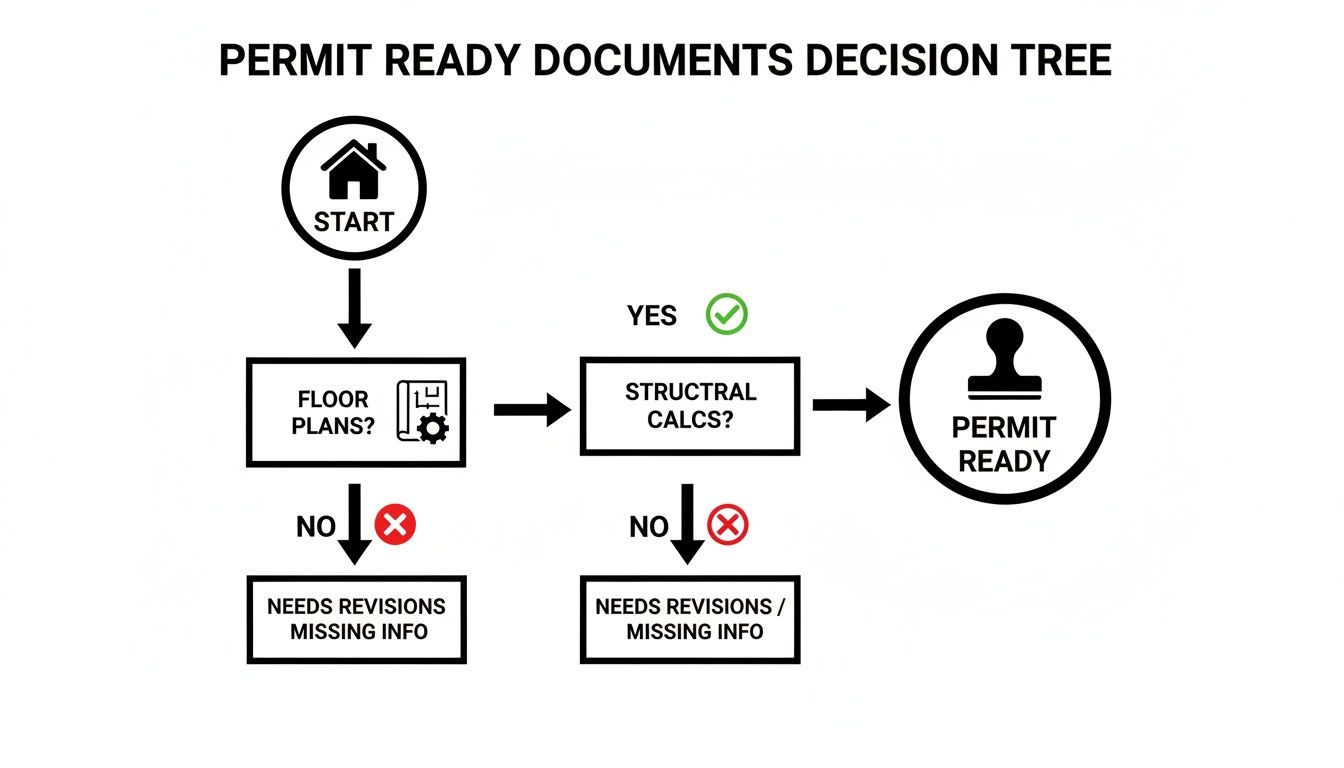
Having complete floor plans and structural calculations is the minimum to avoid an immediate rejection. For more specialized projects like ADUs, the list of requirements is longer. If you’re considering an accessory dwelling unit, our guide explains what permits are required for an ADU or garage conversion.
Investing time and energy in a solid planning phase is the single best thing you can do for a smoother trip through the Monterey County permit system.
The truth about building or remodeling in Monterey County is that success is about preparation, not luck.
This entire guide is built on one simple idea: real design and pre-construction planning for your Monterey permit-ready project is the best investment you can make. It is how you achieve a predictable, well-run project from day one.
When you do this work upfront, you reduce financial risk and sidestep budget overruns and delays. It provides total clarity before a single hammer is swung.
Why This is Your Best Investment for a Predictable Project
A solid plan creates a controlled, positive experience. A clearly defined scope and pricing proposal completed within a structured timeline reduces ambiguity before construction begins.
When we define every detail beforehand—from the specific tile to the exact window model—we replace guesswork with a clear roadmap. Your contractor can then build exactly what’s on that map, efficiently and accurately.
This process turns a vague estimate into a firm final cost and a realistic timeline. It builds trust and keeps communication open.
The goal is to set your project up for success before the first nail is hammered. It’s about ensuring a smooth transition from a well-laid plan to a beautifully constructed reality.
For homeowners on the Monterey Peninsula and throughout the Central Coast, investing in detailed design and pre-construction planning can streamline approvals, reduce uncertainty, and create a smoother transition from concept to construction. If you want to learn more about how a structured process builds confidence in your project, it is worth exploring.
It’s about having a professional in your corner who knows how to navigate the complexities of building in this unique part of California.
Frequently Asked Questions
Homeowners in Monterey, Carmel, and Pacific Grove tend to research planning requirements before committing to construction due to high property values and strict local oversight. Here are answers to common questions about design and pre-construction planning in Monterey for permit-ready projects.
How Long Does The Pre-Construction And Permit Process Typically Take?
The timeline varies. A simple interior remodel might move through planning and permitting in 2-4 months. For complex additions, new builds, or any project in the coastal zone, it is realistic to budget 6-12 months or more.
The single best way to keep your timeline on track is to submit a complete, meticulously prepared permit package from day one.
Do I Need An Architect For A Simple Kitchen Or Bathroom Remodel?
If you are not moving walls or altering the home's exterior, you likely do not need an architect. However, you will still need a professional designer and a qualified general contractor to produce the detailed plans required for permits.
For any addition, ADU, or project involving significant structural changes, an architect and a structural engineer are non-negotiable. Their involvement is essential for safety and getting your plans approved.
What’s The Biggest Cause Of Permit Delays In Monterey County?
The number one cause of permit delays is an incomplete or inaccurate submission package. This is a significant and avoidable pitfall.
It often stems from vague drawings, missing structural calculations, or plans that do not align with local zoning or building codes. Any of these issues will trigger correction notices, adding weeks or months to your review cycle.
Can I Start Demo Or Other Work Before My Permit Is Issued?
Absolutely not. Doing any work that requires a permit before it's officially issued is illegal and can lead to immediate stop-work orders, steep fines, and major project delays.
All construction activity must wait until the approved permit is physically posted at the job site. There are no exceptions.
How Does Living In A Coastal Zone Affect My Project’s Planning?
Building in the coastal zone adds a significant layer of review. Projects almost always require a separate Coastal Development Permit (CDP) in addition to standard building permits. This rigorous process examines factors like:
- Building height and massing
- Setbacks from bluffs and sensitive habitats
- Visual impacts from public viewpoints
- Environmental protections
This extra review adds time and complexity, demanding specialized planning from the very beginning.
At Palacios Construction, we manage the complexities of Professional Home Remodeling and Construction in Monterey County so you can focus on your vision. If you’re ready to start your project with a clear, professional plan, contact us to discuss your project.