Quick Answer
A qualified patio contractor does far more than lay pavers or pour concrete. The job starts with site evaluation, drainage planning, utility checks, material selection, and permit review, then moves into excavation, base preparation, grading, installation, and finish work so the patio lasts and complies with local requirements.
If you're planning a new patio, you're probably looking at a bare yard, an old cracked slab, or a space that never quite worked the way you wanted. In Monterey County, the difference between a patio that lasts and one that starts shifting, cracking, or holding water usually comes down to the work underneath and the planning before the first shovel hits the ground.
What a Professional Patio Contractor Actually Does
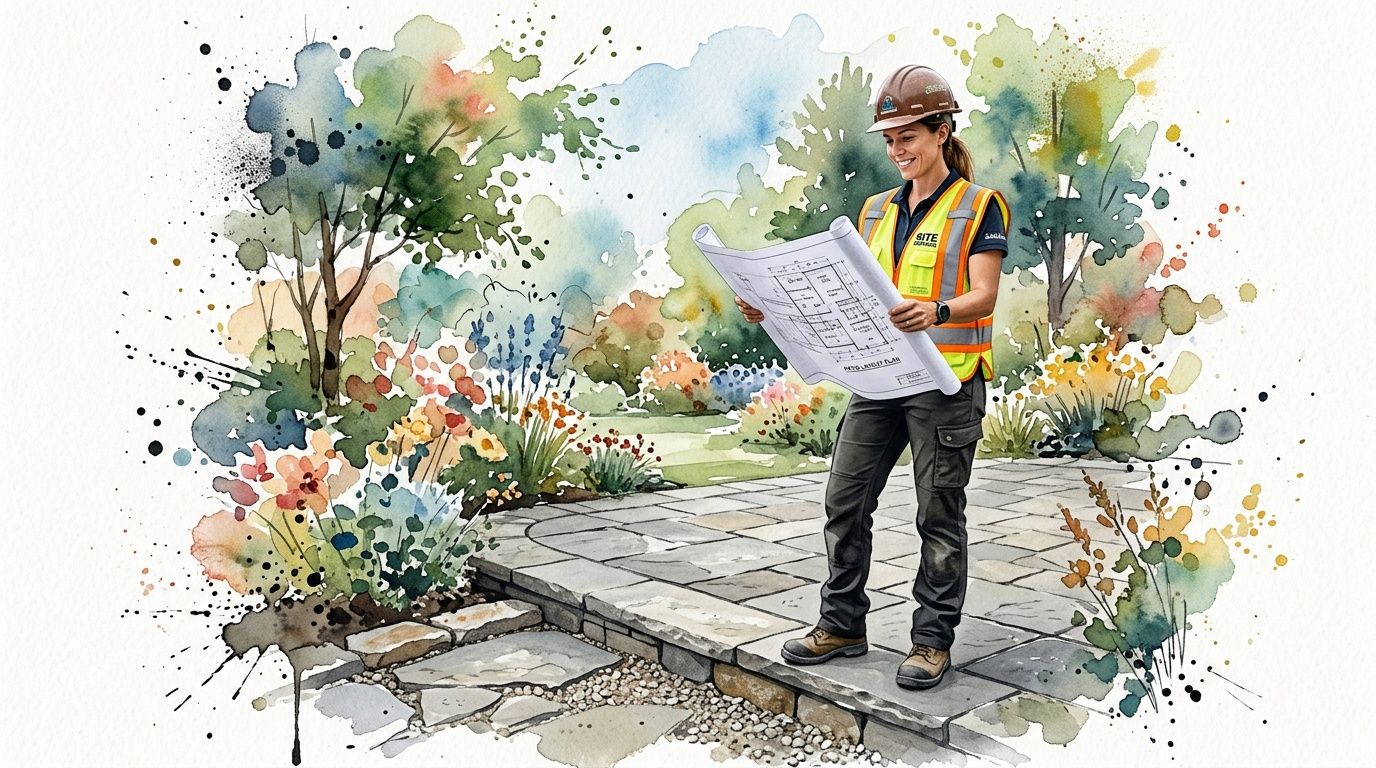
A real patio contractor manages the project from the ground down. That means checking slope, drainage, access, finish elevations, adjacent structures, and soil conditions before talking about surface materials.
The visible part of a patio gets most of the attention. The part that decides whether it performs well is the excavation depth, aggregate base, compaction, edge restraint, drainage path, and how the finished surface ties into the house, walkways, and yard.
Pre-construction is part of the job
Before any excavation starts, utilities have to be identified and protected. In California jurisdictions such as Salinas, standard construction plans require curb markers to be stamped with identifying letters for utility locations, including 'G' for gas, 'S' for sewer, and 'W' for water, before ground disturbance begins, according to the City of Salinas standard plan requirements.
That step gets skipped by people who treat patio work like simple labor. It shouldn't. Utility hits create repair problems, schedule problems, and safety problems that were avoidable from the start.
Practical rule: If a contractor talks only about the finished paver color and not about drainage, compaction, utilities, and permit triggers, you're not hearing the full job scope.
A process-driven contractor also looks at where water will go once the patio is in. If runoff heads toward the house, garage, or crawlspace vents, the design isn't ready. If the patio edge creates a trip at the threshold or traps moisture against siding, the installation details need to be corrected before work starts.
For homeowners who want a clearer picture of that broader responsibility, this overview of what a licensed general contractor is responsible for lines up closely with how patio work should be managed.
Good patio work is mostly invisible at first
The strongest patio jobs usually don't look dramatic during the early phase. You see layout strings, excavation, plate compaction, base rock, screeding, and careful grade checks. That's the part that matters.
A labor-only crew may move faster on day one because they're rushing to the surface install. A professional patio contractor slows down where it counts.
What that usually includes:
- Layout control: Finished height is set off the house, doors, drains, and surrounding grade.
- Excavation depth: The cut has to allow for the material thickness and the supporting layers below it.
- Base preparation: Aggregate is placed and compacted in lifts, not dumped all at once and hoped for.
- Water management: Surface slope and drainage details are planned so water leaves the patio cleanly.
- Edge support: Pavers and stone need proper restraint so the field doesn't spread over time.
A patio can look finished in a week and still be built wrong. The problems show up later as low spots, loose edges, standing water, and movement.
Common Patio Types and Materials for the Monterey Coast

Material choice should match the site. A patio in fog-heavy Carmel-by-the-Sea doesn't face the same conditions as a sunnier inland yard, and a good patio contractor should talk through those differences instead of pushing one material for every project.
On the Monterey coast, moisture and salt air matter. In that environment, Turftenders Landscape notes that proper material specification is critical because salt air and moisture accelerate degradation, and that properly specified pavers over a 4 to 6 inch aggregate base can last over 20 years, while inferior materials may deteriorate in 8 to 12 years.
Interlocking pavers
Pavers are a practical choice when homeowners want flexibility in layout and easier repair if one section ever needs to be lifted and reset. They work well for patios with curves, borders, steps, and transitions to walkways.
They are not forgiving of poor prep. If the base isn't compacted well or the edge restraint is weak, you'll see movement, separation, or settling. In coastal areas, dense, well-specified pavers tend to hold up better than bargain products.
Pavers usually make sense when you want:
- Repairability: Individual units can be replaced without removing the entire patio.
- Design flexibility: Patterns, banding, and mixed sizes are easier to achieve.
- Controlled movement: Properly installed systems handle minor ground movement better than a rigid slab.
For homeowners comparing outdoor living options, Palacios Construction offers deck and patio construction as part of its residential work in Monterey County.
Poured concrete
Concrete gives a cleaner, simpler look and can be a good fit for contemporary yards or utility-focused patio spaces. It can also be more cost-conscious depending on finish and site conditions.
The trade-off is rigidity. If the subgrade isn't stable, or if water is allowed to collect below the slab, cracking becomes more likely. In coastal settings, finish quality and jointing matter, and the slab still needs correct base work under it.
| Material | Main strength | Main risk | Best fit |
|---|---|---|---|
| Pavers | Flexible layout and easier spot repairs | Shifting if base or edges are weak | Patios with detail, curves, and long-term serviceability |
| Concrete | Clean finish and straightforward layout | Cracking from poor prep or movement | Simpler patio shapes and modern designs |
| Natural stone | Strong visual character | Higher install complexity and more material variation | Homes where appearance is the top priority |
Natural stone
Natural stone gives a patio more variation and texture. It can look excellent on older homes, custom remodels, and properties where the patio needs to feel tied to the outdoor surroundings rather than read as a manufactured surface.
It also demands better planning. Thickness can vary, cuts take more time, and the base has to account for those differences. On the coast, not every stone performs the same way, so the contractor should be specific about what product is being used and why.
Coastal patios fail early when material selection is treated as a style decision only. It also needs to be a climate decision.
Understanding Patio Project Costs and Timelines
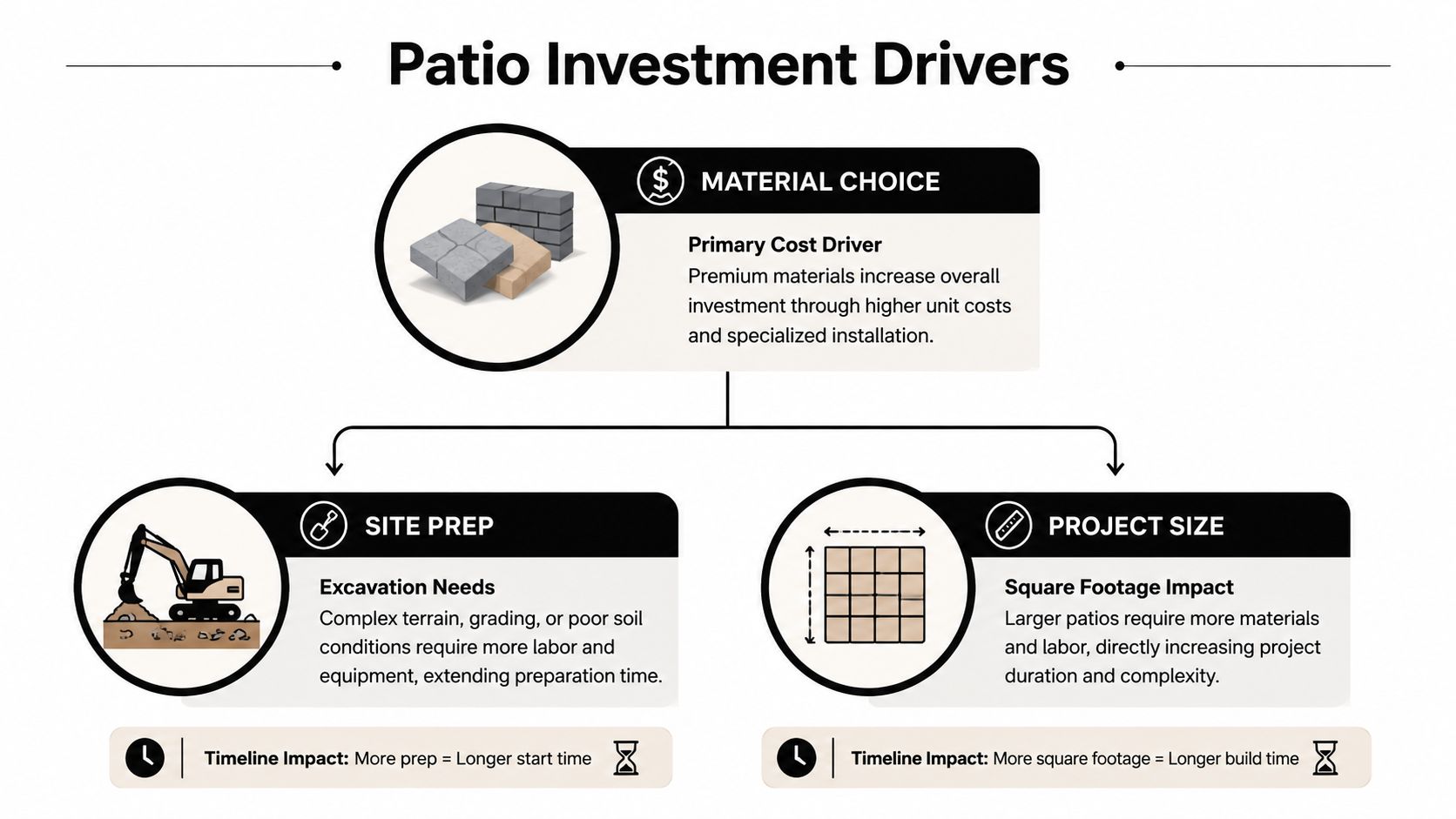
Most homeowners ask cost first. That's fair, but patio pricing only makes sense when you know what drives it. The same is true for schedule.
A patio contractor can't give a meaningful number from square footage alone. Site access, demolition, drainage corrections, grading, material choice, and permit review can change the job substantially.
What pushes a patio budget up or down
The biggest variable is usually the amount of preparation hidden below the finished surface. A flat, open yard with easy access is different from a tight backyard that needs demolition, hand-carrying materials, or extra retaining work.
Material choice also changes the labor profile. Concrete, pavers, and natural stone each install differently. Pattern complexity, borders, steps, seat walls, lighting, and tie-ins to existing hardscape all add labor and coordination.
A detailed estimate should account for:
- Site conditions: Slope, drainage issues, existing concrete, root intrusion, and soil behavior
- Material system: Pavers, concrete, or stone, plus edge details and finish selections
- Access: Whether equipment can reach the work area or the crew has to move material manually
- Project complexity: Curves, steps, multiple elevations, and integration with doors or existing structures
- Administrative work: Permit review, inspections, and scheduling of deliveries or specialty trades
If you've compared bids and wondered why they vary so much, this article on why deck project estimates vary more than most homeowners expect applies to patios too. The same planning issues show up.
Timelines depend on decisions before work starts
The field work is only part of the schedule. Selection, layout approval, permit review when required, utility coordination, demolition, prep, installation, and cleanup all affect timing.
A project with clear scope and prompt decisions moves more cleanly than one where materials are still being changed after excavation starts. Delays also happen when hidden site conditions show up, such as unstable soil, buried concrete, drainage conflicts, or permit issues that should have been addressed earlier.
Field note: Fast schedules are useful only when the prep work is complete. Rushing the early decisions usually slows the middle of the project.
What a realistic process looks like
Instead of focusing on calendar promises alone, look at whether the contractor has a workable sequence. A solid process usually includes site visit, scope definition, material selection, permit check, layout confirmation, excavation, base work, installation, and final walkthrough.
That structure matters more than a loose promise about getting it done quickly. A patio that starts on time but stalls in the middle is usually a planning problem, not a labor problem.
A Homeowner's Checklist for Vetting Your Patio Contractor

Hiring a patio contractor isn't just about photos of finished work. You need to know how they handle licensing, supervision, planning, and jobsite control.
The right questions usually tell you more than the sales pitch. Good contractors answer directly and don't get irritated when you ask how they run a project.
Questions worth asking before you sign
Start with the basics and get them in writing where appropriate. A contractor who is qualified for this work should be able to explain their process in plain language.
Ask about credentials and responsibility
- License status: Ask for their contractor license information and confirm it.
- Insurance: Ask whether they carry liability coverage and workers' compensation.
- Project oversight: Ask who will supervise the work day to day and who your point of contact is.
Ask about the patio itself
- Base and drainage: Ask how they determine excavation depth, slope, and drainage.
- Material recommendations: Ask why they recommend one material over another for your site.
- Local experience: Ask whether they've handled patio work on coastal or hillside properties in Monterey County.
Ask about paperwork
- Written scope: The proposal should explain what is included, not just name a material and size.
- Change handling: Ask how unforeseen conditions or added work are documented.
- Permit review: Ask who checks whether the project needs permits and who handles that process.
For homeowners weighing the legal and practical side of contractor selection, this page on why hiring a licensed general contractor actually matters is worth reading.
Red flags that should slow you down
Some warning signs show up early. Others appear only after you ask for specifics.
| Red flag | Why it matters |
|---|---|
| Vague estimate | You can't tell what prep, materials, or exclusions are built into the price |
| Cash pressure upfront | It often signals weak business practices or poor job control |
| No clear permit answer | The contractor may be leaving the risk with the homeowner |
| No discussion of drainage | That's one of the main reasons patios fail |
| No local address or track record | Harder to verify accountability and follow-up |
If the contractor avoids details now, don't expect more clarity once the job starts.
A strong contractor isn't the one who says yes to everything. It's the one who explains where the site is straightforward, where it isn't, and what needs to be handled before construction begins.
Patio Permits and Coastal Regulations in Monterey County
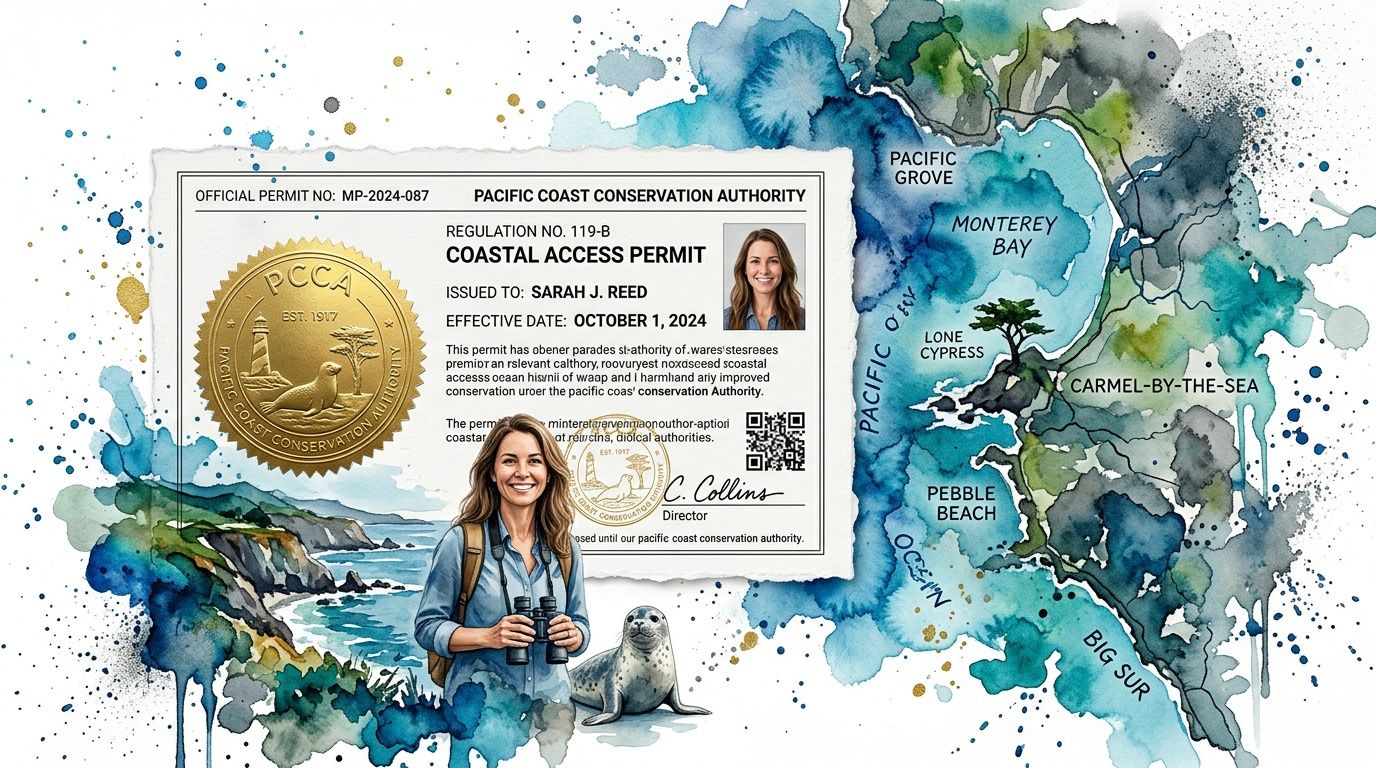
A lot of homeowners assume a patio doesn't need a permit because it's "just flatwork." In Monterey County, that assumption can get expensive.
Some patio projects are simple. Others trigger review because of location, grading, retaining work, drainage changes, hillside conditions, or coastal regulations. That matters in places like Carmel-by-the-Sea, Pebble Beach, and other properties with slope, visibility, runoff, or tighter local review.
Why local permit issues slow patio jobs down
The permit problem usually isn't the patio surface itself. It's the site conditions around it. Cut into a slope, alter drainage, add retaining elements, or build in an area with stricter oversight, and the project can move out of simple-install territory quickly.
A 2025 Monterey County report cited in Outdoor Architects noted that 68% of residential outdoor project permit applications were delayed by an average of 45 days because geotechnical assessments for hillside stability were incomplete. That's a planning problem, not bad luck.
What homeowners should clarify early
You don't need to become a permit expert before hiring a contractor. You do need to know whether the person bidding your patio has checked the right issues.
Early questions that matter:
- Will grading be required: If so, the review may go beyond a simple patio install.
- Is the property in a coastal or hillside area: Local review can become more involved.
- Will drainage patterns change: Even small surface changes can raise concerns on some lots.
- Are retaining walls, steps, or structural elements included: Those details often affect permit scope.
A patio contractor who works carefully in Monterey County should raise these questions before construction starts, not after excavation exposes a problem. Homeowners who want more clarity on responsibility can review who handles remodel permits in Monterey and why it matters.
Permit delays are usually created in pre-construction. They rarely come from the patio surface choice itself.
What professional handling looks like
Good permit handling starts with honest scoping. If the site needs geotechnical input, drainage review, or revised drawings, that should be addressed before crews and materials are scheduled.
The patio contractor's role isn't just to build. It's to recognize when the job touches grading, zoning, or local review and to coordinate the right steps in the right order. That's especially important on coastal and hillside properties, where shortcuts on paperwork usually turn into field delays later.
Frequently Asked Questions About Patio Construction
How do I know if I need a patio contractor or a landscaper
If the project involves excavation, grading, drainage correction, demolition, structural tie-ins, steps, retaining work, or permit review, you want a licensed contractor who can manage construction properly. A simple planting refresh is different from building a stable patio system that affects drainage and finished elevations.
What's the most durable patio material near the coast
There isn't one answer for every property. A durable patio near the coast depends on matching the material to moisture exposure, salt air, sun, shade, and the quality of the base underneath. Good pavers, well-installed concrete, and the right natural stone can all perform well when the site prep is done correctly.
Can you build a patio on a sloped yard
Yes, but slope changes the project. The contractor may need grading, drainage control, retaining elements, or a stepped layout rather than a single flat pad. On hillside lots, planning and permit review become much more important.
Why do patio estimates vary so much
The big differences usually come from prep work, not markup. One estimate may include demolition, drainage correction, deeper excavation, disposal, edge restraints, and permit handling, while another may leave those items vague or exclude them until later.
How long should a patio installation take
That depends on the site, material, access, and whether permits are needed. A simple patio moves much faster than one with demolition, drainage issues, or hillside constraints. The better question is whether the contractor has a clear sequence and a complete scope before work starts.
What should I expect during the first site visit
You should expect measurements, grade observation, questions about drainage and use of the space, and discussion about access, materials, and any local approval issues. If the visit is only about picking colors and getting a fast number, it probably isn't a thorough evaluation.
Is poured concrete better than pavers
Neither is automatically better. Concrete can work well for simpler layouts and a cleaner look, while pavers offer easier spot repair and more flexibility in design. The better choice depends on your site conditions, maintenance expectations, and the look you want.
What matters most in a patio quote
Look for a clear written scope, not just a price. The quote should explain the material system, site preparation, drainage approach, exclusions, and who handles permit review if required. That's where you can tell whether the contractor is pricing the actual job or only the visible surface.
If you're planning a patio and want a clear opinion on site conditions, material options, and whether permits may affect the job, Palacios Construction can talk through the project with you. You can reach the team through the website or visit 222 Ramona Ave Unit 5, Monterey, CA to start the conversation.