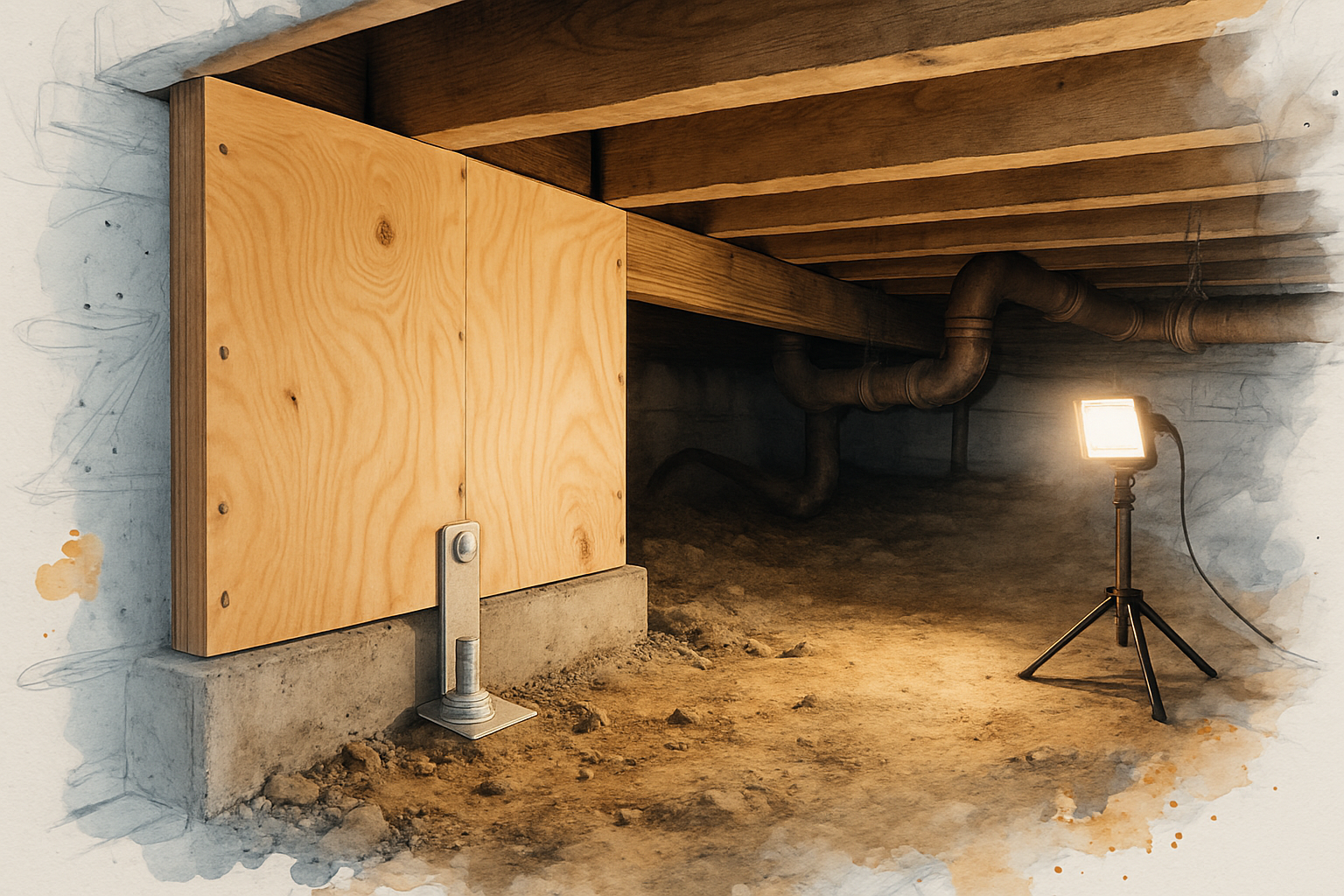

Quick Answer
Good indoor and outdoor living starts with honest planning. Assess how you'll use the space, study sun, wind, drainage, and privacy, connect the layout to the house in a practical way, choose materials that hold up in Monterey County's coastal climate, and handle permits correctly before construction starts.
Your yard may already have what you need. The problem is usually that it feels cut off from the house, too windy to enjoy, too exposed, or too awkward to use day to day.
That's where indoor and outdoor living either works well or turns into an expensive disappointment. According to studies summarized by the EPA, Americans spend 87% of their time indoors and another 6% in vehicles, leaving only about 7% outdoors, as noted in this Statista summary of EPA time-use findings. If you're going to build outside space, it should be space you'll use.
Introduction
Most homeowners start with the same thought. They have a patio, deck area, side yard, or backyard with potential, but it doesn't feel connected to daily life inside the home.
For indoor and outdoor living to work in Monterey County, the project has to do more than look good in photos. It has to fit how you live, hold up in fog, salt air, and wind, and be built in a way that won't create moisture, structural, or permit problems later.
Start with a Plan Assess Your Site and Daily Use
A good project starts before anyone talks about finishes. The first questions are simpler than that. Where do you naturally exit the house, where does the wind hit, where does water go, and what do you want to do outside on a normal weeknight?

A lot of weak projects fail right here. A structured planning process can reduce common design pitfalls by up to 40%, and ignoring microclimates like fog and wind can lead to 25% underuse of patios and decks due to discomfort, according to this landscape planning reference.
Look at the site before you look at finishes
In Monterey County, site conditions change fast from one property to the next. A backyard in Carmel Valley behaves differently from a lot near the coast in Pacific Grove or Pebble Beach. Even on the same street, one house may get hard afternoon wind while the next stays protected.
Walk the property at different times of day if you can. Pay attention to:
- Sun exposure: Morning sun and late afternoon sun create very different seating conditions.
- Wind direction: A nice open patio can become unusable if it's placed in a wind tunnel.
- Drainage: Water should move away from the house, not toward thresholds, siding, or footings.
- Privacy: Neighbors' sightlines matter more than people expect once the space is in regular use.
- Views: If there's a good view, orient seating and door openings toward it instead of turning your back to it.
Practical rule: If a space is uncomfortable at the time you'd normally use it, the layout is wrong even if the materials are expensive.
A sloped lot, older foundation, or low rear door height can also change the whole approach. Those conditions often decide whether a deck, patio, or raised transition works better.
Plan around actual habits
Homeowners often say they want a space for entertaining. That's fine, but weekly use matters more than occasional use. A family that eats outside several nights a week needs a different setup than a homeowner who mainly wants a quiet covered area for coffee and reading.
Ask practical questions:
- Do you grill often or only a few times a year
- Will kids move through the area daily
- Do you need shade at midday
- Will older family members need a level transition
- Are you carrying food and dishes from the kitchen
Those answers shape the project more than style boards do. When the plan matches daily habits, the finished space feels natural instead of forced.
If you want to understand how permit-ready planning fits into early decision-making, this guide on design and pre-construction planning in Monterey for permit-ready projects gives a useful overview.
Design the Connection Layouts and Transitions
The hardest part of indoor and outdoor living isn't adding an outside area. It's making the house and yard work as one connected space instead of two separate ones.
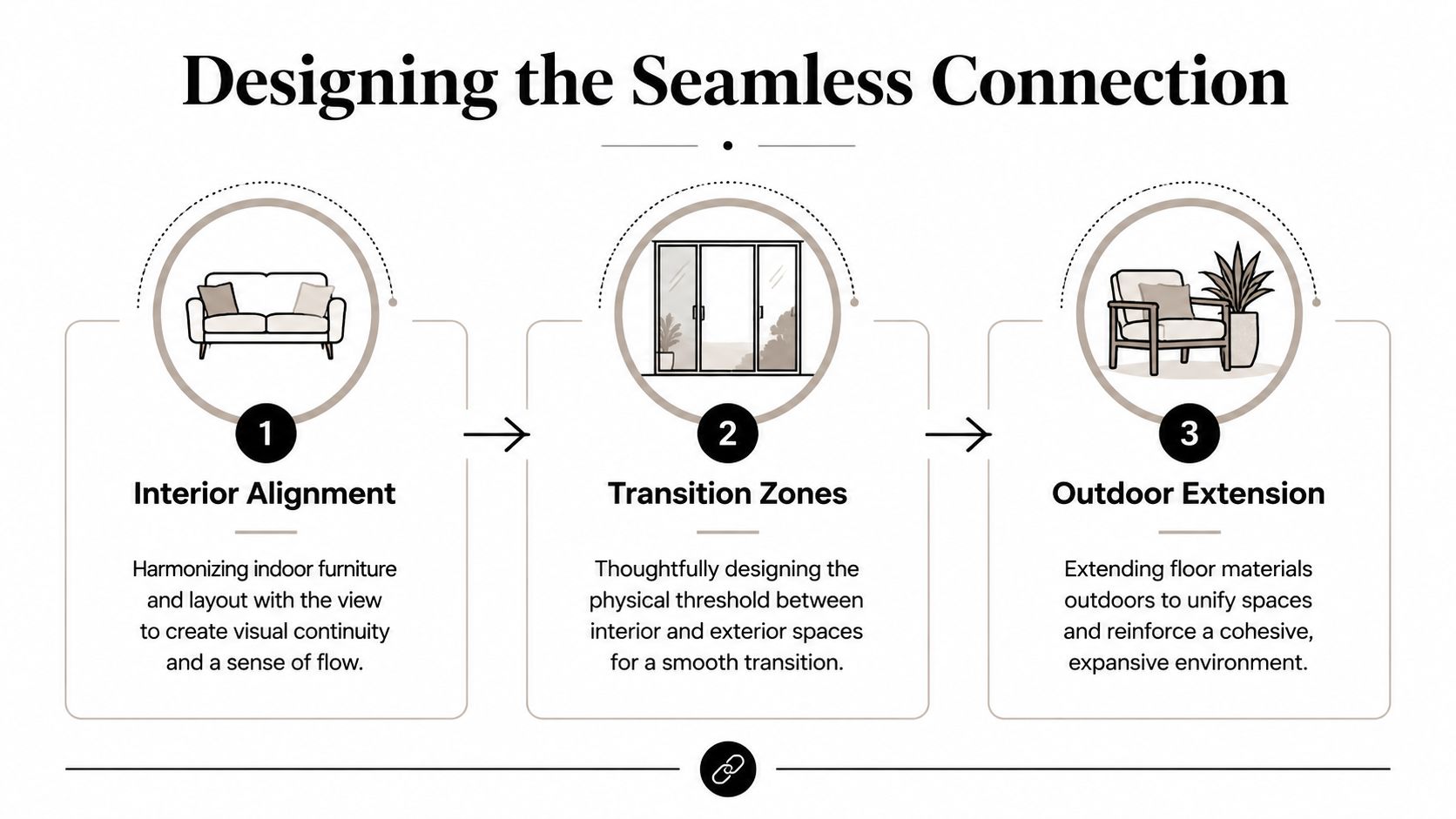
The transition has to make sense structurally and in daily use. If the doorway is too narrow, the step down is awkward, or the outdoor area starts with no clear purpose, people stop at the threshold. The backyard stays visually connected but functionally separate.
Get the threshold right
The door opening does a lot of the work. Large sliding glass doors can make sense when the wall opening, header, and adjacent framing are handled properly. In some homes, a wide slider is more practical than a folding system because it gives good access with fewer moving parts and less maintenance.
Floor height matters too. A sudden drop at the door breaks the connection and creates a trip point. On remodels, matching interior and exterior elevations takes planning because door sill height, drainage, framing depth, and finished materials all have to work together.
Common trouble spots include:
- Thresholds set too high: They interrupt movement and look like an afterthought.
- Doors placed without furniture planning: You end up opening into chairs, tables, or circulation paths.
- Transitions without cover: Water reaches the opening more easily, especially in wind-driven rain.
- Mismatched surfaces: The eye reads the spaces as disconnected even when the opening is large.
Break the yard into useful zones
A good outdoor layout usually has zones, but they shouldn't feel overplanned. You want enough separation to make the space useful, without chopping the yard into cramped little sections.
A practical arrangement often works like this:
| Area | What it needs | What usually goes wrong |
|---|---|---|
| Dining zone | Close access to kitchen or serving path | Too far from the house, so it rarely gets used |
| Lounge zone | Wind protection, shade, and comfortable spacing | Set in a leftover corner with no privacy |
| Cooking area | Safe clearance, utility planning, durable surfaces | Added late without enough room around it |
| Circulation path | Clear route from inside to outside and around furniture | People squeeze past chairs or planters |
Outdoor rooms work best when movement feels obvious. People shouldn't have to zigzag around furniture to get from the kitchen to the table.
Covered areas can also help tie the composition together. A pergola or roof extension can define the transition area, but it has to be sized to the house and built for local exposure. If it's undersized, too open to wind, or too lightly built, it won't solve much.
For examples of how these projects are approached in practice, the outdoor living project overview is worth reviewing.
Choose Materials for a Monterey County Climate
Material choice is where a lot of attractive projects start losing ground. What looks good on install day may not hold up once fog, salt air, sun, and moisture start working on it year after year.
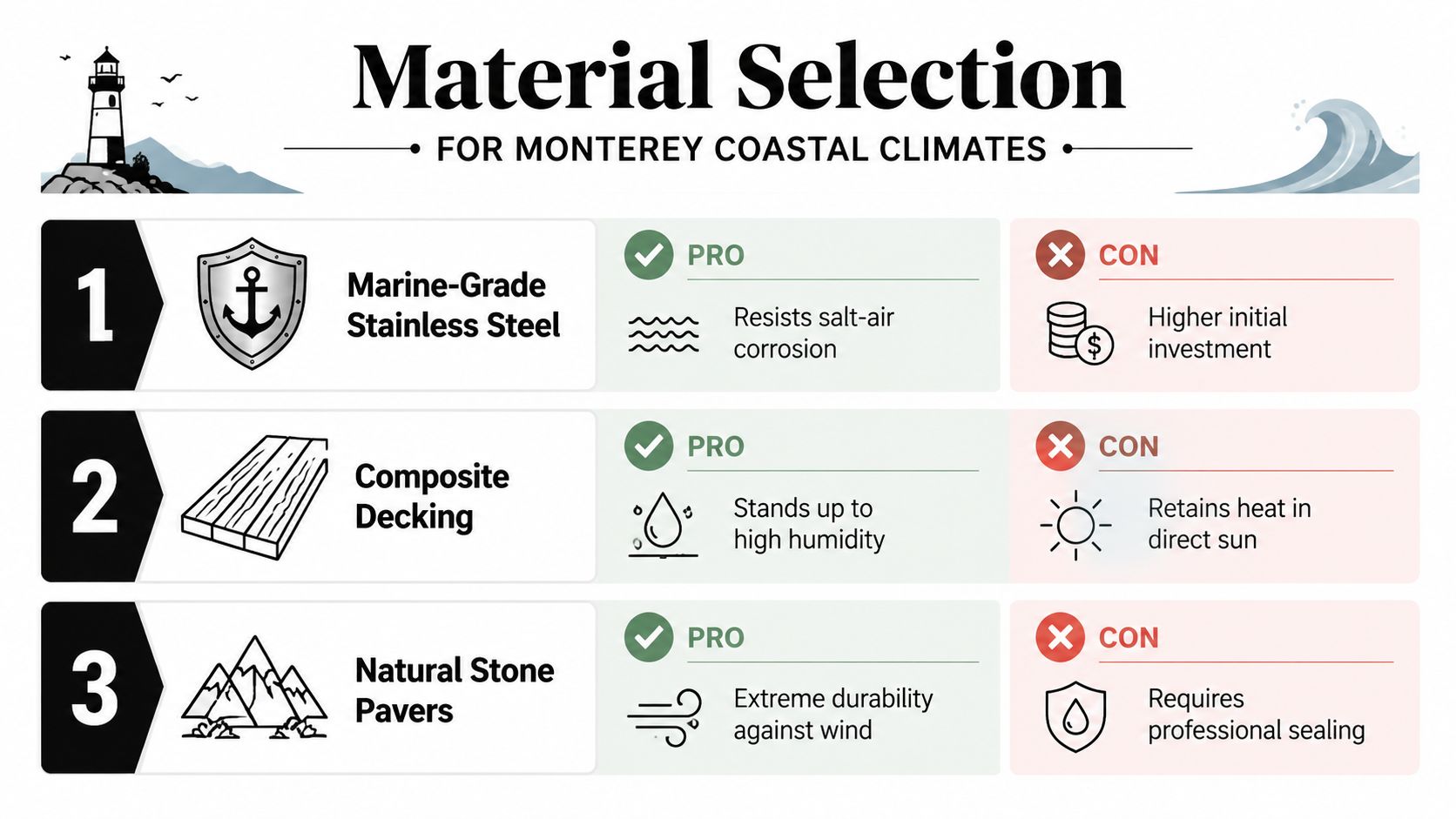
That matters more near the coast than many homeowners realize. A 2023 ASCE report on California coastal infrastructure suggests that 40% of residential remodels in foggy, wind-exposed areas experience significant issues within 10 years due to inadequate weatherproofing and material selection, as referenced in this coastal design article.
Fasteners and connectors matter more than trim color
The visible surface gets most of the attention, but hidden hardware often decides how long the project lasts. In coastal work, corrosion isn't a cosmetic issue. It affects structural connectors, joist hangers, anchors, brackets, and exposed screws.
If metal components start breaking down, the whole assembly weakens. That's why fastener compatibility matters. Mixing the wrong metals or using hardware not suited to marine exposure creates problems that don't show up right away.
A few material decisions carry a lot of weight:
- Marine-grade stainless steel hardware: Usually the safer choice where salt exposure is a concern.
- Corrosion-resistant connectors: Important anywhere framing meets posts, beams, or concrete.
- Quality flashing: Critical where decks, pergolas, or patio covers attach to the house.
- Exterior-rated sealants and membranes: Needed at penetrations and transitions, not just around windows and doors.
If water gets behind the finish and the hardware starts corroding, the project can look fine from the yard while damage builds where you can't see it.
Compare materials by maintenance, not just appearance
Homeowners often compare decking or patio materials by color and texture first. In practice, maintenance and climate performance usually matter more.
Here's the trade-off in plain terms:
| Material | Where it works well | Watch for |
|---|---|---|
| Composite decking | Good where moisture and recurring exposure are concerns | Surface temperature in direct sun and product quality differences |
| Redwood | Traditional appearance and workable material on the build side | Ongoing maintenance, movement, and weathering |
| Natural stone pavers | Durable surface with solid long-term performance when installed well | Base prep, drainage, and sealing details |
| Concrete finishes | Flexible for patios and walkways | Cracking risk, finish wear, and edge detailing |
Composite decking can be a good fit in coastal conditions because it avoids some of the ongoing upkeep associated with wood. That said, product selection still matters. Lower-grade composite can fade, move more than expected, or feel less stable underfoot if the framing isn't planned correctly.
Wood still has a place, but it must be chosen carefully. If a homeowner wants the look of natural wood, they should also expect maintenance, movement, and more regular inspection.
Protect the house where the project touches it
The connection point at the home is where mistakes get expensive. Ledger attachment, flashing sequence, waterproofing behind cladding, and door threshold detailing need to be thought through before framing starts.
Older homes need extra attention here. Existing siding, stucco, or trim often hides conditions that change the plan. If that area is rushed, moisture intrusion becomes the long-term problem, not the patio surface or railing style.
Navigate Structural Needs and Local Permitting
An indoor and outdoor living project is still a construction project. Once you alter structure, add roof framing, open walls, build a raised deck, or tie new work into the house, design choices have to line up with code and local review.
That comes up more often now because these projects are increasingly tied to larger home changes. Some 2025 ADU law amendments increased allowances for multigenerational living, leading to a 15% rise in permits for ADUs integrated with patios and decks in Monterey County during Q1 2026, according to this indoor-outdoor design and ADU reference.
Know when the project becomes structural
A simple patio at grade is very different from cutting in a large new opening or building a raised deck off the back of the house. Once loads shift or new framing ties into existing framing, engineering and permit review often become part of the process.
Typical triggers include:
- Large door openings: Removing wall sections can require new headers and structural review.
- Raised decks: Footings, post sizing, beam spans, guard requirements, and connections all matter.
- Attached patio covers or pergolas: Attachment points and uplift resistance need to be handled correctly.
- Outdoor kitchens with utilities: Gas, electrical, and plumbing work can add separate permit needs.
- Hillside lots: Soil conditions, drainage, and retaining conditions affect design from the start.
Some homes in Monterey County also have older framing, prior remodel work, or nonstandard conditions that don't match the original assumptions. That's why field verification matters so much before construction pricing is treated as final.
Permits affect budget and schedule
Homeowners usually ask two questions first. Do I need permits, and how long will they take?
The honest answer is that it depends on scope, structure, and location. Coastal areas, older neighborhoods, and properties with special site constraints often require more review than homeowners expect. A clean, permit-ready plan package helps, but it doesn't erase jurisdictional review time.
Permits aren't paperwork for its own sake. They force key decisions early, before those decisions become change orders or corrections in the field.
Budget follows the same logic. Cost is driven by structural scope, site access, finishes, utility work, drainage requirements, and permitting complexity. A ground-level patio with straightforward access is one kind of project. A new opening, covered structure, outdoor utilities, and a sloped lot is another.
For homeowners comparing responsibilities before hiring, this explanation of what a licensed general contractor is responsible for is a useful starting point.
Understand the Budget and Project Timeline
Budget and timeline usually become clearer once the site, scope, and permit path are defined. Before that, broad pricing talk doesn't help much because too many unknowns are still in play.
Two projects can look similar in photos and differ significantly in labor, sequencing, and review time. The main drivers are rarely just square footage. They're usually structural work, access, finish level, drainage, utility coordination, and how much of the house is being altered to create the connection.
What pushes a project budget up or down
A few factors have an outsized effect on cost:
- Existing conditions: Older framing, hidden water damage, or uneven grades create extra prep work.
- Material choices: Surface materials, door systems, railings, and hardware all change the scope.
- Site access: Tight side yards or limited staging space can slow delivery and labor.
- Integrated features: Lighting, heating, built-in seating, and utility-fed cooking areas add trades.
- Permitting and review: More complex plans usually mean more time in pre-construction.
There's also a difference between building a usable outdoor area and building one that's intended to last in coastal exposure. The second approach usually demands better hardware, better detailing, and more attention where materials meet.
How the schedule usually unfolds
Most homeowners underestimate the pre-construction part. Construction might move steadily once the project starts, but the early phase is where scope is clarified and problems get prevented.
A typical sequence looks like this:
| Phase | What happens |
|---|---|
| Early planning | Site visit, scope discussion, existing-condition review |
| Design development | Layout decisions, structural direction, material selections |
| Permit preparation | Drawings, engineering if needed, submittal package |
| Jurisdiction review | Comments, revisions, approvals |
| Construction | Demolition, structural work, utilities, finishes |
| Final closeout | Punch items, inspections, completion details |
If you want a clear picture of why estimates can vary so much from one deck or outdoor project to another, this article on why deck project estimates vary more than most homeowners expect lays out the main reasons.
The best way to keep both budget and timeline under control is to make real decisions early. Late changes to door size, roof lines, finish materials, or utility locations usually create the delays homeowners remember most.
Frequently Asked Questions
How much does an indoor and outdoor living project usually cost in Monterey County
It depends on the scope more than the category. A simple patio or pergola is very different from a project that includes structural openings, a raised deck, utility work, and custom finishes. The best way to get useful pricing is to define the layout, materials, and permit requirements before treating any estimate as final.
Do I need a permit for a deck or pergola
Often, yes, especially if the structure is attached to the home, raised, roofed, or part of a larger remodel. Permit requirements depend on the specific design and property conditions, so it's worth checking early instead of assuming a small structure will be treated as exempt.
What materials hold up best near the coast
In Monterey County, hardware and waterproofing details matter as much as the visible finish. Corrosion-resistant connectors, quality flashing, durable surface materials, and assemblies built for recurring moisture exposure usually perform better than appearance-driven choices alone.
How long does a project like this take
The answer depends on design complexity, permit review, material lead times, and site conditions. Homeowners often focus on the build phase, but planning and permitting can take a meaningful share of the overall timeline, especially when structural changes are involved.
Can this be built as part of an ADU or home addition
Yes, and in many cases that's the smartest way to approach it. When the outdoor area is planned with an ADU or addition from the start, circulation, utilities, structure, and permitting can be coordinated instead of patched together later.
Is a big glass door system always the right move
No. Large openings can work very well, but only when the wall can be altered properly and the threshold, drainage, and weather protection are handled correctly. In some homes, a simpler sliding door or a different opening location creates a better result with fewer trade-offs.
What usually causes problems after the project is finished
Most long-term issues come from water management, corrosion, or poor connections back to the house. Weak flashing, rushed ledger attachment, low-grade hardware, and layouts that ignore wind or sun exposure are common reasons a space looks good at first and then becomes harder to maintain or less comfortable to use.
Start Your Indoor and Outdoor Living Project
A successful indoor and outdoor living project isn't just about opening a wall or adding a patio. It depends on careful site review, practical layout decisions, coastal-appropriate materials, and permit handling that fits the property and the scope.
If you're sorting through options, it helps to start with the approval side early. This guide on who handles remodel permits in Monterey and why it matters is a good place to begin.
If you want to talk through an indoor and outdoor living project with a local residential contractor, Palacios Construction can help you evaluate scope, materials, and permitting for your property. You can also learn more at palaciosconstructionca.com or visit at 222 Ramona Ave Unit 5, Monterey, CA.