Quick Answer
Modern home remodeling in Monterey County works best when you start with clear priorities, build a realistic budget with contingency, phase the work in the right order, choose materials that hold up to salt air and moisture, and handle permits early for any structural changes. A licensed general contractor keeps the process coordinated from planning through final inspection.
If you're looking around your house and thinking it no longer fits how you live, that's usually where modern home remodeling starts. Not with trends, but with daily friction. A cramped kitchen, a dark hallway bath, poor storage, or a layout that made sense years ago but doesn't now.
Homeowners across the country are putting money into existing homes instead of moving, and U.S. remodeling spending has stayed above $600 billion annually after the pandemic, with 90% of homeowners hiring professionals for major projects according to the NARI 2025 Remodeling Impact Report. If you're sorting through ideas, this overview of home remodeling trends homeowners should watch in 2026 can help you separate lasting upgrades from short-term style choices.
Defining Your Modern Remodel Goals
A modern remodel should solve problems first. In practical terms, that usually means better flow, more usable light, cleaner lines, easier maintenance, and materials that don't punish you later.

Start with function, not Pinterest
When a homeowner says they want a home to feel more modern, I usually translate that into a few concrete questions. Do you need the kitchen opened up to the living area. Do you need a bathroom that works better every morning. Do you need an addition because the house is too small for the way your family uses it now.
Those answers matter more than any finish board. A project with clear priorities stays grounded when decisions get harder.
Practical rule: If a design choice looks good but creates more maintenance, less storage, or a harder layout, it isn't improving the house.
For kitchens, modern often means removing visual clutter, improving circulation, and bringing in better task lighting. For bathrooms, it usually means durable tile, simpler cleaning, better ventilation, and fixtures placed where they work. For additions or ADUs, modern means the new space feels integrated with the house instead of tacked on.
Separate needs from wants
At this point, projects either stay disciplined or start drifting. A useful scope has a short list of needs and a separate list of wants.
Common needs in Monterey County homes include:
- Layout fixes: Moving walls or reworking rooms that block light or interrupt traffic flow.
- Aging materials: Replacing finishes or assemblies that don't hold up well near the coast.
- Storage problems: Adding cabinets, built-ins, or better room planning so daily use is easier.
- Structural work: Addressing framing, moisture damage, or outdated conditions before cosmetic work starts.
Common wants might include a larger island, wider sliders to a patio, a statement backsplash, or upgraded hardware. Those can all be worthwhile, but they shouldn't come ahead of the work that makes the house function properly.
Modern in Monterey County means performance
Along the coast, material choice isn't just about appearance. Fog, salt air, and moisture change the conversation. A finish that works inland may age poorly in Pacific Grove, Pebble Beach, or Carmel-by-the-Sea.
That applies across the project:
| Area | Better modern choice | Why it matters locally |
|---|---|---|
| Exterior hardware | Stainless steel or hot-dip galvanized | Resists corrosion better in salt air |
| Siding | Fiber cement or well-detailed stucco | Handles moisture better than more fragile options |
| Windows | Fiberglass or quality vinyl | Lower maintenance and better durability |
| Outdoor living | Products rated for exposure | Helps decks and patio details last longer |
A modern remodel should look clean, but it also needs to age well. That's the difference between a remodel that still works years from now and one that starts showing problems too early.
Creating a Realistic Budget and Phased Plan
Most remodeling problems start before demolition. They start when the budget isn't tied to a real scope, or when the schedule ignores the actual order the work has to follow.
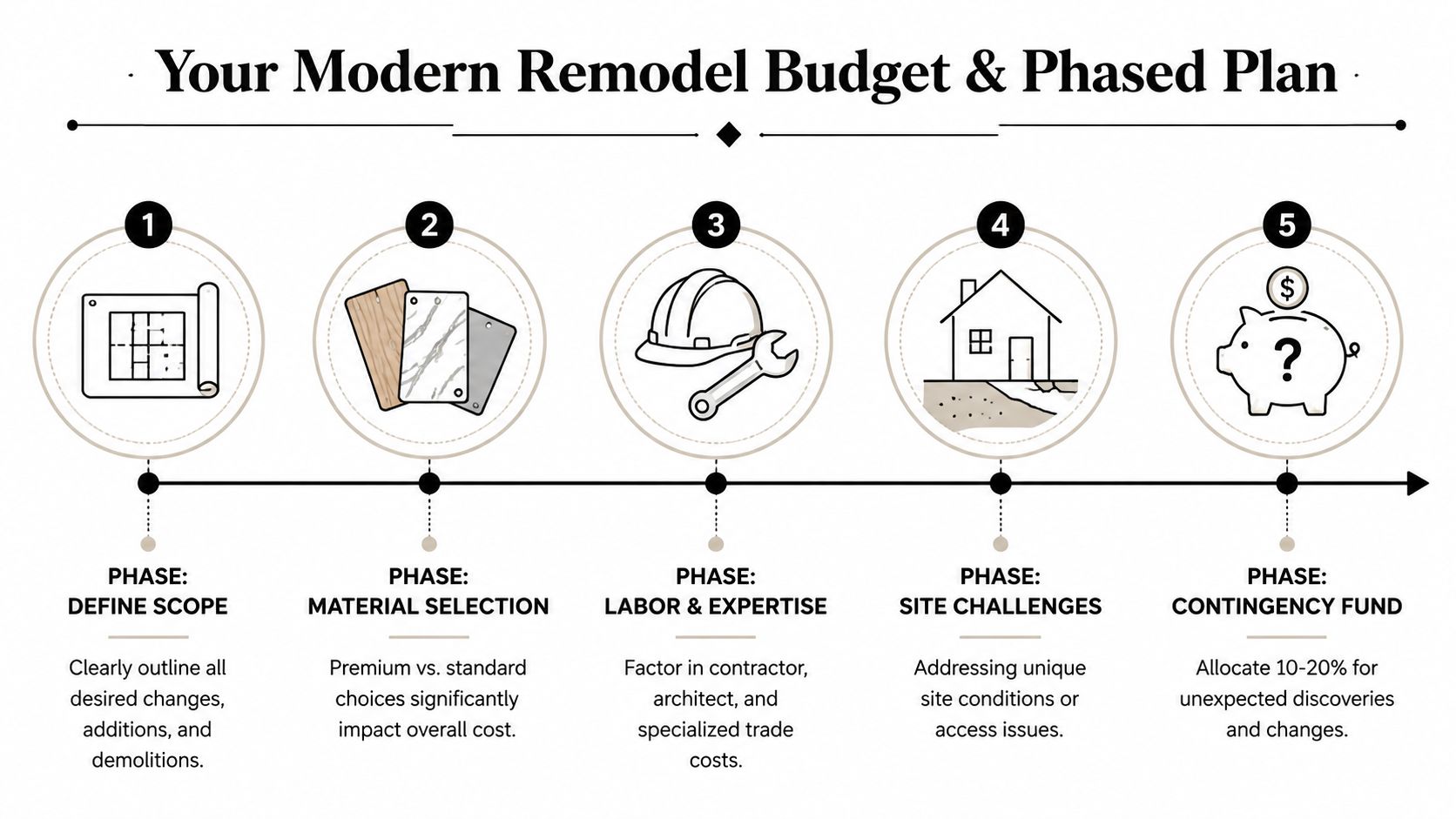
A disciplined budget matters because 55% of projects without a data-driven approach go over budget, and scope creep accounts for 35% of overruns according to this remodel budgeting guidance. The same source recommends a structured allocation, including 25% for planning and permits, 30% for construction, 20% for finishes, and a 15% to 20% contingency. If you're preparing for a larger renovation, this guide to planning a whole house remodel the right way is a good next read.
What actually drives the budget
Homeowners usually want one number early. That's understandable, but remodel cost depends on decisions that have to be defined first.
The main variables are:
- Scope of work: Cosmetic updates cost differently than moving walls, replacing windows, or adding square footage.
- Material level: Cabinet construction, tile selection, plumbing fixtures, hardware, and glazing all shift the final budget.
- Labor complexity: Tight access, older framing, occupied homes, and specialized trades all affect labor.
- Permit requirements: Structural changes, additions, ADUs, and major system changes add review and documentation work.
- Unknown existing conditions: Older homes can hide moisture damage, wiring issues, framing changes, or earlier work that wasn't done well.
If the house is older, a contingency isn't optional. It's part of responsible planning. Hidden conditions are common enough that you should expect some adjustments once walls and floors are opened.
Keep your allowance money for finishes separate from your contingency. One covers choices. The other covers surprises.
Why phasing matters more than most homeowners expect
A remodel has to move in the right sequence or trades start stepping on each other. Work gets redone, materials get damaged, and the homeowner ends up paying for disorder.
A typical sequence looks like this:
Planning and permits
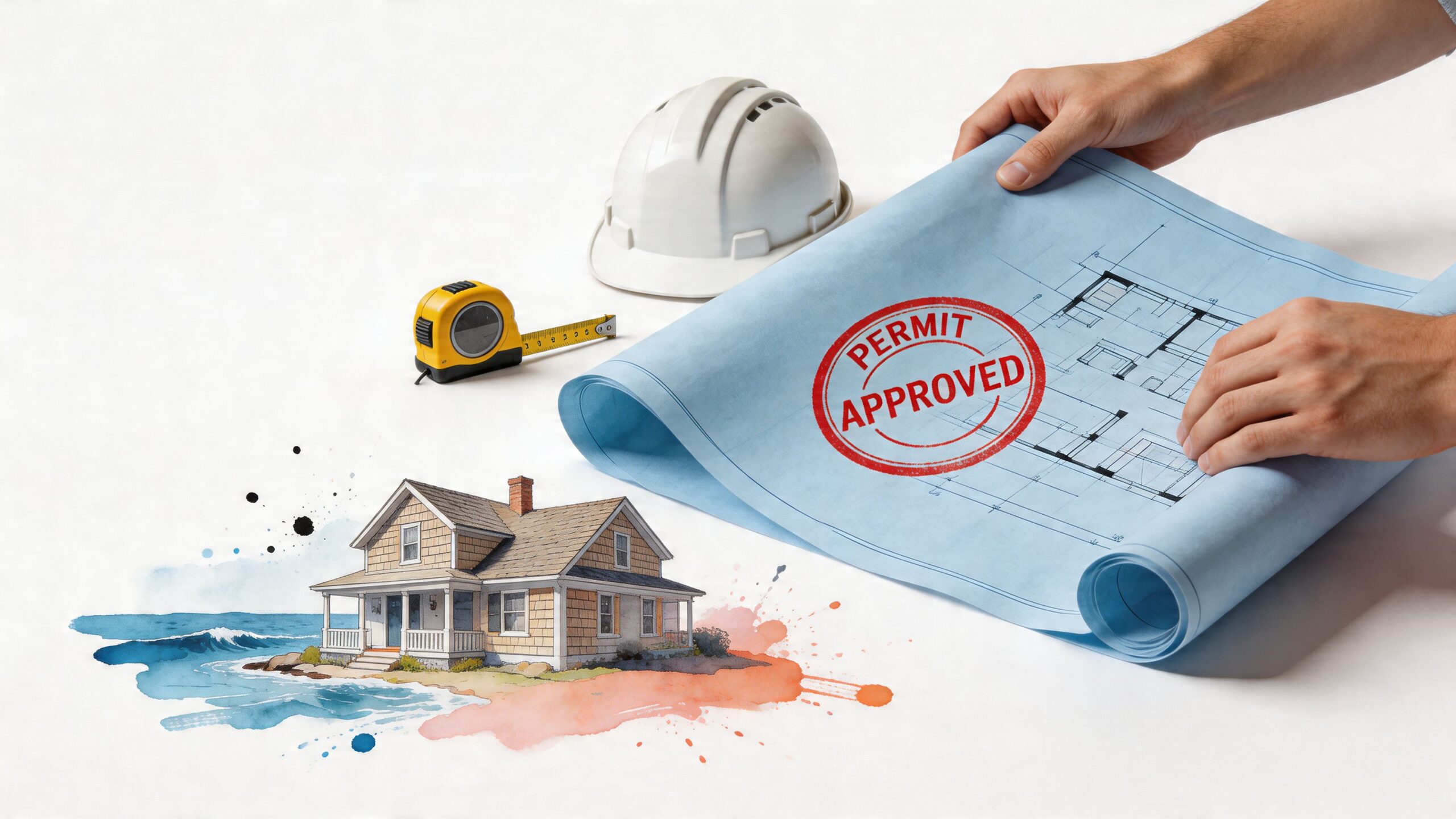
This stage includes measuring, scoping, selections tied to the build, and permit preparation if the project requires it. Structural work, additions, ADUs, and major kitchen or bath reconfigurations need extra attention here because the paperwork drives the rest of the schedule.
Demolition and site protection
Demo isn't just tearing things out. Floors, adjacent rooms, utilities, and dust control need to be protected first, especially in occupied homes.
Structural and rough work
Framing comes before finishes. Electrical, plumbing, and other rough-in work follow once the structure is set.
Inspections and close-in work
Required inspections happen before walls are closed. At this point, patience pays off because moving too early creates expensive rework.
Finish installation
Cabinetry, tile, trim, flooring, paint, fixtures, and hardware go in once the underlying work is complete and confirmed.
Permits are part of the schedule, not a side issue
Homeowners sometimes think permitting is separate from the project. It isn't. In Monterey County, permits affect start dates, sequencing, and material lead timing.
Regulations can feel slow, but they exist for a reason. Structural review, zoning checks, and code compliance protect life safety and help make sure the work can be inspected, insured, and relied on later. That matters even more when you're adding space or changing how a home is supported.
Selecting Materials for Coastal Durability
A modern remodel near the coast has to be built for exposure. Salt air doesn't care what looked good in a showroom, and fog will find weak details over time.

Where homeowners get into trouble
The common mistake is choosing materials by appearance first and performance second. That usually shows up in exterior fasteners that corrode, trim details that trap moisture, low-grade fixtures that pit early, or deck components that don't hold up.
In bathrooms and kitchens, the same problem shows up in a different way. Finishes may look modern on day one but become harder to maintain if they stain easily, collect moisture, or require more upkeep than the homeowner expected. This is one reason bathroom projects benefit from choices that are simple to clean and detailed for moisture control, as covered in this article on bathroom remodeling in Monterey County beyond the spa aesthetic.
Materials that tend to make sense here
No single product fits every house, but some categories consistently perform better in Monterey County conditions.
- Corrosion-resistant hardware: Stainless steel and hot-dip galvanized components are usually the safer call for exposed or semi-exposed conditions.
- Stable exterior cladding: Fiber cement and properly detailed stucco are common choices because they handle coastal wear better than more delicate materials.
- Low-maintenance window frames: Fiberglass and quality vinyl are often easier to live with than products that need more frequent upkeep.
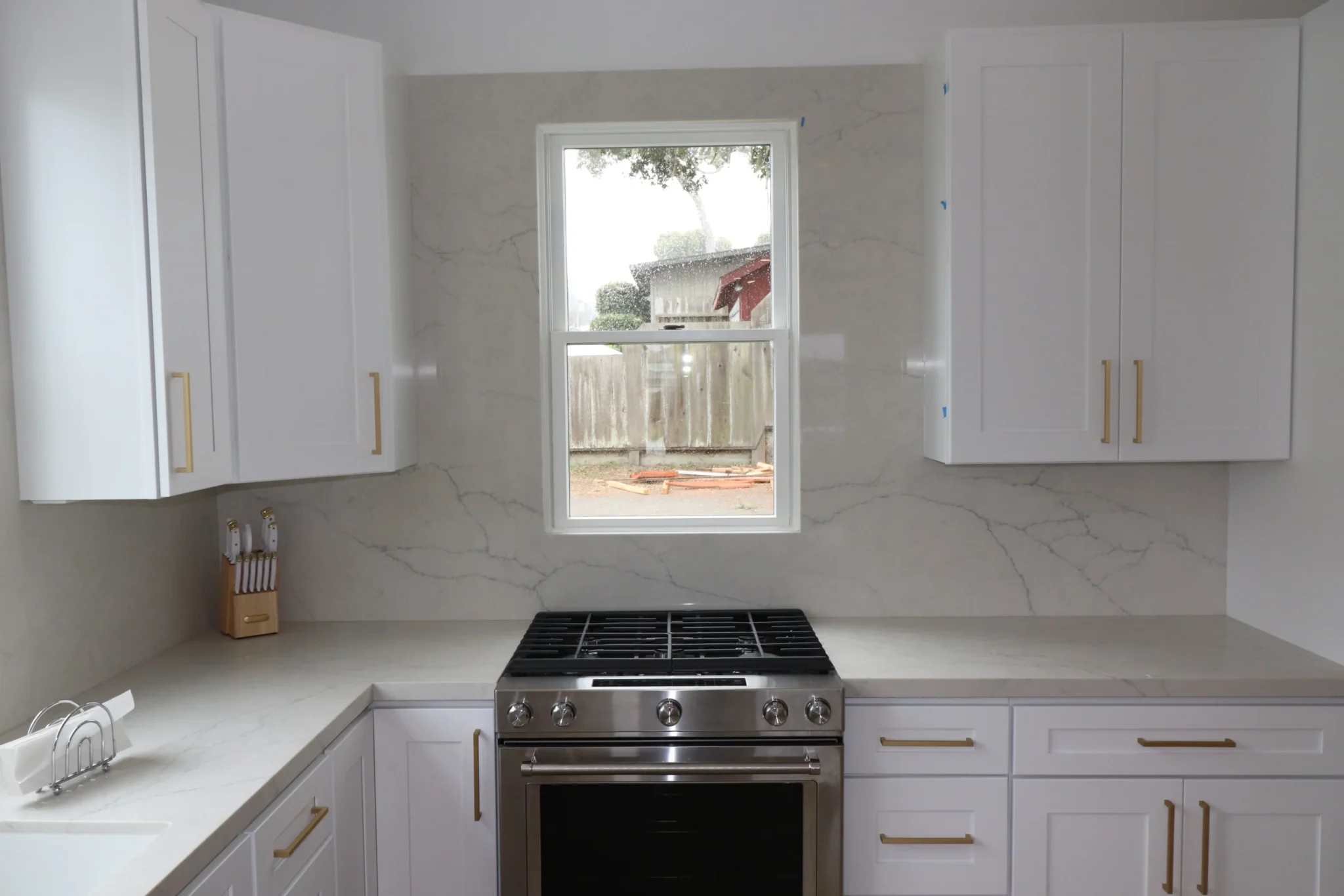
- Moisture-aware interior finishes: Porcelain tile, quartz surfaces, and quality paint systems generally hold up well in kitchens and baths.
- Outdoor living materials selected for exposure: Decks, patios, pergolas, and connectors need to match the site's weather exposure, not just the design concept.
A coastal remodel lasts longer when the finish layer and the hidden parts agree with each other. Good siding with the wrong fasteners is still a weak assembly.
A general contractor ties these choices together
Material selection, scheduling, and communication aren't separate jobs. They affect each other every day on site. If a homeowner chooses a finish with a long lead time, the build sequence may need to shift. If a product requires a specific substrate or flashing detail, that has to be accounted for before installation day.
That's where a licensed GC adds value. The role isn't just hiring trades. It's coordinating what gets ordered, when it arrives, how it's installed, and whether it fits the climate, the scope, and the schedule. Palacios Construction handles that kind of coordination on residential remodeling projects in Monterey County, especially where durability and sequencing matter.
Navigating Permits and Structural Changes
Once a remodel goes beyond surface updates, permits become part of the job. That's especially true for additions, ADUs, JADUs, wall changes, major kitchen reconfigurations, and work that affects structural, electrical, or plumbing systems.
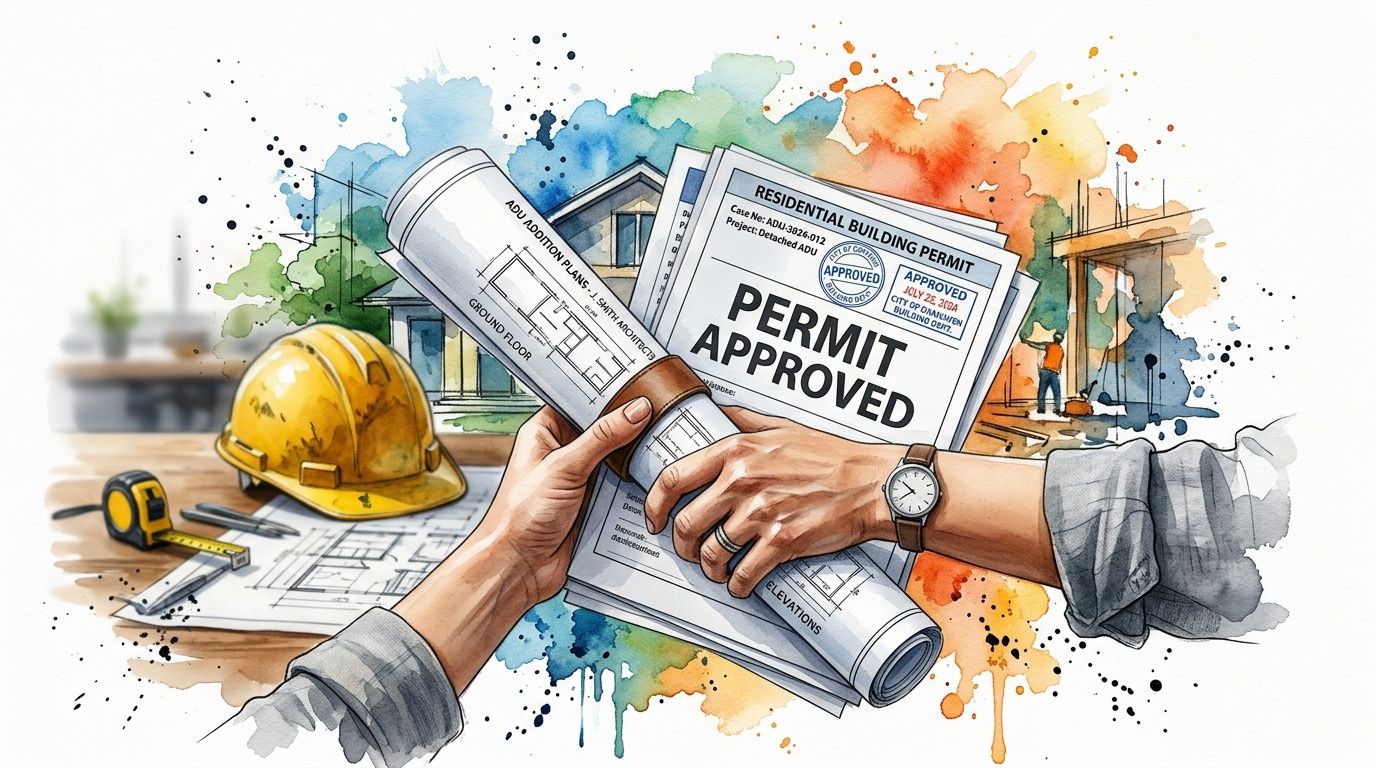
General remodeling advice often misses local conditions. In coastal areas like Monterey County, permitting timelines can be double the national average due to environmental reviews, and rushing design decisions without proper local planning can lead to 15% to 25% cost overruns from rework according to this discussion of local remodeling challenges in coastal regions. If you want a closer look at responsibility and process, this page on who handles remodel permits in Monterey and why it matters lays it out clearly.
What usually triggers permits
Paint, finish replacement, and some like-for-like updates may not require much review. Structural changes usually do.
Common triggers include:
- Moving or removing walls
- New additions
- ADU or JADU construction
- Major window or door changes that affect structure
- Electrical and plumbing rework beyond minor replacement
- Decks, patios, or other exterior structures when code review applies
If a project changes how the house stands, drains, vents, exits, or connects to utilities, expect permit review to be part of the path.
Why local review takes time
Monterey County isn't a generic build environment. Coastal zones, setbacks, environmental review, site constraints, and older housing stock all add layers to the process. A design that looks straightforward on paper can run into zoning comments, access issues, or structural requirements once it enters review.
That's why early planning matters. Homeowners get into trouble when they commit to a design direction before checking whether the lot, the jurisdiction, and the existing house support it.
Permits aren't there to slow a project down for no reason. They force the important questions early, when changes are cheaper and safer.
Additions and ADUs need integrated planning
Home additions and ADUs are where process matters most. These projects typically involve design coordination, zoning review, structural planning, and a permit path that has to be managed in the right order.
Palacios Construction doesn't present itself as a standalone design firm, but design coordination is handled as part of additions and ADU work. That's the practical way to approach these projects because planning, code review, and field execution affect each other from the beginning.
A simple maintenance checklist after permit-driven work
Once the project is complete, keep an eye on the assemblies you just invested in:
- Check sealants and transitions: Look around new windows, doors, and exterior penetrations for wear.
- Watch drainage paths: Make sure water moves away from the house and doesn't sit near new work.
- Inspect exposed metal: Catch corrosion early on exterior hardware and connectors.
- Service new systems on schedule: Ventilation, water heating, and HVAC equipment last longer when maintained regularly.
Hiring and Working with Your General Contractor
The contractor you hire affects the job long before construction starts. Good results usually come from clear scoping, realistic scheduling, and direct oversight. Problems usually start when one of those is missing.
A structured process matters because 40% of projects face permit delays and 25% exceed timelines due to poor sequencing, while hands-on oversight by a licensed GC can reduce change orders by 50% and improve on-time completion to 85% according to this article on home renovation steps and project phasing. If you want a plain-language overview of the role itself, this page on what a licensed general contractor is responsible for is useful.
What to look for before you sign
Start with the basics. The contractor should be properly licensed, insured, and experienced with the kind of work you're planning.
Then look closer at how they run jobs:
| What to ask about | Why it matters |
|---|---|
| Similar project experience | A kitchen remodel, addition, and ADU all require different planning |
| Scope documentation | Clear scopes reduce assumptions and disputes |
| Trade coordination | Scheduling electricians, plumbers, framers, tile setters, and inspectors takes active management |
| Communication habits | You need to know how updates, decisions, and changes will be handled |
| Local familiarity | Monterey County conditions and permit environments affect planning from day one |
A detailed scope matters more than broad promises. If allowances, exclusions, material responsibilities, and change procedures are vague, the project will feel vague later too.
How the working relationship should feel
You shouldn't feel like you're chasing your contractor for basic answers. A well-run remodel has regular communication, documented decisions, and a practical schedule that reflects real conditions.
That doesn't mean there will never be surprises. Remodeling older homes always involves some level of discovery. It does mean surprises should be handled directly, with options explained and impacts made clear.
What a good process looks like on site
A licensed GC coordinates the order of work, checks quality, handles subcontractors, tracks material timing, and keeps the project aligned with the approved scope. That hands-on role matters even more in occupied homes, where cleanliness, access, and daily communication affect the homeowner's experience as much as the finished product.
The best working relationships are simple. Everyone knows what is being built, what is not being built, who is making selections, and how changes will be approved.
Long-Term Maintenance for Your Remodeled Home
A good remodel doesn't stay good on its own. Coastal homes need regular attention, even when the materials were chosen well.
Check exterior sealants, window perimeters, and transitions around doors on a regular basis. Small failures at joints and penetrations are easier to fix early than after moisture gets in.
Wash down exterior surfaces as needed, especially where salt and grime collect. Look at exposed hardware, connectors, and fasteners for early corrosion. If you have a deck, pergola, or other outdoor feature, inspect wear points before a minor issue turns into structural repair.
Inside the house, keep bathroom ventilation working properly and don't ignore signs of trapped moisture. Maintain any new HVAC, tankless water heater, or other installed equipment according to the manufacturer's schedule. Even a well-built modern space performs better when the owner treats maintenance as part of the investment.
Frequently Asked Questions About Home Remodeling
How do I know if my house is a good fit for modern home remodeling
Most houses are, but the right approach depends on the layout, structure, and condition of the existing home. A walkthrough usually reveals whether the best move is a focused kitchen or bathroom remodel, a larger renovation, or an addition.
Do I need permits for a kitchen or bathroom remodel
Sometimes yes, sometimes no. If the work stays cosmetic, permitting may be limited. If you're moving walls or changing plumbing, electrical, ventilation, or structural elements, permit review is usually part of the project.
How long does a remodel usually take
That depends on scope, selections, permit requirements, and site conditions. A simple finish update moves very differently than a full-home renovation, addition, or ADU. The timeline gets more reliable when the scope is fully defined before work starts.
What's the biggest mistake homeowners make before remodeling
Starting with finishes before they've defined the actual scope is a common one. Choosing tile and fixtures is the easy part. The harder and more important step is deciding what problems the remodel needs to solve.
Should I live in my house during the remodel
Sometimes that works, and sometimes it doesn't. It depends on which rooms are affected, how much demolition is involved, and whether utilities or access will be disrupted. For major kitchen, bath, or full-home work, it's worth discussing living arrangements early.
What should I bring to the first meeting with a contractor
Bring photos, a basic list of needs and wants, and anything that helps explain how you use the space now. If you've collected inspiration images, those are useful too, but it helps to explain what you like about them rather than just handing over a stack of pictures.
Call to Action
A successful coastal remodel starts with a clear scope, realistic allowances, and a plan that holds up to Monterey County conditions. Homeowners get better results when they address layout, durability, and permit requirements before they commit to finishes.
If you want to talk through a kitchen remodel, bathroom remodel, full renovation, addition, ADU, JADU, or outdoor living project, contact Palacios Construction or visit 222 Ramona Ave Unit 5, Monterey, CA.