


Quick Answer
A Monterey County landlord gets the same call many owners are getting this year. The tenant has a leak under the kitchen sink, and what should be a straightforward repair turns into a scheduling problem. The plumber is tied up on remodel work. The drywall patch has to wait. The cabinet damage gets worse while everyone tries to line up trades.
That is the effect of the renovation boom on rental maintenance in 2026.
For landlords in Monterey County, the issue is not just that repairs cost more. The bigger shift is that homeowner remodeling activity is absorbing the same local crews, supplier attention, and calendar space that rental owners depend on for routine maintenance. If you still wait for something to fail before making calls, you are competing for labor at the worst possible time.
The practical response is to treat maintenance as a business strategy, not a cleanup task. Inspect units on a schedule, handle small defects before they spread, line up work during vacancies when possible, and keep an active relationship with a local contractor before you need urgent help.
That pressure is coming from the same stay-put renovation trend affecting owner-occupied homes across the area. This related look at the stay-and-renovate trend for homeowners explains why so many trades are staying busy on larger residential projects instead of leaving room for scattered service calls.
In Monterey County, that matters even more because many rentals are older, salt air is hard on exterior materials and hardware, and occupied-unit repairs take more coordination than vacant-house remodel work. Owners who stay ahead of maintenance are usually protecting two things at once. They are controlling repair costs, and they are reducing the risk that a small issue turns into a vacancy, a tenant complaint, or a much larger repair bill.
Why Your Usual Repair Process Is Breaking Down in 2026

A tenant reports a leaking shower on Tuesday. You call the plumber you have used before. He is tied up on a kitchen remodel in Carmel Valley, a bath addition in Monterey, and two larger residential jobs that were booked weeks ago. By the time he can get there, the leak has already turned into drywall damage, paint damage, and an unhappy tenant.
That is the repair process many landlords are running into now.
The old model depended on extra room in local trade schedules. Monterey County does not have much of that room anymore. Homeowners are staying put and putting money into their houses, and that work pulls from the same labor pool rental owners need for service calls, turnover repairs, and small upgrades.
For landlords, the problem is not just higher pricing. It is loss of flexibility. Small repair jobs are harder to place on a calendar, harder to coordinate across trades, and more likely to get handled in pieces instead of as one clean scope.
More renovation demand is crowding out routine rental work
A lot of rental maintenance used to get done because a contractor had an open afternoon, a cancelled job, or a crew member available between larger projects. I see less of that now. Remodels and additions fill those gaps.
That changes how your repair requests get treated. A one-day patch on a rental unit often loses out to a three-week residential project with a larger contract value and fewer access constraints. Occupied units also take more coordination. Tenants need notice. Work hours may be limited. Parking, noise, and material staging can all be tighter than they are on owner-occupied remodel jobs.
In Monterey, Pacific Grove, and other older housing areas, repair work also has a way of expanding once a wall, ceiling, or deck surface is opened up. Water staining can lead to hidden rot. An exhaust fan replacement can expose wiring issues. Exterior trim repair near the coast often reveals more moisture wear than the owner expected.
That is why the usual call-when-it-breaks system keeps failing. It assumes the repair is isolated, the right trade is available, and the work can be slotted in quickly. Those assumptions are weaker in 2026.
Practical rule: If you only start calling contractors after a failure, you are entering the schedule late, with less negotiating room and fewer good options.
What a workable maintenance system looks like now
Landlords do not need a complicated property maintenance program. They need a repeatable one.
Schedule evaluations before the problem becomes urgent
If flooring is worn, caulk is failing, exterior wood is exposed, or a bathroom is showing signs of age, get the unit looked at before the issue forces action. Early site visits give you more choices on timing, scope, and trade coordination.
That matters because planned work can be grouped. Emergency work usually cannot.
Sort work into clear priority buckets
The owners who stay organized usually sort maintenance into three categories:
- Near-term items such as deteriorated sealant, minor leaks, loose fixtures, failing hardware, or visible trim damage
- Turnover items such as full paint, flooring replacement, vanity swaps, cabinet repair, or bath and kitchen refreshes
- High-risk items such as roof issues, plumbing leaks, electrical concerns, deck deterioration, and failed ventilation
This makes budgeting and scheduling easier. It also helps you avoid spending money on cosmetic work while a hidden water problem keeps getting worse.
Budget by building condition
Tenants report what they can see and feel. Owners have to manage what the building needs.
A unit with original windows, an older bathroom, and deferred exterior maintenance should not share the same repair budget assumptions as a unit updated three years ago. Condition-based planning is more accurate than complaint-based planning, especially in older Monterey County rentals where age, moisture, and coastal exposure affect how long materials last.
Keep contractors involved before there is a crisis
The best time to establish a contractor relationship is before an active leak, failed turnover, or tenant dispute. Repeat clients usually get faster decisions because the contractor already knows the property, the ownership goals, and the common trouble spots.
If you are planning bigger turnover scopes or repair work that touches several trades, it helps to understand how long a whole house remodel usually takes. Rental projects are smaller, but they are affected by the same crew availability, material lead times, and sequencing issues.
What tends to work, and what tends to stall out
Here is the pattern I see on active rental properties:
| Approach | What usually happens |
|---|---|
| Reactive only | Delays, rushed approvals, partial fixes, and more repeat visits |
| Annual inspection plus turnover planning | Better scheduling, clearer scopes, and fewer surprises during vacancy periods |
| Searching for a new vendor every time | Slower response, uneven workmanship, and less accountability |
| Using established contractor relationships | Better continuity, better recordkeeping, and faster prioritization |
The larger point is simple. In Monterey County, the renovation boom has created a secondary squeeze on rental maintenance. Landlords who still treat repairs as isolated events are competing for scarce labor one problem at a time. Owners who plan ahead usually get better scheduling, better cost control, and fewer disruptions across the year.
The Real Costs of Reactive Maintenance in This Market
Reactive maintenance always costs more than most owners expect. Not just in repair invoices, but in time, vacancy exposure, tenant frustration, and preventable damage.
In a tight labor market, those costs stack up faster.
Emergency work is usually the most expensive work
Emergency calls compress decision-making. You don’t have time to compare options well. You don’t have time to batch related work. And if the failure affects habitability or tenant access, you don’t control the timeline.
Effective preventive maintenance programs can reduce emergency repair costs by 25-30% and extend asset life by 15-40% (Oxmaint, 2026). That lines up with what contractors see in the field. A maintained building gives you more choice. A neglected building forces your hand.
A small leak under a sink is a repair. The same leak after weeks of cabinet swelling, damaged flooring, and tenant complaints becomes a restoration project.
That’s the part many owners underestimate. The first problem is often manageable. The secondary damage is what drives cost and downtime.
Vacancy gets longer when repairs start late
If a unit turns and the owner is still deciding what to repair after move-out, the clock is already running. In a busy market, waiting to line up multiple trades one at a time can stretch a standard turnover into a much longer process.
That’s especially true when the work touches more than one trade, such as:
- Bathroom failures that involve plumbing, drywall, waterproofing, tile, and paint
- Kitchen damage that requires cabinet work, countertops, flooring, and electrical updates
- Exterior deterioration that exposes framing, trim, or deck assemblies to further weather
In these situations, local permitting and scope also matter. Some work is straightforward repair. Some crosses into replacement or improvement and may need a different level of review. If your scope is moving beyond simple maintenance, who handles remodel permits in Monterey and why it matters is worth understanding before a turnover schedule gets tied to an approval issue.
Reactive owners usually pay twice
The first payment is for the urgent fix. The second is for the work that should have been addressed earlier but now has to be redone around the emergency.
That often looks like this:
Temporary patch first
A leak gets stopped, but damaged finishes remain.Tenant disruption next
Access has to be coordinated again, often while the unit is occupied.Full repair later
Cabinets, flooring, wall finishes, or fixtures still need replacement.
That sequence burns time and money. It also puts the tenant through multiple rounds of disruption for one underlying issue.
Monterey County makes deferral riskier
Older Central Coast rentals don’t fail in neat, isolated ways. Coastal moisture, aging windows, worn exterior surfaces, and older plumbing assemblies all tend to overlap. In hillside or older neighborhoods, drainage and envelope issues can complicate what looked like a basic maintenance call.
That’s why smart owners put more attention on condition-based maintenance than cosmetic touch-ups alone.
Jobsite reality: In older rentals, the visible problem is often the smallest part of the repair.
The reactive model still has a place for true surprises. But using it as the default operating system is what gets expensive.
Shifting to a Proactive Maintenance Strategy
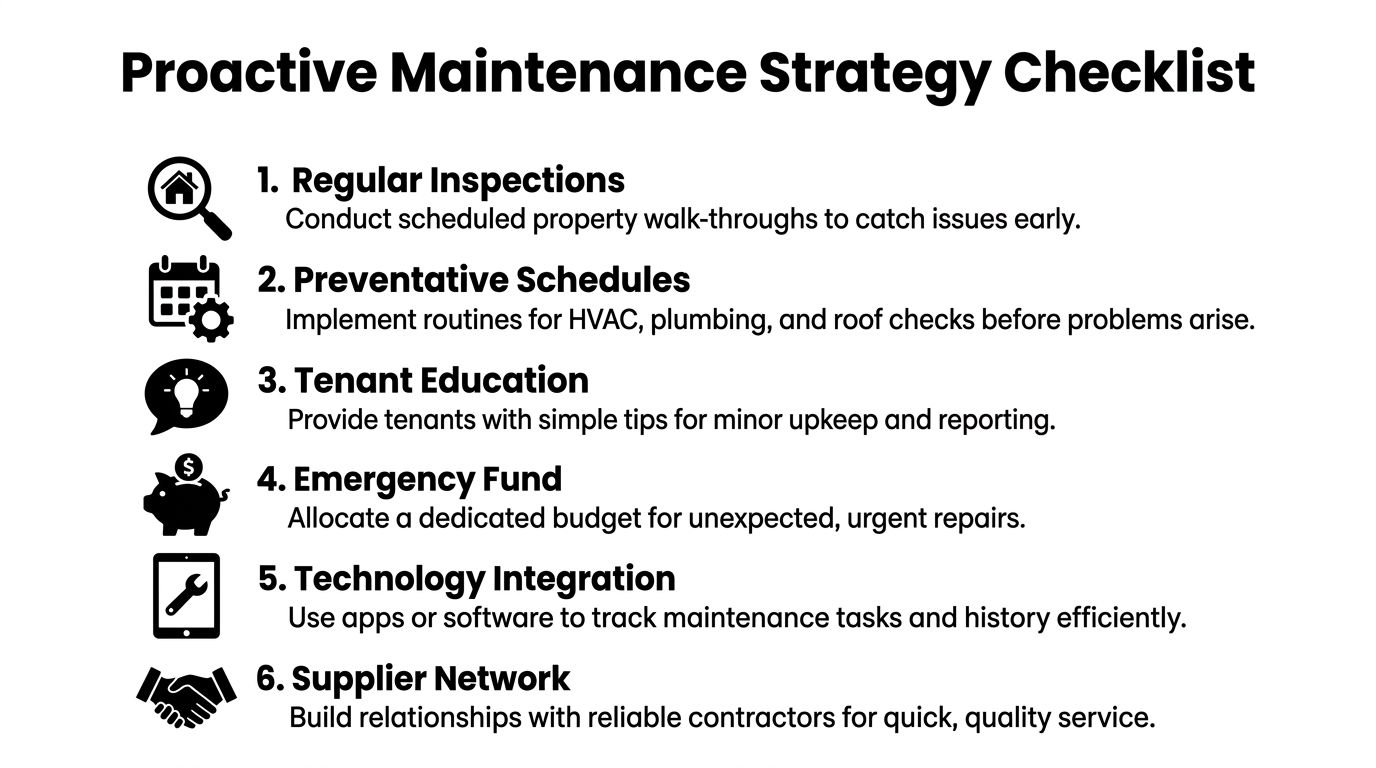
A Monterey County landlord used to have more room to wait. A loose plan, a few trusted calls, and a quick patch during turnover could carry a property through the year. In 2026, that approach breaks down faster. Homeowner renovation demand is keeping many crews booked, which means rental owners who plan work late often end up choosing from limited schedules, higher pricing, or temporary fixes that should have been permanent.
A proactive maintenance strategy is a scheduling strategy. It helps you reserve labor earlier, combine related repairs into one visit, and protect your unit from the kind of small failure that turns into a vacancy problem.
Build a maintenance calendar that matches the property
Generic checklists miss the point. A coastal fourplex in Pacific Grove has different risks than an inland duplex in Salinas, and an older property with original windows or aging supply lines needs a different inspection rhythm than a newer build.
Set review dates around the parts of the building that fail first:
- Exterior surfaces and drainage for trim, siding, deck boards, railings, sealant joints, and runoff paths
- Wet rooms for caulking failure, slow drains, cabinet swelling, soft flooring, and plumbing access points
- Ventilation and window performance for condensation, weak bath fans, and recurring moisture at sills or corners
- Turnover wear items for paint, flooring transitions, hardware, light fixtures, and appliance condition
The format can stay simple. A spreadsheet, shared calendar, and photo log are enough if someone is updating them.
Treat turnover as a production window
Vacancy is the cleanest time to do real work. Materials can be staged. Trades can move in order. Owners can approve a scope once instead of reopening the unit for three smaller jobs over the next six months.
That matters more this year because contractor availability is tighter than many landlords expect. If the unit is vacant and you already know what belongs in the scope, you have a much better chance of getting the right work done before the next lease starts.
I usually tell owners to sort turnover work into three buckets before the tenant leaves, not after the keys come back:
| Turnover type | Best use |
|---|---|
| Light turnover | Paint touch-up, hardware replacement, fresh caulking, fixture swaps, cleaning |
| Moderate turnover | Flooring replacement, vanity or toilet replacement, appliance updates, trim and door repair |
| Major turnover | Kitchen or bath rebuilds, plumbing rework, damaged substrate repair, larger code-related corrections |
That approach keeps small jobs from turning into scattered decisions. It also helps with budgeting, because owners can separate true maintenance from elective upgrades.
Line up contractors before the repair becomes urgent
This is one of the clearest changes I see in the field. Owners who already have a contractor relationship usually make calmer and cheaper decisions. Owners starting from scratch during an active leak or a tight turnover usually spend the first few days just trying to get calls returned.
A practical bench matters. You need to know who can handle a larger renovation scope, who can take on targeted repair work, and how far out each trade is booking. That gives you options before a routine issue becomes an expensive scheduling problem.
For Monterey County landlords, one workable model is using a contractor that can handle both renovation planning and rental repair scopes. Palacios Construction’s rental property solutions are one example of that type of relationship.
Give tenants enough notice to get cooperation
Proactive maintenance works better when tenants can see the reason for it. Clear notice usually gets better access, fewer missed appointments, and earlier reporting on related issues.
Keep the message plain:
We are scheduling this repair now so it can be handled before it affects other parts of the unit. Here is the work window, who will need access, and what we need from you.
That kind of notice sets expectations without overpromising. It also reduces the friction that comes from vague scheduling.
What a workable yearly system looks like
A good system is usually boring. That is a compliment.
Use a repeatable schedule with a few basic controls:
- Quarterly condition checks for known trouble spots and previously deferred items
- Pre-turnover walk-throughs while the current tenant is still in place, so scope decisions are made early
- Written scopes after turnover that separate required repairs from optional upgrades
- Photo records to track recurring issues and compare changes over time
- A short vendor list with real contacts, typical lead times, and backup options
The renovation boom has changed more than pricing. It has changed access to labor. For rental owners in Monterey County, proactive maintenance is no longer just a tidy management habit. It is a business decision that helps you secure crews earlier, reduce repeat disruption, and keep repair costs from getting dictated by someone else’s full schedule.
Prioritizing Upgrades for Your Monterey County Rental

A landlord in Monterey County might have money for one major project this year, not three. In this market, the order of work matters because the wrong choice can tie up budget and contractor time while maintenance risk keeps getting worse.
Start by ranking work in three buckets. First, fix anything that affects safety, code exposure, water control, or habitability. Next, spend on items that reduce repeat service calls and hold up between tenants. After that, consider upgrades that improve appearance or leasing appeal.
Start with safety and compliance
Electrical defects, loose or failing railings, active leaks, damaged subfloors, poor bathroom ventilation, and deteriorated exterior stairs should move first. Those items tend to get more expensive if they sit, and they are the kind of problems that can force rushed scheduling later.
Local review also affects scope and timing. A simple replacement may stay simple. Once you start relocating plumbing, changing layouts, adding fixtures, or opening walls in an older unit, permit requirements can change by city and by the exact work involved. On the Peninsula, some plumbing changes may also trigger review from the Monterey Peninsula Water Management District. Owners should confirm requirements before finalizing the scope, not after materials are ordered.
Buy for service life, not showroom appeal
Monterey County rentals see different wear patterns depending on location. Pacific Grove, Seaside, Marina, and other coastal areas deal with salt air, damp mornings, corrosion, and slower drying conditions. Inland properties in Salinas or King City often see more heat, dust, and heavy day-to-day use. Material choices should match those conditions.
In rental work, durable usually beats stylish. I would rather see a landlord install a bathroom exhaust fan that clears moisture, a vanity top that survives turnover after turnover, and hardware that can be replaced from local stock than spend the same money on finishes that look dated or fail early.
That usually points owners toward:
- Moisture-resistant bath finishes that are easy to clean and easy to repair
- Exterior fasteners, hardware, and fixtures rated for coastal exposure where needed
- Straightforward kitchen counters and cabinets that hold up under frequent use
- Standard-size plumbing and lighting fixtures that do not depend on long special-order lead times
For owners weighing long-term value against maintenance burden, upgrades that add long-term value to Monterey County homes in 2026 give a useful reference point. The rental version of that advice is simpler. Choose materials and layouts that keep the unit easier to maintain five years from now.
Focus upgrade dollars where they change operations
After the building is sound, put money into areas that reduce complaints, shorten turnovers, and support rentability. Kitchens and bathrooms usually lead that list, but not every unit needs a full remodel.
A partial upgrade often produces a better return than a full tear-out. Replacing failing cabinets, improving task lighting, correcting poor ventilation, upgrading worn flooring, and fixing awkward storage can improve the unit without creating a larger project than the rent supports. That matters in 2026 because every extra trade and every added week of work increases exposure to delays.
Energy and water efficiency also deserve a hard look, especially in older units with dated fixtures and ventilation. Lower utility waste, fewer moisture problems, and easier maintenance have more business value than trend-driven finishes.
A practical seasonal order for upgrade work
Spring
- Inspect stucco, trim, siding, and paint failures after winter moisture
- Check drainage and grading near foundations, walkways, and decks
- Scope exterior repairs early before summer contractor calendars tighten further
Summer
- Schedule larger unit upgrades during vacancies or planned turnovers
- Repair deck surfaces, guardrails, and exterior stairs
- Handle kitchen and bath work while access and drying conditions are better
Fall
- Service heating equipment and exhaust fans
- Inspect roofs, gutters, and roof penetrations
- Seal known water entry points around windows, doors, and utility penetrations
Winter
- Track indoor moisture problems in baths, kitchens, and laundry areas
- Document deferred capital work for the next dry season
- Limit occupied-unit work to repairs that affect use, safety, or further damage
The best upgrade plan for a rental is usually the one that prevents future disruption. In Monterey County, that is no longer just good maintenance discipline. It is how landlords protect margin when renovation demand keeps crews busy and pushes avoidable repair work into the most expensive part of the year.
Communicating with Tenants During Maintenance Work
Good maintenance communication doesn’t just keep a job moving. It helps keep tenants in place.
That matters more right now because tenant retention is unusually important. Record-high tenant retention rates are running at 55-67% in 2025-2026, and proactive maintenance plus clear communication have become key strategies for stabilizing revenue and avoiding turnover costs (SmartScreen, 2026).
Say what’s happening, when, and why
Tenants get frustrated when they feel like maintenance is vague, delayed, or constantly changing. Most handle disruption reasonably well when they know what to expect.
A useful notice usually covers four things:
- The issue being addressed
- The reason it’s being handled now
- The expected timing
- Any access needs for the contractor
Short and clear is better than overexplaining.
For example:
We’re scheduling this bathroom repair now to prevent a larger moisture problem. The crew is expected on Tuesday morning, and they’ll need access between specific hours. We’ll let you know right away if anything changes.
Don’t promise a schedule you can’t control
Owners often encounter difficulties in such situations. If a specialty material is delayed, if hidden conditions show up, or if one trade pushes the next, the tenant remembers the first promise, not the later explanation.
So be direct. Give a realistic range. Explain that construction timelines can change once work starts, especially in older buildings.
Separate inconvenience from neglect
Tenants can usually tell the difference between planned work and owner neglect. If you’re addressing a problem before it worsens, say that plainly.
That message matters because it changes how the repair is perceived. Planned maintenance feels like stewardship. Last-minute scrambling feels like avoidable disruption.
Use communication to support renewals
Owners often think of maintenance as operations and lease renewal as leasing. Tenants don’t separate them that way. A resident who sees repairs handled promptly, respectfully, and clearly is more likely to view the property as well managed.
That’s especially important in older Monterey County rentals, where tenants know the property won’t be perfect. What they care about is whether the owner responds, follows through, and keeps the unit functional.
Clear maintenance communication tells a tenant what kind of landlord you are.
A calm text, email, or written notice can prevent a lot of unnecessary tension. Silence usually creates the opposite result.
A Practical Maintenance Action Plan for This Year
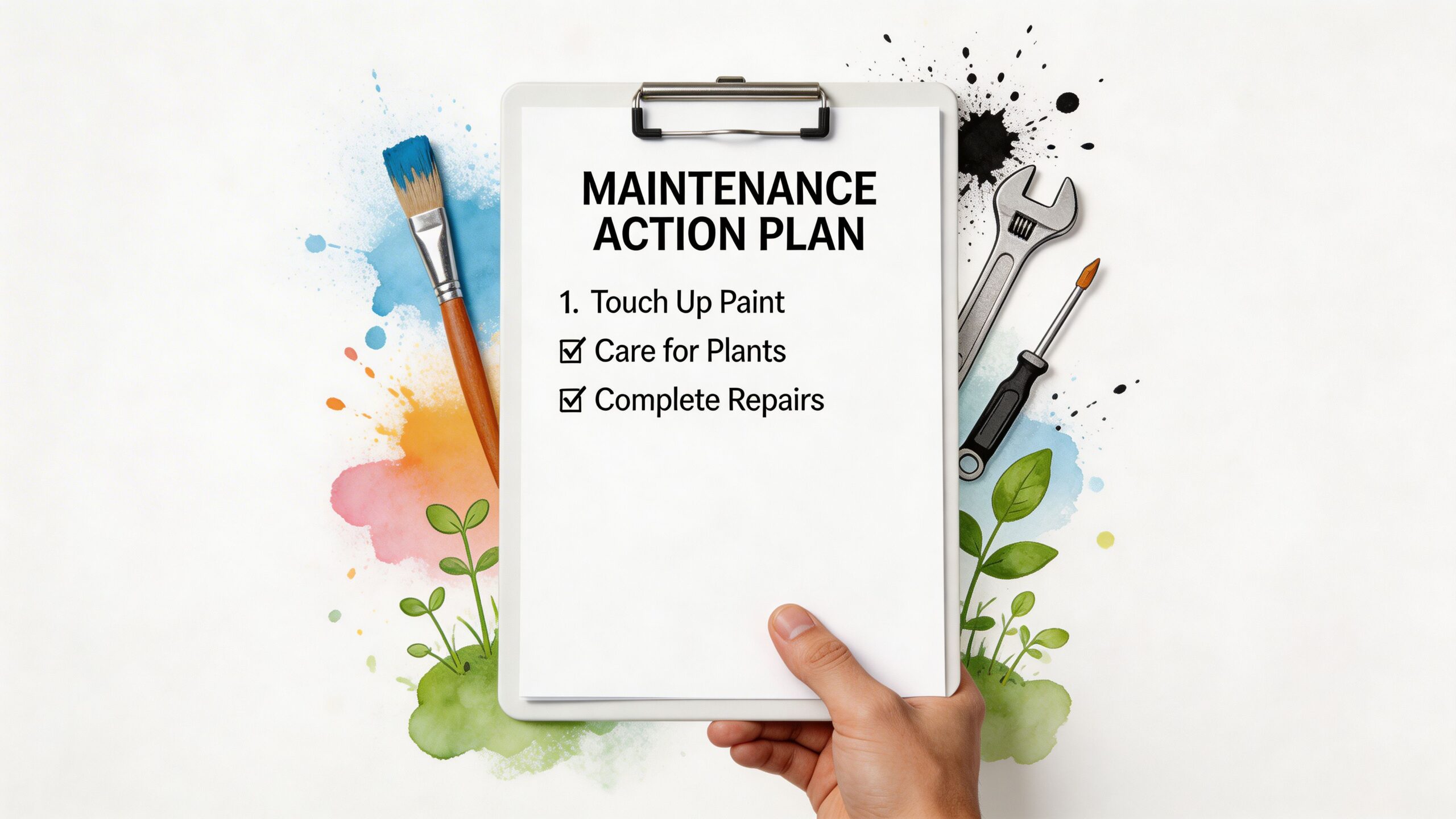
A landlord calls in a small leak under a sink. By the time a plumber can get there, the cabinet bottom is soft, the wall needs patching, and the turn between trades takes longer than the repair itself. That pattern is showing up more often in Monterey County because homeowner renovation work is still absorbing labor, materials, and schedule space that rental owners used to count on.
This year, the practical approach is to run maintenance like a business operation, not a series of one-off work orders. The goal is simple. Reduce avoidable emergencies, bundle work where it makes sense, and reserve contractor time before a minor issue turns into a vacancy problem.
What to do now
Inspect each unit with a written scope in hand
Walk the property looking for water entry, failing caulk, worn flooring at wet areas, aging fixtures, damaged trim, deck wear, and window or door issues that are easy to postpone and expensive to ignore.Sort findings by consequence, not annoyance
Put items into three groups: safety and habitability, building protection, and appearance. That order keeps money focused on problems that can spread or interrupt occupancy.Pre-scope turnover work before notice is given
If a unit has older flooring, worn cabinets, or a bathroom that has been patched several times, build a draft scope now. Waiting until keys are returned usually means paying more for a rushed schedule.Bundle trades into one planned job
A bathroom repair that involves plumbing, drywall, paint, and finish work should be scheduled as one project. Separate calls create gaps, repeat site visits, and more tenant disruption.Confirm who is available this season
A contractor list from two years ago is not a plan. Check who is taking rental work, how far out they are booking, and which jobs they will not touch on short notice.
What to keep doing through the year
Set a maintenance calendar by quarter. One review should focus on exterior exposure and water management. Another should focus on unit interiors, turnover candidates, and parts or finishes with long lead times. That rhythm matters more now because the renovation boom has changed the rental maintenance market around it. Owners who plan early usually get better sequencing and fewer expensive surprises.
If you need a reference point for organizing scopes and larger repair planning, rental property solutions for Monterey County owners shows the type of coordinated approach that helps in a tight contractor market.
The main point is straightforward. In this market, proactive maintenance is not just good practice. It protects schedule, budget, and occupancy.
Frequently Asked Questions
Q: How far ahead should I schedule rental property maintenance this year?
A: Earlier than you probably used to. In a busy construction market, routine work and turnover upgrades are easier to schedule when you plan them before they become urgent. If you know a lease end or known repair is coming, start the conversation well in advance.
Q: Should I wait until a unit is vacant to do upgrades?
A: For many kitchen, bathroom, flooring, and finish upgrades, vacancy is the cleaner window. You get better access, fewer disruptions, and tighter sequencing between trades. Safety or active water issues shouldn’t wait for turnover.
Q: What repairs should a landlord prioritize first?
A: Start with safety, water intrusion, structural deterioration, electrical concerns, and anything that affects basic function. After that, focus on durability items that prevent larger failures. Cosmetic improvements come later unless they’re tied to a turnover strategy.
Q: Is it better to repair or fully replace an older kitchen or bathroom?
A: It depends on condition, layout, and how often you’ve already been patching it. If the room has recurring problems, poor function, or worn-out finishes across multiple components, replacement can be more practical than repeated spot repairs. A site review usually makes that clearer.
Q: Can I bundle maintenance and improvement work together?
A: Yes, and in many cases that’s the smarter way to approach it. The line between repairs and improvements matters for tax treatment, but that’s something to review with a qualified tax professional. From a construction standpoint, bundled work often reduces repeat disruption and improves scheduling.
Q: Are older Monterey County rentals at higher maintenance risk?
A: Generally, yes. Older properties often have layered repairs, aging assemblies, and more hidden conditions once work begins. Coastal exposure can also shorten the life of exterior materials and increase moisture-related wear.
Q: Do all rental repairs need permits?
A: No. Some maintenance is straightforward repair work, while other scopes cross into replacement, reconfiguration, or code-related work that may require permits. Requirements vary by jurisdiction and by scope, so check with the local building department for your property.
At Palacios Construction, the work is handled the way many landlords and long-term property owners prefer it to be handled. The focus is on residential renovation and repair work that’s planned properly, scoped realistically, and managed hands-on from start to finish. That matters in Monterey County, where older homes, coastal conditions, and occupied properties can turn a simple repair into a more involved job if the planning isn’t there.
The company also understands the local building environment. Monterey, Pacific Grove, Carmel, Salinas, and the rest of the Central Coast don’t all build the same way or review projects the same way. That local familiarity helps owners make practical choices about sequencing, durability, and what to address now versus later.
If you need help sorting out rental property maintenance this year, Palacios Construction is available for a straightforward conversation about scope, timing, and next steps. You can also visit the office at 222 Ramona Ave Unit 5, Monterey, CA, or make contact through palaciosconstructionca.com.
Sources
Realtor.com. "Remodeling Growth Slows in 2026." 2026. https://www.realtor.com/advice/home-improvement/remodeling-growth-slows-2026/
Realtor.com. "Home Renovation Boom 2026." 2026. https://www.realtor.com/advice/home-improvement/home-renovation-boom-2026/
Oxmaint. "Property Maintenance Management Definitive Guide 2026." 2026. https://oxmaint.com/industries/property-management/property-maintenance-management-definitive-guide-2026
Lessen. "Renovation Forecast 2026 Market Trends in Unit Upgrades and Pricing." 2026. https://www.lessen.com/resources/renovation-forecast-2026-market-trends-in-unit-upgrades-and-pricing
SmartScreen ClearScreening. "Top Five Rental Trends in 2026." 2026. https://smartscreen.clearscreening.com/top-five-rental-trends-in-2026/