
Direct Answer: A bathroom remodel in Monterey typically runs $15,000 to $60,000+, depending on size, scope, and finishes. Labor, permits, and materials each drive the final number in different ways.
Most homeowners on the Monterey Peninsula start a bathroom remodel with a number in their head — and end the project wondering where that number went. The gap between expectation and reality isn’t always contractor error. It’s usually a lack of information upfront about where the money actually goes.
Monterey County has its own set of cost drivers that don’t show up in national remodeling guides. Older housing stock in Pacific Grove and Carmel-by-the-Sea, Monterey Peninsula Water Management District (MPWMD) requirements, and local labor rates all push costs in directions that generic calculators miss.
This guide breaks down every major cost category in a real bathroom remodel — not ballpark averages, but the actual line items that show up in a proposal. By the end, you’ll know exactly what you’re paying for and why.
What a Bathroom Remodel in Monterey Actually Costs
There’s no single number that covers every bathroom remodel in Monterey County. But there are clear ranges based on scope.
- Basic refresh (fixture swap, paint, flooring): $8,000 – $15,000
- Mid-range full remodel (new tile, vanity, tub/shower, lighting): $18,000 – $35,000
- Full gut and rebuild with layout changes: $35,000 – $60,000+
- Primary suite bath with custom tile and heated floors: $55,000 – $90,000+
These ranges reflect current Monterey County labor rates and materials costs — not Bay Area pricing, and not national averages from a remodeling website. Labor alone on the Central Coast runs $85 to $140 per hour for skilled tile setters and plumbers, which is meaningfully higher than interior California markets.
The wide range within each tier comes down to finish selections, existing conditions behind the walls, and whether the layout is staying put or moving. Those three factors account for more cost variation than almost anything else.
Labor: The Biggest Line Item Most People Underestimate
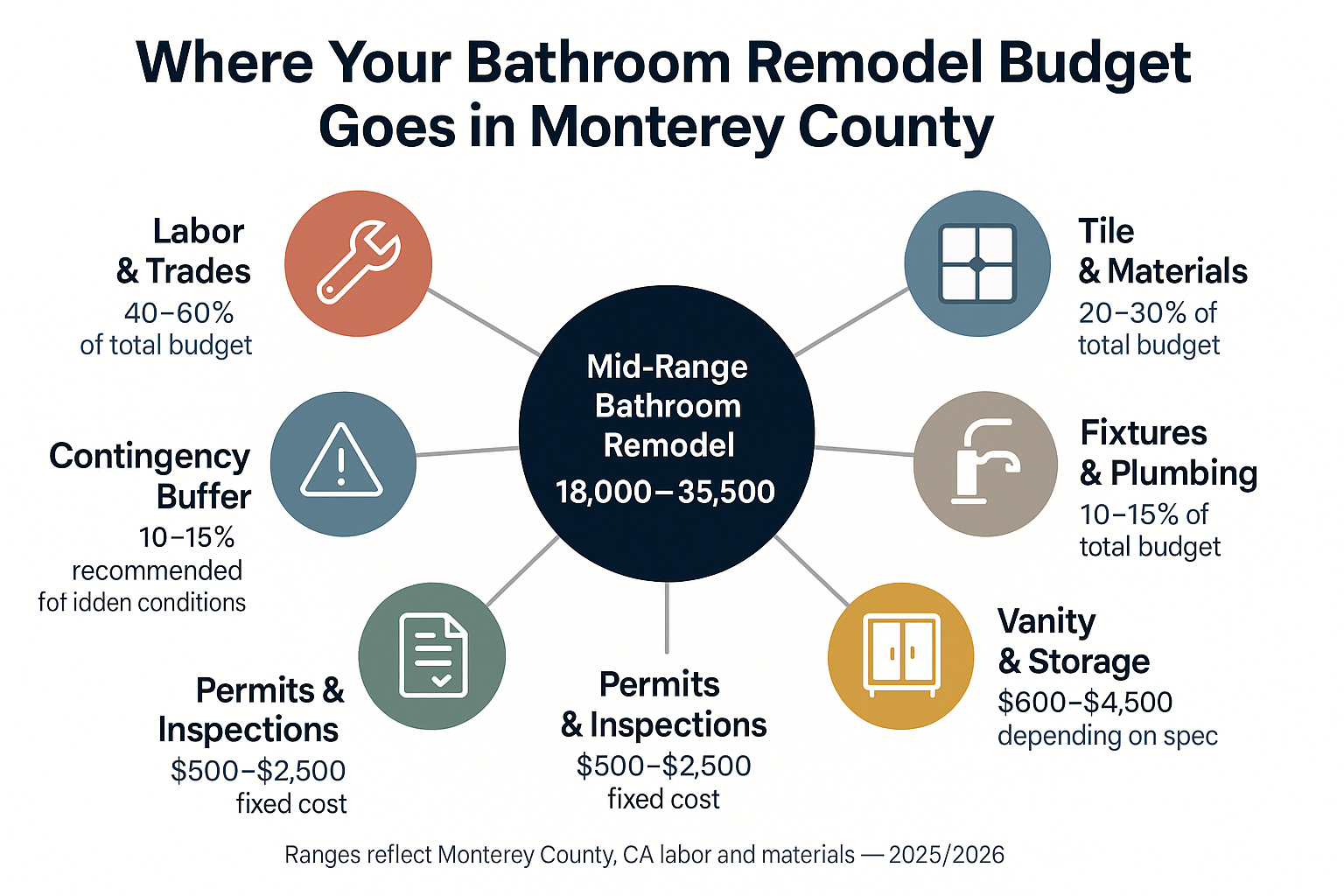
Labor typically represents 40 to 60 percent of a bathroom remodel budget. That surprises a lot of homeowners who focus on the cost of tile or a vanity.
A bathroom remodel involves multiple licensed trades working in sequence:
- Demolition — removal and haul-away of existing fixtures, tile, and drywall
- Rough plumbing — repositioning drains, supply lines, and any code-required updates
- Rough electrical — GFCI circuits, exhaust fan wiring, lighting rough-in
- Waterproofing and backer installation — critical step that protects the structure
- Tile setting — floor, shower walls, niches, and transitions
- Finish plumbing — setting the toilet, vanity, faucets, shower valve, and trim
- Finish electrical — installing fixtures, switches, and exhaust fans
- Painting and finish carpentry — trim, doors, and final touch-up
Each trade has its own scheduling window. A well-planned, professionally managed project sequences these trades correctly so each phase is inspected and approved before the next one starts. Skipping or rushing any of these steps creates rework — and rework costs more than doing it right the first time.
If you want to understand more about what a licensed contractor is actually responsible for managing on a job like this, What a Licensed General Contractor Is Responsible For covers it well.
Materials: Where the Range Gets Wide Fast
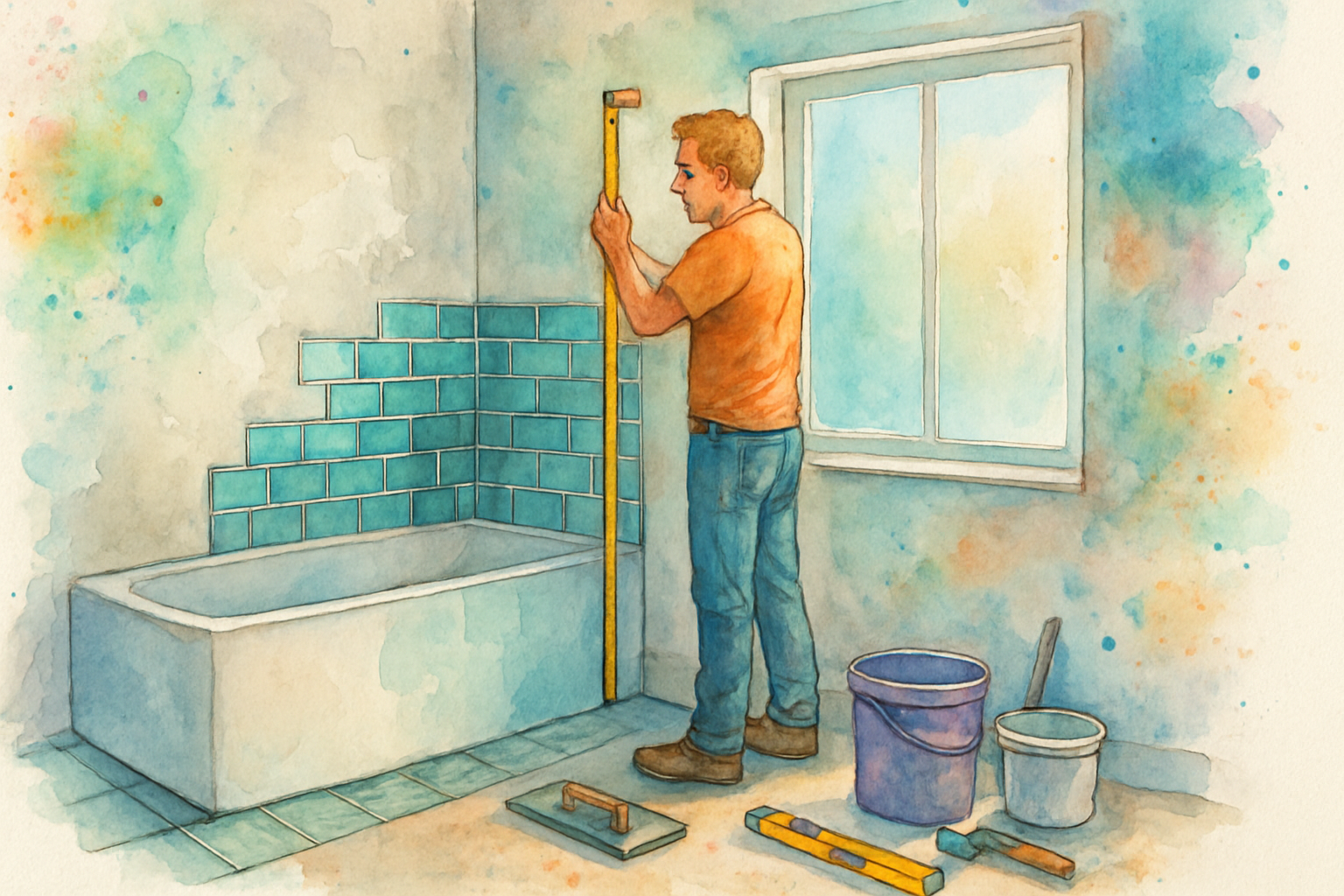
Materials are where a $25,000 bathroom remodel can climb to $45,000 without changing a single square foot of scope. The difference is entirely in what you select.
Here’s how materials typically break down by category:
- Tile (floor and shower walls): $3 – $25+ per square foot installed, depending on tile type and pattern complexity
- Vanity and countertop: $600 for a stock unit to $4,500+ for custom cabinetry with stone top
- Plumbing fixtures (faucet, shower valve, toilet): $800 budget range to $4,000+ for designer brands
- Tub or shower pan: $400 for an acrylic insert to $3,500+ for a freestanding soaking tub
- Lighting: $150 per fixture on the low end, $600+ for statement lighting over a double vanity
- Mirror and accessories: $200 to $1,500 depending on framing and hardware finishes
The detail that separates a realistic proposal from a lowball one is how material allowances are handled. A contractor who uses vague line items like “tile allowance: $1,500” is setting up a conversation you don’t want to have mid-project. Every finish and line item should be clearly explained from day one — with realistic allowances that reflect what you actually want, not the cheapest option in the showroom.
For a broader look at how remodeling costs vary across project types in Monterey County, Modern Home Remodeling in Monterey County has useful context.
Bathroom Remodel Cost by Scope: Monterey County Ranges
This table gives a quick reference for typical cost ranges based on project scope. These reflect current Monterey County conditions — not national averages.
| Project Scope | Typical Cost Range | Key Cost Drivers |
|---|---|---|
| Basic refresh — fixtures, paint, floor | $8,000 – $15,000 | Flooring material, fixture quality |
| Mid-range full remodel | $18,000 – $35,000 | Tile selection, plumbing layout, vanity |
| Full gut with layout changes | $35,000 – $60,000 | Trade labor, permit fees, waterproofing |
| Primary suite with custom finishes | $55,000 – $90,000+ | Custom tile work, heated floors, designer fixtures |
| Historic home with hidden conditions | Add $5,000 – $20,000 | Lead, asbestos, outdated wiring or plumbing |
Permits and Local Requirements You Need to Know
Bathroom remodels in Monterey County typically require permits when the scope includes plumbing, electrical, or structural work. A cosmetic refresh — new paint, a vanity swap, a mirror — usually doesn’t. But the moment you move a drain, add a circuit, or open a wall, you’re in permit territory.
The permit process varies by jurisdiction. The City of Monterey, Pacific Grove, and Carmel-by-the-Sea each have their own building departments and their own review timelines. Carmel in particular has a design review layer that can add time to the approval process even for straightforward interior work.
There’s also the Monterey Peninsula Water Management District to consider. Any project that replaces plumbing fixtures — toilets, showers, faucets — must meet MPWMD water efficiency requirements. Fixtures need to be low-flow compliant, and in some cases the district requires documentation before or after installation. This is a step many homeowners and out-of-area contractors miss entirely.
Permit fees in Monterey County typically run $500 to $2,500 for a bathroom remodel, depending on project value and jurisdiction. That’s not a huge line item, but it belongs in your budget from the start.
For more on how permits work and who’s responsible for pulling them, Guide: Who Handles Remodel Permits in Monterey and Why it Matters is a solid resource.
Where Your Bathroom Remodel Budget Actually Goes
This infographic breaks down how a typical mid-range bathroom remodel budget is allocated across the major cost categories in Monterey County.
Hidden Costs That Show Up After Demolition Starts
The cost items that catch homeowners off guard aren’t always due to contractor error. A lot of them are genuinely unknowable until the walls come down.
Monterey Peninsula homes are often 50 to 80 years old. That age means:
- Galvanized supply lines that are corroded and need full replacement
- Cast iron drain lines that are deteriorating and can’t accept new connections cleanly
- No existing waterproofing behind the original tile — just drywall, which absorbs moisture
- Asbestos or lead paint in older tile mastic, texture, or window trim requiring licensed abatement
- Undersized electrical panels or circuits that don’t meet current code for bathroom ventilation and lighting
- Subfloor damage under a tub or toilet that’s been leaking slowly for years
A contractor who has done significant work in Pacific Grove and Carmel knows to expect these. The right approach is to build a contingency allowance of 10 to 15 percent into the budget before the project starts — not after something unexpected surfaces.
That contingency isn’t wasted money if nothing goes wrong. It just means the project finishes on budget instead of over it.
What Drives Cost Differences Between Contractors
Two contractors can look at the same bathroom and come back with proposals that are $12,000 apart. That gap is usually explained by one of a few things.
First, scope differences — one proposal may include waterproofing, demo haul-away, and permit fees. The other might not. Reading line by line matters.
Second, material allowances — a low proposal often uses placeholder numbers for tile and fixtures that don’t reflect real selections. When you choose something you actually like, the number jumps.
Third, trade coordination — a general contractor who manages all trades under one contract is more expensive than hiring subs directly. But that coordination cost covers scheduling, accountability, inspections, and quality control. You’re not just paying for the work — you’re paying for someone to manage the whole sequence.
Fourth, licensing and insurance — a licensed B-contractor in California carries workers’ comp and general liability. That insurance is priced into the bid. An unlicensed contractor skips that cost, which is why their number looks better on paper and why homeowners bear all the risk.
If you’re in the process of evaluating contractors for a remodel, How to Hire a General Contractor in Monterey County walks through the right questions to ask before signing anything.
How to Read a Bathroom Remodel Proposal
A well-structured proposal tells you a lot about how a contractor operates before work even starts.
Here’s what a solid proposal should include:
- Detailed scope of work — not ‘bathroom remodel’ but specific tasks: demo, waterproofing, tile installation, fixture install, etc.
- Itemized material allowances — with specific dollar amounts per category, not vague line items
- Permit responsibility — who pulls permits and what the estimated fees are
- Payment schedule — tied to project milestones, not arbitrary dates
- Change order process — how out-of-scope work gets documented and priced
- Timeline by phase — rough start date, inspection milestones, and expected completion
- Warranty terms — what’s covered after completion and for how long
If a proposal is missing most of these, that’s a signal — not a reason to renegotiate, but a reason to ask why. A contractor who can’t explain their own proposal in writing is going to have the same communication pattern during construction.
Clear budgeting practices from the first conversation are one of the strongest indicators that a project will finish without major surprises. The Home Remodeling Permits in Monterey guide is also worth reading before you sign anything, so you know what the permit process should look like on your contractor’s end.
Frequently Asked Questions About Bathroom Remodel Costs in Monterey
Do I need a permit to remodel my bathroom in Monterey?
It depends on scope. Cosmetic work like painting, a new vanity, or flooring usually doesn’t require a permit. But plumbing moves, electrical work, or structural changes do. Requirements vary by city — Monterey, Pacific Grove, and Carmel each have their own building departments, so verify with your local jurisdiction before starting.
How long does a bathroom remodel take in Monterey County?
A mid-range bathroom remodel typically takes 4 to 8 weeks from demo to final inspection. Permit approval timelines in Carmel or Pacific Grove can add 2 to 4 weeks before work starts. Projects with custom tile orders or specialty fixtures may run longer depending on lead times.
What is the Monterey Peninsula Water Management District and why does it matter for my bathroom?
The MPWMD regulates water use across the Monterey Peninsula, including fixture efficiency standards. Any bathroom remodel that replaces toilets, showers, or faucets must use fixtures that meet district low-flow requirements. Missing this step can delay final inspection or require re-work after the fact.
Why does my contractor want a 10-15% contingency in the budget?
Older homes on the Monterey Peninsula frequently have hidden conditions — corroded pipes, water damage, outdated wiring — that only show up after demo. A contingency buffer of 10 to 15 percent covers those discoveries without blowing the budget. It’s not padding; it’s realistic planning for a 50-year-old home.
Is it worth remodeling a bathroom before selling a home in Monterey?
In Monterey County’s mid-to-high value market, updated bathrooms consistently move buyers. A clean, full remodel in the $20,000 to $35,000 range often returns more than its cost in sale price, especially in Pacific Grove and Carmel-by-the-Sea where buyers have strong expectations for finish quality. That said, over-specifying for the neighborhood doesn’t always pay back dollar for dollar.
Ready to Get a Realistic Number for Your Bathroom Remodel?
Palacios Construction works with homeowners throughout Monterey County — from Pacific Grove to Carmel Valley — on bathroom remodels that are planned thoroughly and managed hands-on from demo to final inspection. If you want a proposal with real line items, clear material allowances, and a straightforward explanation of what you’re paying for, reach out to the team at palaciosconstructionca.com or call (831) 220-3334.