Direct Answer: A JADU is a unit up to 500 square feet built inside the walls of an existing home, with its own entrance and a small kitchen. It costs less than a detached ADU but requires owner occupancy.
Most people who call me about a backyard unit are picturing the same thing: a small detached building out back, with its own roof and foundation. Then they hear the number for ground-up construction on the Monterey Peninsula and the conversation slows down.
That is usually where I bring up a JADU, short for Junior Accessory Dwelling Unit. It is a smaller, simpler path that uses space you already own and already pay to heat.
I hear the term thrown around a lot in Monterey, Seaside, and Pacific Grove, but almost nobody can tell me what actually separates a JADU from a plain bedroom remodel. So let me walk through the definition, the real cost tradeoff, and the one rule that stops some homeowners cold.
What a Junior Accessory Dwelling Unit Actually Is
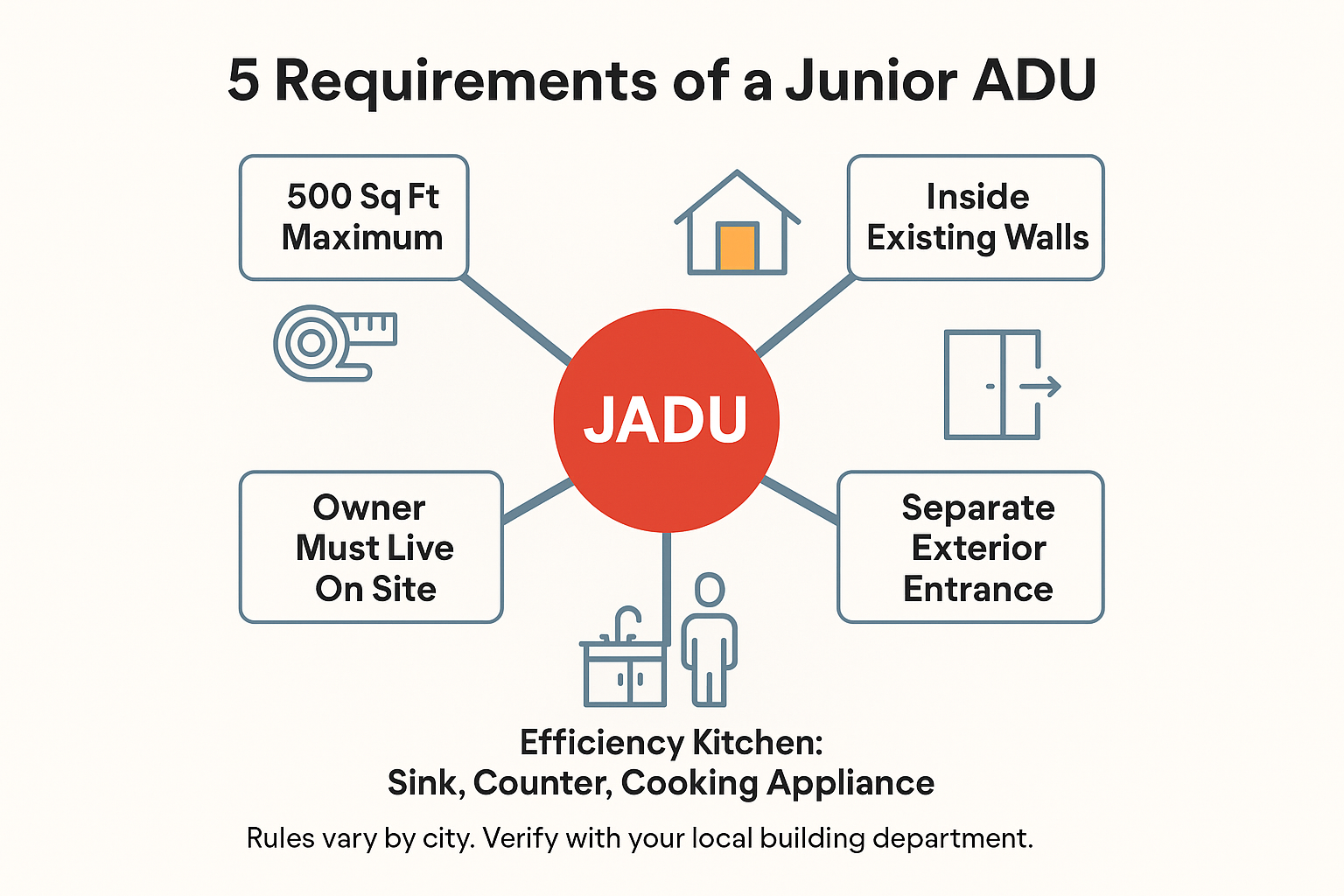
Under California law, a JADU is a unit of no more than 500 square feet created entirely within the existing walls of a single family home. That last part is the whole point. You are not pouring a new foundation or framing a new roof.
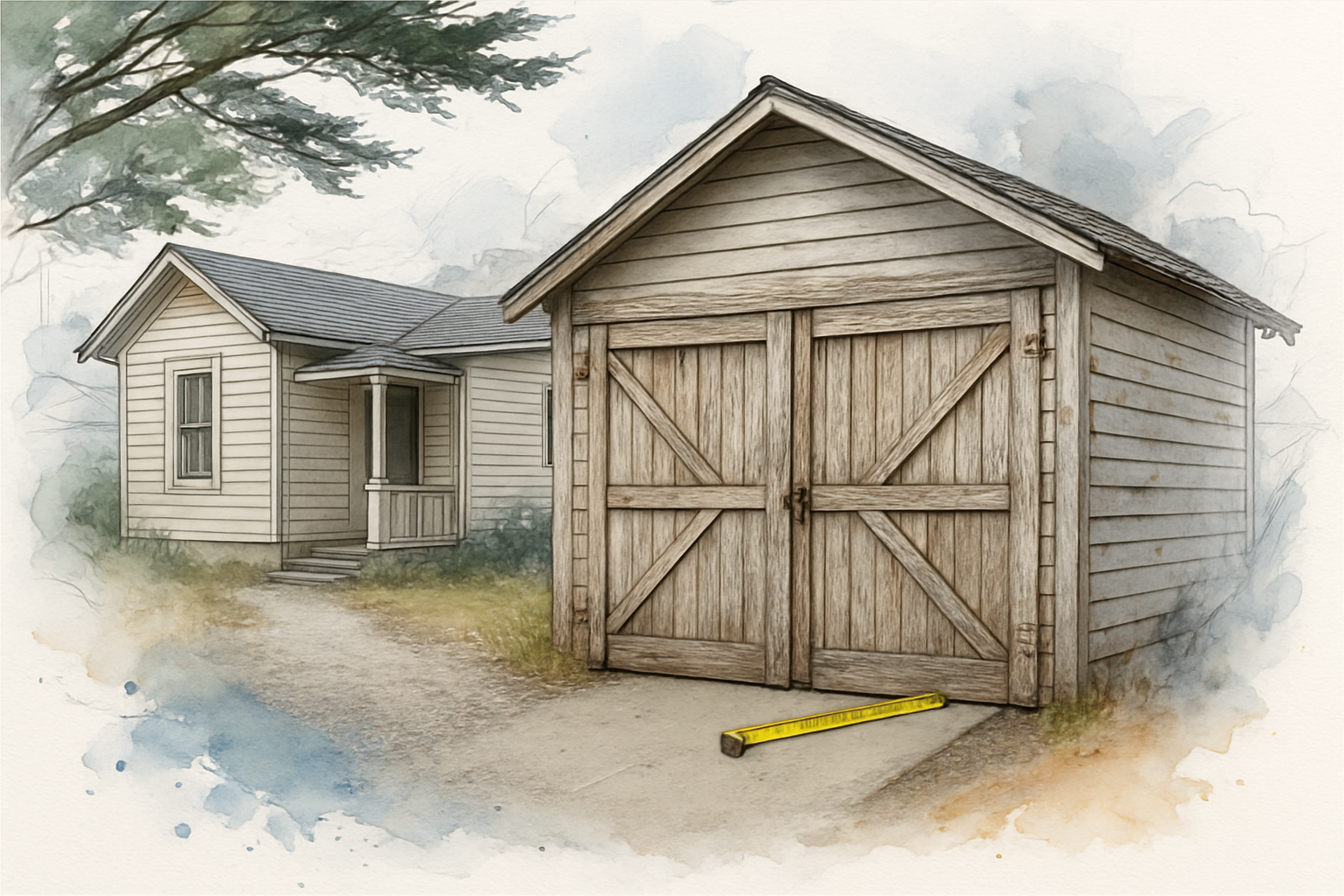
Most of the ones I see start as one of two things: a front bedroom with a decent exterior wall, or an attached garage that is already inside the home’s footprint.
To qualify as a JADU rather than just a remodeled bedroom, the space has to include:
- A separate exterior entrance from the main house
- An efficiency kitchen with, at minimum, a sink, a counter surface for food prep, and a cooking appliance
- Storage space sized for the unit
- A bathroom, which may be shared with the main house under state law
That shared bathroom allowance is a real cost saver. It means you can sometimes skip a full second bath build, which is where plumbing costs pile up fast in older Peninsula homes with cast iron drain lines.
The 500 square foot cap is hard. There is no variance, no rounding up. If the layout you want needs 620 square feet, you are looking at a different project.
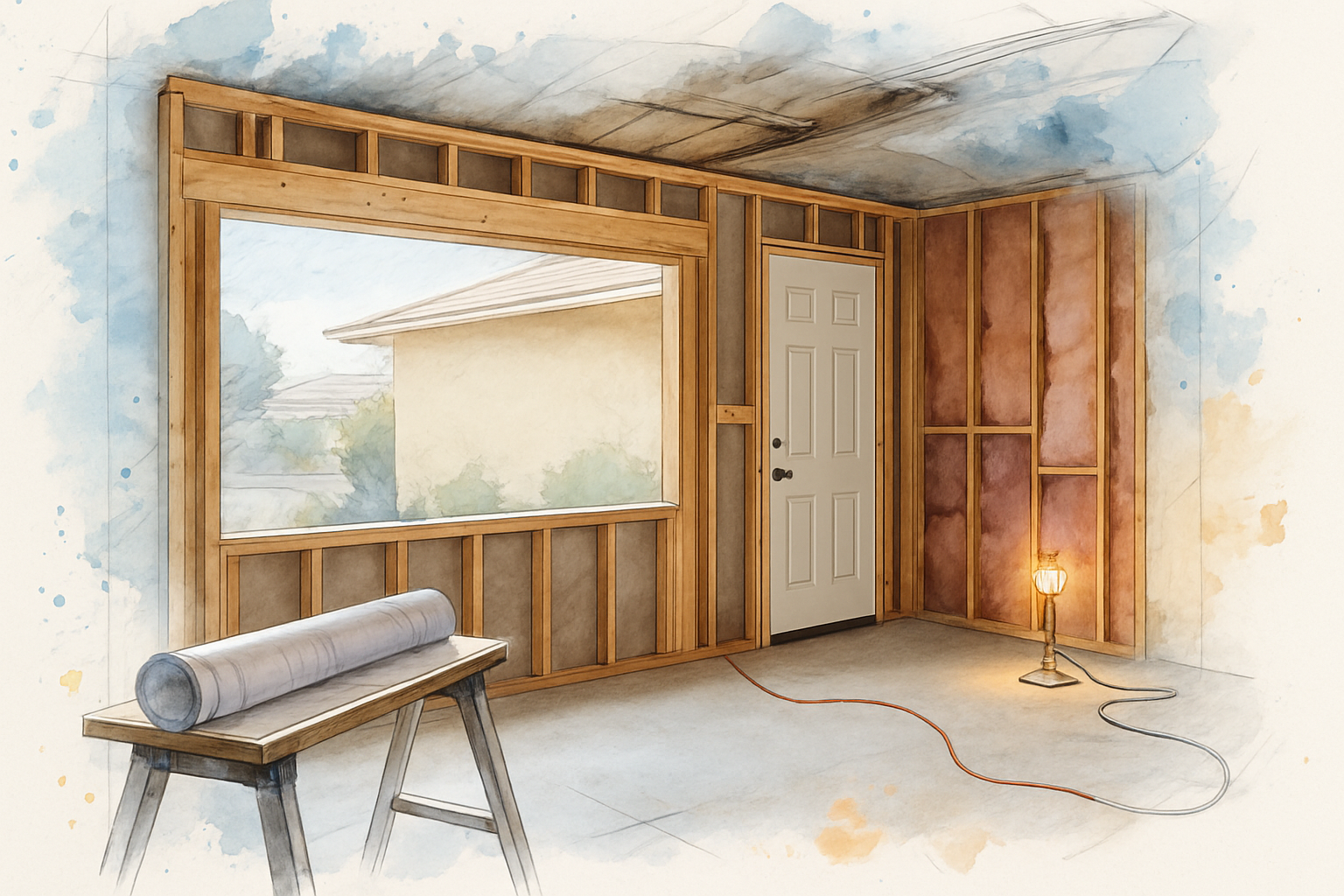
Why a JADU Usually Costs Less Than a Detached ADU
Cost is the number one reason my clients land on a JADU. When you build a detached unit, you are paying for a foundation, exterior framing, sheathing, roofing, siding, and a full run of new utilities across the yard.
A JADU skips almost all of that. The shell already exists. You are paying for interior framing, insulation, drywall, a new exterior door, electrical, an efficiency kitchen, and finishes.
Actual costs vary a lot based on the house, but the drivers I see most often on the Peninsula are:
- Plumbing distance, meaning how far the new sink is from an existing waste line
- Electrical panel capacity, since a lot of pre-1980 Monterey and Pacific Grove homes are still on a 100 amp service
- Insulation and fire separation between the JADU and the main house
- Egress, meaning window sizing and the new exterior door opening
- Whether the space is a conditioned bedroom already or an uninsulated garage with a sloped slab
As a general rule in this market, a JADU built inside an existing bedroom lands well below what a comparable detached unit runs, sometimes by a wide margin. But I will not throw a number at you without seeing the house. The panel and the plumbing tell me more about your budget than the square footage does.
We use realistic allowances in our proposals instead of lowball placeholders, and every line item gets explained up front. If you want a sense of how that process should look before you sign anything, I wrote about how a general contractor’s bid process reveals more than the price.
JADU vs. Attached ADU vs. Detached ADU
Here is how the three options compare on the points that usually decide the project. Local rules vary, so treat this as a starting frame, not a final answer.
| Factor | JADU | Attached ADU | Detached ADU |
|---|---|---|---|
| Maximum size | 500 sq ft, hard cap | Varies by jurisdiction | Up to 1,200 sq ft in Monterey County |
| New foundation or roof | No | Usually yes, partial | Yes, full |
| Separate bathroom | Optional, can share with main house | Required | Required |
| Kitchen | Efficiency kitchen only | Full kitchen | Full kitchen |
| Owner must live on site | Yes | Generally no | Generally no |
| Relative cost | Lowest | Middle | Highest |
| Best fit | Small lots, tight budgets, family housing | Narrow lots with usable side space | Lots with real rear yard room |
The Owner-Occupancy Rule Is the Real Catch
This is the part I make sure people hear before we go any further. California law requires the property owner to live on the property when there is a JADU, either in the main house or in the JADU itself.
That rule does not apply the same way to a standard detached ADU. So if your plan is to buy a Monterey rental, add a JADU, and lease out both units while you live somewhere else, the JADU path does not work for you.
Where it does work well:
- Housing a parent who needs to be close but wants a private entrance
- An adult child staying local while saving for a place of their own
- Downsizing into the JADU yourself and renting the main house
- Adding rental income while you continue living in the primary home
A JADU also generally cannot be sold separately from the main house. It is part of your property, not a second parcel.
The state’s housing agency keeps current rules and guidance posted on its accessory dwelling unit page, which is worth reading before you commit either direction. If income is the main goal, it is also worth understanding whether you can really rent out an ADU in Monterey County.
JADU at a Glance
This breaks down the five requirements that turn an interior remodel into a legal junior accessory dwelling unit.
A JADU Is Cheaper, But It Is Not Permit Free
I want to be direct about this because it trips people up. Converting a bedroom into a JADU still requires a building permit. Adding a kitchen and an exterior door changes the use of that space, and inspectors treat it accordingly.
On the Peninsula there is a second layer. If your JADU adds plumbing fixtures, the project may trigger a water permit application through the Monterey Peninsula Water Management District. Water credits and fixture counts are their own conversation in Monterey, Pacific Grove, Carmel-by-the-Sea, Seaside, and Del Rey Oaks.
That is one reason the shared bathroom allowance matters. Fewer new fixtures can mean a simpler water permit path, though the district makes that call, not me.
Expect the permit set to cover:
- Floor plan showing the new unit and its entrance
- Electrical layout for the efficiency kitchen
- Plumbing plan for any new fixtures
- Insulation and fire separation details
- Egress window and door sizing
Requirements are not uniform across the county. What Salinas asks for is not what Carmel-by-the-Sea asks for, and coastal parcels have their own review layer. Verify with your local building department before you assume anything. I covered why the map matters so much in ADU permitting in Monterey County.
You Can Often Build Both a JADU and a Full ADU
Here is the planning angle most homeowners do not know about. California law generally allows one JADU and one detached ADU on the same single family lot, depending on lot configuration and local zoning.
For a homeowner on a standard residential parcel in Monterey or Seaside, that changes the math. You could convert the attached garage into a JADU now and keep the rear yard open for a detached unit later, phased over a few years as budget allows.
I have had this conversation more than once with long-term residents who would rather add on than move. One caller was weighing tearing down an old studio and starting over. Once we mapped what could go inside the existing footprint versus what had to be built new, the phasing became obvious.
A few things to check before you count on that combination:
- Lot size and setback room for a future detached unit
- Where the existing sewer or septic system sits
- Panel capacity to carry two additional units
- Whether your parcel falls in the coastal zone
If you want to run the numbers before you commit, start with what determines whether an ADU makes financial sense. And if a garage is your likely candidate, turning a garage into an ADU in Monterey County walks through what that work really involves.
Frequently Asked Questions About JADUs in Monterey County
Can I convert a bedroom into a JADU if it does not have an exterior wall?
Not easily. A JADU requires a separate exterior entrance, so the room needs a wall that faces outside where a door can go. Interior rooms with no exterior wall are usually a non-starter unless you rework the layout to capture a room that does.
Does a JADU need its own gas and electric meter?
Generally no. Because a JADU sits inside the existing home, state law does not require a separate utility connection the way it can for a detached unit. That saves real money. Your local jurisdiction still has the final say, so confirm before you plan around it.
How long does a JADU project take to build?
Construction itself is usually shorter than a detached build since there is no foundation or roof work. The bigger variable is permitting, especially if a water permit application is involved. I would rather give you a realistic schedule after seeing the house than a number that falls apart in week three.
Can I rent my JADU on a short-term basis?
Short-term rental rules are set locally, and cities on the Peninsula treat them very differently. Several restrict or prohibit them in residential zones. Check with your city before you assume a JADU can be used that way.
Will a JADU raise my property taxes?
Adding a JADU typically triggers a reassessment of the new construction value, not your whole property. The existing base assessment generally stays put. Talk to the Monterey County Assessor’s office for specifics on your parcel.
Thinking Through a JADU on Your Monterey County Property?
Whether a JADU fits usually comes down to three things: where your exterior walls are, where your plumbing runs, and what your panel can carry. Those are questions worth answering before you fall in love with a floor plan. Palacios Construction works with homeowners across the Peninsula on additions and accessory units, and we are happy to talk through what your house can realistically support at palaciosconstructionca.com or (831) 220-3334.