
Quick Answer
If your remodel changes structure, electrical, plumbing, or HVAC, you’ll usually need home remodeling permits in Monterey County. The process typically involves plans, plan review, corrections if needed, permit issuance, and inspections during construction. Local coastal, hillside, historic, and water-related rules can add another layer, so early planning matters.
You’re probably at the stage where the project sounds exciting until permits come up. A kitchen remodel, bathroom update, addition, or ADU can move forward smoothly, but only if the paperwork, plans, and inspections are handled correctly from the start.
In Monterey County, home remodeling permits aren’t just a formality. Under the California Building Code, permits are required before constructing, enlarging, altering, repairing, changing occupancy, or modifying regulated systems like electrical, gas, mechanical, or plumbing, and unpermitted work can lead to stop-work orders and fines up to $5,000 per violation (Experts In Your Home permit overview). This is the practical side of the process, what usually triggers a permit, how local review works, where delays happen, and what homeowners should watch for in Monterey, Carmel, Pacific Grove, and nearby communities.
When Home Remodeling Permits Are Required in Monterey County

The shortest answer is this. If the work affects structure, electrical, plumbing, or mechanical systems, assume a permit is required until the local building department says otherwise.
That covers a lot of common remodel work. Opening a wall between the kitchen and living room, moving a sink, adding recessed lights, replacing or relocating a water heater, upgrading a panel, changing ducting, or building an addition all fall into permit territory.
Work that almost always needs a permit
Structural changes are the clearest trigger. If you’re moving walls, changing window or door openings, altering roof framing, building a deck, or adding square footage, the jurisdiction wants to see plans and verify the loads, setbacks, and details.
System work is the next major category. New circuits, subpanels, plumbing relocations, drain or vent changes, gas lines, and HVAC changes usually require review because they affect life safety and long-term performance.
A simple way to think about it is by permit type:
- Building permit for framing, structural changes, additions, decks, and other physical alterations to the building.
- Electrical permit for new wiring, circuits, panel work, fixture additions that require branch circuit changes, and similar upgrades.
- Plumbing permit for relocated fixtures, new supply or drain lines, water heater changes, and gas piping tied to plumbing systems.
- Mechanical permit for furnaces, heat pumps, ductwork, vents, and other HVAC-related work.
- Planning or zoning review when setbacks, lot coverage, height, design rules, coastal factors, or site constraints apply.
One project can require several of these at once. A kitchen remodel may need building, electrical, plumbing, and sometimes mechanical review, depending on what is changing behind the walls.
Practical rule: If the work will be covered up later by drywall, tile, cabinetry, or finish materials, the odds are high the jurisdiction will want permits and inspections first.
Why Monterey County projects get extra scrutiny
Local conditions matter. Monterey County has older homes, coastal exposure, hillside sites, and neighborhoods with specific zoning or historic considerations. Those conditions can change what is exempt and what is not.
Even for smaller jobs, local rules can override generic permit advice you find online. If you want a project-specific example, this breakdown on whether permits are optional for minor remodeling work is worth reading before assuming a job is too small to matter.
Why permits matter beyond code language
Permits protect more than the city or county file. They create a documented path showing that the work was reviewed, inspected, and completed to the approved scope.
That matters when seismic stability is part of the equation, which it is in California. It also matters later when you refinance, sell, insure the house, or try to avoid tearing open finished work because something hidden wasn’t approved the first time.
Understanding the Different Types of Permits for Your Project
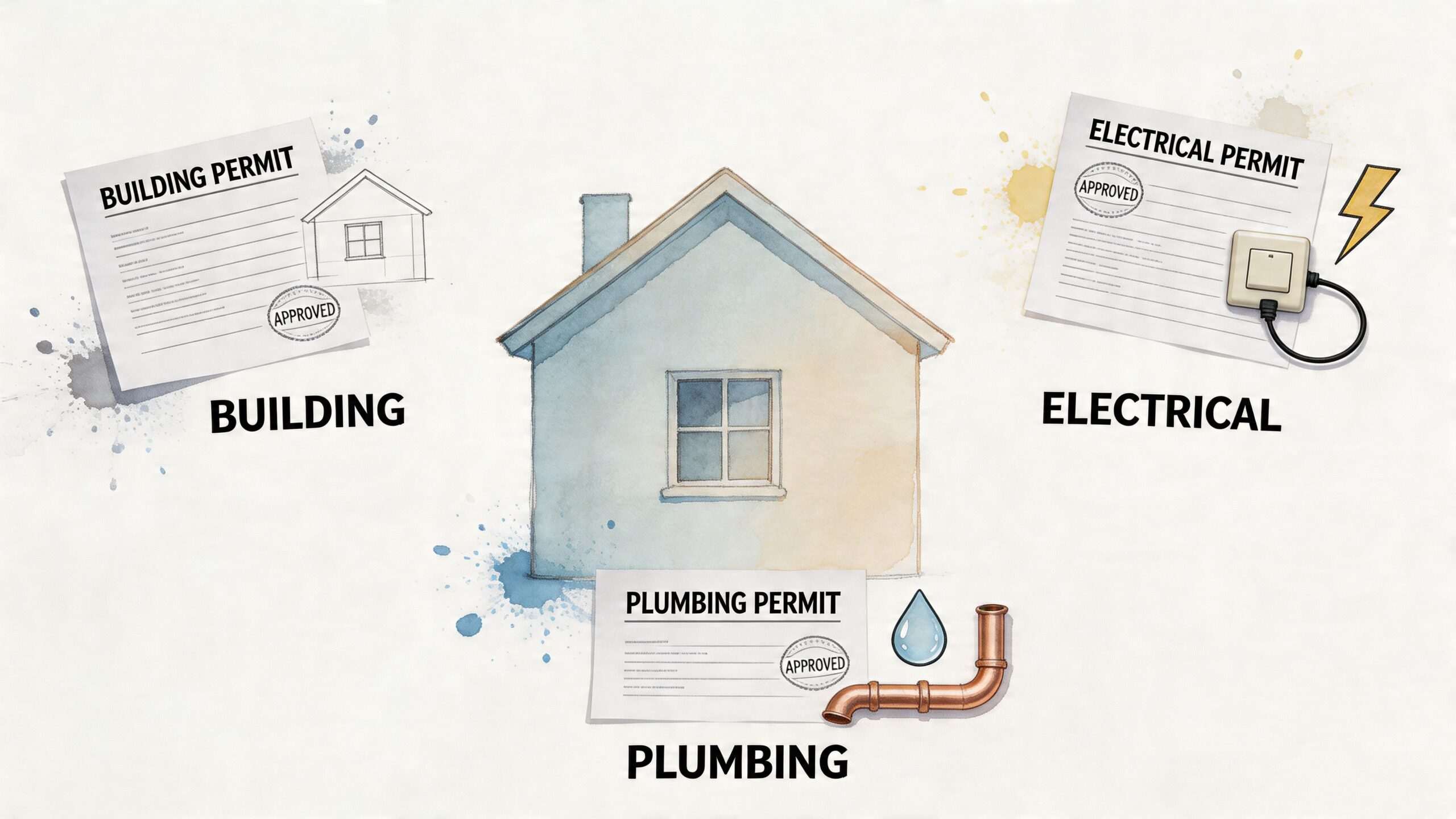
A lot of Monterey County homeowners expect one permit and one approval stamp. In real projects, the permit set is usually layered. A kitchen remodel in Pacific Grove might stay mostly inside the existing footprint and still trigger building, electrical, plumbing, and mechanical review. A similar scope in Carmel Highlands can add coastal or site-related review because of where the house sits.
Building permits cover the structure and physical changes
Building review applies to the parts of the job that affect how the house is built and supported. That includes framing changes, beams, posts, stair work, decks, foundation repairs, window or door enlargements, and additions.
If a wall is coming out, a new opening is getting cut, or floor framing is being altered, building review is part of the file. On older Monterey Peninsula homes, this often brings up field conditions that are not obvious at the planning stage, like undersized framing, past unpermitted work, or foundation details that need to be corrected before the new work can pass.
Electrical, plumbing, and mechanical permits follow the systems
These permits deal with the work hidden behind finishes. New circuits, panel work, recessed lighting, exhaust fans, ducting, drain relocations, water line changes, gas piping, and water heater replacements can all require their own review and inspection.
A bathroom remodel is a good example. Keeping the same layout may reduce plan complexity, but once fixtures move or new wiring gets added, the permit scope expands. Homeowners get into trouble here when they assume a finish remodel is only cosmetic, even though the underlying work is in the walls, floor, and ceiling cavities.
Planning review checks whether the project is allowed on that property
Planning review is separate from construction code. It deals with setbacks, lot coverage, height, use, design rules, historic considerations, tree issues, and local overlays.
In Monterey County jurisdictions, that review can change a project more than the building comments do. Coastal zone properties, hillside lots, and homes in design-sensitive areas often need more than a standard building submittal. In some neighborhoods, the question is not whether the work can be built. The question is whether it fits the site rules before construction review is even finished.
Some projects also trigger outside-agency approvals
This catches homeowners off guard.
Depending on the address, the permit path may involve water districts, sanitation districts, fire review, coastal review, public works, or geotechnical input. A remodel that adds fixtures or living area can raise water or sewer questions. A property on a slope may need drainage or soils documentation. Near the coast, exterior changes may get a closer look than the same project inland.
ADUs, garage conversions, and additions usually stack the most reviews
These projects combine several permit types in one package. You may be dealing with building, structural, energy, planning, utility, and site-related comments at the same time. That is one reason ADU submittals stall when the drawings are thin or the existing property information is incomplete.
For a local breakdown, this guide on what permits are required for an ADU or garage conversion walks through the permit mix homeowners usually face in Monterey County.
One practical point matters here. The permit type is tied to the actual scope, not the name of the project. Calling it a remodel does not keep it out of structural or planning review if the work includes new square footage, fixture count changes, exterior alterations, or site constraints.
The Permit Application and Review Process Step-by-Step
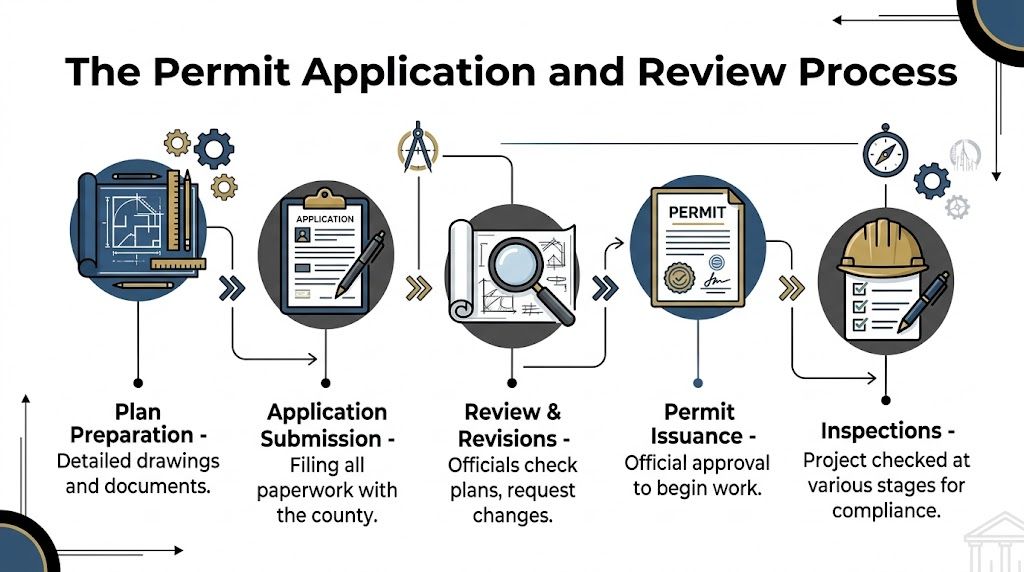
A homeowner gets excited, hires a designer, and starts picking finishes. Then the permit comments come back asking for a site plan, Title 24 forms, structural details, and clarification on whether the property is in the Coastal Zone. That is a normal Monterey County start when the job is priced and designed before the permit path is sorted out.
The cleanest permits are built on complete information. In practice, the review process is less about filling out one application and more about proving, on paper, that the work fits the house, the site, and the local rules.
Step 1 Plan preparation
At this juncture, the job is either organized or delayed.
A permit package usually needs scaled drawings, a clear written scope, existing and proposed conditions, and enough detail for a reviewer to understand exactly what will be built. For an interior remodel, that often includes floor plans, demo plans, framing notes, electrical changes, plumbing changes, and mechanical notes. For an addition, ADU, or slope lot, the package can expand fast and include structural engineering, grading or drainage information, a survey, energy documents, and product specifications.
In Monterey County, I also look at jurisdiction issues before submittal. A house in Pacific Grove is not reviewed the same way as a house in unincorporated Carmel Valley. A property in the Coastal Zone, on a hillside, or in an area with water service limits can need extra documents before building review gets far. Homeowners planning an addition can save time by reviewing this local guide on how to prepare for permits on a home addition in Monterey County before drawings are finalized.
Step 2 Application submission
The application has to go to the right counter or portal for the property address. That may be Monterey County, Monterey, Carmel-by-the-Sea, Pacific Grove, Seaside, or another local jurisdiction.
That sounds basic, but it is a common mistake. I have seen homeowners assume the County handles a property that is inside city limits, or submit a building package before confirming whether planning review has to happen first. On some jobs, especially additions and exterior remodels, the first question is not construction. The first question is whether the proposed work is allowed as drawn.
Step 3 Plan check and agency review
After submittal, the plans are routed to the departments that apply to that project. Building review is only one part of it.
Typical reviews include:
- Building for structural details, life-safety items, code compliance, and whether the drawings support the scope
- Planning for setbacks, lot coverage, zoning limits, design rules, and site constraints
- Electrical, plumbing, and mechanical review for service size, fixture counts, venting, gas piping, ducting, and equipment details
- Energy review when Title 24 documents are required
- Outside agency review when the address triggers water district, sanitation, fire, public works, or geotechnical input
This step slows down when the plans answer one question but create two more. A common example is a kitchen remodel that adds or relocates fixtures. What looks minor to a homeowner can trigger questions about venting, gas, electrical load, water use, or the exact scope of wall and framing changes.
Step 4 Corrections and resubmittal
Corrections are part of the process. They are not a sign that the project is dead in the water.
Reviewers issue comments when details are missing, sheets conflict, or the plans do not yet show enough information for approval. I see the same trouble spots over and over: incomplete structural notes, missing door and window schedules, inconsistent dimensions between sheets, unclear beam or header sizing, incomplete Title 24 forms, and site plans that do not match actual field conditions.
A good resubmittal answers each comment directly. Do not send back a revised plan set with no response letter and expect the reviewer to hunt for changes. Clear responses usually shorten the next round.
A clean first submittal does not prevent corrections, but it usually keeps them smaller, cheaper, and easier to clear.
Step 5 Permit issuance and job card release
Once the comments are cleared and fees are paid, the permit is issued and the approved set becomes the job record. That set matters in the field.
Crews need to build to the approved plans, not to the old estimate, not to a sketch on the hood of a truck, and not to a homeowner decision made after demolition starts. If the scope changes, the permit often has to change too. In Monterey County jurisdictions, that can mean a revision, another review cycle, or added inspection questions later if the field work no longer matches the approved drawings.
Timelines, Costs, and Common Reasons for Delays

Permit timelines depend less on hope and more on scope, completeness, and jurisdiction. A like-for-like interior update may move much faster than an addition, ADU, or site-sensitive project with planning review.
Cost works the same way. There isn’t one standard permit price for “a remodel.” Fees usually track the size of the job, the type of work, the number of departments involved, and whether outside consultants, engineering, or revisions are needed.
What affects timing the most
The biggest variable is the quality of the first submittal. Incomplete plans usually create back-and-forth that stretches the schedule more than homeowners expect.
Local review layers can also add time. In Monterey County, properties may involve coastal conditions, hillside issues, planning review, utility coordination, or water-related constraints that don’t show up on a generic permit checklist.
The broader market also affects staffing and permit volume over time. Nationally, 981,911 single-family building permits were issued in 2024, up 6.7% from 919,973 in 2023, before permitting activity softened in 2025 according to the National Association of Home Builders (NAHB building permits by state and metro area). That doesn’t tell you your exact local wait time, but it does show why review backlogs can shift from year to year.
Common reasons projects get delayed
Some delays are hard to avoid. Most are not.
- Incomplete plans that leave out structural notes, sections, schedules, or clear scope descriptions.
- Site conflicts such as setback issues, grading concerns, access problems, or constraints tied to the parcel.
- Outside agency coordination when water, sewer, or related approvals need to line up with the building permit.
- Design changes mid-review after the plans are already in the system.
- Inspection sequencing issues when work gets covered before the required sign-off.
A whole-house remodel brings more moving parts than a single-room project. If you’re trying to set realistic expectations, this guide on how long a whole house remodel usually takes helps frame the construction side alongside permit timing.
Inspections are part of the schedule and budget
Inspections are not a final formality. They are built into the job sequence and affect labor planning, trade scheduling, and how quickly the next phase can start.
Typical checkpoints may include footing or foundation work, framing, rough electrical, rough plumbing, rough mechanical, insulation where required, and final approval. If one phase isn’t ready, the next trade often has to wait.
The Role of Inspections During Construction
A permit starts the project. It doesn’t finish the review. The primary value of the permit process shows up during inspections, when the jurisdiction checks whether the work in the field matches the approved plans.
That protects the homeowner as much as anyone else. Hidden work gets looked at before it disappears behind drywall, tile, stucco, or cabinetry.
What inspectors are looking for at each stage
Early inspections usually focus on the structure and the parts of the project that become inaccessible later. If there is foundation or footing work, the inspector checks the excavation, reinforcement, and layout before concrete is placed.
Framing and rough-in inspections come next on many remodels and additions. At that point, the building inspector may verify framing details and connections, while electrical, plumbing, and mechanical inspectors review the rough systems before insulation and wall finishes go in.
Final inspection is where everything gets tied together. Guards, stairs, fixtures, devices, ventilation, safety items, and overall conformance to the approved plans all come back into focus.
If work gets covered before inspection, the correction can be expensive and frustrating. That’s one of the easiest mistakes to avoid with proper scheduling.
Why inspections help instead of getting in the way
Homeowners sometimes see inspections as delay points. In practice, they are quality-control stops that catch problems when they are still fixable.
A failed rough plumbing inspection is inconvenient. Finding that same issue after cabinets, tile, and paint are installed is much worse.
Good inspection results usually come from three things. The approved plans are on site, the work is ready, and the contractor or site lead can answer questions clearly when the inspector walks the project.
What a Licensed Contractor Handles for You
A licensed contractor doesn’t just build the project. On permit work, the contractor often handles the paperwork path, the technical coordination, and the inspection sequence that homeowners don’t want to manage themselves.
That usually includes assembling the permit package, coordinating with designers or engineers when needed, responding to correction comments, keeping the field work aligned with the approved plans, and scheduling inspections in the right order. On a larger remodel or addition, that coordination work can be as important as the physical construction.
For homeowners, one practical decision is who pulls the permit and who is responsible for the approved scope. This local article on who handles remodel permits in Monterey and why it matters is useful because it gets into responsibility, not just paperwork.
A local general contractor such as Palacios Construction may also spot issues earlier because Monterey County projects often involve older homes, coastal exposure, hillside site conditions, or local review requirements that don’t appear in a statewide checklist.
One more point matters. If you’re dealing with old unpermitted work, the fix is usually not to ignore it. The better path is to document what exists, expect some level of opening or investigation, and work toward legalizing the work through the jurisdiction’s review process rather than hoping it won’t surface later.
Frequently Asked Questions About Home Remodeling Permits
A homeowner in Pacific Grove starts with a simple bathroom refresh. Then the vanity moves six inches, a new exhaust fan goes in, and an old wall opens up to fit new plumbing. That is usually the point where a job stops being cosmetic and starts needing permit review.
Here are the questions I hear most often on Monterey County remodels.
| Question | Answer Summary |
|---|---|
| Do I need a permit for a kitchen or bathroom remodel? | Usually, if plumbing, electrical, ventilation, or walls are changing. |
| Can I do cosmetic work without a permit? | Often yes, but only if the work stays truly cosmetic. |
| What happens if old work was done without permits? | Expect review, possible corrections, and sometimes opened walls or ceilings. |
| Can I pull my own permit? | Yes in some cases, but the owner carries the responsibility. |
| How long do permits stay valid? | It depends on the city or county and whether work stays active. |
Do I need a permit for a kitchen remodel if I’m not changing the layout
Sometimes no for cabinets, counters, and finishes alone. In practice, many kitchen remodels still trigger permits because the work includes new receptacles, lighting, appliance circuits, plumbing changes, or ventilation updates.
Older homes in Monterey, Carmel, and Pacific Grove add another layer. Once walls are open, code issues often show up that need to be corrected before the job can pass inspection.
Can I remodel a bathroom without permits if it’s just a refresh
If the work is limited to paint, tile, fixtures in the same location, or similar finish work, it may be exempt. The trouble is that bathroom projects rarely stay that limited. A fan replacement, new dedicated circuit, shower valve change, or moved drain line can push the work into permit territory fast.
Ask the jurisdiction before demolition, not after.
Are there permit exemptions for small jobs in Monterey County
Yes, for some minor work. But local conditions matter more here than they do in a generic California checklist.
A small project in Carmel-by-the-Sea can raise design or historic-review questions. A property in the Coastal Zone may face added review even if the interior scope looks modest. Homes on hillside lots or in areas served by special water districts can also bring site and utility questions into what looked like a simple remodel. The safe approach is to check the address, zoning, and site constraints first, then decide whether the work is exempt.
What if the previous owner did work without permits
This comes up a lot in older Monterey County homes.
The practical path is to document what exists, contact the city or county, and expect some level of retroactive review. That can include plan preparation, engineering if structural work is involved, and opening finished surfaces so inspectors can verify framing, wiring, plumbing, or foundation work. It is frustrating, but dealing with it early is usually better than having it surface during a sale, refinance, or insurance claim.
Can I pull my own permit as a homeowner
Usually yes, if the jurisdiction allows owner-builder permits for that scope. But pulling the permit yourself means you are responsible for the application, approved plans, inspections, and code compliance.
That can work on a small and well-defined job. On additions, structural remodels, ADUs, or projects with coastal or hillside review, homeowners usually underestimate how much coordination is involved.
Will the city or county tell me exactly what I need before I apply
They can often give direction on the permit path, submittal expectations, and whether planning review may apply. They usually will not design the project, produce construction drawings, or solve conflicts between building, planning, and utility requirements for you.
A counter conversation is useful. It is not a substitute for a complete plan set.
How long do home remodeling permits take
It depends on the scope and the jurisdiction. A straightforward interior permit can move much faster than a project that involves structural changes, planning review, coastal review, or outside agency sign-off.
The better question is what can slow the file down. In Monterey County, the common causes are incomplete plans, missing energy documents, unclear existing conditions, and projects that touch setbacks, water service, hillside grading, or Coastal Zone rules.
What happens if I start work without a permit
Expect trouble. The jurisdiction can stop the job, require corrections, and ask for finished work to be uncovered so it can be inspected.
That usually costs more than doing it correctly at the start. It also makes scheduling harder because crews, materials, and inspections all get thrown off once enforcement starts.
Do permits help when I sell the house later
Yes. Permitted work is easier to explain and easier to document.
Buyers, appraisers, and lenders want to know whether additions, major remodels, electrical upgrades, and plumbing changes were approved and inspected. In this county, that matters even more on older homes where records are already uneven and property conditions can be harder to verify.
Call to Action
A permit problem usually shows up after plans are drawn, crews are lined up, and the owner is ready to start. That is the expensive point to find out a bathroom remodel in Pacific Grove needs revised structural notes, or a deck in Carmel triggers planning review because of setbacks, coastal rules, or site conditions.
Get the permit path clear first. For residential work in Monterey County, that means confirming the scope, the jurisdiction, and any local constraints before money is committed to drawings or construction. Palacios Construction works from 222 Ramona Ave Unit 5, Monterey, CA, and can help homeowners sort out early permit questions, project scope, and the order of approvals.
Sources
Good permit advice starts with the right jurisdiction. For Monterey County work, homeowners should rely first on the local building department, planning department, coastal review authority where applicable, and utility or water district requirements tied to the property. The references below provide broader background on permit rules and building permit data, but local approval standards in Monterey, Carmel, Pacific Grove, unincorporated county areas, and coastal or hillside zones should always control the actual permit path.
National Association of Home Builders. "Building Permits by State and Metro Area." 2026. https://www.nahb.org/news-and-economics/housing-economics/state-and-local-data/building-permits-by-state-and-metro-area
Experts In Your Home. "Home Remodeling When You Need a Permit, When You Don't." 2025. https://blog.expertsinyourhome.com/home-remodeling-when-you-need-a-permit-when-you-dont
Max Building Designs. "Do You Need a Permit for Your Home Remodel in Louisville." 2025. https://www.maxbuildingdesigns.com/post/do-you-need-a-permit-for-your-home-remodel-in-louisville
If you want to talk through a remodel before permits become a problem, Palacios Construction can help you sort out scope, approvals, and next steps for residential work in Monterey County. Visit the office at 222 Ramona Ave Unit 5, Monterey, CA.