
Direct Answer: A claim-ready estimate shows a written scope of loss room by room, measurements, line items split by trade, labor and materials separated, code-required work called out, and dated photos.
The hard part may already be behind you. The leak got stopped, the mold crew packed up, or the fire was put out and the trusses are gone. Now you are holding an estimate and wondering if your insurance company will accept it.
I get these calls and form submissions every month from homeowners across Monterey County. One described a small closet that needed to be rebuilt after water damage and mold remediation. Another in Salinas asked about a broken slider and the window next to it, and said plainly that the estimate was for insurance.
The fear is always the same: what if this paperwork is not good enough? So let me walk through what an adjuster is actually reading for, what happens when the damage turns out bigger than anyone thought, and the local code items that have to show up on a Monterey Peninsula repair scope.
The difference between a repair price and a claim-ready estimate
A repair price is a number. A claim-ready estimate is a document that explains how that number was built, in a format a claims adjuster can review line by line.
When I write an estimate that is going into a claim file, it carries a different level of detail than a planned kitchen remodel bid. Here is what belongs in it:
- A written scope of loss, room by room. Not “bathroom repair.” Instead: remove and replace 48 square feet of drywall, reset the toilet, replace the subfloor under the vanity wall.
- Measurements. Square footage of flooring, linear feet of baseboard, counts of fixtures and openings.
- Line items separated by trade. Demolition, framing, plumbing, electrical, drywall, paint, flooring, each standing on its own.
- Labor and materials shown distinctly. Adjusters price those two things from different tables.
- Code-required upgrades on their own lines, never buried inside another item.
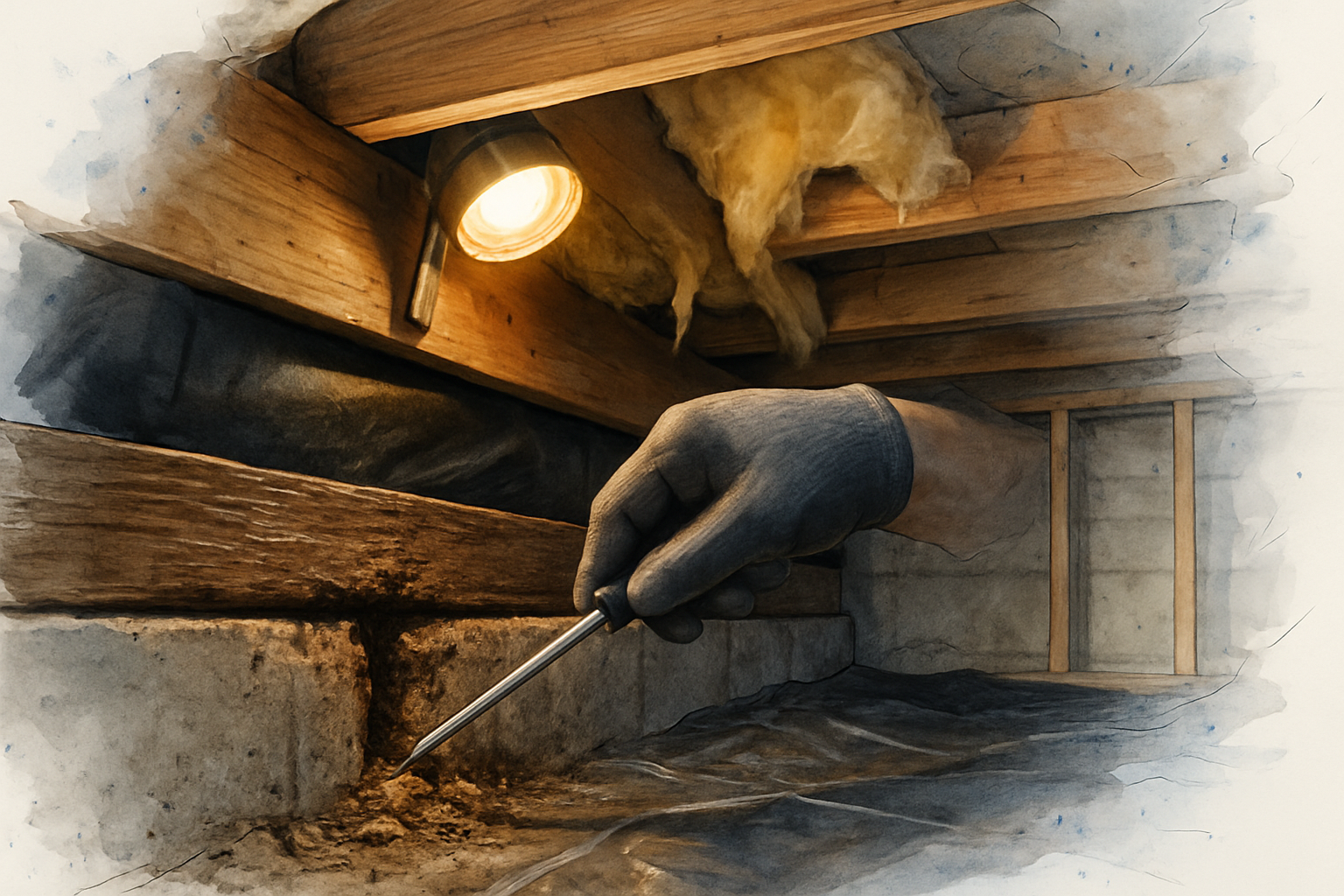
- Dated photos of the damaged conditions, taken before anything gets covered back up.
If the estimate you are holding is one paragraph and one total, that is not a sign the contractor is dishonest. It is a sign the document was not written for an insurance file, and it will slow your claim down.
The California Department of Insurance explains your side of this too. Under the state’s Fair Claims Settlement Practices Regulations, insurers face deadlines to acknowledge, evaluate and pay claims, can only ask for documentation that is reasonably necessary, and must put denials in writing with the reasons stated.
Quick Price Versus Claim-Ready Estimate
Same job, two very different documents. This is roughly how an adjuster sees the gap.
| What the estimate shows | Quick repair price | Claim-ready estimate |
|---|---|---|
| Scope description | One or two lines | Room by room, task by task |
| Measurements | Rarely included | Square feet, linear feet, fixture counts |
| Trade breakdown | Lumped into a total | Separate lines per trade |
| Labor and materials | Combined | Shown separately |
| Code-required work | Absorbed or missed | Its own line items |
| Photos | Maybe a few texts | Dated photos of conditions before cover-up |

When the damage turns out to be bigger than the first inspection showed
This is the moment most homeowners feel the claim slipping away. The crew opens a wall and there is more rot, more char, or a second water path nobody saw.
I want to be direct about something: the first estimate is a starting scope, not a verdict. Adjusters know this. Hidden damage behind finished surfaces is normal, and claims have a process for it.
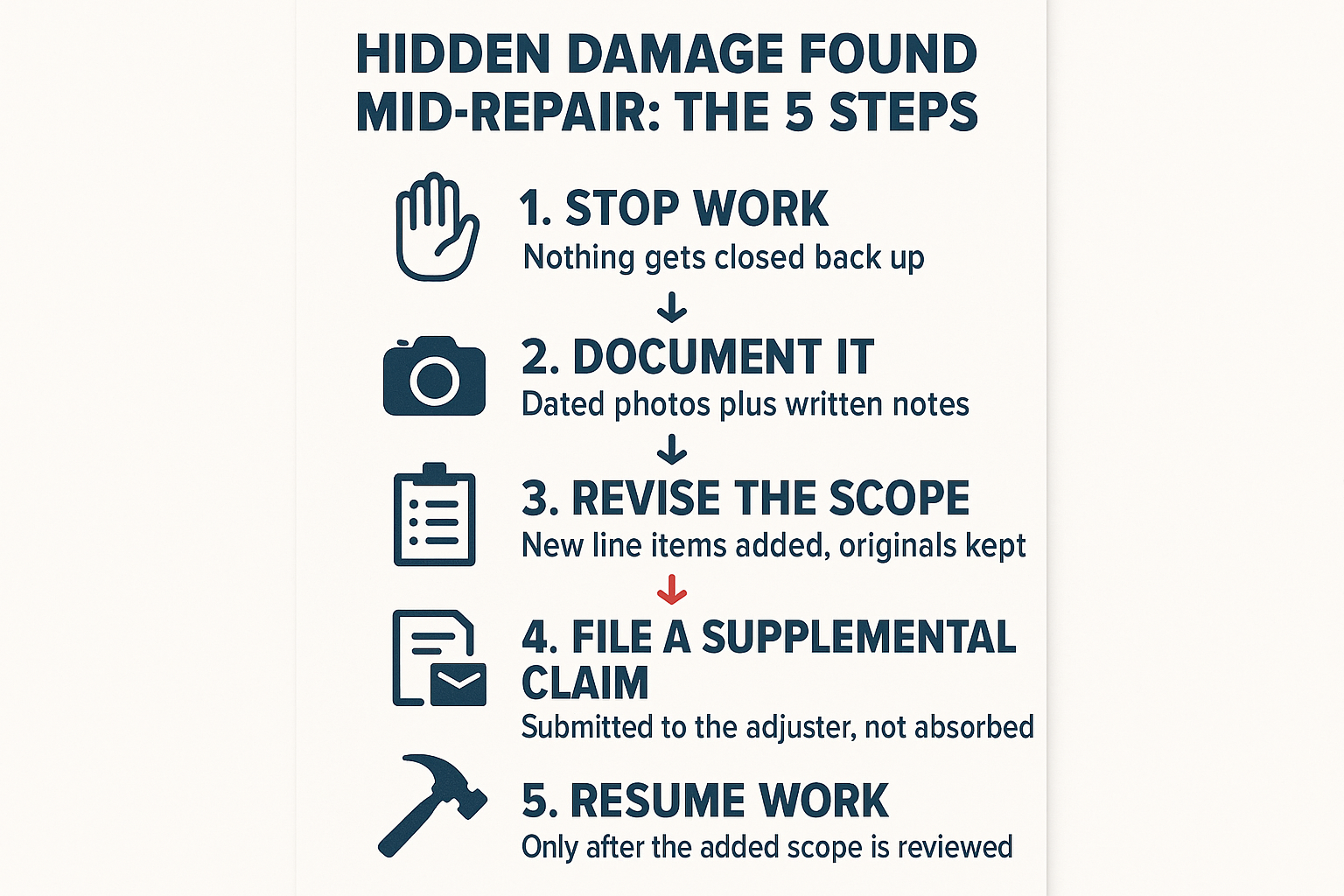
Here is the sequence I follow when it happens:
1. Work stops at the discovery. Nothing gets covered back up.
2. The new conditions get documented in writing with dated photos, while they are still visible and provable.
3. A revised scope goes to you and your adjuster as an addition to the original, not a replacement that muddies the record.
4. You file a supplemental claim rather than absorbing the difference out of pocket.
5. Work resumes once the added scope is reviewed.
I have seen this pattern in real houses here. A Pacific Grove homeowner came to us about front stairs, porch columns and railing, and mentioned a possibly water damaged section of the front wall at basement level. In a fire rebuild, the trusses and roof were already gone and the Sheetrock was coming down to the studs, which means everything behind it was about to become part of the conversation.
Older homes on the Peninsula hide moisture in predictable places. If you want to know where to look before a problem becomes a claim, these six spots where dry rot starts on older Monterey Peninsula homes are a good starting point.
A contractor who documents as he goes protects your claim. One who quietly eats the surprise usually makes it up somewhere else, and one who springs it on you at the end leaves you with no paper trail to submit.
What Happens When Hidden Damage Shows Up Mid-Repair
The five steps that keep a surprise discovery inside the claim instead of on your credit card.
The Monterey County layer national claim articles miss
Here is something that catches homeowners off guard: your repair estimate often has to include work the damage itself did not cause.
That is because current code applies to what gets rebuilt. If a wall is opened and rewired, the new wiring meets today’s standard, not 1962’s. If a bathroom is rebuilt and the fixtures are touched, the plumbing gets brought current.
Common code-driven items that show up on local repair scopes:
- Permits for repairs that involve structure, wiring or plumbing, which most meaningful damage repairs do
- Fire sprinklers in some rebuild situations, which one homeowner here flagged to me themselves while their partial fire rebuild permit was in progress
- The Monterey Peninsula Water Management District water permit step, which can come into play when a kitchen or bathroom is rebuilt and fixtures are added, moved or changed
- Correcting prior unpermitted work that sits inside the repair area and has to be legal before the job can pass final
- Smoke and carbon monoxide alarms, GFCI protection, and similar safety items triggered by the scope of work
These are not a contractor padding the number. They belong on their own line items inside the estimate so your adjuster can review and pay for them on their own terms. Many policies address code upgrade coverage separately, so burying a sprinkler line inside “plumbing” can cost you money.
Requirements vary a lot between Monterey, Pacific Grove, Carmel-by-the-Sea, Seaside, Salinas and unincorporated county areas. Always confirm with the building department that has jurisdiction over your address before you assume anything.
Why last year’s estimate may not cover the work today
A lot of homeowners call me holding a settlement figure that was built months ago and a contractor estimate that is higher, assuming one of the two must be wrong.
Usually neither is. Costs move, and labor is the part that moves most, not materials. Industry cost tracking has pointed to repair and remodel costs climbing in the low single digits year over year recently, and running substantially higher than they did a decade ago. National housing research also points to a long-running skilled trades shortage that keeps crews booked and pricing firm on the Peninsula.
Two honest estimates can also differ for reasons that have nothing to do with the date:
- Scope assumptions. One assumed the subfloor was fine. The other assumed it was not.
- Allowance levels. Tile at one grade versus another changes the number without changing the scope.
- When the pricing was built. A figure priced in winter may not hold by summer.
So when you compare numbers, ask three questions of each one: what is actually included, what is an allowance rather than a firm selection, and when was this priced? That closes most of the gap in a single phone call.
I use realistic allowances rather than lowball placeholders for exactly this reason. The same thinking applies to planned work too, which is covered in more depth in this guide on planning a renovation without losing control of the budget.
Who stands behind the repair after the claim closes
Your adjuster closes the file and moves on. Nobody at the insurance company tracks whether the shower pan holds in month nine.
That is the piece you have to handle yourself, before you sign anything. Ask for these in writing:
- The warranty period and what it covers, workmanship and materials spelled out separately
- Closeout documents, including the final inspection sign-off and any permit cards closed out with the city or county
- Manufacturer warranties on anything installed, handed to you rather than filed away
- A named point of contact for a problem that shows up later, and how fast you can expect a response
Specific wording helps. Something like: “Put the warranty term and what it covers in the contract, and tell me who I call if something surfaces eight months from now.” A contractor who answers that cleanly is telling you a lot.
Many people come into a repair carrying a bad experience with a previous contractor. One homeowner put it this way in a review: “I had two issues arise, and without hesitation (and out of warranty, might I say), Christian immediately responded and resolved both issues to my satisfaction.” That kind of follow-up is part of the repair, not a favor.
Frequently Asked Questions About Insurance Repair Estimates in Monterey County
Can I use my own contractor, or do I have to use the one the insurer suggests?
In California you generally choose your own licensed contractor. Your insurer may offer a preferred vendor, but the repair decision is yours. Check your policy language and confirm with your adjuster before work starts.
What if my contractor’s estimate is higher than the insurance settlement?
That gap is usually about scope, not honesty. Line the two documents up side by side and look for items in one that are missing from the other, for allowance levels that differ, and for when each was priced. Most disputes I see come down to the settlement scope missing code-required work or hidden damage that was not visible at the first inspection.
Do I need a permit for a repair that is just putting things back the way they were?
Often yes, if the work touches structure, wiring or plumbing. Cosmetic patch and paint usually does not. Requirements differ between Monterey, Pacific Grove, Carmel-by-the-Sea and the unincorporated county, so verify with your local building department rather than assuming.
How long does it take to get a detailed repair estimate written?
For a defined area like a bathroom or a closet, a few days after the site visit is typical. A fire rebuild or a multi-room water loss takes longer, because the scope has to be walked, measured and photographed carefully before anything gets written.
What should I photograph before any repair work starts?
Everything, from wide room shots to tight shots of the damage, with the date captured. Include the inside of cabinets, the subfloor, the framing if it is exposed, and anything that will be covered up. Photos you did not take are the hardest thing to go back and get.
Looking at a repair estimate and not sure it will hold up?
We write estimates the same way whether they are headed to a claims adjuster or a homeowner’s kitchen table: realistic allowances, every finish and line item explained from day one, documented as the work moves. One Monterey homeowner described it simply in a review: “The bid process was very transparent, with everything documented online.” If you own a home anywhere in Monterey County and want a site visit and a written estimate on a damage repair, Palacios Construction can be reached at (831) 220-3334 or palaciosconstructionca.com. CA General Contractors License #1071780 B.