
Direct Answer: On the Monterey Peninsula, bathroom remodel costs vary widely based on labor, plumbing layout, and what’s found behind the walls. Contact Palacios Construction for an accurate local estimate.
The question I hear most often before a bathroom project kicks off is some version of: ‘Why is this so much more than I expected?’ And honestly, it’s a fair question — not a complaint. Most homeowners come to the conversation with a number in their head, usually pulled from a national average they found online, and that number almost never matches what a real remodel costs on the Monterey Peninsula.
The gap isn’t because contractors are padding proposals. It’s because the variables that actually move a bathroom budget — labor rates, plumbing configuration, and what’s hiding behind your walls — are rarely explained upfront. This article is my attempt to fix that.
I’m going to focus on the three cost drivers that account for the largest share of a real-world bathroom remodel budget in Monterey County. Not every line item. Not a complete teardown of material pricing. The things that matter most — and the decisions you actually control.
Why Labor Is the Biggest Number on Any Bathroom Proposal
Materials feel like the obvious place to start because they’re the most visible part of a remodel. You pick the tile, you pick the vanity, you see the price tags. But labor is consistently the largest single cost component in a bathroom remodel — and it’s the one factor you have the least control over.
On the Monterey Peninsula, skilled trade labor runs higher than most inland California markets. That’s not a complaint — it’s just the regional reality. Plumbers, tile setters, and finish carpenters here reflect a cost environment shaped by local wages, local demand, and the fact that skilled tradespeople in this area are in short supply relative to the work available.
Here’s the part that surprises most homeowners: your tile selection affects cost far less than how it’s set. You can choose a tile at $4 per square foot or $18 per square foot — that’s a real and meaningful difference. But the labor to prep the substrate, set it correctly, grout it, and seal it is what it is regardless of which tile you chose. Hunting for the lowest material allowance while underestimating labor hours is one of the most common ways a bathroom budget ends up feeling wrong by the end of the project.
Meaningful year-over-year cost increases in the remodeling sector over recent years have reinforced something I’ve seen firsthand: getting a realistic labor estimate upfront matters more than finding the cheapest tile. A proposal that lowballs the labor hours to win the job isn’t saving you money — it’s setting up a future conversation you don’t want to have.

The Layout Decision: The One Cost Lever You Actually Control
If labor rates are largely fixed by the market, layout is where a homeowner has real influence over the final number. And the principle here is straightforward: moving plumbing costs more than keeping it where it is.
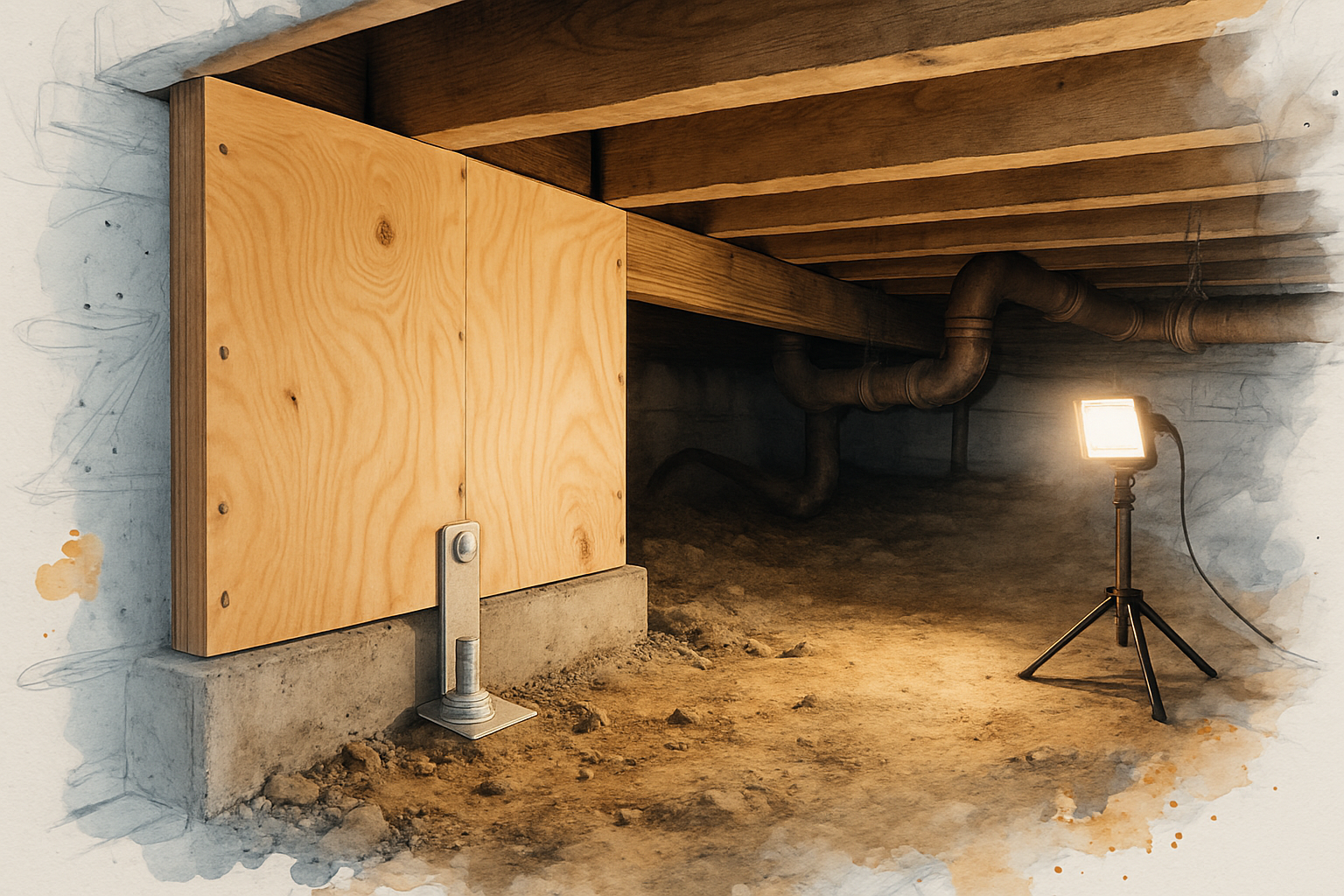
When drain lines and supply lines stay in their existing locations, the plumber’s scope is limited to disconnecting old fixtures, making any needed repairs, and reconnecting new ones. That’s manageable. When you want to relocate a toilet, move a sink across the room, or convert a tub-only bathroom into a walk-in shower with a different footprint, someone has to open walls or floors, re-route pipe, and in many cases expand the permit scope accordingly.
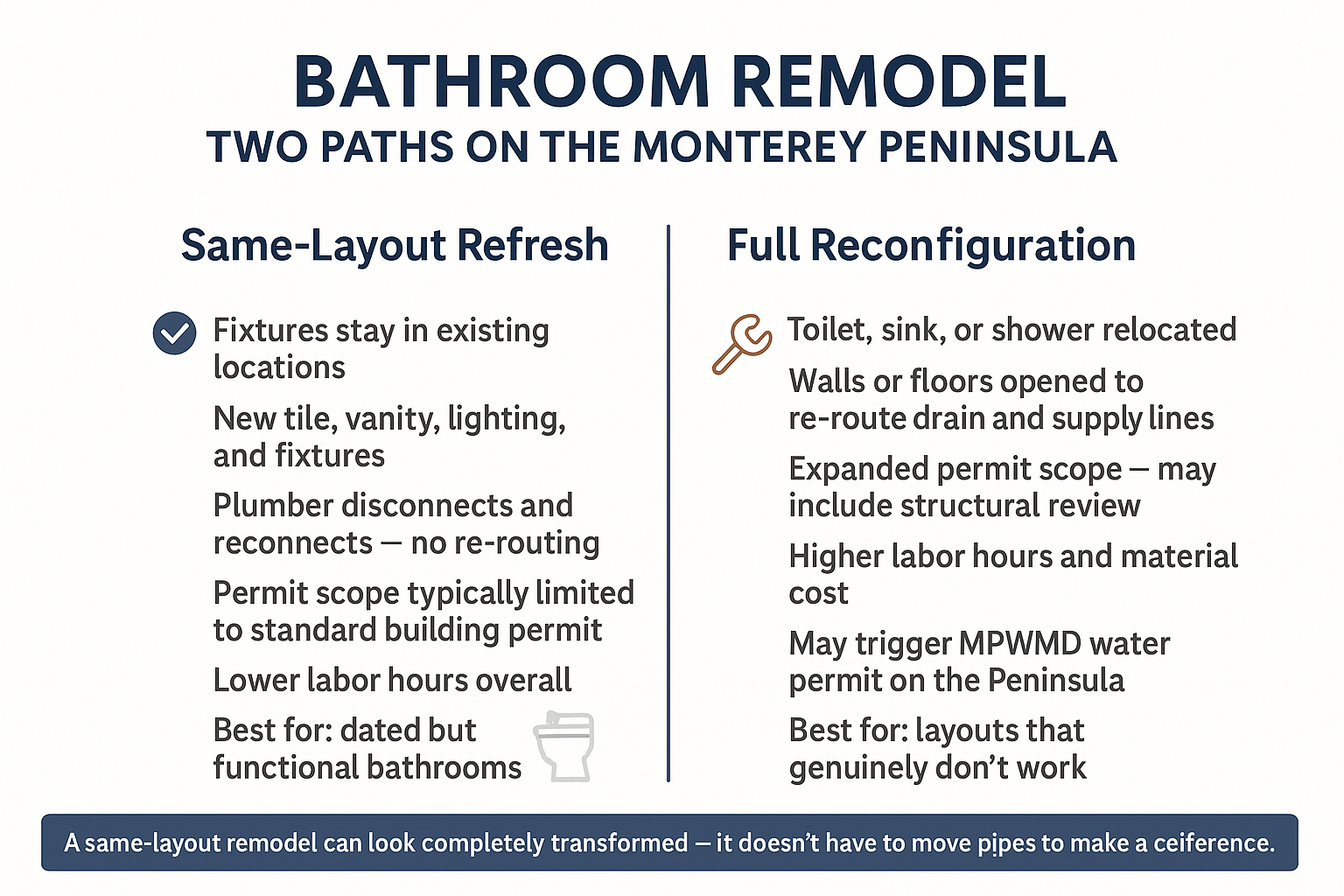
I think about bathroom remodels in two broad categories:
- Same-layout refresh: Updated finishes, new fixtures in existing locations, new tile, new vanity. The bathroom feels completely transformed without touching the plumbing rough-in. This is the right move for most bathrooms that are dated but functional.
- Full reconfiguration: New layout, relocated fixtures, possibly a different shower or tub configuration. This makes sense when the existing layout genuinely doesn’t work — not just because it’s older.
The honest truth is that a same-layout remodel done with well-chosen finishes can look and feel completely different from what was there before. Not every bathroom needs to be reconfigured to feel like a new space. And keeping the layout intact is one of the most effective ways to keep the project within a realistic budget range.
For more on how remodeling decisions connect to overall project sequencing, The Order of Operations Most Homeowners Don’t Know About is worth a read.
Two Paths: Same-Layout Refresh vs. Full Reconfiguration
Here’s a side-by-side look at what separates a cosmetic-to-mid-range bathroom remodel from a full reconfiguration — and what each one typically involves.
Hidden Conditions in Peninsula Homes — and Why a Contingency Isn’t Optional
This is the part of the conversation I think matters most for homeowners on the Peninsula specifically, and it’s the one most national guides skip over entirely.
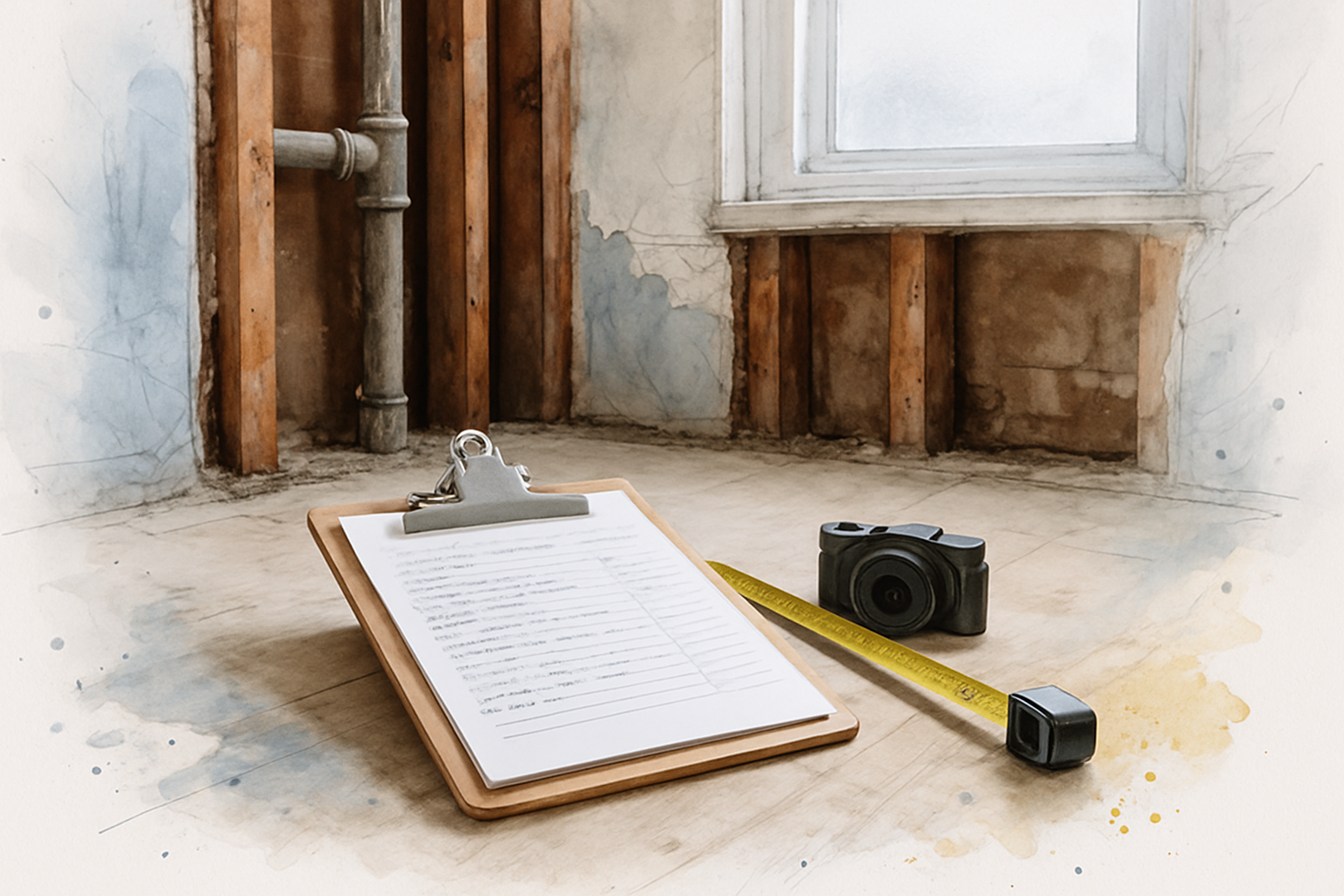
A significant share of the housing stock in Pacific Grove, Seaside, and older parts of Monterey was built in the mid-century era — the 1950s through the 1970s. Those homes were built well, but they’ve been lived in for decades, and bathrooms are the rooms that take the most moisture abuse over time. When demo starts, it’s not unusual to find:
- Subfloor moisture damage under tile or vinyl that looked perfectly fine from the surface
- Galvanized or corroded supply lines that need to be replaced before new fixtures go in
- Ventilation that doesn’t meet current code — older bathrooms often had inadequate exhaust setups
- Tile set directly over drywall rather than cement board or a proper waterproof substrate
None of these show up in a proposal before demo happens — because nobody can see through a wall. But a contractor who has worked in this market regularly knows to flag these as realistic contingency items rather than treating them as surprises after the contract is signed.
A 10–15% contingency on a bathroom remodel is a reasonable planning figure for a Peninsula home of any age. That money sits in reserve, and if the walls come out clean, it stays in your pocket. But if there’s subfloor rot or a corroded drain line that needs to be replaced, you’re not scrambling to cover an unexpected cost mid-project.
This is something I look for when reviewing any proposal — does it acknowledge the realistic possibility of hidden conditions, or does it pretend every job will go perfectly? The Hidden Expenses That Catch Monterey Homeowners Off Guard covers this broader dynamic in more detail.
The Water Permit Piece Most Homeowners Don’t See Coming
If your bathroom remodel involves adding a fixture or relocating plumbing — a new showerhead location, moving a sink, converting a tub-only bath to a walk-in shower — you may be looking at more than a standard Monterey County building permit.
The Monterey Peninsula Water Management District (MPWMD) has jurisdiction over water use across the Peninsula, and certain plumbing changes in bathroom remodels can trigger a water permit requirement from them in addition to the standard building permit your city or county requires.
Here’s the part that directly affects fixture selection and budget: as a condition of receiving an MPWMD water permit to add a bathroom or plumbing fixture, all toilets on the property must be upgraded to 1.28-gallon-per-flush high-efficiency models, and showerheads must be rated at no more than 2.0 gallons per minute. If you have older toilets elsewhere in the house, those get replaced as part of the condition — not just the bathroom you’re remodeling.
This isn’t a burden so much as it’s a planning reality. High-efficiency toilets and low-flow showerheads have come a long way in terms of performance. But it does mean the fixture budget needs to account for more than just the one bathroom you’re focused on. And it means the contractor managing your project needs to know MPWMD’s current requirements before the permit application goes in — not after.
For a clear breakdown of how permit responsibility works on a remodeling project, Who Is Responsible for Permits on a Remodeling Project? is a good starting point. And if you’ve ever wondered what happens when this step gets skipped, What Happens When Remodeling Work Gets Done Without a Permit is worth reading before you start.
What Moves a Bathroom Remodel Budget on the Monterey Peninsula
These are the variables that make the most meaningful difference between a lower-end and higher-end bathroom remodel estimate in this market — based on what I see on real projects in Monterey County.
| Cost Driver | Lower Impact Scenario | Higher Impact Scenario |
|---|---|---|
| Labor | Same-layout refresh, standard finishes | Full reconfiguration, complex tile patterns, custom work |
| Plumbing scope | Fixtures stay in place, minor repairs | Relocated drain/supply lines, new rough-in |
| Hidden conditions | Clean subfloor, sound walls, code-compliant ventilation | Moisture damage, corroded lines, ventilation rebuild |
| MPWMD permits | No plumbing additions, existing fixtures retained | New fixture added — triggers water permit and whole-home toilet upgrade |
| Tile and finishes | Mid-range tile, stock vanity, standard fixtures | Large-format tile, custom vanity, specialty fixtures |
Frequently Asked Questions About Bathroom Remodel Costs in Monterey
How much does a bathroom remodel cost in Monterey?
There’s no single answer that’s honest, but I can give you a useful range. Many Monterey County homeowners working on a mid-size bathroom see costs somewhere in the range of $25,000 to $55,000 or more depending on scope, layout changes, finishes, and what’s found behind the walls. A cosmetic-only refresh in a small bathroom can come in below that; a full reconfiguration with premium finishes in an older home with hidden conditions can go well above it. The only way to get a number you can actually plan around is to have a contractor walk the space and put together a detailed proposal.
Does moving a toilet or sink really cost that much more?
Yes — more than most people expect. Relocating a drain line means opening the floor, cutting into the subfloor, re-routing the pipe to its new position, and patching everything back. That’s several additional labor hours from a licensed plumber, plus materials, plus the expanded permit scope that typically follows. It’s not impossible, and sometimes it’s the right call for the layout — but it should be a deliberate choice, not an afterthought added mid-project.
What’s the MPWMD water permit, and will my remodel need one?
The Monterey Peninsula Water Management District regulates water use across the Peninsula, and some plumbing changes in a bathroom remodel can trigger a water permit from them separate from the standard building permit. If you’re adding a fixture or relocating plumbing that changes the water use profile of the bathroom, a water permit may be required. As a condition of that permit, all toilets on the property must be 1.28 GPF high-efficiency models and showerheads must be rated at 2.0 GPM or less. Requirements can vary, so always verify with your contractor and the relevant building department before assuming your project won’t be affected.
Why do contractors include a contingency in bathroom proposals?
Because older homes on the Peninsula regularly produce surprises once demo starts — subfloor moisture damage, corroded galvanized pipe, inadequate ventilation. A 10–15% contingency is a planning buffer, not padding. If everything comes out clean, you don’t spend it. If there’s hidden damage, you’re covered without a mid-project conversation about additional funds. A contractor who builds a realistic contingency into the proposal is doing you a favor.
Can I save money by buying my own fixtures and tile?
You can, but it comes with tradeoffs. When you supply materials, the contractor typically won’t warranty them — so if a fixture arrives damaged or the wrong size, the delay and replacement cost fall on you. It also affects scheduling, because the job can’t move forward until materials are on-site. In some cases it works fine; in others it creates more friction than the savings are worth. Worth discussing with your contractor before the proposal is finalized.
How do I evaluate whether a proposal is realistic or too low?
Look at how the proposal handles labor, contingency, and finish allowances. A realistic proposal will itemize labor separately from materials, include a contingency line, and use specific allowances for finishes — not a single lump-sum number that leaves you guessing. If a proposal is significantly lower than others you’ve received, the difference is almost always in what’s been left out, not in better pricing. How a General Contractor’s Bid Process Reveals More Than the Price goes into this in more detail.
Ready to Get a Realistic Budget for Your Bathroom Remodel?
If you’re planning a bathroom remodel on the Monterey Peninsula and want a proposal built around real local costs — not national averages — Palacios Construction is available to walk through your project and put together a detailed estimate. Reach out through palaciosconstructionca.com or call (831) 220-3334 to get started.