
Quick Answer
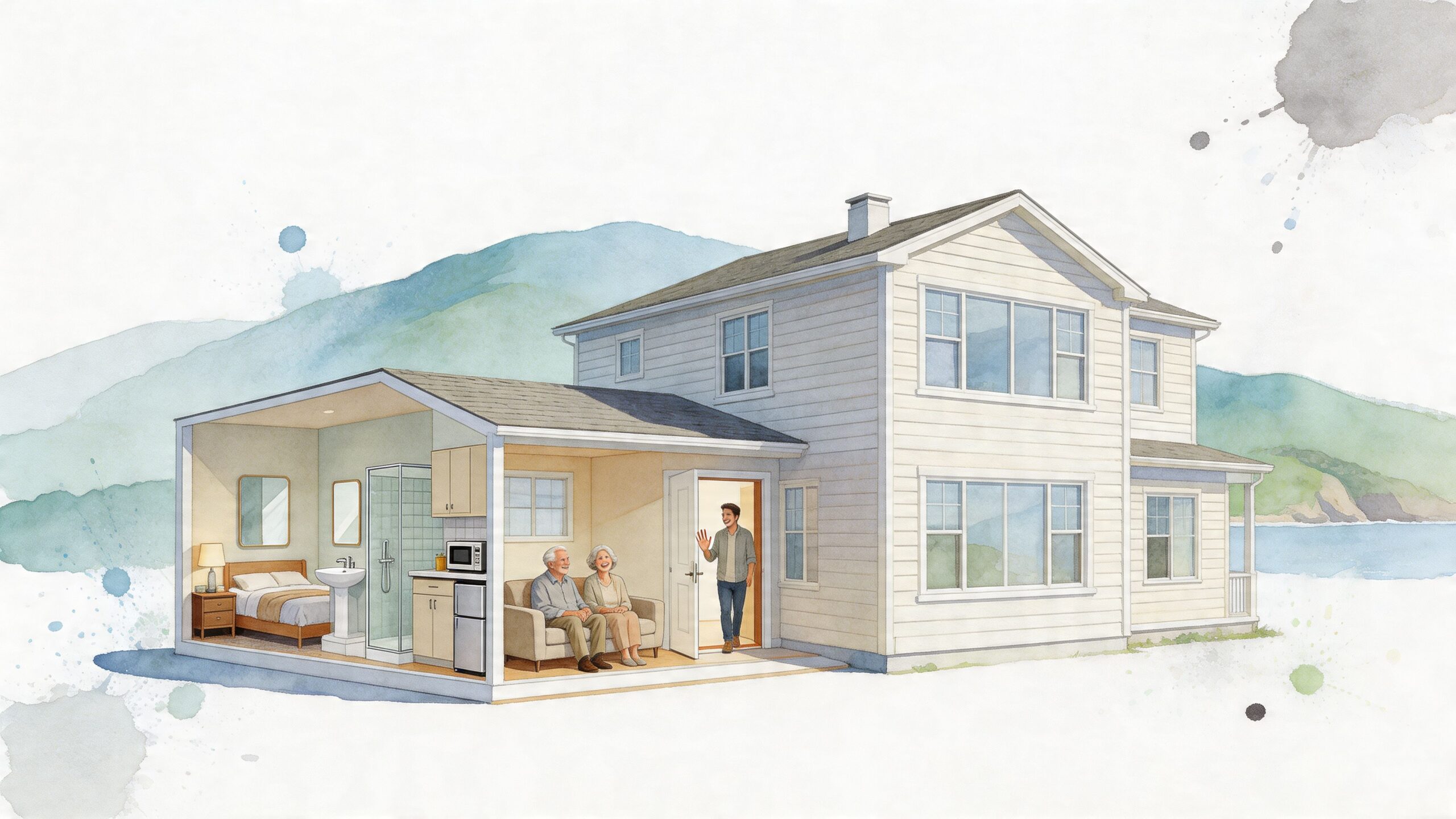
Finding houses with mother in law suite near me in Monterey County can be difficult because inventory is limited and many existing suites need careful review for permits, layout, and utility capacity. The two practical paths are to inspect a rare existing suite thoroughly, or buy the right property and build a compliant ADU or JADU. If you're considering the second path, start with what determines whether you can build an ADU on your property.
If you're searching because a parent may move in, an adult child needs more independence, or you want a long-term family housing plan, you're not alone. U.S. multigenerational households reached a record 15% during the pandemic, a shift tied to family support and childcare needs, as noted in this multigenerational living discussion.
The hard part isn't typing the search into Zillow or Redfin. The hard part is finding a property where the suite is legal, functional, private enough to live in, and built well enough that you won't be correcting someone else's shortcuts after closing.
How to Search for Houses With a Mother In Law Suite Near Me
Start broad, then narrow fast. Real estate sites don't use one consistent label, so a search for houses with mother in law suite near me will miss properties if you rely on only one term.

Search terms that actually help
Use several keyword variations on Zillow, Redfin, Realtor.com, and MLS alerts:
- In-law suite means a secondary living area, but the listing may not say whether it's permitted.
- Mother-in-law suite is common in consumer searches and sometimes appears in marketing descriptions.
- ADU usually points to a more formal secondary unit.
- JADU matters if the suite is carved out of the main house rather than built as a fully separate unit.
- Guest house can describe a detached backyard structure.
- Casita shows up less often locally, but it's still worth trying.
- Next-gen layout sometimes appears in newer homes built for multigenerational living.
A good local agent can build saved searches that combine these terms with property features like ground-floor bedrooms, detached structures, or converted garages.
Read the listing like a skeptic
A listing can say "perfect for extended family" and still describe space that isn't a legal dwelling unit. Photos may show a kitchenette, exterior door, or detached room, but none of that confirms permit history, electrical capacity, or whether the bathroom and kitchen were added correctly.
Practical rule: If a listing highlights a suite but avoids words like permitted, ADU, or approved conversion, assume you need to verify everything.
Listing sites mainly confirm the amenity's existence. They rarely disclose whether the suite meets current code, has proper drainage, or shares an overloaded panel with the main house.
Why inventory feels thin
These properties are limited to begin with, and demand is strong. In California, 1,873 homes are listed for sale with in-law suites statewide, and 11 are in Salinas, according to California in-law suite listings on Homes.com. That sounds like a lot statewide, but once you narrow for neighborhood, lot layout, condition, and permit status, the pool gets small quickly.
In practice, buyers usually end up in one of two situations. They either chase a rare listing with a questionable suite, or they buy a house they like and create the secondary space properly.
What to Look For When Evaluating an Existing Suite
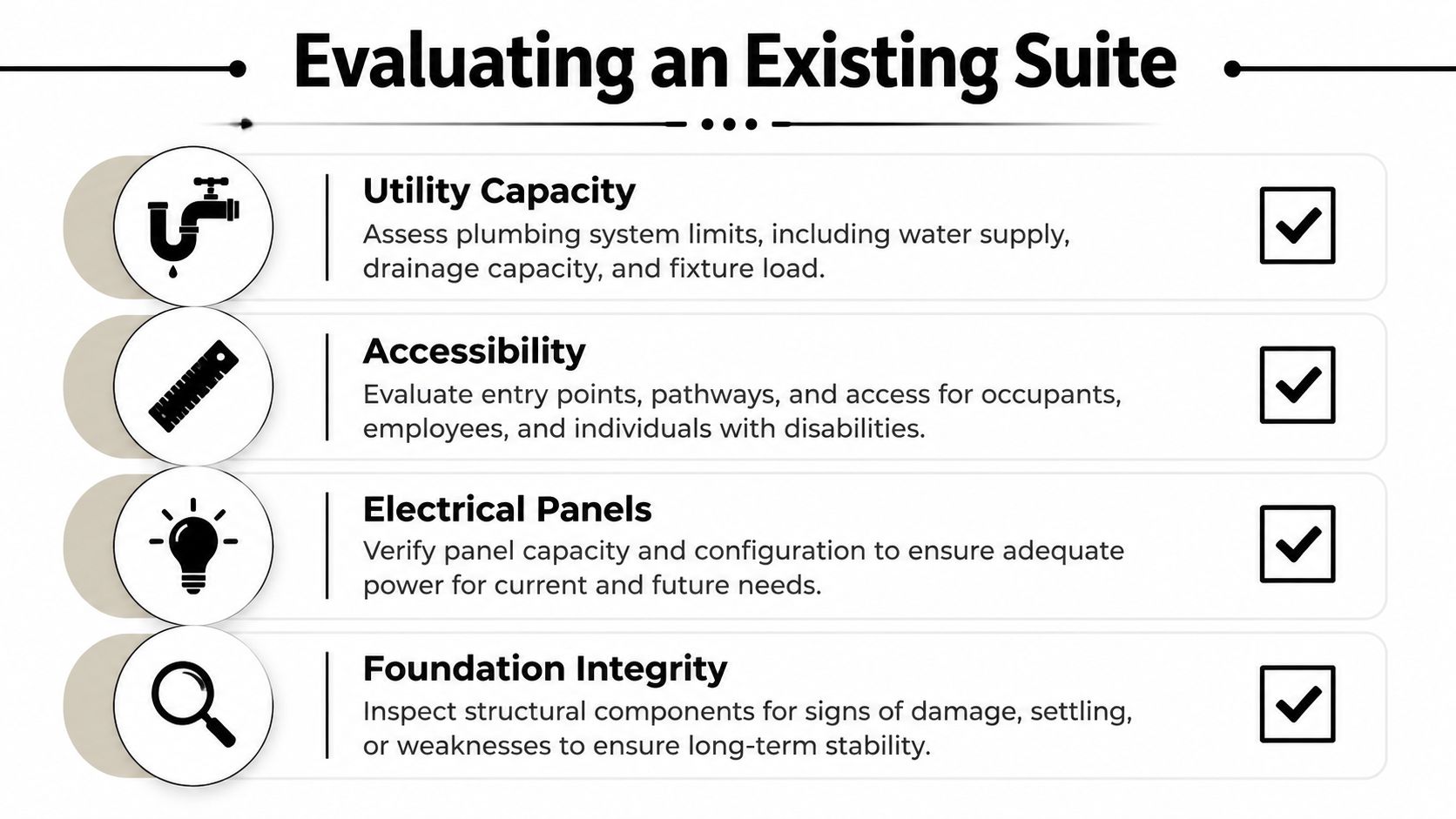
An existing suite can save time if it's legal, well planned, and built correctly. If it isn't, you may inherit permit issues, expensive corrections, and a layout that never really works for daily living.
Confirm the suite is legal
Ask for permit records early. Don't wait until you're emotionally committed to the house.
You want to know whether the kitchen, bathroom, added square footage, separate entrance, plumbing, and electrical work were approved. If the seller says the space was "done years ago," that isn't proof of anything.
Look for these warning signs:
- Garage conversions with no paper trail often have hidden insulation, fire separation, or egress problems.
- Basement or lower-level suites may have moisture issues, non-compliant windows, or patchwork drainage work.
- Added kitchens can trigger bigger code questions than buyers expect.
A suite that looks finished and a suite that is permitted are not the same thing.
Check whether it functions as independent living space
A mother-in-law suite needs more than a bed and a bathroom. It has to work for someone living there day after day.
A functional suite needs a dedicated exterior entrance, and for privacy, walls between the suite and main home should reach STC 50 or better, according to this mother-in-law suite contractor guide. If you can hear every conversation, TV show, or dishwasher cycle through the wall, the space won't feel independent no matter how nice the finishes are.
Look at the layout with daily use in mind:
| Area | What to check |
|---|---|
| Entry | Private exterior access, safe path of travel, no awkward route through the main home |
| Kitchen | Full function, not just a sink and mini fridge tucked into a hallway |
| Bathroom | Proper ventilation, usable clearance, comfortable shower access |
| Living area | Enough separation so the resident isn't living in one crowded room |
| Privacy | Door placement, sound control, window placement, shared wall conditions |
Inspect the systems, not just the finishes
Fresh paint hides problems well. The systems tell the story.
Pay attention to utility capacity and how the suite connects to the rest of the house:
- Electrical panel needs enough space and capacity for the added load.
- Plumbing layout should make sense. Long awkward drain runs often point to improvised work.
- Heating and cooling should support the suite without leaving one side of the property uncomfortable.
- Foundation and framing matter even more in older Monterey County homes where additions have been layered over time.
If it's attached, inspect how the addition was tied into the original structure. If it's detached, look at foundation condition, roof age, drainage path, and whether the outbuilding was built for habitation.
Think beyond the transaction
A lot of suites look acceptable during a showing because nobody is cooking in them, bathing in them, or trying to sleep beside the main living room. The test is daily use.
Ask yourself a simple question. Would a parent, in-law, or adult child feel independent there for years, or would they feel like they were living in an improvised spare room?
If the answer is uncertain, bring in a contractor before you make assumptions.
The Alternative Building Your Own Mother In Law Suite
When the resale market keeps turning up compromised options, building your own suite often becomes the cleaner path. You control the layout, the level of privacy, the access, and the construction quality from the start.
California's ADU and JADU rules have made this option more realistic for many homeowners, but the right path depends on the property. Some homes are better suited for a detached ADU in the yard. Others make more sense as an attached addition or an interior conversion. If you're weighing those options, this guide on how much an ADU costs in Monterey CA is a useful starting point.
Why building can produce a better result
Building new gives you choices an existing suite usually can't:
- Access that fits the resident whether that's fewer stairs, wider circulation, or easier bathroom use
- Modern separation between spaces so the main home and suite don't interfere with each other
- Planned utility infrastructure instead of trying to stretch old systems past their limits
- Clear permit history from day one
There's also a long-term property argument for doing it right. Well-designed and permitted ADUs can add value, with some industry analyses showing increases of up to 35% in high-cost cities, as summarized in this Los Angeles mother-in-law suite market reference.
Build for the person who will use it
A suite for an aging parent shouldn't be planned the same way as a suite for an adult child or long-term guest use. Daily routines matter more than trendy finishes.
Think about where the resident will enter, how they move through the bathroom at night, where they sit during the day, and how much sound passes between spaces. Those decisions shape whether the suite feels calm and usable or cramped and temporary.
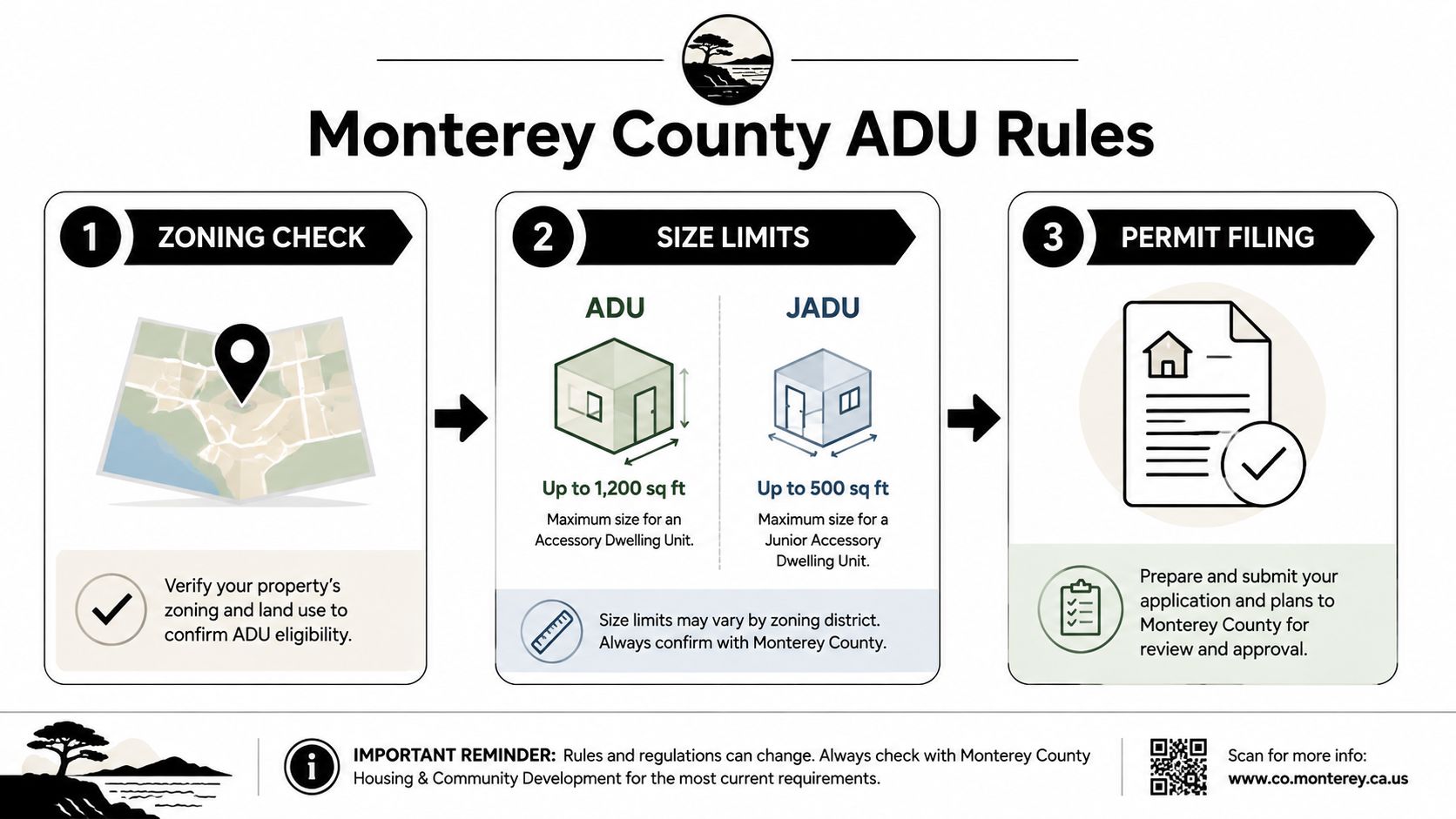
Understanding Local ADU Rules in Monterey County
Monterey County properties vary a lot. Coastal lots, older neighborhoods, rural parcels, and hillside conditions all change what is practical. Before anyone talks about finishes, they need to know whether the site supports the project.
The common project paths
Most mother-in-law suite projects fall into one of these categories:
- Detached ADU in the yard, separate from the main home
- Attached addition connected to the house but designed as a distinct living area
- Interior conversion using existing area such as part of the house or garage
- JADU created within the existing home envelope
Each path has trade-offs. Detached units usually offer better privacy. Attached units can make access easier and keep the addition closer to the household. Conversions can work well if the existing structure is sound and the layout supports proper entry, plumbing, and life safety requirements.
Why early feasibility work matters
In Monterey County, the permitting and approval timeline for a new mother-in-law suite or ADU typically ranges from 8 to 16 weeks, and bringing in a contractor early helps catch zoning or structural conflicts before plans are finalized, according to this Monterey County ADU permit overview.
That early phase is where a lot of avoidable mistakes show up. Site setbacks, utility routing, structural tie-ins, drainage, and coastal review constraints can affect the project before demolition or framing even begins.
Local reality: In Monterey County, the lot may say yes before the site conditions say yes.
Questions that should get answered early
A homeowner should get clear answers to these before moving too far into design:
| Question | Why it matters |
|---|---|
| Can the lot support a detached or attached unit? | Determines the basic project type |
| Are there site constraints? | Slope, access, drainage, septic, and coastal factors can reshape the plan |
| Is the existing structure suitable for conversion? | Some spaces cost more to fix than to rebuild properly |
| Where will utilities run? | Kitchen and bath placement affect feasibility and construction complexity |
| What approvals will be required? | Impacts schedule and design decisions |
What usually works better than people expect
Simple plans usually move more cleanly than overly ambitious ones. A clear footprint, efficient utility placement, and realistic access route tend to hold up better through permitting and construction than layouts that try to force too much into the wrong part of the property.
The best ADU and JADU projects aren't the ones with the most features. They're the ones where zoning, structure, utilities, and daily use all line up.
Planning Your Project Costs, Timelines, and Hiring a Contractor
People searching houses with mother in law suite near me are often trying to solve a family housing problem quickly. The part most articles skip is the actual buy versus build decision. As noted in this discussion of the buy versus build gap, homeowners are usually left without useful guidance on ownership trade-offs, permitting, and local eligibility.
What drives project cost
Cost comes from scope, not just size. Two suites with the same square footage can land very differently depending on site conditions and infrastructure needs.
The main cost drivers usually include:
- Project type whether it's detached new construction, an addition, or a conversion
- Site conditions including access, slope, drainage, and existing foundation conditions
- Utility work especially kitchen and bathroom connections
- Finish level from straightforward durable materials to more customized selections
- Permit and design complexity which can increase when the property has unusual constraints
How to think about timeline
A realistic project timeline has several phases. Feasibility and planning come first. Permitting comes next. Construction starts only after the plans, approvals, and scope are ready.
That sequencing matters. Rushing into construction decisions before the permit path and utility strategy are clear is one of the easiest ways to create delays and change orders.
Hire the contractor while the project is still being defined, not after the plans are already fighting the property.
How to vet a contractor
This isn't a project for a handyman approach. A mother-in-law suite affects structure, plumbing, electrical, life safety, and permitting.
Ask direct questions:
- License and insurance should be current and appropriate for residential construction
- Local experience matters because Monterey County review and site conditions aren't generic
- Process should be clear from feasibility through final inspection
- Project management should include communication, scheduling, and trade coordination
- Responsibility should be clearly defined, which is easier to understand if you review what a licensed general contractor is responsible for
A good contractor won't promise a perfect answer on the first call. They should be able to explain what needs to be verified, what could change the scope, and what risks need to be addressed before work starts.
Frequently Asked Questions
| Question | Answer |
|---|---|
| Can I trust a listing that says in-law suite? | Treat it as a starting point, not proof. Verify permits, entry access, utility setup, and code compliance before you assume the space works as a legal living area. |
| Is it usually better to buy a home with a suite or build one? | It depends on the property and the condition of the existing suite. If the existing space has permit or layout problems, building new often gives better long-term results. |
| How long does permitting usually take in Monterey County? | For a new mother-in-law suite or ADU, the permitting and approval timeline typically ranges from 8 to 16 weeks in Monterey County, based on the verified local data cited earlier. |
| Does a mother-in-law suite add property value? | It can. Well-designed and permitted ADUs can add significant value, with some industry analyses showing increases of up to 35% in high-cost cities, which is why quality and permit history matter. |
| What's the biggest mistake buyers make with existing suites? | They focus on finishes and overlook legality, privacy, and infrastructure. A nice-looking space can still have major problems behind the walls. |
Are houses with mother in law suite near me hard to find?
Yes, especially if you want one that's fully functional and properly documented. Inventory is limited, and many listings blur the line between a guest setup and a real secondary dwelling.
Can I turn part of my current house into a suite?
Sometimes, yes. The answer depends on layout, access, available space, utility capacity, and whether the configuration can meet local rules for an ADU or JADU.
Do I need a separate entrance for a mother-in-law suite?
If you want the space to work well for independent living, yes. A dedicated exterior entrance improves privacy, usability, and overall function.
Is a detached ADU better than an attached suite?
Not automatically. Detached units usually offer more privacy, while attached suites can be more convenient for family support and easier access to the main house.
Should I inspect an existing suite before making an offer?
If the suite is a major reason you're buying the property, yes. That inspection should focus on permits, structure, electrical, plumbing, drainage, and how the space functions for daily living.
Call to Action
If you're searching for houses with mother in law suite near me and finding that the market doesn't offer many clean options, it may be worth looking at the property you have, or the one you're considering, through a build-first lens. For a straightforward conversation about an ADU, JADU, or addition, you can contact the team here.
If you want practical guidance on adding a mother-in-law suite, ADU, or JADU in Monterey County, reach out to Palacios Construction. You can start the conversation at palaciosconstructionca.com or visit 222 Ramona Ave Unit 5, Monterey, CA.