

Direct Answer: Start with anything that keeps water out or holds the house up. Roof, siding, window frames, decks, and framing come before kitchens, baths, and paint.
You closed a few weeks ago. You walked the house with a notepad, and by the time you reached the back yard the list included the kitchen, a bathroom, the siding, some window frames, and a deck nobody should be standing on.
I get that list almost every week. One recent inquiry came from a buyer with a house under 800 square feet that needed a kitchen, a bath, siding, roof work, and a new deck all at once. The list is normal for a home on this coast. The order is where people get stuck.
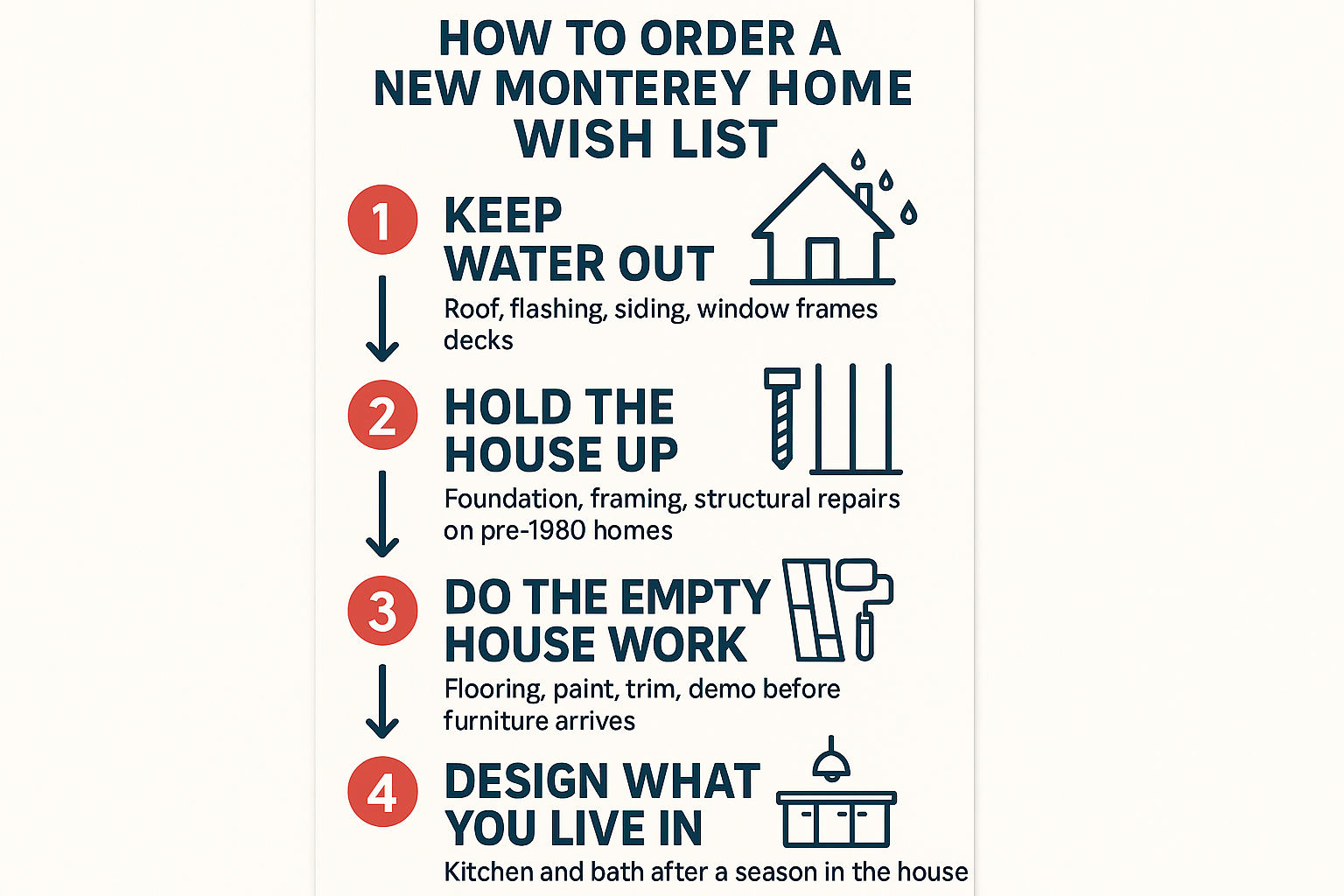
So here is how I sort it: what keeps water out and holds the house up goes first, what is cheaper to do in an empty house goes second, and what you only understand after living there goes last. The rest of this is how that plays out in Monterey County, including the permit timelines that will reorder your plans whether you like it or not.
A Long Wish List Is Normal Here. Sort It, Do Not Shorten It
The first thing I tell a new owner is that the list is not a sign they bought the wrong house. Peninsula housing stock is old. Salt air and fog off the Monterey and Pacific Grove coastline work on anything exposed, and wood that was fine in a 2019 inspection photo can be soft now.
So exterior envelope work usually earns the top of the list:
- Roof, flashing, and gutters, because every other repair under them is temporary until this is right
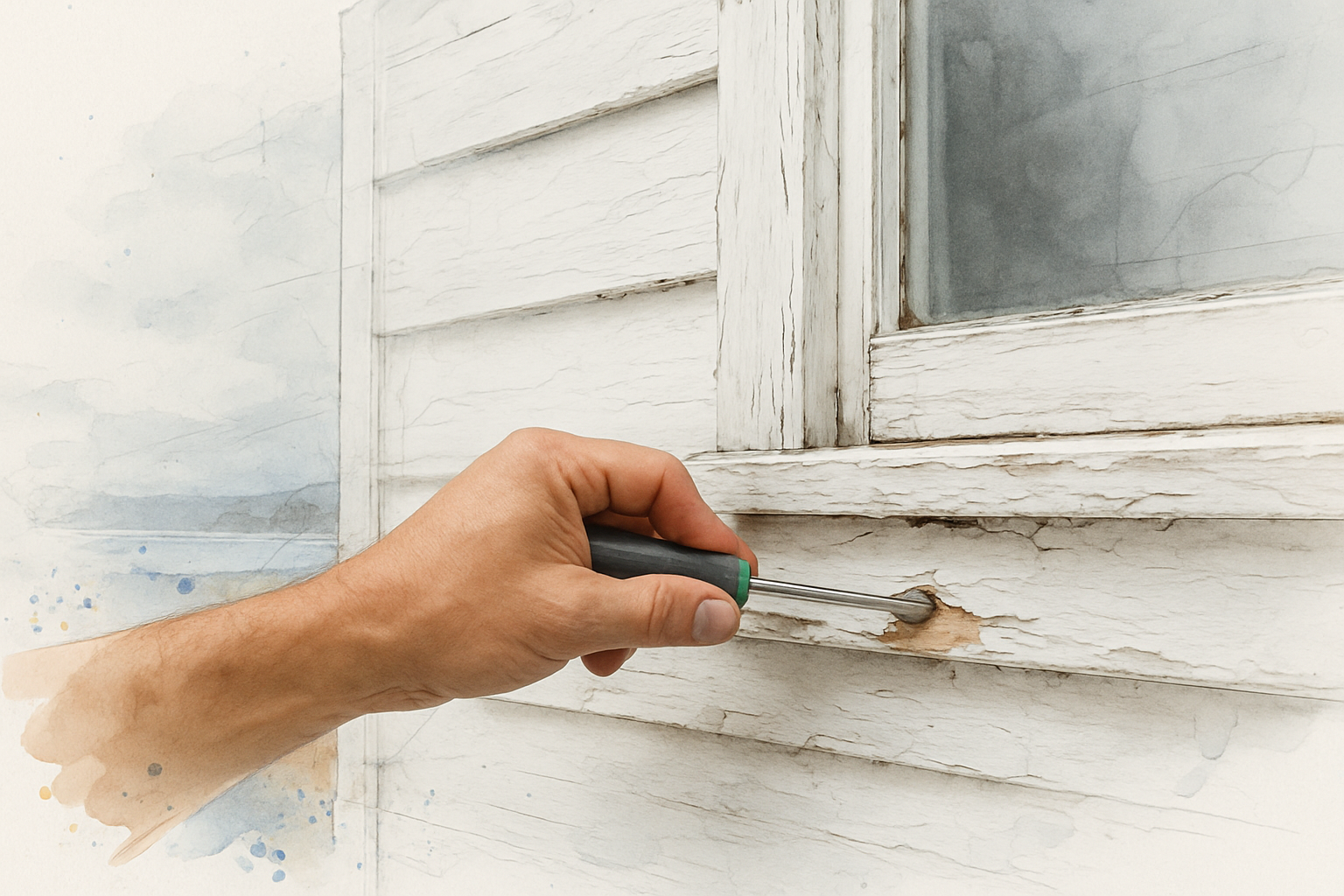
- Siding, exterior trim, and window frames, the three spots coastal moisture attacks first
- Decks, stairs, and porch framing, which are both a water problem and a safety problem
- Foundation and framing connections on homes built before 1980
I see siding, window frame restoration, water damage repair, and porch rebuilds come in as four separate requests all the time, usually on the same age of house. They are really one conversation.
If you want a sense of where to look yourself, start with the six spots where dry rot starts on older Monterey Peninsula homes. And if your home predates 1980 and structural work is already on the table, it is worth reading about whether to retrofit first and then remodel before you commit to a sequence.
Some Work Is Far Cheaper Before the Furniture Arrives
The window between closing and move-in is the cheapest working time you will ever have in that house. Anything that requires emptying a room belongs in it.
Push into the empty window if you can:
- Flooring, which costs more in labor and days once furniture has to be shuffled room to room
- Whole room paint and trim, done fast with nothing to mask or move
- Demo and wall changes, which are loud, dusty, and hard to live beside
- Electrical and plumbing rough-in in rooms you would otherwise have to clear out twice
One buyer contacted me with a townhome closing and needed flooring turned around before the truck showed up. That is a smart use of the gap, and the same job six months later is a different job.
Now the other half of the honest split. A kitchen you have cooked in for four months gets designed better than a kitchen you designed off a listing photo. You learn where the light falls at 7 a.m., which doorway everyone actually uses, and whether the island you pictured would block the only path to the back door.
So I will often tell a new owner to do floors and paint now, handle the exterior, and give the kitchen a season. If you do end up living through part of it, here is what each day looks like during a Monterey remodel, and here is how flooring decisions drive the cost.
In Monterey County, Paperwork Sets the Start Date, Not the Crew
This is the part new owners do not see coming. The crew is rarely the bottleneck. Plan check is.
In the City of Monterey, building plan review generally runs a minimum of about 15 business days for smaller projects and closer to 20 business days for larger ones, and exterior changes typically need a Planning Division review before you can even apply for the building permit. Add to that the water side: within the Monterey Peninsula Water Management District service area, a remodel that adds water fixtures needs a separate water permit before the building permit can be issued, and the City of Monterey’s water availability page describes a residential remodel waiting list because allocation is limited.
Rules vary by jurisdiction, so always confirm with the building department for your own city. Carmel-by-the-Sea, Pacific Grove, and unincorporated county parcels each handle review differently.
The practical move is simple. Put the permit heavy items into plan check early, then run the permit light work while the paperwork sits. The calendar does the waiting instead of you.
Permit Light Versus Permit Heavy on a Typical New Owner List
Here is roughly how a new buyer’s wish list splits in this county. Confirm specifics with your local building department, since every jurisdiction draws these lines a little differently.
| Wish list item | Usual permit weight | Where it belongs in your calendar |
|---|---|---|
| Flooring, interior paint, trim | Light, often no permit | Empty house window, right after closing |
| Roof replacement, siding repair | Permit, plus planning review for exterior changes | Early, submit while you plan interiors |
| Deck rebuild or new deck | Permit for most structures, height and setback matter | Submit early, build after plan check |
| Bathroom remodel that adds a fixture | Heavy, water permit may be required first | Start the paperwork first, build later |
| Kitchen remodel with layout change | Heavy, structural and fixture review | Give it a season, submit when design is settled |
| Home addition or ADU | Heaviest, plans plus full review | Start now if it is on the list at all |
The Order I Use on a New Owner’s List
This is the same four step sort I walk through on a first site visit with a buyer who has a list touching every system in the house.
One Contractor for All of It, or Hire Trade by Trade?
I get this question nearly word for word: can one contractor handle the kitchen, the bathroom, the siding, the roof, the windows, and a new deck as one project?
Yes, and the real difference is not skill. It is who sequences the trades, who holds the permit, and who is accountable when the roofer and the window installer both want the same week.
Hiring trade by trade means you own all of that. You become the scheduler, the permit holder, and the person standing in the driveway when two crews show up at once. Some owners genuinely want that. Most new buyers do not, because they are also unpacking and starting a job on Monday.
What hands-on project management actually looks like in practice:
- One schedule that puts demo, framing, rough trades, and finishes in a workable order
- One point of contact who knows what every crew is doing that week
- One permit holder responsible for inspections and corrections
- One person walking the job, not just at kickoff but through the finish
One homeowner in exactly your position put it this way in a review: “We had just moved to a new house and had many upgrades and repairs to deal with. He managed several different teams and projects.” That is the whole value of a general contractor on a wide scope. If you want the detail, here is what a general contractor actually does on a remodel in Monterey.
The Budget Question Under the List
The question behind all of this is rarely what a single project costs. It is how to fund a sequence without the numbers moving halfway through.
Most buyers I talk to say some version of “we are just getting quotes” and do not have a fixed number yet. That is fine. But it makes it easy to pick the lowest bid, which on an older Peninsula home is usually the bid with the thinnest assumptions.
Three things I would look for in any proposal you receive:
- Realistic allowances that reflect what tile, cabinets, and fixtures actually cost here, not placeholder numbers that reset the day you go shopping
- Line items explained on day one, so you can see what is included and what is not before you sign anything
- A contingency line that exists because homes built from the 1920s through the 1960s hide things behind lath and plaster
That contingency is not padding. On one condo project, the exact spot the owner wanted a new window had eight gas mains running through the wall. The fix was a conversation about options, not a surprise invoice, because the budget had room to absorb a real world discovery.
Before you compare bids, read what a remodeling proposal should actually tell you. And for an exact number on your own house, you need someone standing in it.
Frequently Asked Questions About Where to Start on a Newly Bought Home
Should I do the kitchen first since that is what we hate most?
Usually not. If the roof, siding, or window frames need work, money spent on a kitchen is money sitting under an active water problem. And a kitchen designed after four months of living in the house is almost always a better kitchen than one designed the week you closed.
How long before work can actually start in Monterey?
For permit light work like flooring or interior paint, quickly. For anything needing plan review, the City of Monterey generally runs about 15 business days minimum for smaller projects and closer to 20 for larger ones, plus planning review for exterior changes. Timelines vary by jurisdiction, so check with your own building department.
Does adding a second bathroom really need a water permit?
If your property is in the Monterey Peninsula Water Management District service area and the remodel adds water fixtures, yes, a water permit generally has to come before the building permit. The City of Monterey even keeps a residential remodel waiting list because allocation is limited. Verify your specific address with the city.
Is it cheaper to do everything at once or spread it out over a few years?
Doing related work at once usually saves on mobilization, dust control, and repeated demo, especially when several items share the same wall or the same permit. Spreading it out lowers what you spend in any one year but costs more in total. The right answer depends on your cash flow and how much of the house is actually failing.
We only have a few small things. Is that too small to bring to a contractor?
No. Callers often open with “it’s a small project, but…” and then describe four trades. Small repair and remodel work is a normal part of what we do, and small jobs are often how a longer list gets sorted.
Thinking Through the Order on a Newly Bought Monterey County Home?
Several trades running on one schedule, under one licensed residential general contractor, is the work we handle most often across Monterey, Pacific Grove, Carmel, and the rest of the county. Palacios Construction holds CA General Contractors License #1071780 B, and Christian walks the jobs himself. If you want to talk through the order of your list and what it would take, the site is palaciosconstructionca.com or you can reach us at (831) 220-3334.