Direct Answer: Monterey County homeowners are most commonly remodeling kitchens and bathrooms, adding ADUs or home additions, and building outdoor living spaces — driven more by livability than resale.
I talk to Monterey County homeowners every week, and I can tell you what’s actually coming through the door — not what a national remodeling survey says is trending. Kitchens and bathrooms dominate the inquiry list by a wide margin. After that, it’s ADUs, home additions, and outdoor living structures. And the reason people are doing these projects isn’t to chase some resale number. It’s because their house doesn’t work the way they need it to.
A significant share of homes on the Monterey Peninsula were built between the 1950s and 1980s. That means closed floor plans, undersized kitchens, bathrooms that were never designed around a modern tiled shower, and electrical panels that weren’t built for today’s appliance loads. The house is fine — it just doesn’t fit the way people actually live now.
What I’ve also noticed is that most of these homeowners aren’t planning to move. High home prices, limited Peninsula inventory, and the simple friction of relocating mean people are staying put and improving what they have. These are long-term investments in a home someone expects to live in for another 10 to 20 years — and that changes how they think about scope, materials, and budget.
Kitchens and Bathrooms: Still the Most Popular Projects in the County
There’s a reason these two rooms keep coming up. They’re the spaces that affect daily life the most — and in older Peninsula homes, they’re often the rooms that have changed the least since the house was built.
On the bathroom side, I hear the same thing over and over: the existing setup has a fiberglass tub-shower combo that nobody uses as a tub anymore. One homeowner in Marina described wanting to tear out that combo entirely and replace it with a fully tiled shower. That’s not a cosmetic refresh — it involves demo, waterproofing, cement board, new plumbing rough-in, and tile work. It changes the structure of the room.
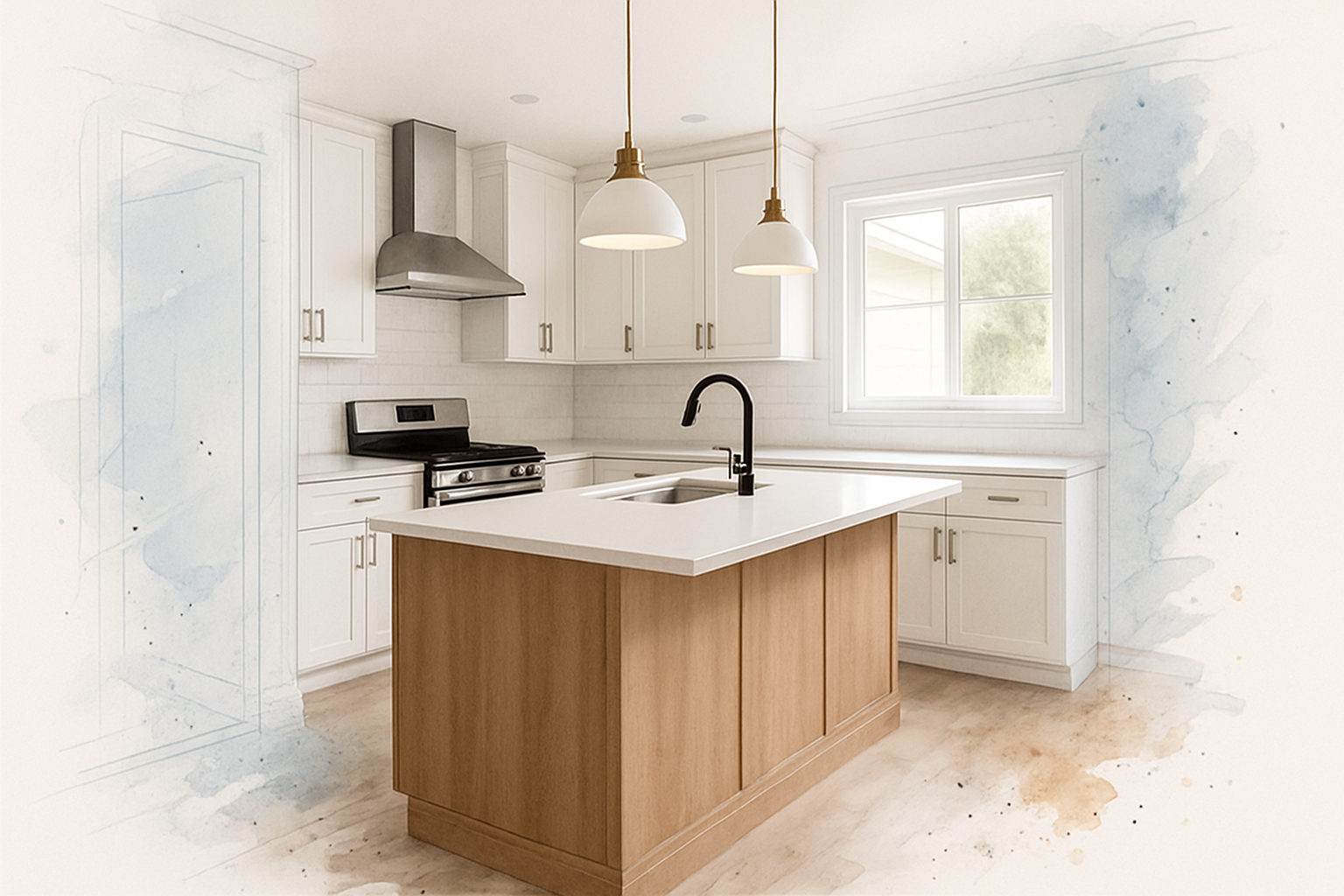
Kitchen inquiries tell the same story. A homeowner in Seaside came to us wanting a full layout reconfiguration — not just new cabinet fronts, but a real island installation with a new hood, reconfigured traffic flow, and new flooring throughout the kitchen and adjacent family room. These are structural changes to how a home functions day to day.
If you want to understand what drives bathroom costs specifically, what actually drives bathroom remodel costs on the Monterey Peninsula goes into that in more detail. For kitchens, the sequencing of the work matters more than most people expect — the order of operations in a kitchen remodel explains why getting that wrong adds time and cost.
ADUs and Home Additions: The Projects People Research Before They’re Ready
There’s a distinct category of caller I hear from regularly — the homeowner who’s outgrown their space but hasn’t decided yet what the right solution is. They’re not ready to sign anything. They’re trying to figure out what’s even possible on their lot.
One homeowner in Monterey reached out describing a few different directions they were considering: a walk-in closet addition, an extra bedroom, or possibly something bigger. Another caller was weighing whether to remove an existing studio structure and replace it with a proper ADU, while also evaluating what work the main house needed. These aren’t simple questions, and the answer depends heavily on lot size, zoning, setbacks, and — on the Peninsula — water connection capacity.
The Monterey Peninsula Water Management District adds a layer of planning that doesn’t exist in most California markets. Any project that touches plumbing — including new ADU construction — may trigger water allocation requirements that affect feasibility and timeline before a single permit application is filed.
For homeowners researching the add-on path, home additions in Monterey County: what the process looks like start to finish is a good starting point. If the ADU route seems more likely, ADU permitting in Monterey County: why location on the map matters covers how jurisdiction and lot position affect what you can actually build.
Common Project Types and What Drives Scope in Monterey County
This is a rough overview of the most common project types we see in Monterey County, what typically expands the scope, and what local factors affect planning.
| Project Type | Common Scope Drivers | Local Factors to Know |
|---|---|---|
| Kitchen Remodel | Layout reconfiguration, island addition, new appliance loads, flooring | Older electrical panels often need upgrade; permit required for structural changes |
| Bathroom Remodel | Tub-to-shower conversion, full tile, plumbing relocation | MPWMD water permit may apply; tile waterproofing standards are non-negotiable |
| Home Addition | Bedroom, closet, or square footage expansion | Setback rules vary by city; Carmel-by-the-Sea has design review requirements |
| ADU / JADU | Detached unit, garage conversion, or attached unit | Water connection capacity, lot coverage limits, and city jurisdiction all factor in |
| Outdoor Living | Deck, patio, covered pergola, spa integration | Marine layer and salt air require specific wood species and finish choices |
| Flooring + Fireplace | LVP or hardwood replacement, hearth and face update | Often added mid-project to avoid a second round of construction disruption |
Outdoor Living on the Central Coast Is Different From Everywhere Else
Decks, patios, and covered outdoor structures are genuinely popular here in a way they aren’t in most California markets — and the reason is the weather. The Monterey Peninsula gets mild temperatures and real usable outdoor time year-round, even through winter. That means a well-built deck or covered patio isn’t a seasonal amenity. It gets daily use.
Inquiries have come in from Carmel Valley, Pebble Beach, and Monterey proper for deck builds and patio redesigns — including one project explicitly planned around an outdoor spa setup. That’s the kind of scope that takes outdoor living from a weekend project to a real construction engagement.
What homeowners often don’t anticipate is how much the coastal environment changes material selection. Salt air and marine layer exposure are hard on wood. Certain species and finishes that work fine inland will fail much faster within a few miles of the coast. Redwood and certain composite decking materials hold up differently here than they would in, say, the Central Valley — and the finish or sealer choice matters just as much as the wood species. The California Redwood Association has published guidance on species performance in coastal environments that’s worth a look if you’re in the early planning stage.
For a broader look at how indoor and outdoor projects interact in scope planning, indoor and outdoor living: a Monterey contractor’s guide covers that well.
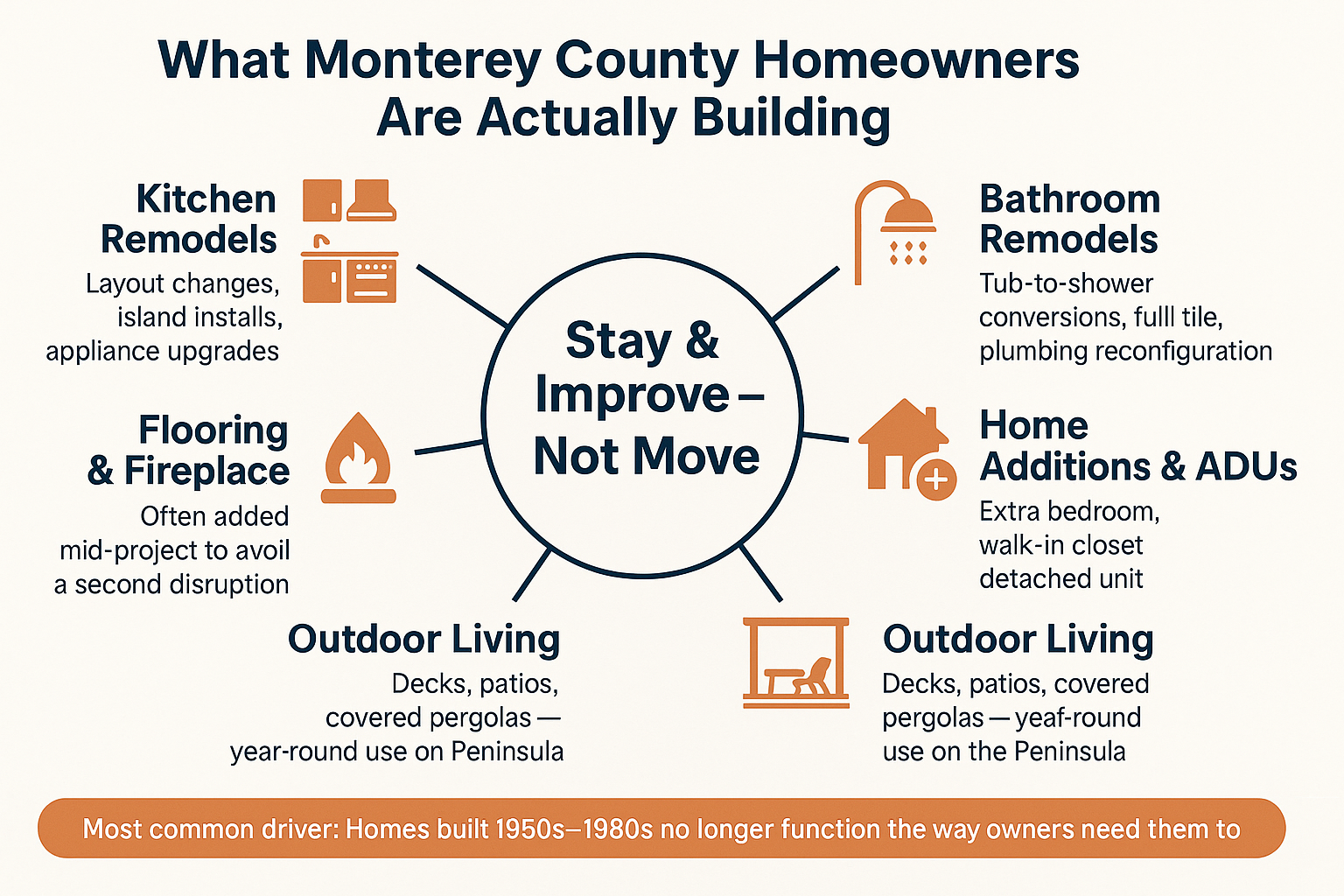
Why Monterey County Homeowners Remodel (And What They’re Actually Building)
This infographic breaks down the most common project types and the real reasons driving them in Monterey County — not national trend data, but what we actually see in the field.
The Add-On Projects That Make the Most Sense Mid-Build
I’ve seen a clear pattern in how experienced homeowners approach scope: once a larger project is in motion, they look at what else is worth doing at the same time — because the alternative is going through construction disruption a second time.
One Monterey homeowner started with kitchen work — a new sink, island hood, and LVP flooring — and also had the fireplace face and hearth redone during the same engagement. The fireplace went from dated stone to a shiplap finish, which one reviewer noted “lightens up the whole room.” That’s a decision that made sense to tackle while the crew was already on site and the house was already in construction mode.
Flooring often follows the same logic. Once walls are open and finish work is underway, pulling up and replacing old flooring adds less disruption than it would as a standalone project. The planning is what makes that work — you need to know upfront what you want to add, so material lead times and subcontractor scheduling can be built into the original timeline.
That’s where clear budgeting practices matter. When every line item is documented from day one — including realistic allowances for finishes rather than placeholder numbers — it’s much easier to evaluate what additions actually cost and whether they fit the budget. How a general contractor’s bid process reveals more than the price explains what to look for in a proposal before you sign anything.
Frequently Asked Questions About Remodeling in Monterey County
Do I need a permit for a bathroom remodel in Monterey County?
Usually yes, if the work involves plumbing, electrical, or structural changes — which most real bathroom remodels do. A simple cosmetic update like swapping a vanity or toilet might not require a permit, but converting a tub-shower combo to a tiled shower almost always does. Requirements vary by city, so the relevant local building department is the right place to verify. For more on how permits work and who handles them, who is responsible for permits on a remodeling project? is a good read.
How long does a kitchen remodel typically take in Monterey County?
A mid-scope kitchen remodel — layout changes, new cabinets, appliances, flooring — generally runs 6 to 12 weeks once work starts, though that varies based on material lead times and whether structural work is involved. The pre-construction phase (permits, selections, ordering) often takes longer than homeowners expect. How long does a kitchen remodel actually disrupt your home? covers this in more detail.
Can I build an ADU on my property in Monterey County?
Probably, but the specifics depend on your lot size, zoning, jurisdiction, and — critically on the Peninsula — your water connection situation. The Monterey Peninsula Water Management District has requirements that affect ADU feasibility in ways that don’t apply to most California markets. The best first step is understanding what’s on your lot and what your city allows. ADU permitting in Monterey County: why location on the map matters is a solid starting point.
Why do older Peninsula homes cost more to remodel than newer ones?
Homes built in the 1950s through 1980s often have surprises behind the walls — outdated wiring, galvanized plumbing, undersized panels, or framing that doesn’t meet current code. When you open a wall for a kitchen reconfiguration or bathroom remodel, you sometimes find things that need to be addressed before the finish work can move forward. That’s not a contractor problem — it’s just what older housing stock looks like. Realistic budgeting accounts for this upfront rather than treating it as a change order surprise.
Is outdoor wood decking a good choice near the coast?
It can be, but species selection and finish matter more here than they do inland. Salt air and marine layer exposure degrade certain wood species and sealers significantly faster than they would in a drier climate. Redwood and certain composite options tend to hold up better in coastal conditions, but the right choice depends on the specific site and budget. A contractor familiar with Peninsula projects will factor this into material recommendations from the start.
What’s the real difference between an ADU and a JADU?
A JADU (Junior ADU) is a smaller unit — up to 500 square feet — created within the existing footprint of the main house, often from a bedroom or attached garage space. A standard ADU can be larger and may be detached. JADUs come with their own owner-occupancy rules. The right choice depends on your lot, your goals, and what your jurisdiction allows. What determines whether an ADU makes financial sense covers the financial side of that decision.
What a Full-Scope Remodel Actually Looks Like
Most of the projects described above — kitchens, bathrooms, additions — are meaningful undertakings. But occasionally a homeowner needs something much larger: a full renovation where the scope touches nearly every system in the house.
Marco S., a Monterey homeowner, described his project this way: “Christian handled the complete renovation of my home in Monterey, complete teardown of ceiling, floors, then new floor plan and rebuild. The result is spectacular, his attention to details and the ‘can-do’ attitude are great… The bid process was very transparent, with everything documented online.”
That last part — everything documented online, the bid process transparent — is what makes a project like that manageable rather than chaotic. When scope is broad and subcontractors are coordinating across multiple trades, the difference between a smooth project and a difficult one usually comes down to how well the planning phase was handled before the first wall came down.
Ready to Talk Through What Your Home Actually Needs?
If you’re a Monterey County homeowner thinking through a kitchen, bathroom, addition, ADU, or outdoor project — and you want a clear conversation about what’s feasible and what it actually costs — Palacios Construction is available to talk. Reach the team at palaciosconstructionca.com or call (831) 220-3334 to get started.