Direct Answer: As of January 1, 2026, any permit application in Monterey County must conform to the 2025 California Building Code. Kitchen remodels, bathroom updates, home additions, and ADUs are all affected.
If you are planning a kitchen remodel, a bathroom update, a home addition, or an ADU anywhere in Monterey County and you have not yet submitted permit applications, one thing has changed that matters a lot: the 2025 California Building Standards Code is already active. As of January 1, 2026, Monterey County’s Housing and Community Development department requires all new permit applications to conform to the 2025 code cycle, not the prior one.
I talk to homeowners every week who are surprised by this. They got quotes a year or two ago, they have a rough plan in mind, and they assume the rules are the same. Sometimes they are. But in several specific areas, the 2025 code changes what a project has to include, and that affects both the permit timeline and the budget.
The good news: this is not a reason to put a project off. It is a reason to ask the right questions early. I’ll walk through the scopes most likely to be affected and what you actually need to know before your project goes to permit.
The Energy Code Is Where Most Homeowners Get Surprised
Part 6 of Title 24, California’s Energy Code, is the section that touches the most residential remodels. The 2025 update expands the list of conditions that trigger energy compliance requirements, and several of those triggers show up in projects people think of as routine.
Here is where I see it come up most often:
- Replacing an HVAC system during a remodel can now require the new system to meet current heat pump standards, depending on the scope of work and what is already in the home.
- Replacing windows above a certain threshold triggers U-factor and solar heat gain coefficient (SHGC) requirements. Replacing one window as part of a repair is different from replacing six windows as part of a kitchen or whole-room remodel.
- Adding conditioned square footage, whether through a room addition or a new living space, puts the project on the full energy compliance path, including insulation values and mechanical equipment specifications.
What this means practically is that a project homeowners budget as a simple update can pick up additional line items once a contractor reviews the energy compliance requirements. That is not a contractor adding scope for profit. That is the code.
The right time to find this out is during preconstruction planning, not after the permit is submitted. California’s New Energy Code Is Now Active, Here’s What Remodels Trigger It goes deeper on the specific Title 24 triggers if you want more detail on that.
ADUs: The 2025 Code Treats Them as New Construction
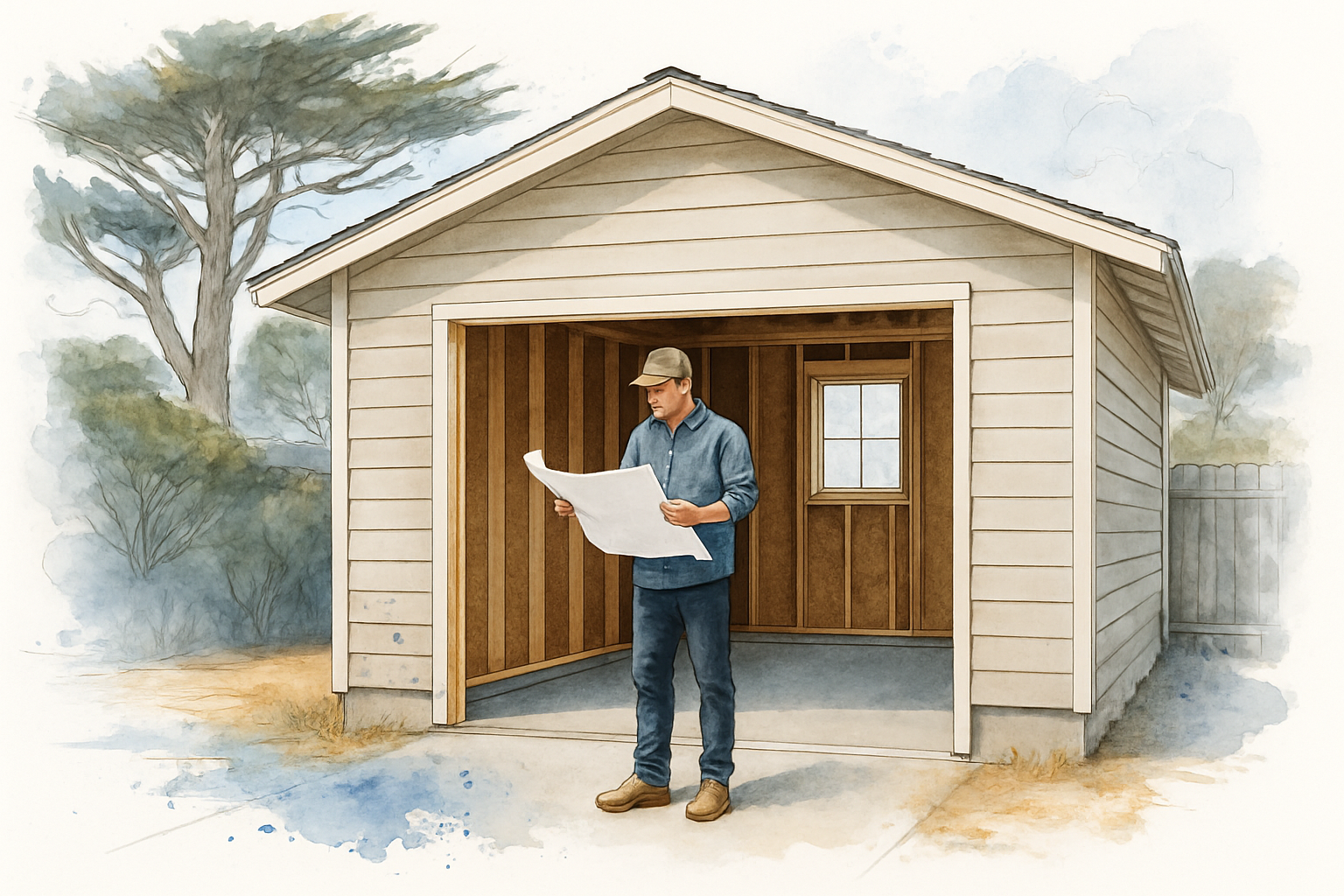
This one catches people off guard more than anything else I see in the planning process. Whether you are building a detached backyard unit or converting a garage into a livable space, a detached ADU is treated as new construction for energy compliance purposes under the 2025 code. That distinction matters.
For a detached ADU permitted under the 2025 code, the prescriptive baseline includes:
- Heat pump water heaters instead of conventional gas units
- Updated insulation values for walls, ceilings, and floors
- Solar-ready provisions that must be addressed in the plans, even if panels are not being installed
Garage conversions have their own nuances. Because they typically share a wall or utilities with the primary residence, some requirements apply differently than they do for a fully detached unit. But the energy compliance requirements still apply, and equipment costs under the 2025 code are often higher than quotes homeowners received in prior years suggested.
If you are early in the planning phase for a garage conversion, Turning a Garage Into an ADU in Monterey County: What to Expect covers what the process actually looks like on the ground here. And for broader questions about what makes an ADU financially worthwhile given today’s costs, What Determines Whether an ADU Makes Financial Sense is worth a read before you commit to a direction.
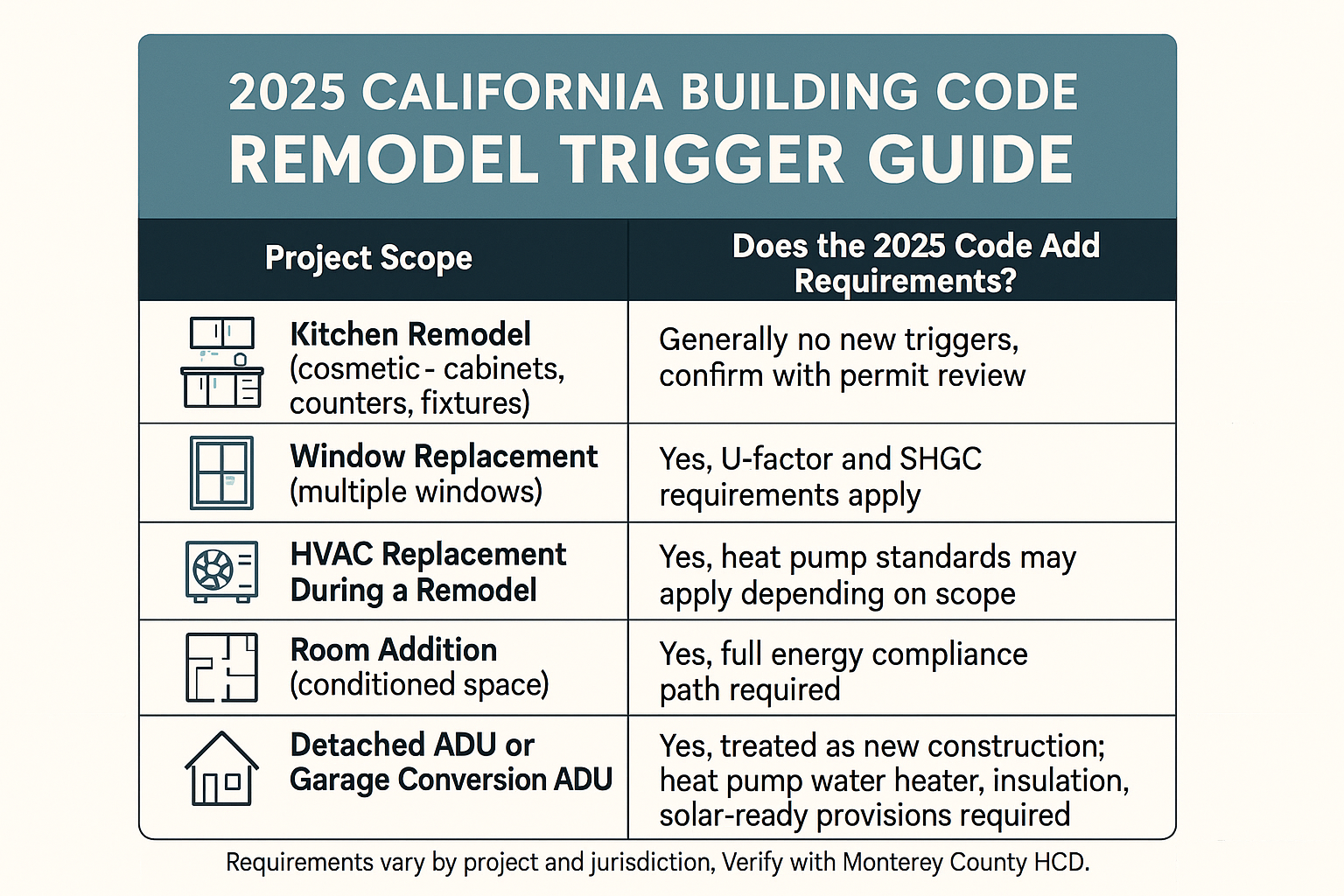
At a Glance: Which Scopes Trigger 2025 Code Compliance
This quick reference shows the common remodeling scopes and whether the 2025 California Building Code introduces new compliance requirements for each.
The Code Is Stable Until at Least 2031, Which Actually Helps You Plan
One thing worth knowing: AB 130 froze further residential building code updates until at least 2031. That means the 2025 code is not a stepping stone to another change cycle in three years. For homeowners doing longer-range planning, that stability matters.
A kitchen or bathroom remodel you are considering for 2027 will face the same code as one you start today. So if you are gathering information now and planning to act in a year or two, the requirements you are reading about are the ones that will apply when you actually pull the permit.
This also means there is no particular urgency to rush a project to beat a code change. What there is, instead, is good reason to understand the current requirements clearly before designs get locked in. Once a project goes to plan check, revisions to meet code requirements cost time and money. Catching them in preconstruction planning costs almost nothing by comparison.
Common Remodel Scopes and 2025 Code Considerations
This is a general reference for the scopes that come up most often in Monterey County residential projects. Requirements vary by jurisdiction and project details, so always verify with Monterey County HCD or the relevant city building department.
| Remodel Scope | Typical Trigger Under 2025 Code | When to Flag It |
|---|---|---|
| Kitchen remodel (layout change) | Possibly none, depends on mechanical changes | At design phase |
| Multiple window replacement | U-factor and SHGC requirements | Before window selection |
| HVAC replacement with remodel | Heat pump standards may apply | Before equipment purchase |
| Room addition (conditioned space) | Full energy compliance path | At project inception |
| Detached ADU (new or conversion) | Heat pump water heater, insulation values, solar-ready provisions | During preconstruction planning |
| Bathroom remodel (plumbing changes) | Water permit requirements may also apply on Peninsula | Before permit submittal |
What This Means for How You Approach Preconstruction
The practical takeaway here is not that remodeling has become harder. It is that the preconstruction phase is where code questions need to surface. A contractor doing hands-on project management from the start of planning, rather than arriving after design decisions are already locked in, can identify which scopes trigger compliance requirements and adjust the plan before it affects the permit timeline or the budget.
I’ve seen projects stall at plan check because an energy compliance form was missing, or because an equipment spec in the plans didn’t match what the code now requires. None of that is catastrophic, but it adds weeks. And weeks cost money, especially if you are coordinating subcontractors.
For homeowners on the Monterey Peninsula specifically, there is an additional layer. Bathroom remodels and plumbing changes that touch water-using fixtures may also require coordination with the Monterey Peninsula Water Management District, which has its own permit requirements separate from the building department. If you have not run into that before, The Water Permit Step Monterey Homeowners Miss Before a Bathroom Remodel explains how it works and why it matters for timing.
Getting the right contractor involved before you finalize your design is the single most effective way to keep a project on track under the current code environment. What a General Contractor Actually Does on a Remodel in Monterey breaks down what that involvement actually looks like in practice.
Frequently Asked Questions About the 2025 California Building Code and Remodels
Does the 2025 code apply to my project if I already have a design but haven’t submitted permits yet?
Yes. The submission date is what matters, not when you started designing. If your permit application lands at Monterey County HCD after January 1, 2026, it must conform to the 2025 code regardless of when the design work was done. If your plans were drawn under the prior code cycle, it is worth having them reviewed before submittal.
I’m just doing a cosmetic kitchen update, new cabinets, counters, and fixtures. Does the 2025 energy code affect me?
Probably not in a significant way. Cosmetic kitchen work that does not touch mechanical systems, add conditioned space, or trigger window replacement thresholds generally does not pull in energy compliance requirements. But if you are also replacing appliances, updating ventilation, or changing the layout in a way that affects mechanical runs, it is worth confirming with your contractor before the plans are finalized.
We’re planning a detached ADU in our backyard in Monterey. What equipment changes should we expect compared to a few years ago?
The biggest shift is on the water heating side. Heat pump water heaters are now the prescriptive baseline for detached ADUs under the 2025 code, replacing conventional gas units. They cost more upfront than a standard tank heater, but the operating costs are lower. You will also need to account for updated insulation values and solar-ready provisions in the plans. None of this is a dealbreaker, but it should be in your budget from the start rather than discovered at plan check.
Will the code change again in 2028 or 2030 and require more updates?
Not for residential construction. AB 130 froze residential building code updates until at least 2031, so the 2025 code is what you are working with for the foreseeable future. That gives you a stable planning window if you are looking at a project one or two years out.
Who is responsible for making sure my project meets the current code, me or the contractor?
In practice, your licensed general contractor carries the responsibility for submitting plans that conform to the applicable code and for ensuring the work matches those approved plans. That said, you as the homeowner benefit from understanding what the code requires, especially when it affects your budget. Who Is Responsible for Permits on a Remodeling Project? walks through how that responsibility is divided.
Planning a Project in Monterey County This Year?
If you are in the early stages of planning a kitchen remodel, bathroom update, home addition, or ADU anywhere in Monterey County, the team at Palacios Construction is available to walk through what the 2025 code means for your specific scope before you commit to a design direction. Reach out at palaciosconstructionca.com or call (831) 998-0046 to start the conversation.